

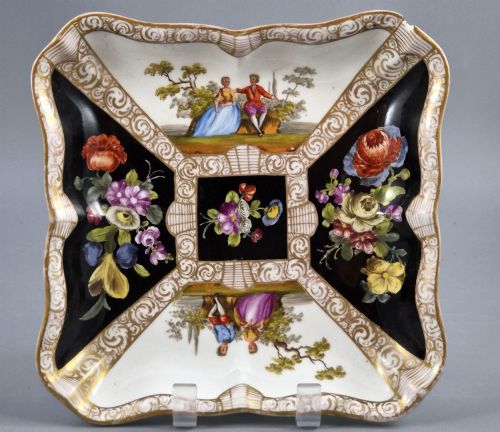
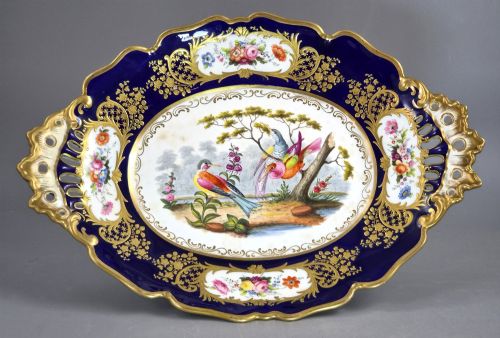
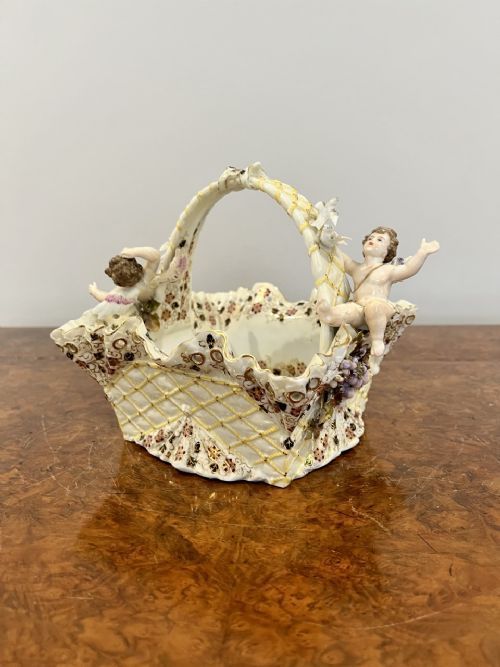


Rococo Revival Porcelain Bowl
These rococo revival porcelain bowl examples bring exuberant 19th-century flourish and dramatic floral forms to a table.
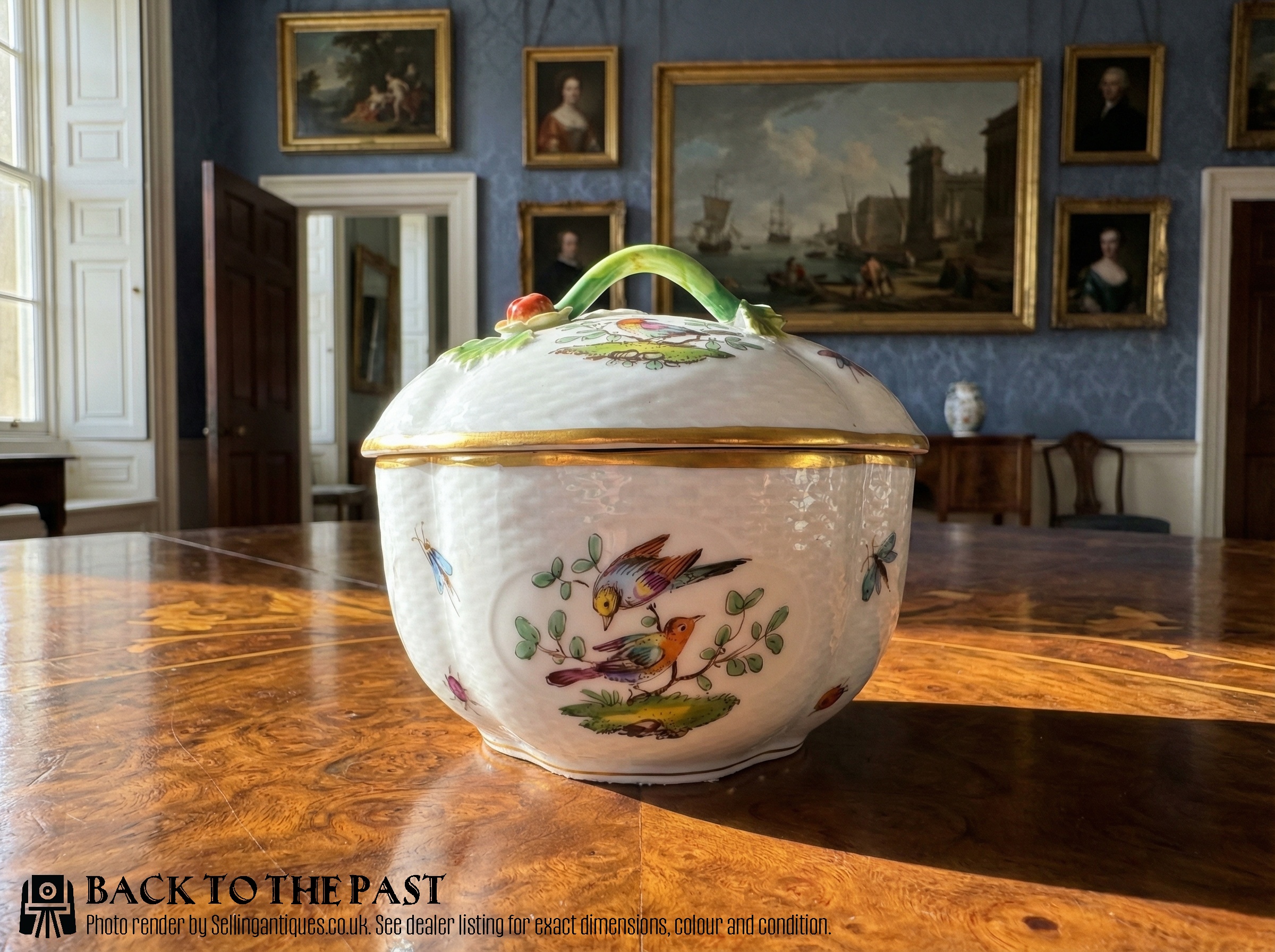
Rococo Revival Porcelain Bowl
A rococo revival porcelain bowl draws on mid-to-late 19th-century styling, emerging across periods from 1850 through to 1920 in various European traditions. You will encounter decorative dishes, centrepieces, baskets, and lidded pots that channel the curving asymmetry of earlier French movements.
Makers across England, Germany, and France interpreted the style through specific functional forms like sauce tureens, tea services, and comports. These pieces serve as striking centrepieces or decorative dishes that showcase the enduring appeal of ornate Victorian design.
How they were made
The underlying body relies upon hard-paste porcelain, bone china, or general ceramic production, shaped into intricate square, oval, or basket forms. Firing yields a stable white body ready for subsequent decorative work.
Enamel painting and gold leaf application complete the surface, often featuring cobalt blue backgrounds, Watteau scenes, or applied cherubs. Gilding and gilded enamel highlight the raised scrollwork characteristic of the revival style.
Rococo Revival Porcelain Bowl Retail Price Guide 2026
Typical asking prices for rococo revival porcelain bowl among the pieces listed under this phrase on Sellingantiques today, from the lower quarter to the upper quarter. They describe what is for sale here now, not the wider market.
Some nineteenth-century decorators added cheeky porcelain cherubs clinging to the rims, apparently unfazed by the impending dessert.
What varies in quality
The sophistication of the hand-painted details separates standard factory output from exceptional studio work, particularly in figurative scenes or floral arrangements. Crisp definition in the moulded scrollwork and the richness of the gilding indicate superior craftsmanship.
The weight and presence of the piece matter greatly, with large centrepieces and complex lidded bowls requiring considerable skill to fire without distortion. The integration of applied elements like cherubs or handles demonstrates the maker's technical confidence.
Coalport·Meissen·Mintons·Dresden·Royal Worcester
The Rococo Revival Porcelain Bowl Glossary
- Hard-paste porcelain
- A dense, durable ceramic composed of kaolin and petuntse, fired at very high temperatures. It forms the robust base for many continental European pieces.
- Gilding
- The application of gold leaf or gold dust to the porcelain surface. It accents the raised motifs typical of nineteenth-century decorative wares.
- Comport
- A large decorative dish or bowl raised on a pedestal or foot. These were traditionally used for serving fruit or sweets at formal dining tables.
- Enamel
- Vitreous coloured glass fused to the porcelain body during firing. It provides the vibrant hues found in floral and figural painting.
- Potpourri
- A lidded bowl featuring pierced or perforated sections designed to diffuse scent. They combine functional ventilation with elaborate sculptural form.
Rococo Revival Porcelain Bowl: Frequently Asked Questions
Were these bowls used for food?
Many examples served practical functions on the dining table as sauce tureens, dessert cream containers, or comports for fruit and sweets. Others functioned purely as decorative centrepieces or potpourri holders.
Examine the interior glaze and any staining to determine whether a specific dish saw regular culinary use. Most refined pieces from the Victorian era now suit display rather than daily dining.
How can I tell the period?
Look closely at factory marks, style indicators, and the specific manner of the gilding and enamel work. Pieces from the mid-19th century often display exuberant Victorian interpretations of earlier French motifs.
Later examples stretching into the 20th century may show shifts in palette and manufacturing precision. Cross-referencing factory backstamps remains the most reliable method for dating.
Where should I display a large centrepiece?
Place large centrepieces on sturdy sideboards, dining tables, or dedicated display cabinets where their three-dimensional form can be appreciated from multiple angles. Ensure the location avoids direct sunlight to protect the enamel colours.
Because these heavy ceramic pieces command visual attention, they work best as focal points in a room rather than crowded among other objects.