

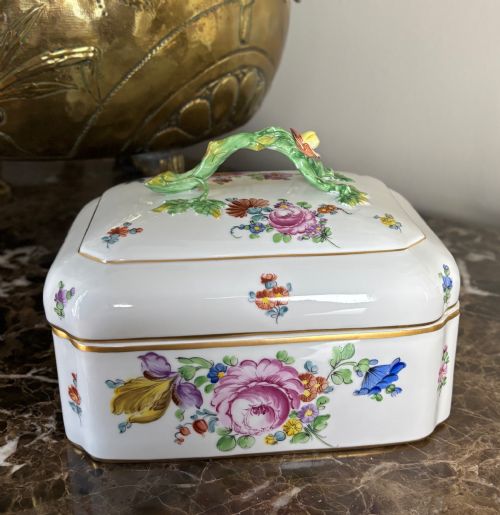


Gilt Porcelain Lidded Bowl
These gilt porcelain lidded bowls bring rich gilding and refined ceramic bodies to your table, offering practical storage with striking visual presence.
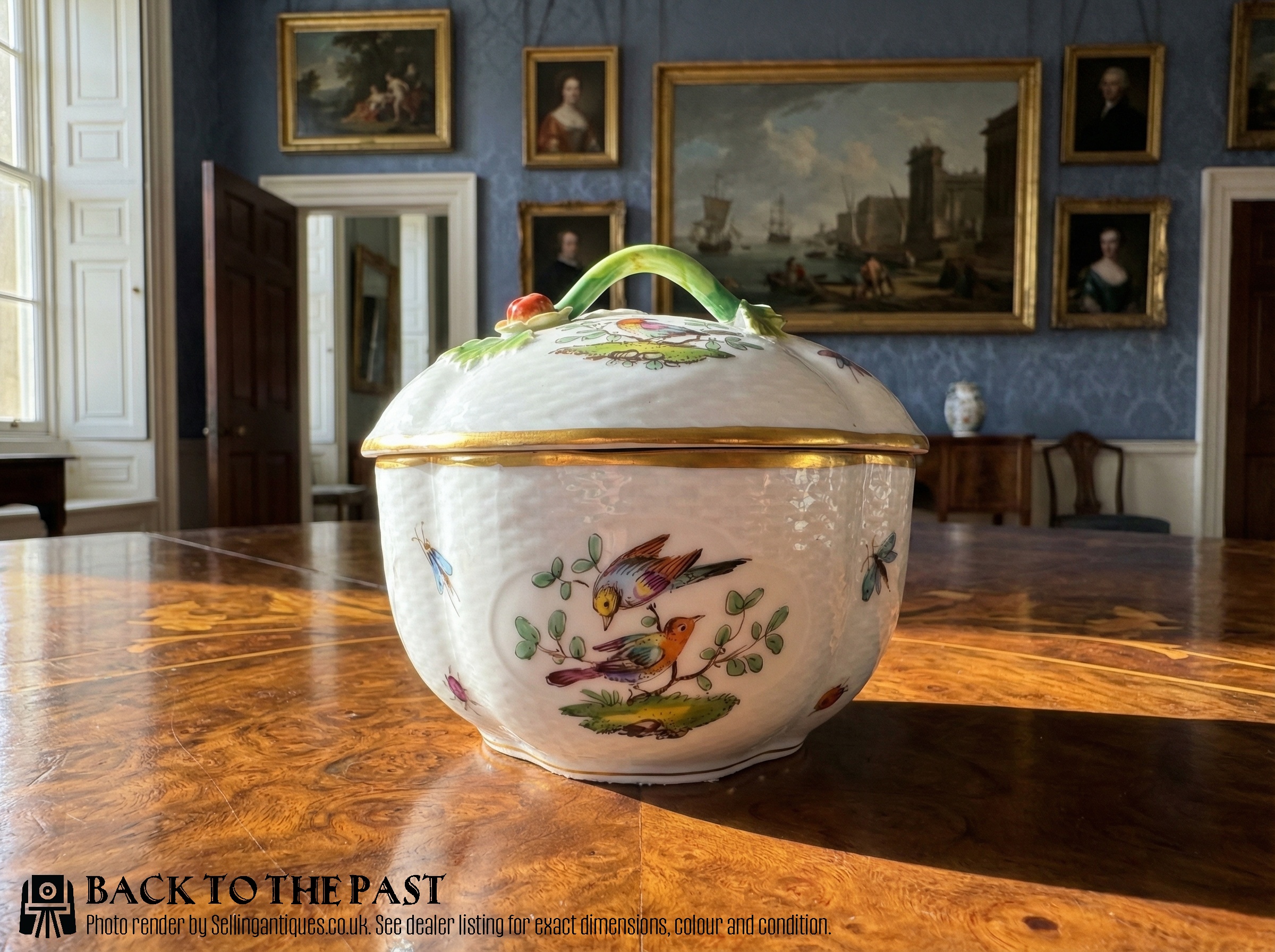
Gilt Porcelain Lidded Bowl
When you search for a gilt porcelain lidded bowl, you enter a diverse field of covered containers spanning the Georgian, Regency, and late nineteenth-century periods. These vessels encompass sugar bowls, trinket boxes, potpourri containers, and small tureens designed for both display and functional use.
The pieces on this page originate from notable European and Asian traditions, including English factories like Spode and Worcester, continental makers in Germany and France, and Japanese Kyoto studios. You are most likely to encounter refined forms finished with intricate gilding and enamel work from the nineteenth century.
How they were made
Makers shaped these vessels from fine porcelain, felspar porcelain, and ironstone, applying detailed enamel painting before adding gold leaf or gilding to highlights and borders. Many examples incorporate cast or chased ormolu and gilt metal mounts that frame the ceramic body.
Techniques varied from the delicate hand-painted motifs of European manufactories to the distinct Satsuma style of the Meiji period. Artisans combined skilled ceramic firing with precise metalwork to secure covers, handles, and pedestals.
Gilt Porcelain Lidded Bowl Retail Price Guide 2026
Typical asking prices for gilt porcelain lidded bowl among the pieces listed under this phrase on Sellingantiques today, from the lower quarter to the upper quarter. They describe what is for sale here now, not the wider market.
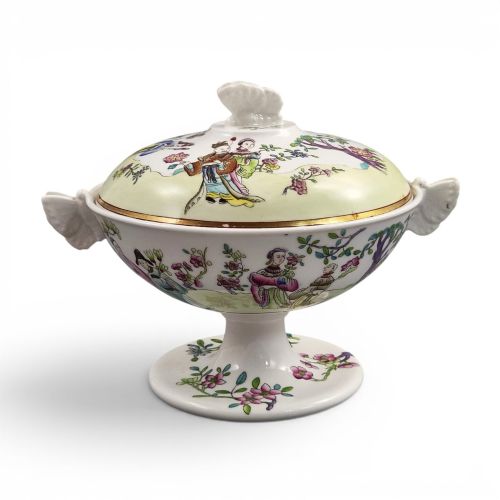
Butterfly handles flutter across the rim of an early nineteenth-century pedestal bowl, proving that porcelain insects do not require a garden to thrive.
What varies in quality
Quality rests upon the crispness of the porcelain body and the precision of the hand-applied gilding. Superior examples exhibit finely detailed enamel work and well-balanced forms, whether handling a pedestal bowl or a lidded sugar box.
The integration of metal mounts, such as ormolu fittings or butterfly handles, distinguishes standard production from exceptional studio output. Maker attribution and the clarity of painted decoration further elevate the standing of individual pieces.
Spode·Dresden·Limoges·Royal Crown Derby·Shozan Kyoto Studio·Flight Barr and Barr Worcester·Mason's Ironstone·Meissen·Coalport
The Gilt Porcelain Lidded Bowl Glossary
- Felspar porcelain
- A dense ceramic body developed in the nineteenth century using felspar to improve durability and whiteness. It allowed English factories to produce thinner, more translucent wares.
- Ormolu
- Gilded bronze or other metals applied as decorative mounts on ceramics. This technique adds structural weight and ornamental contrast to lidded vessels.
- Sucriere
- A specialised container designed for holding sugar at the tea table. These vessels typically feature a fitted lid and matching saucer or stand.
- Potpourri
- A lidded bowl pierced with holes or designed to diffuse scent from dried botanicals. These decorative pieces were popular for scenting domestic interiors in the nineteenth century.
- Imari
- A decorative style featuring dense underglaze blue and iron-red enamel, often enriched with gold. Factories in Europe and Japan adopted these patterns on bowls and dishes.
Gilt Porcelain Lidded Bowl: Frequently Asked Questions
What were gilt porcelain lidded bowls used for?
These covered vessels served various domestic functions, from holding refined sugar at the tea table to containing potpourri or small trinkets.
Their decorative finishes meant they were frequently displayed on sideboards and centre tables when not in active use.
How do I distinguish Regency pieces from later nineteenth-century styles?
Regency items often feature neoclassical proportions and specific paste compositions like felspar porcelain, linked to English makers active around the early eighteen hundreds.
Later nineteenth-century examples tend toward revivalist aesthetics, including elaborate Rococo forms and vibrant Imari or Satsuma palettes.
Are all these bowls made of true porcelain?
The selection includes traditional porcelain alongside related ceramic bodies such as ironstone and felspar porcelain.
Each material offers a different weight and opacity, though all share the characteristic glazed surface suited to fine gilding.
How should I care for antique gilded ceramics?
Gentle dusting with a soft cloth preserves the delicate gold leaf and enamel decoration without risking abrasion.
Submerging antique gilded pieces in water or using modern chemical cleaners should be avoided to protect the surface finish.