

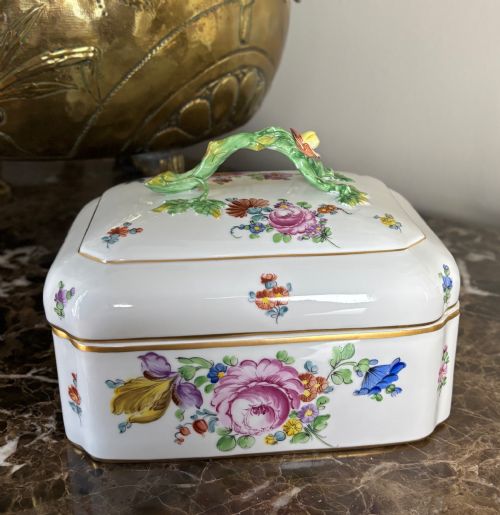
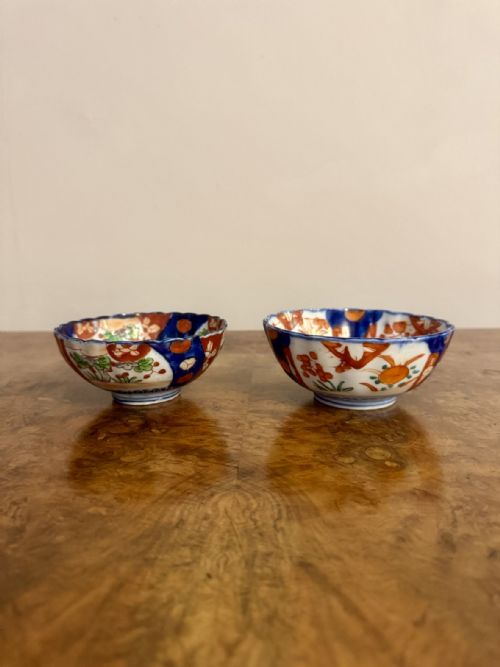


Floral Porcelain Trinket Bowl
These floral porcelain trinket bowls bring hand-painted blooms and rich gilding to dressing tables and desks, offering a small, decorative place to store pins and rings.
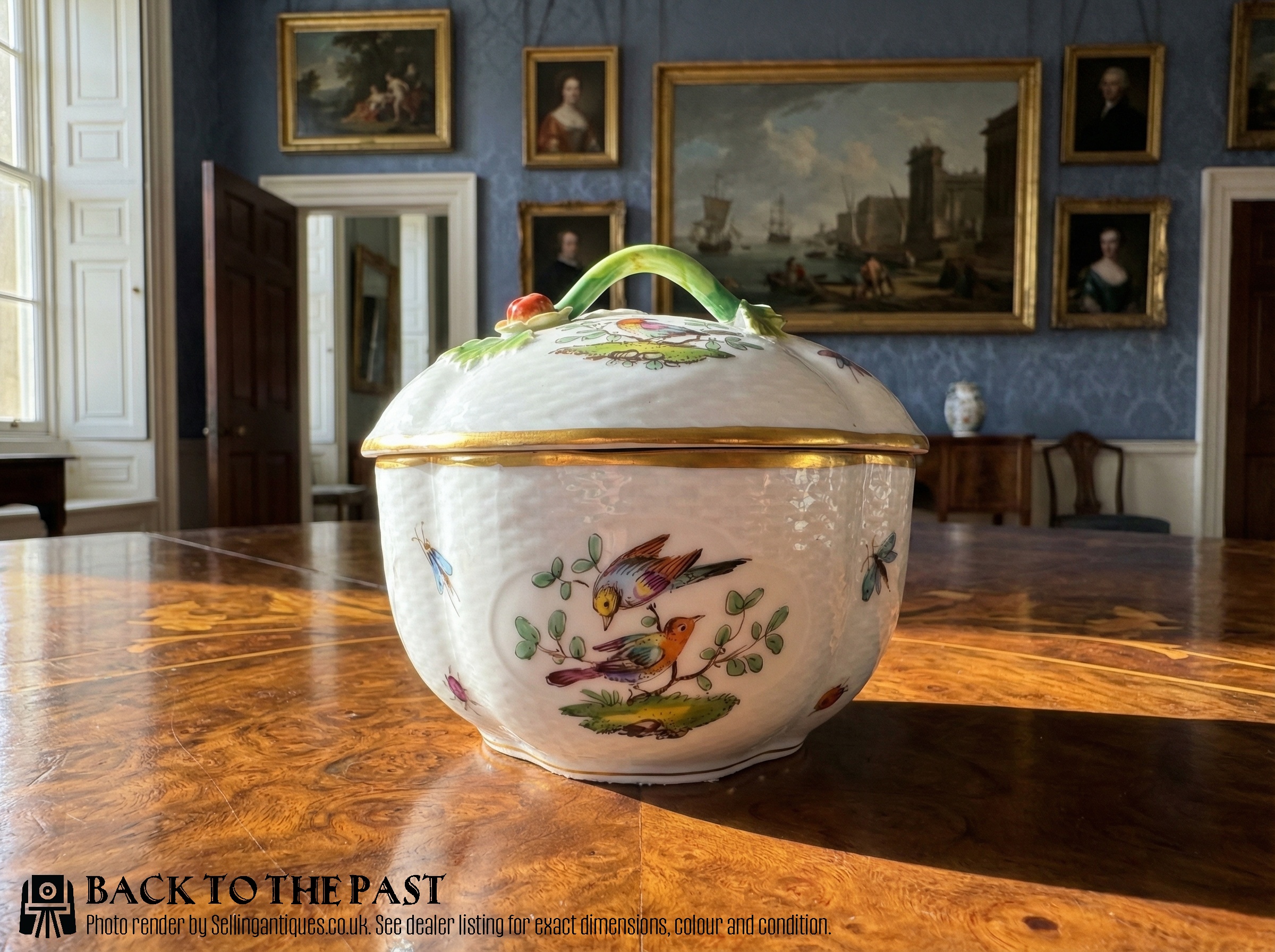
Floral Porcelain Trinket Bowl
When you search for a floral porcelain trinket bowl, you encounter small decorative dishes, lidded jars, and bonbonniere boxes designed for bedside or dressing table use. These pieces span periods from the early nineteenth century up to the nineteen-thirties, reflecting diverse international traditions.
You are most likely to meet nineteenth-century European factories and Japanese studios on this page. Common forms include shell dishes, lidded potpourri bowls, and miniature bowls decorated with hand-painted floral sprays and gilt edges.
How they were made
Potters shaped fine porcelain and earthenware bodies by hand or in moulds before applying delicate glazes and enamel colours. Artisans painted botanical scenes and floral sprays directly onto the ceramic surface, often highlighting rims and handles with liquid gold leaf or gilding.
Mounts in ormolu and gilt metal were cast and chased to frame miniature dishes and lidded boxes securely. Kiln firings fused the enamel pigments into the glaze, creating permanent, glossy designs that resisted daily wear.
Floral Porcelain Trinket Bowl Retail Price Guide 2026
Typical asking prices for floral porcelain trinket bowl among the pieces listed under this phrase on Sellingantiques today, from the lower quarter to the upper quarter. They describe what is for sale here now, not the wider market.
Listings span multiple eras, encompassing both nineteenth-century European porcelain factories and Meiji period Japanese studios.
What varies in quality
The refinement of the painted botanical detail separates standard wares from superior examples. Master painters achieved subtle tonal gradients in their floral sprays, whereas lesser pieces relied on transfer-printed outlines filled with flat washes of colour.
The crispness of the porcelain moulding and the weight of any ormolu or gilt metal mounts dictate the overall standard of the piece. Well-preserved gilding without rubbing indicates careful handling over generations.
Paul Müller Selb·R Wehsner·Royal Worcester·Meissen
The Floral Porcelain Trinket Bowl Glossary
- Bonbonniere
- A small ornamental box or jar originally intended to hold sweets or sugar confects. These lidded vessels now serve as elegant containers for small trinkets and rings.
- Imari
- A traditional Japanese style of porcelain featuring a distinct palette of underglaze blue, iron red, and added gold. The patterns typically incorporate intricate floral and geometric panels.
- Ormolu
- Finely chopped high-karat gold applied to a bronze base using a mercury amalgamation process. This technique gives metal mounts a rich, warm lustre.
- Potpourri
- A mixture of dried plant materials and flower petals scented with spices, kept in a lidded bowl to fragrance a room. The pierced lids allowed the scent to escape gradually.
- Blush ivory
- A specialist ceramic finish developed by Royal Worcester that mimics the creamy, tactile quality of ivory. It provides a soft background for hand-painted floral decoration.
Floral Porcelain Trinket Bowl: Frequently Asked Questions
What were floral porcelain trinket bowls used for?
These small vessels served a variety of domestic purposes on dressing tables and parlour desks. Victorians used them to contain pins, rings, and small personal valuables.
Lidded versions also functioned as sugar boxes, sweetmeat containers, or small potpourri jars to keep rooms smelling fresh.
How do I date a porcelain trinket bowl?
Dating relies on identifying factory backstamps, stylistic markers, and the type of gilding used. Nineteenth-century pieces often display hand-painted factory marks or impressed numbers underneath.
Comparing the painting technique and the ceramic body to documented historical examples helps narrow down the decade of production.
Are these bowls safe to use for food?
Most antique pieces are intended purely for display or dry storage rather than culinary use. Historic glazes and enamel paints can contain lead or other substances that react poorly with acidic foods.
Additionally, delicate gold leaf and hand-painted details degrade quickly when washed repeatedly in modern dishwashers.
What is the difference between European and Japanese bowls?
European porcelain from this selection often follows classical or Rococo Revival forms with painted floral bouquets and heavy gilding. Japanese pieces, such as Kutani and Imari wares, utilise distinct iron-red and blue palettes with stylized natural motifs.
The clay density and glaze texture also differ visibly between Western factories and Meiji period Asian kilns.