


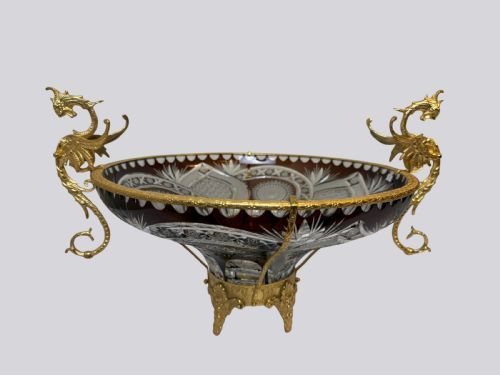
Gilt Bronze Centrepiece Bowl
A gilt bronze centrepiece bowl brings heavy metalwork and glass or porcelain together on the dining table or sideboard.
Gilt Bronze Centrepiece Bowl
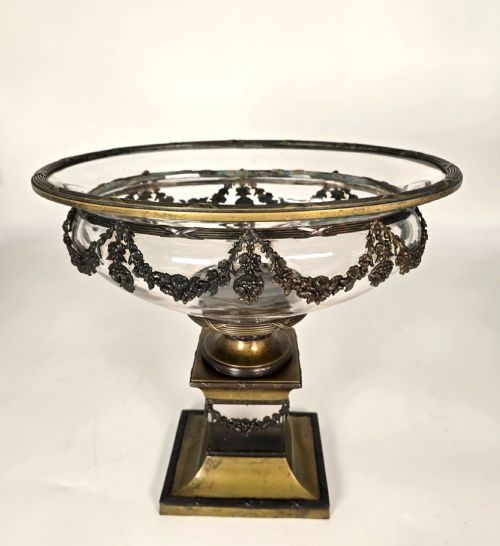
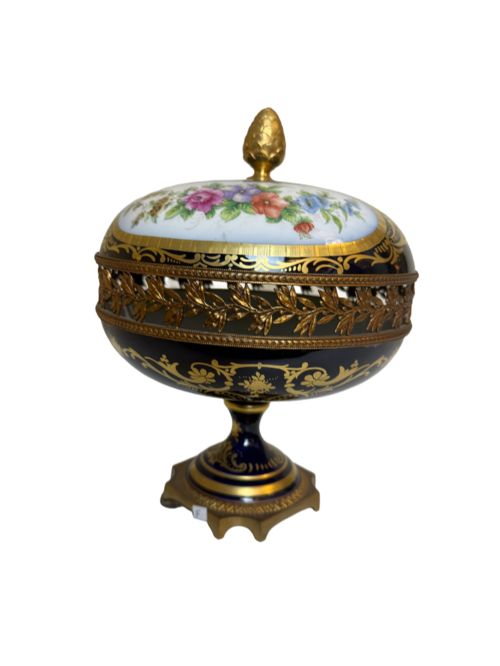
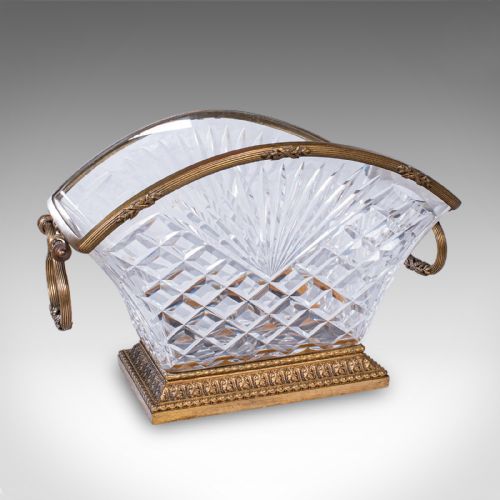
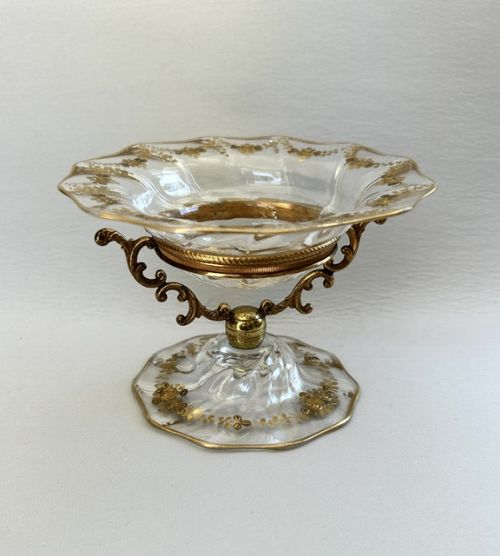
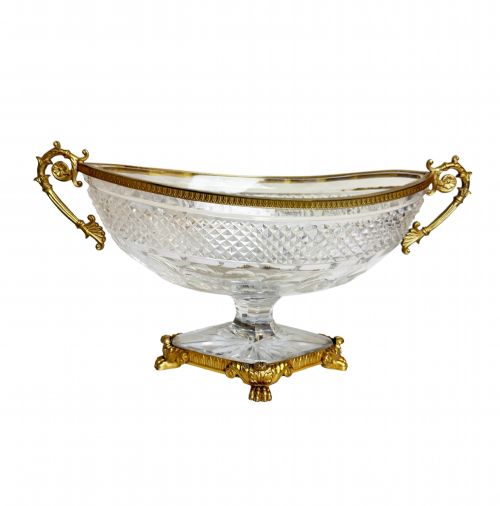
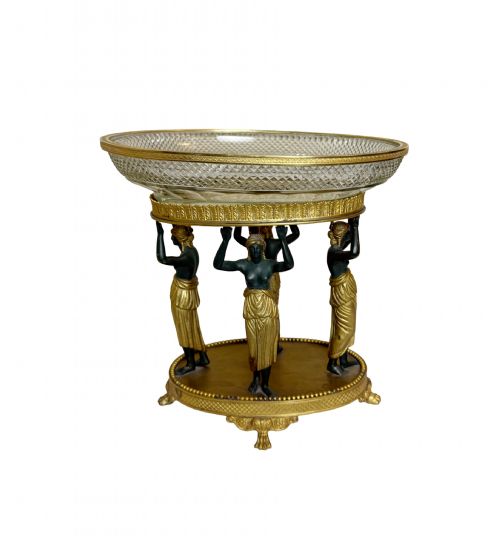
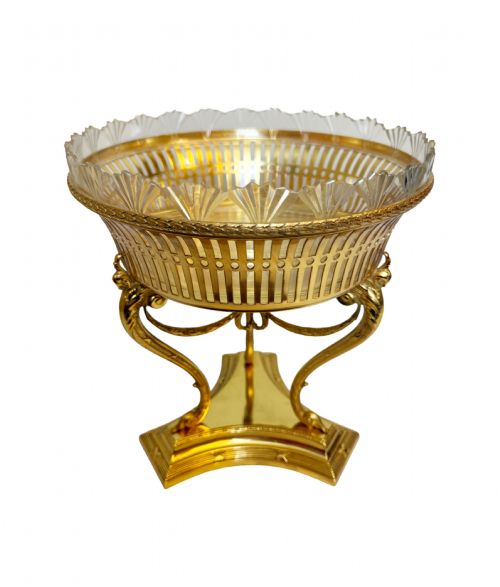
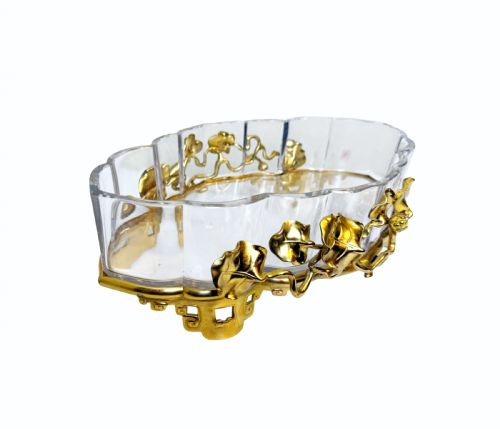
A gilt bronze centrepiece bowl is a substantial table display piece designed to hold fruit, flowers, or simply to stand alone as an ornament. These items appear primarily in nineteenth-century French designs, drawing heavily on Rococo Revival, Empire, and Second Empire aesthetics.
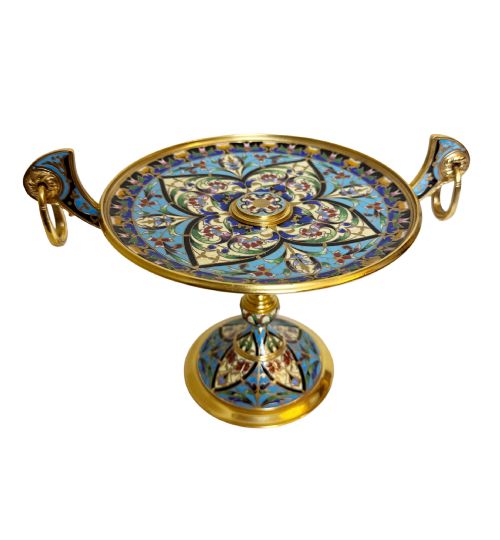
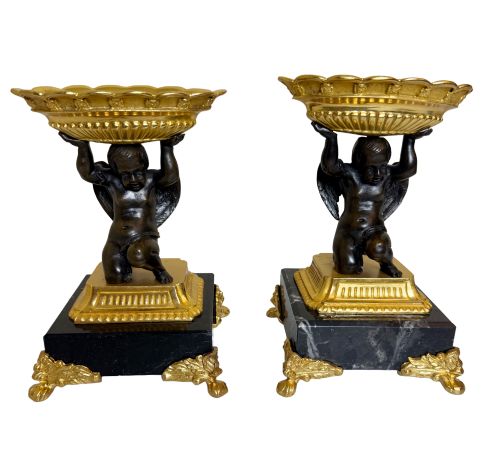
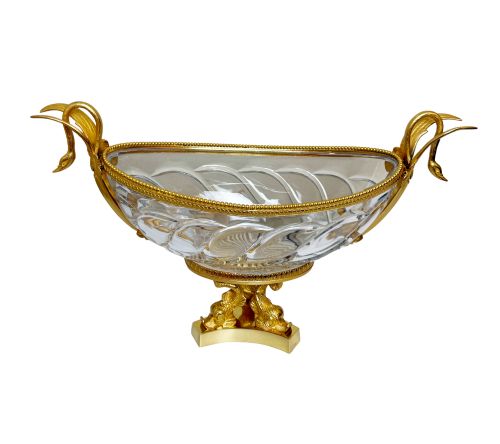
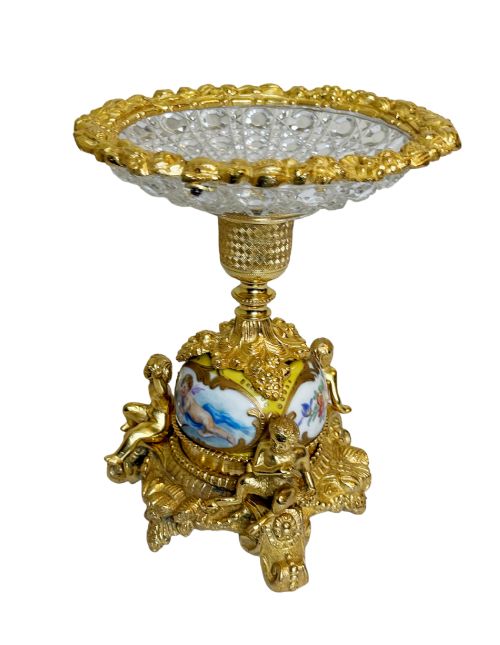
Most examples combine a cast metal frame with an insert of cut crystal, coloured glass, or porcelain such as Sevres style plates and dishes. Formats range from low shallow dishes and tazzas to pedestal bowls mounted with cherubs, mermen, or classical figures.
How They Were Made
The metal components rely on bronze cast in detailed moulds, then finished with mercury gilding or modern electroplating to create the characteristic ormolu surface. Frames are frequently combined with carved marble, onyx, malachite, or champlevé enamel panels.
Glass inserts are heavy, moulded, and deeply cut with geometric or floral patterns, while porcelain bowls are hand-painted with landscapes or portraits and secured into the metal mounts with threaded fixings.
Materials across these listings include cut glass, porcelain, onyx, agate, and champlevé enamel framed in gilt bronze and ormolu.
What Varies in Quality
Quality rests upon the crispness of the bronze chasing, where sharper casting details in figures and foliage separate superior work from softer, mass-produced variants. The weight and clarity of the glass or the hand-painting execution on the porcelain insert also dictate the tier of the piece.
Construction methods reveal the standard of manufacture, particularly how tightly the metal mounts fit the stone, glass, or ceramic body without relying on excessive adhesive.
Christofle Paris·Ferdinand Preiss
The Gilt Bronze Centrepiece Bowl Glossary
- Ormolu
- Gilded bronze, where a gold-mercury amalgam is applied to cast bronze and heated. This technique creates a rich, durable golden surface seen on nineteenth-century French mounts.
- Tazza
- A shallow bowl or dish raised on a high foot and stem. These often serve as decorative centrepieces on dining tables.
- Champlevé
- An enamelling technique where troughs are dug into the surface of the metal and filled with vitreous enamel powder before firing. It is commonly found on nineteenth-century frames alongside gilt bronze.
- Comport
- A large standing dish or bowl used for fruit or dessert service. They frequently feature porcelain bowls supported by metal pedestals.
- Grand Tour
- Travel across continental Europe undertaken by nineteenth-century gentry, which popularised the acquisition of decorative works in classical styles.
Gilt Bronze Centrepiece Bowl: Frequently Asked Questions
How were centrepiece bowls used historically?
These pieces sat at the middle of large dining tables during formal meals, often holding fruit, sweetmeats, or floral arrangements. They acted as visual anchors for the tablescape.
In drawing rooms, they transitioned to sideboards and pedestals simply to display fine porcelain, glass, and gilt metalwork.
How do I clean gilt bronze and ormolu?
Dust gently with a soft, dry brush to prevent dirt accumulation in the recessed chasings of the metal. Avoid water, abrasive cloths, and chemical polishes which strip the delicate gold layer.
Glass and porcelain inserts can be removed and washed in warm soapy water, provided they are completely dry before being remounted.
Are the glass inserts usually original?
Many nineteenth-century pieces retain their original heavy cut crystal or moulded glass liners, matched precisely to the internal dimensions of the metal frame. Because bowls were vulnerable to breakage, replacements in period glass do occur.
Inspect the rim and base of the insert for signs of wear that match the age and handling of the bronze mount.
How can I tell French Empire style apart?
French Empire pieces favour strict symmetry, classical motifs such as wreaths and urns, and heavy architectural lines reflecting ancient Roman influence. The gilding is typically bright and uniform.
In contrast, Rococo Revival pieces embrace asymmetrical curves, scrolling foliage, and organic forms featuring cherubs and marine creatures.