






Antique English Sideboard
When you search for an antique English sideboard, you enter a tradition of domestic service furniture spanning heavy country oak to refined mahogany server cabinets.
Antique English Sideboard
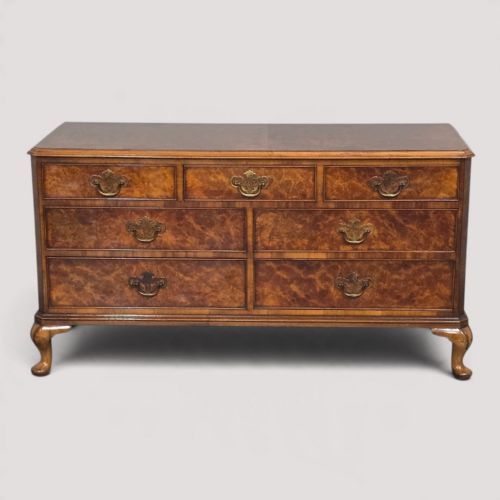
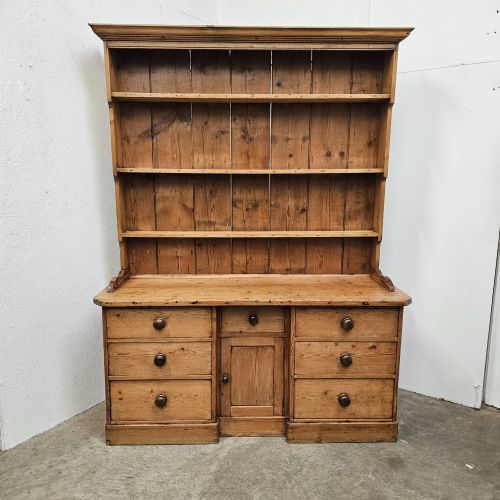
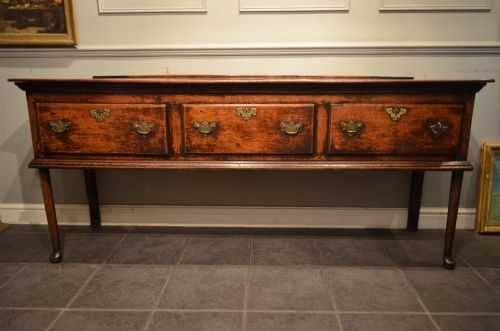
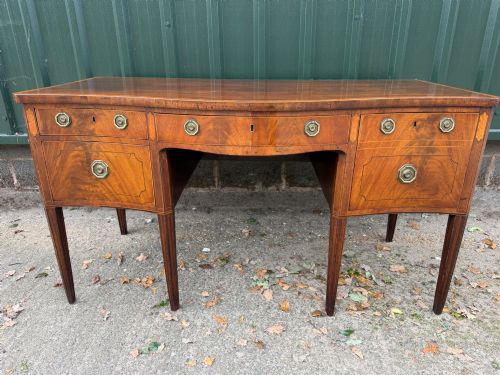
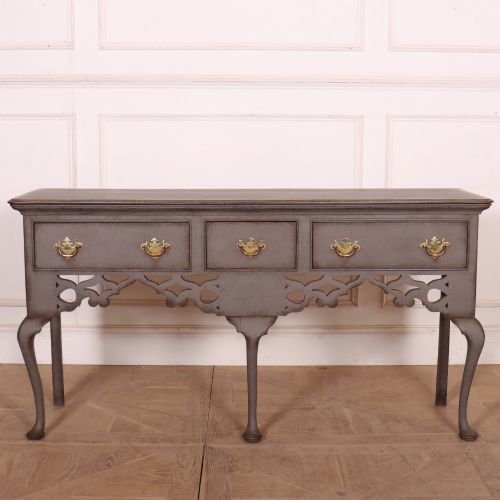
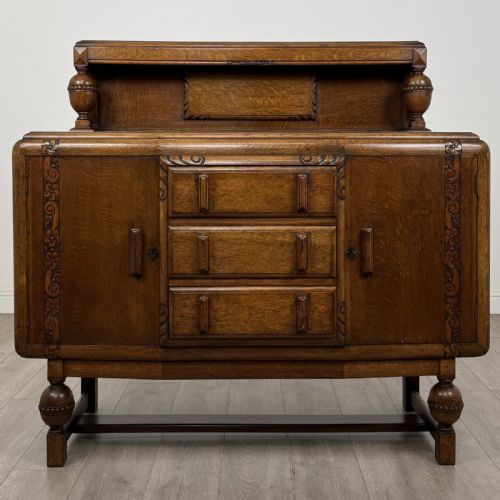
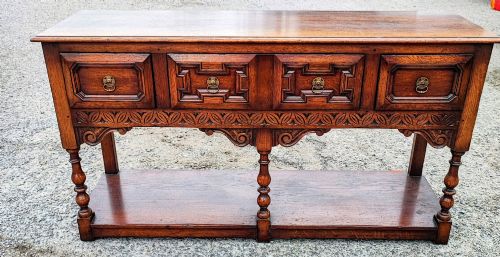
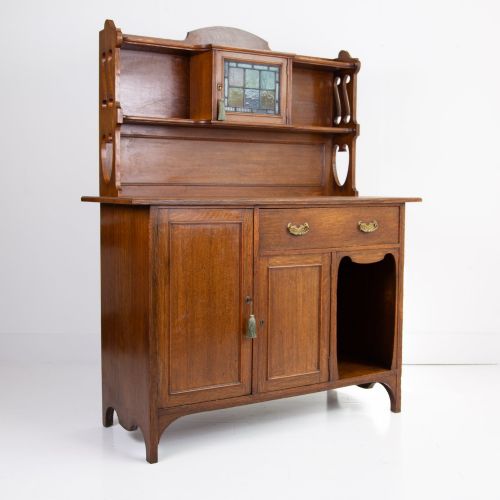
The antique English sideboard encompasses a broad family of dining and kitchen storage furniture, including dresser bases, serving tables, and chiffoniers. You will encounter robust 18th-century oak country pieces alongside formal 19th-century mahogany and walnut dining room servers.
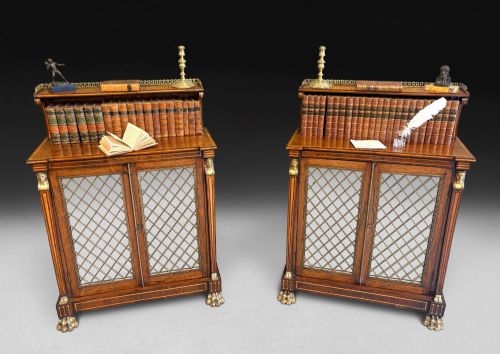
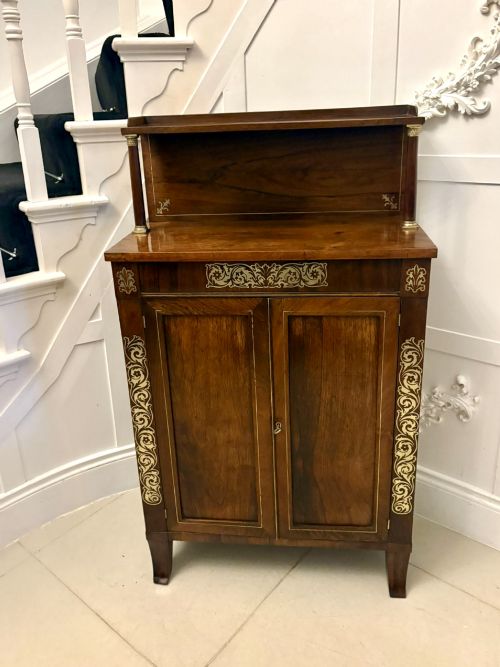
Early examples originate as heavy oak potboard bases and joined cupboards intended for utilitarian rural use. Later Victorian and Regency iterations introduce flame mahogany veneers, pedestals, and mirror-backed galleries designed for formal entertaining.
Regional variations feature strongly, from Lancashire and Cheshire low dressers to Cotswold School cupboards. These forms serve dining rooms, hallways, and kitchens, adapting domestic storage across multiple centuries.
Materials and Construction
Construction relies heavily on native timbers, predominantly solid oak in earlier centuries supplemented by elm and pine in regional workshops. Master cabinetmakers later turned to imported hardwoods like flame mahogany, pollard oak, and satinwood for high-status urban commissions.
Joinery methods range from pegged mortise and tenon frames on seventeenth-century joined cupboards to precise dovetailing on eighteenth-century drawer linings. Surface finishes depend on the timber, utilising traditional wax polishes to preserve original patination or historical painted layers.
Antique English Sideboard Retail Price Guide 2026
Typical asking prices for english sideboard among the pieces listed under this phrase on Sellingantiques today, from the lower quarter to the upper quarter. They describe what is for sale here now, not the wider market.
Early Welsh and English dresser bases occasionally double as impromptu kitchen workbenches bearing centuries of historic knife marks.
Evaluating Construction and Surface
Quality rests in the integrity of the timber selection and the restraint of subsequent restoration. Superior pieces display book-matched flame mahogany veneers, original brass hardware, and untouched patination built up through centuries of waxing.
Lesser examples suffer from unsympathetic timber replacement, stripped surfaces, or modern reconstruction using mismatched older elements. The finest work reveals crisp hand-carved detailing and uncompromised structural joints that withstand daily domestic use.
Gillows·Harry & Lou Epstein·Cowtan & Sons·Harris Lebus·Liberty & Co
The Antique English Sideboard Glossary
- Potboard
- An open slatted lower shelf found on traditional country dresser bases. This feature allowed damp earthenware plates to dry safely off the flagstone floor.
- Dresser base
- A low cabinetry unit fitted with drawers and cupboards beneath a solid timber top. It predates the dedicated dining room sideboard and served farmhouse kitchens.
- Chiffonier
- A compact sideboard or low cabinet popular during the Regency and Victorian eras. These often feature enclosed cupboards below a shelved superstructure.
- Flame mahogany
- A veneer sliced from the point where branches join the main tree trunk. This cutting method produces a distinctive swirling, flame-like grain pattern prized by Regency cabinetmakers.
- Gallery
- A raised wooden or brass rail attached to the rear edge of a serving table. It prevented serving dishes and silverware from sliding off during busy household banquets.
Antique English Sideboard: Frequently Asked Questions
What is a dresser base?
A dresser base is a long, low wooden cabinet featuring drawers and cupboards, originally used in English country kitchens for food preparation and storage. Unlike complete dressers, these pieces lack the upper plate rack.
Today, they function as versatile sideboards in dining rooms or hallways, offering deep drawer space and heavy timber surfaces suited for daily display.
Where were sideboards placed?
Historical dining arrangements placed these servers against dining room walls to hold platters, cutlery, and wine decanters during formal meals. Kitchen variants stood against stone walls to organise heavy earthenware.
Modern interiors utilise them in living spaces and hallways as focal storage units that anchor decorative lamps and collections.
What is a potboard?
A potboard is the low slatted wooden shelf built near the floor beneath a country dresser base. Rural households used this open tier to store heavy pots, pans, and damp ceramic plates.
Survival of an original potboard indicates an early, untouched rural utility piece that predates formal dining room furniture.