


Antique Decorative Tazza
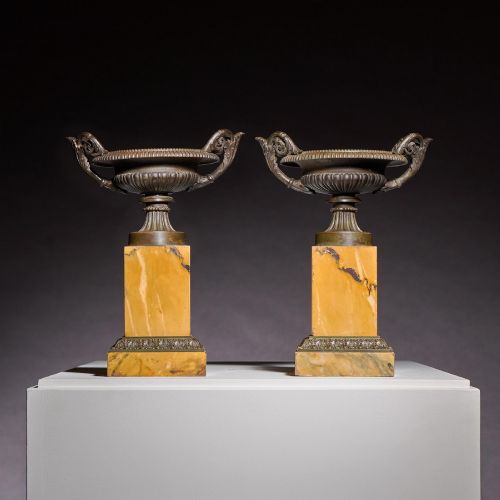
An antique decorative tazza brings classical proportion and tiered display to a table, offering a raised footed dish for fruit, flowers or cards.
Antique Decorative Tazza
An antique decorative tazza functions as an elevated shallow bowl on a central foot, tracing its design to classical vessels used for libations and dining.
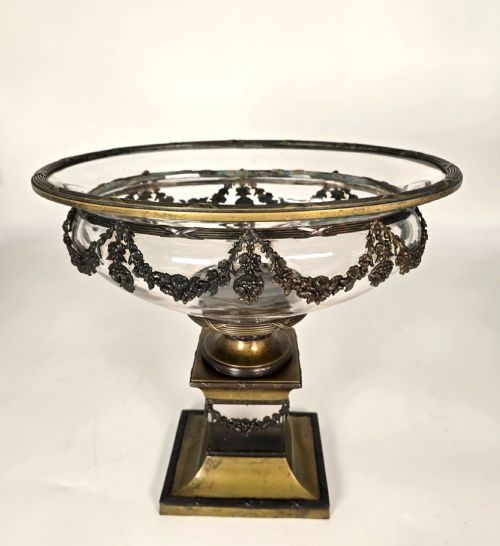
The pieces grouped under this phrase span circular centrepiece bowls, mounted dishes and footed comports intended for formal interior decoration.
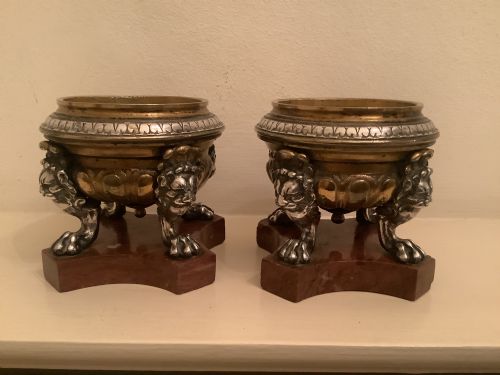
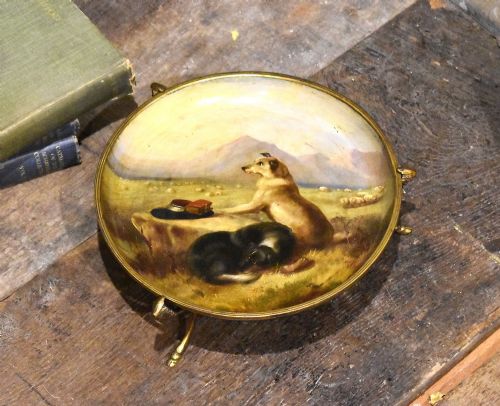
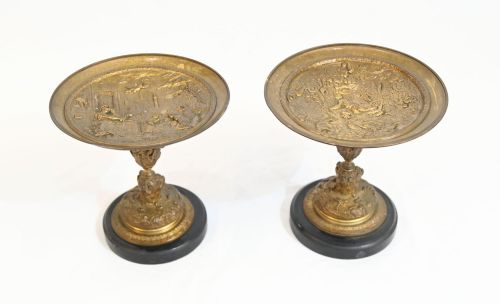
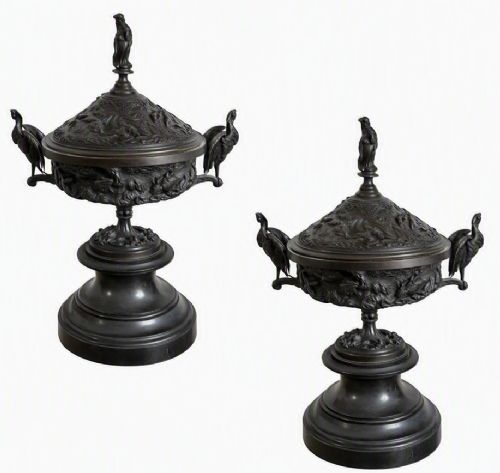
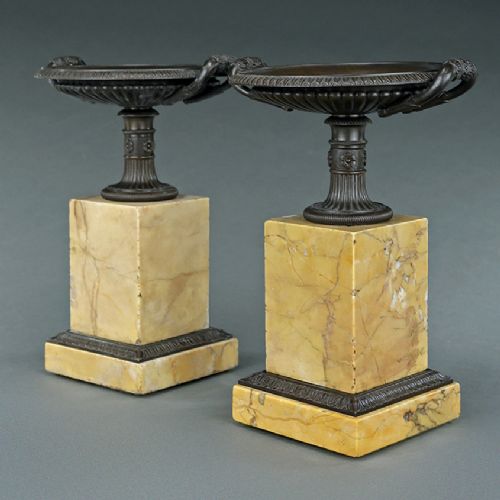
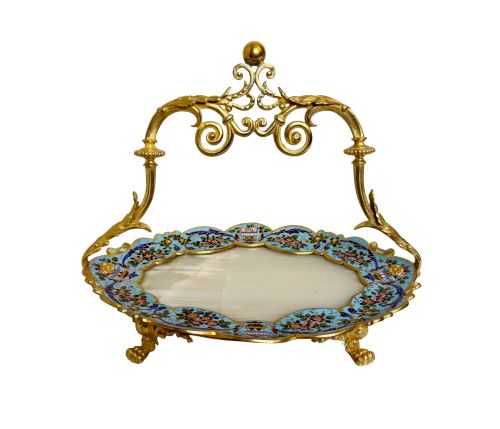
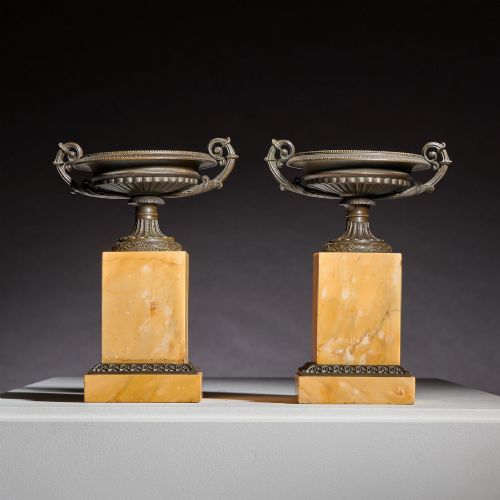
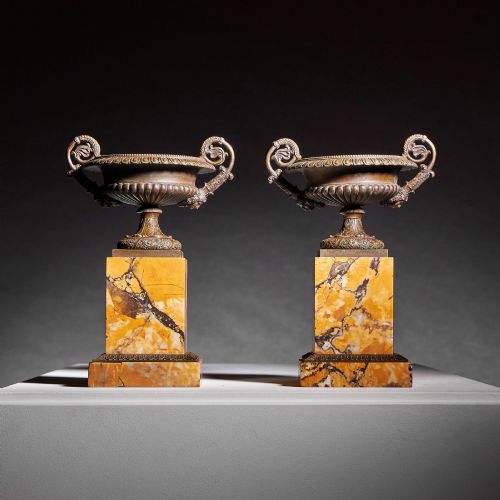
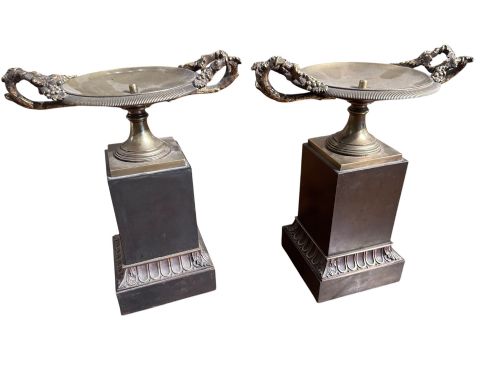
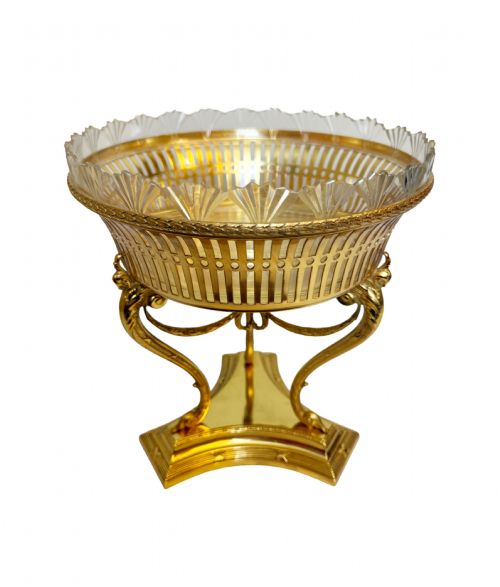
French nineteenth-century examples dominate the selection, frequently pairing cast metal frames with coloured marble bases, hardstones or inset porcelain plates.
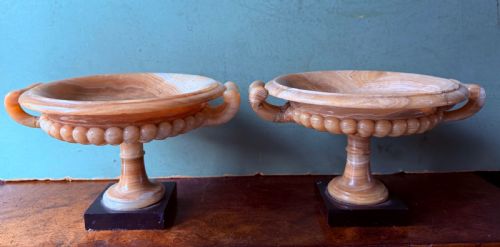
Alternative iterations incorporate English coloured glass, carved alabaster from Grand Tour souvenirs, and Arts and Crafts copper set with enamel cabochons.
Materials and construction methods
Foundries produced the metal components using lost-wax or sand-casting techniques in bronze, brass or Britannia metal, often finishing the surface with fire-gilding known as ormolu.
Stonemasons turned and polished dense natural minerals like Siena marble, green onyx, malachite and alabaster to form contrasting plinths and shallow basins.
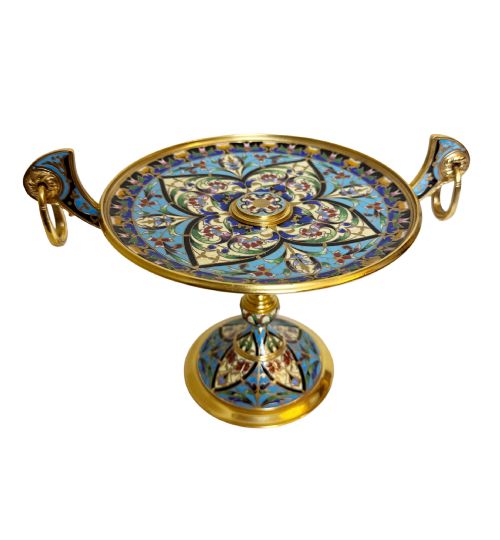
Enamelling techniques such as champlevé applied fused vitreous glass powders into recessed metal channels to create intricate coloured patterns along the rims and stems.
Listings feature eighteenth-century miniature patch stands alongside nineteenth-century French bronze and marble centrepieces.
Distinguishing quality in manufacture
The sharpness of the chased and gilt metal ornamentation separates superior output from simpler cast pieces, where fine detail on cherubs, mermen or foliate scrolls remains crisp.
The selection of raw materials dictates the level of ambition, as pieces incorporating semi-precious stones, banded agate or hand-painted Sevres porcelain represent higher tiers of craftsmanship.
Structural integrity relies upon the precision of the mechanical joins connecting the upper bowl, central stem and weighted base without wobble or visible solder.
Charles Boyton·Ridgway·WMF
The Antique Decorative Tazza Glossary
- Tazza
- A shallow saucer-shaped vessel raised on a stem and foot, derived from Italian Renaissance plate forms. These pieces served primarily as display items rather than utilitarian tableware.
- Ormolu
- Finely chopped gold amalgamated with mercury and applied to a bronze base through intense heat. This process leaves a durable golden surface characteristic of French decorative arts.
- Champlevé
- An enamelling technique where troughs are gouged into a metal plate and filled with enamel paste before firing. The resulting surface displays colourful decorative motifs flush with the surrounding metal.
- Grand Tour
- A cultural journey through continental Europe undertaken by wealthy young men during the eighteenth and nineteenth centuries. Souvenirs from these travels included miniature architectural models and carved alabaster tazze.
- Comport
- A decorative footed dish used for serving fruit or sweets at dessert. The term frequently interchanges with tazza in nineteenth-century dining contexts.
Antique Decorative Tazza: Frequently Asked Questions
What were antique tazzas used for?
These vessels served as ornamental centrepieces on dining tables and sideboards during formal meals and evening receptions. Wealthy households utilised them to display seasonal fruit, sweetmeats or decorative arrangements of flowers.
Over time, their role shifted toward pure interior decoration, placed upon mantelpieces or console tables to showcase fine materials like ormolu and marble. Smaller examples held calling cards in entrance halls or functioned as desk accessories.
How do I style a tazza at home?
Place a footed tazza in the centre of a dining table or on a deep bookshelf where its elevated profile adds vertical interest. The shallow bowl works well empty to highlight the internal enamelling or marble patterning.
Alternatively, fill the basin with seasonal fruit, glass spheres or collected curiosities to create a traditional tablescape. Ensure the piece sits on a stable surface away from heavy foot traffic due to its top-heavy design.
How do I date an antique tazza?
Dating relies upon stylistic markers, material combinations and manufacturing techniques recorded across the nineteenth century. Pieces displaying heavy gilt bronze mounts, champlevé enamel and classical revival motifs typically point to the Victorian era or the French Second Empire.
Later examples from the early twentieth century often incorporate cleaner geometric lines associated with Art Deco or Arts and Crafts metalwork. Examining the construction of the central screw thread or pin holding the tiers together also offers clues to the period of assembly.
What is the difference between a tazza and a comport?
The two terms describe functionally similar footed vessels used for display or dessert service, though regional naming conventions often separate them. Tazza tends to apply to pieces with strong Italian Renaissance or classical design influences executed in bronze or marble.
Comport frequently appears in descriptions of ceramic or glass tablewares intended for Victorian dining room service. Both share the characteristic raised bowl on a central pedestal.