




Classical Bronze Centrepiece
A classical bronze centrepiece brings the monumental dignity of antiquity onto a dining table or sideboard, taking the form of tazzas, urns, and sculptural bowls.
Classical Bronze Centrepiece
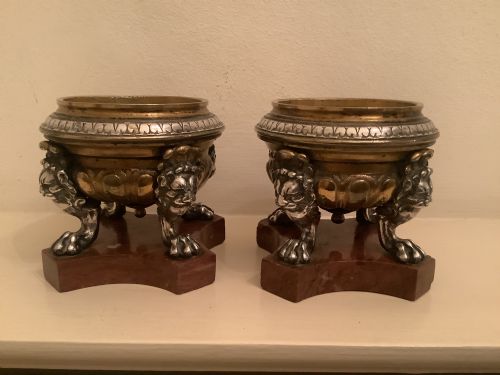
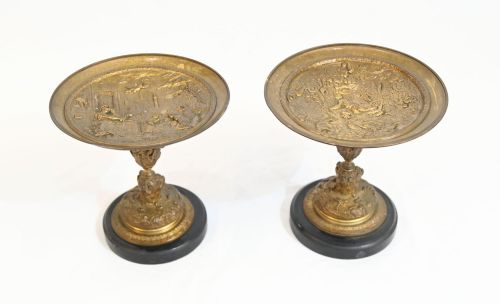
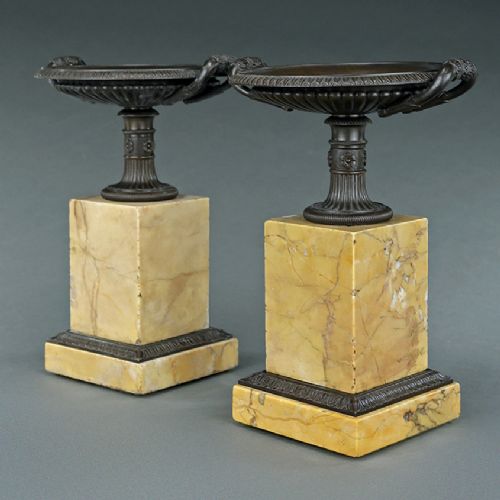
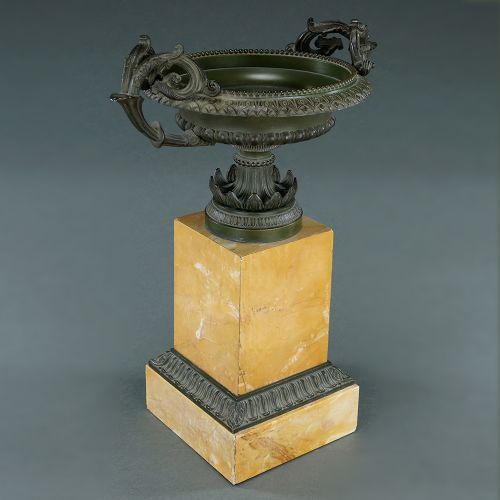
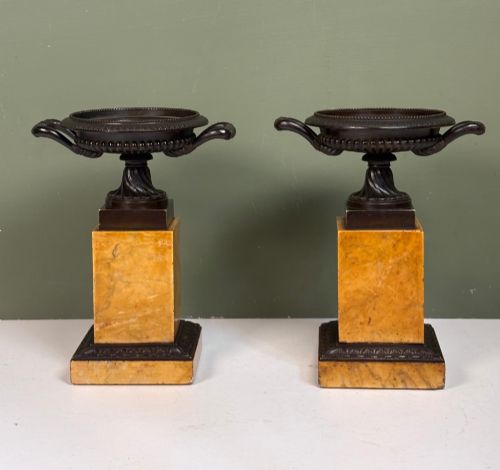
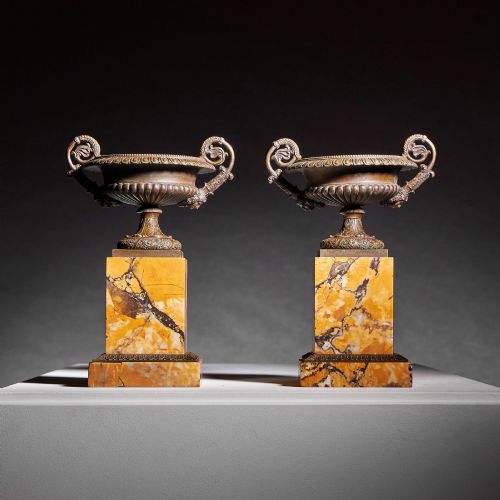
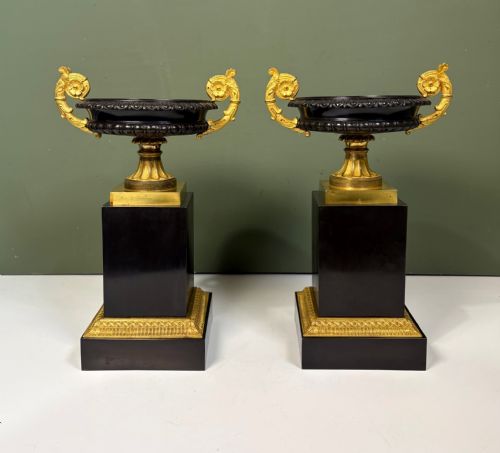
A classical bronze centrepiece unites neoclassical and French Empire aesthetics with the substantial presence of cast metal, predominantly appearing in nineteenth-century designs influenced by Grand Tour souvenirs and French workshops. Buyers seeking a classical bronze centrepiece encounter tazzas, twin-handled urns, and decorative bowls supported by marble bases or mounted with gilt bronze and ormolu.
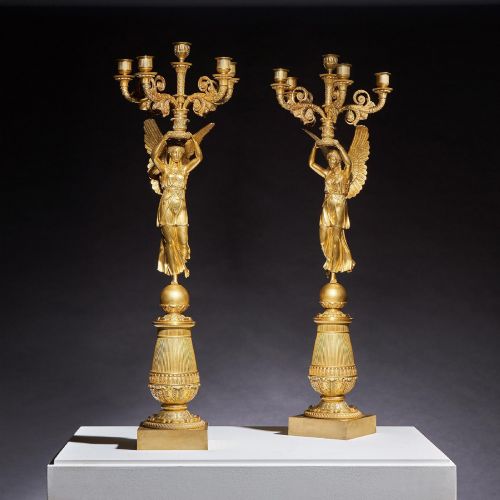
The objects span eighteenth-century friezes to late nineteenth-century productions, with the nineteenth century supplying the vast majority of items on this page. Formats range from monumental candelabra and cachepots to low-slung tazza vases and porcelain-mounted bowls.
Italian Grand Tour souvenirs and French Empire creations dominate the selection, frequently combining dark patinated bronze with rouge marble, white marble, or porcelain. These pieces served as dramatic focal points in period interiors and continue to anchor formal room schemes today.
Evaluating Quality
Quality rests in the crispness of the chasing and the depth of the casting, where sharper chiselling on featherwork, hair, and drapery separates superior workshop output from routine production. The weight and selection of the supporting stone also indicate grade, as dense rouge marble and heavy solid ormolu elevate a piece far above thin brass plating or hollow composite bases.
Attribution to documented makers or adherence to celebrated models like the Warwick vase elevates a piece, though the overall harmony of proportions remains the primary test. Pieces that integrate diverse materials - such as malachite, porcelain, and silvered bronze - successfully depend entirely on the precision of the assembly.
The listings on this page demonstrate a strong preference for nineteenth-century French and Italian bronze works paired with marble and ormolu.
Pierre Philippe Thomire
The Classical Bronze Centrepiece Glossary
- Tazza
- A shallow bowl or cup mounted on a stem and foot, originating in classical antiquity and widely reproduced during the nineteenth century as a centrepiece. These vessels often feature classical friezes or cast handles.
- Ormolu
- Finely ground high-carat gold mercury-gilded onto a bronze base, creating a rich golden surface characteristic of French Empire and Regency decorative arts. It provides high contrast against patinated dark bronze.
- Grand Tour
- A cultural journey undertaken by wealthy young Europeans to view classical antiquities in Italy, prompting the creation of souvenir bronzes and miniature architectural models. These objects were brought home to furnish libraries and drawing rooms.
- Champlevé
- An enamelling technique where troughs or cells are hollowed out of the metal surface and filled with vitreous paste before firing. This method adds vibrant polychrome decoration to bronze mounts and centrepieces.
- Rouge Marble
- A deep red decorative limestone with white or grey veining, frequently utilised for the bases of nineteenth-century bronzes and Grand Tour souvenirs. It provides a rich, colourful plinth for dark patinated metal.
Classical Bronze Centrepiece: Frequently Asked Questions
How do I identify Grand Tour bronzes?
Grand Tour bronzes are nineteenth-century miniature or scale souvenirs of famous ancient Roman and Greek sculptures, architecture, or vessels. They were acquired by travellers touring Italy.
These pieces typically sit upon marble bases and exhibit careful patination intended to mimic excavated antiquity.
What is the difference between bronze and ormolu?
Bronze is a copper and tin alloy cast into sculptural forms, while ormolu is bronze that has received a fine application of gold amalgam gilding. The combination creates a dramatic two-tone effect.
Empire and Regency centrepieces frequently pair dark patinated bronze figures with bright, reflective ormolu mounts.
Where should I place a centrepiece?
Centrepieces are traditionally styled in the middle of large dining tables, entrance hall consoles, or prominent marble mantelpieces. Their symmetrical designs command attention from all sides.
Ensure the surface is stable and capable of supporting the substantial combined weight of cast bronze and heavy stone bases.