
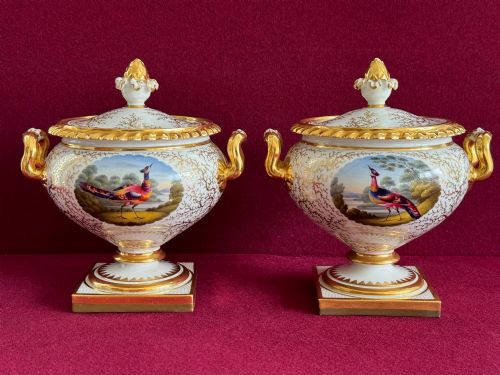
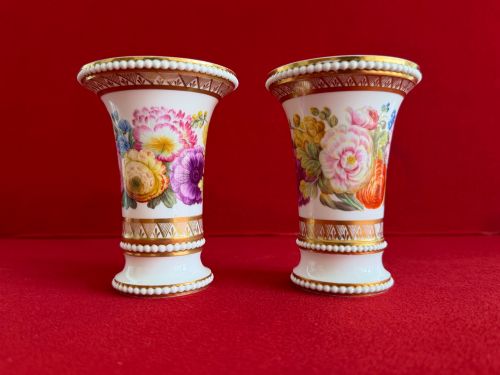
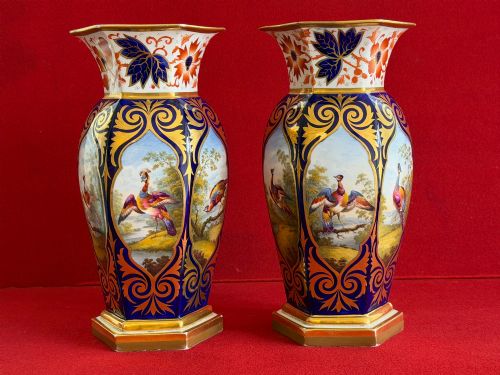

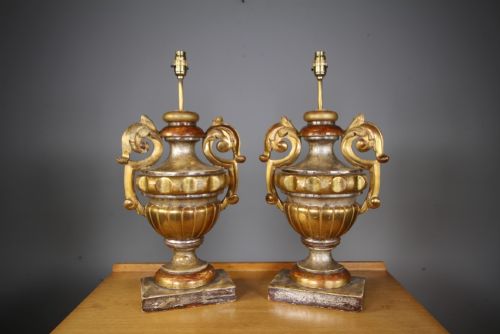

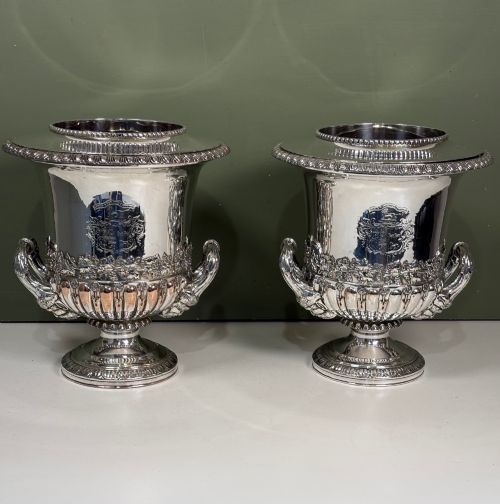
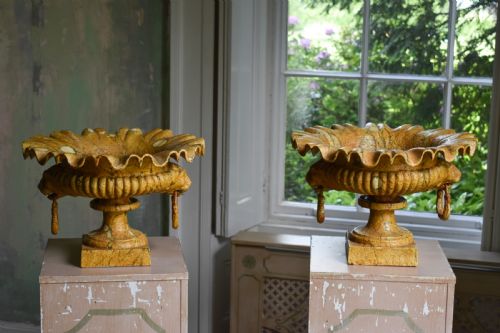
Regency Urns Pair
Regency urns pair selections bring classical symmetry and refined proportion into a room, serving as striking focal points derived from architectural traditions.
Regency Urns Pair
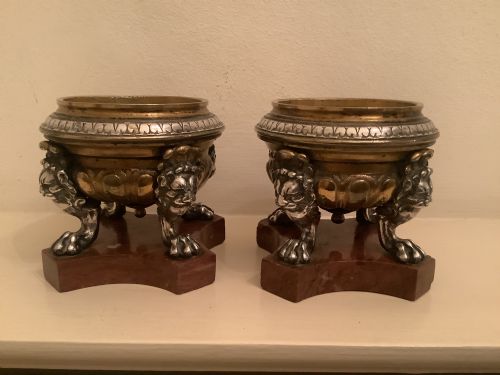
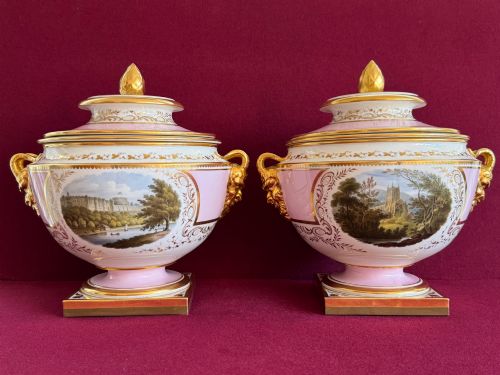
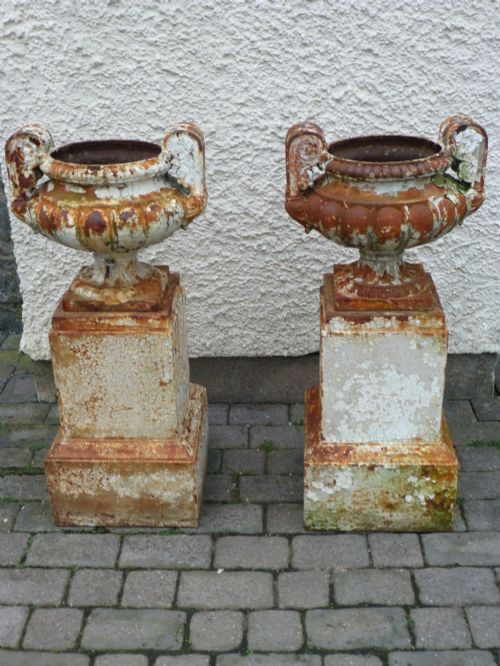
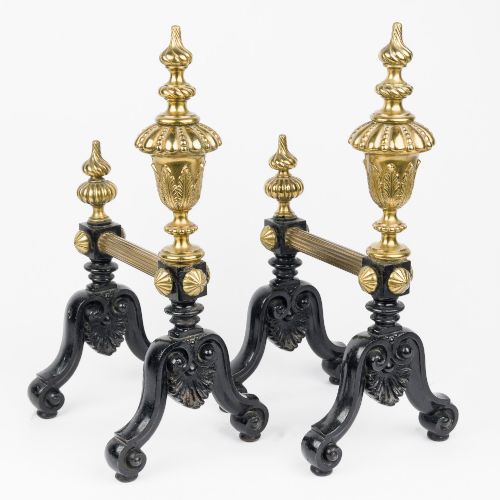
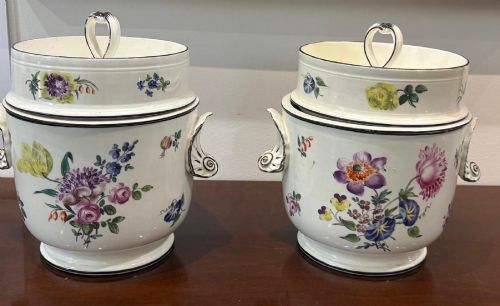
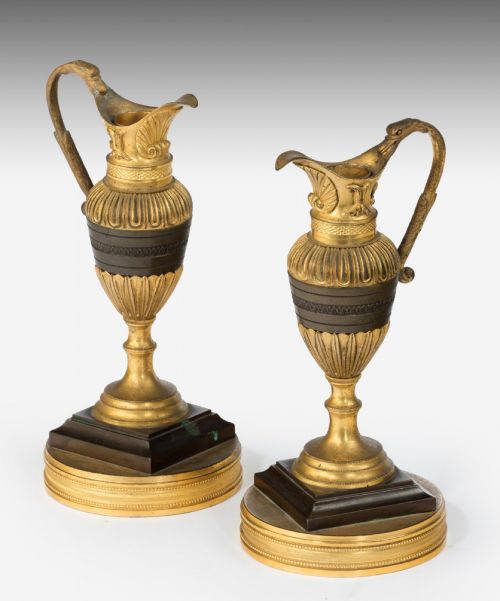
When searching for a regency urns pair, one encounters symmetrical dual decorative objects shaped by classical antiquity and neoclassical taste. The forms span metal cache-pots, porcelain vessels, and heavy cast iron garden ornaments designed to balance a mantelpiece, sideboard, or entrance hall.
Most examples originate from the 19th century, drawing heavily on Regency, Georgian, and French Empire styles. These decorative items often manifest as campana-shaped vessels, wine coolers, or ice pails adapted from ancient Roman models.
The materials reflect both interior elegance and garden utility, ranging from painted toleware and fine Worcester porcelain to weathered stone and heavy bronze mounted on marble plinths.
Materials and Construction
Foundries utilised cast iron and bronze, frequently combining cast bronze elements with gilded ormolu details and contrasting Sienna marble bases. These metal works required skilled casting and chasing to achieve crisp classical foliage and handles.
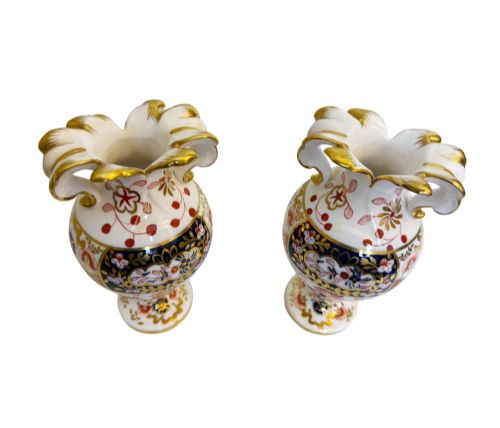
Potteries shaped creamware, ironstone, and porcelain into vases and ice pails, applying hand-painted topographical scenes, Imari palettes, or transfer prints before firing. Cabinetmakers turned mahogany, rosewood, and carved pine to create matching stands and pedestals for display.
Metalworkers hammered copper and iron to form toleware chestnut urns, finishing the surfaces with dark painted grounds and delicate gilt decoration. Lead workers cast garden planters and jardinieres in moulds to achieve large-scale classical relief motifs.
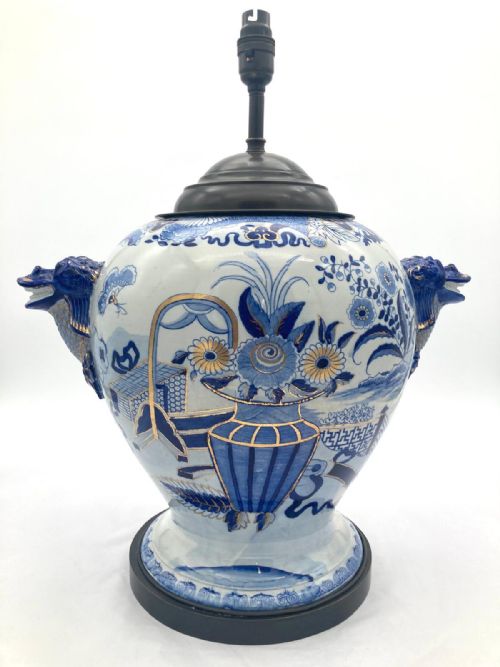
The inventory records numerous conversions, where 19th-century ironstone and porcelain vases now function as wired table lamps.
Distinctions in Execution
The fidelity of the classical casting and the crispness of the chased ormolu details separate standard decorative pieces from exceptional works. Fine examples exhibit sharp relief on acanthus leaves, handles, and base mounts without softening from worn moulds.
In ceramic and porcelain pairs, the precision of the hand-painted enamels, the richness of the gilding, and the absence of firing distortions determine the standing of the vessels. Matched pairs must retain identical dimensions and consistent glaze coloration across both items.
The integrity of the original surface, whether patinated bronze, aged Sheffield plate, or undisturbed painted toleware, dictates the overall character. Alterations such as subsequent drillings for table lamps or replacement plinths influence how closely a pair aligns with its original period state.
Flight Barr And Barr·Chamberlain Worcester·Hicks And Meigh·Falkirk Carron Foundry·Gillows
The Regency Urns Pair Glossary
- Campana
- Bell-shaped classical vessel form with a flaring rim and a pedestal foot. This silhouette underpins many traditional wine coolers and decorative vases.
- Ormolu
- Gilded bronze mount or detail applied to decorative objects. The technique involves fusing a mercury and gold amalgam onto bronze.
- Toleware
- Painted and lacquered sheet metal utilised for decorative domestic vessels such as chestnut urns and tea caddies. Artisans finished the metal with dark grounds and applied gilt decoration.
- Cassolette
- Ornamental vase featuring a reversible lid that transforms the vessel from a solid urn into a perfume burner or candle holder. These pieces frequently appear in bronze and ormolu.
- Tazza
- Shallow bowl or cup raised on a slender stem and foot, modeled after classical dining vessels. They are constructed from bronze, marble, silver plate, or brass.
Regency Urns Pair: Frequently Asked Questions
What were regency urns pair objects originally used for?
Many of these vessels served practical functions in dining and entertaining, operating as wine coolers, ice pails, or chestnut urns to keep provisions chilled or warm at the table. Others functioned purely as decorative ornaments, placed on pedestals, mantelpieces, or in gardens to project classical learning and taste.
Over subsequent generations, many ceramic and metal examples were adapted into table lamps, altering their primary function while retaining their sculptural silhouette.
How do I style a regency urns pair in a modern interior?
Symmetrical placement remains the most effective approach, positioning the pair on either end of a long sideboard, flanking a fireplace mantel, or resting upon matching wooden columns. Their classical proportions anchor contemporary rooms by introducing architectural weight and historical contrast.
Heavier cast iron and lead versions suit garden terraces and entranceways, while delicate porcelain vases or bronze tazzas fit interior display cabinets and console tables.
How can I tell a genuine period pair from a later revival?
Examining the construction methods, metal casting quality, and wear patterns reveals the age of the pieces. 19th-century works often display hand-chased metal details, period fixing screws, and natural patination that modern reproductions cannot replicate.
Comparing both objects in the pair ensures they share identical casting moulds, hand-painted variations, and uniform ageing rather than being assembled from disparate single items.