





French Ormolu Compote
These french ormolu compote pieces bring gilded display and sculptural weight to a room, driven by nineteenth century ambition.
French Ormolu Compote
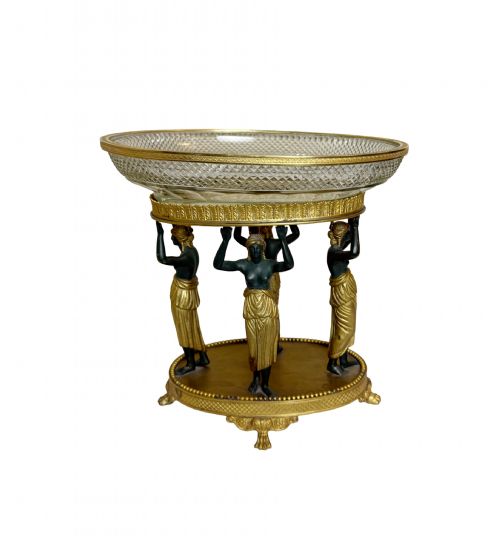
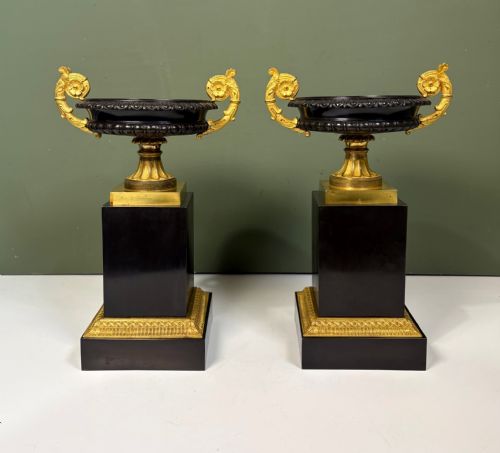
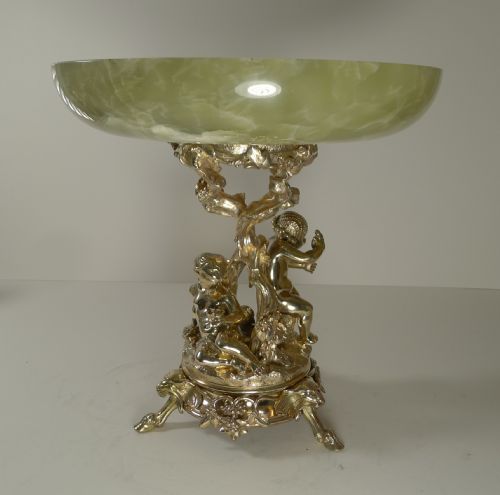
A french ormolu compote is an elevated vessel or tazza designed for display, combining metalwork with glass, stone or porcelain. The form serves as a centrepiece or ornamental bowl, often standing on a pedestal or mounted base.
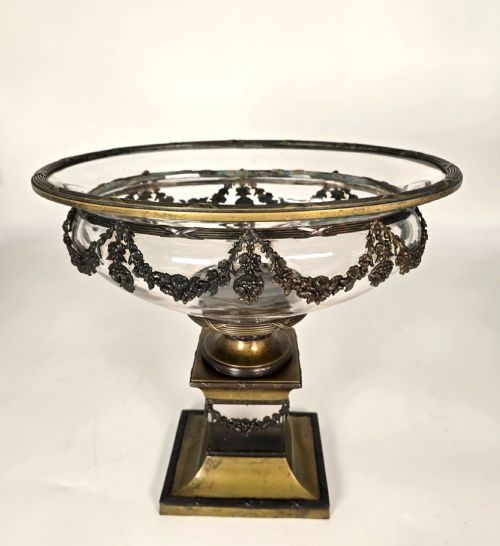
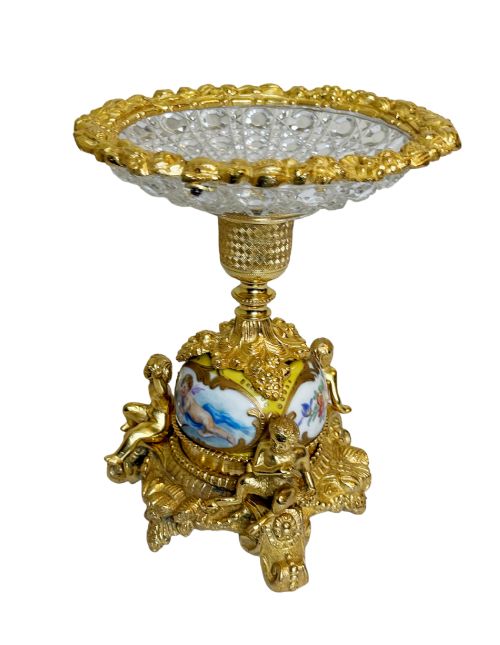
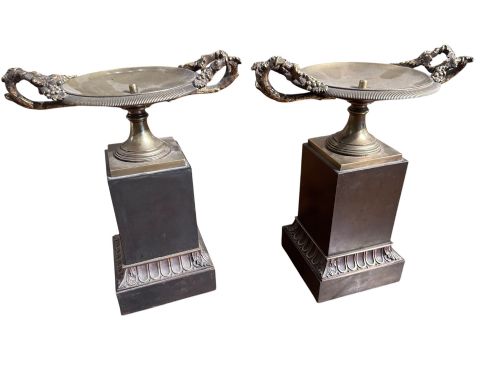
Most examples encountered here belong to the nineteenth century, spanning periods from Regency and French Empire to Napoleon III and later revivals. Buyers frequently meet paired tazzas and grand centrepiece bowls featuring cast figures, cherubs or mythological mounts.
The regional origins sit firmly in France, drawing on classical motifs and later Rococo or Renaissance revivals. These objects function primarily as decorative centrepieces rather than utilitarian tableware.
How they were made
Makers utilised gilt bronze and ormolu for the structural mounts, chased and finished to give a bright golden surface alongside patinated bronze details. This metalwork holds together diverse bodies formed from cut crystal, glass, marble, onyx and porcelain.
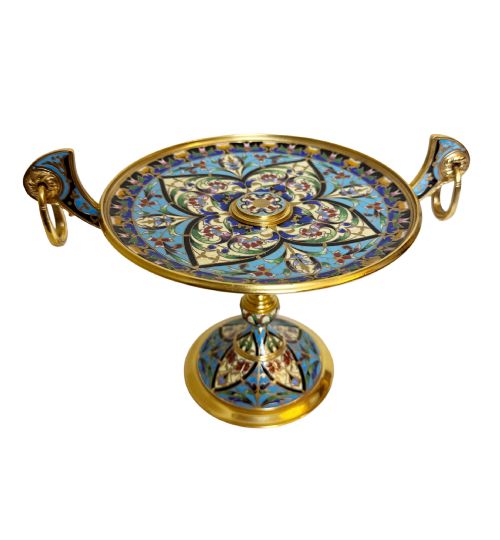
Some pieces incorporate champlevé enamel work or coloured stones such as malachite and Blue John into the bronze framework. The assembly relies on threaded bolts and precise casting, uniting heavy stone bases with delicate glass or porcelain bowls.
Materials span gilt bronze, ormolu, cut crystal, champlevé enamel, marble, onyx, and porcelain.
What varies in quality
Christofle Paris
The French Ormolu Compote Glossary
- Ormolu
- A method of applying finely ground high-carat gold to a bronze object, also known as gilded bronze. The finish yields a warm golden lustre that defines the decorative highlights of the piece.
- Tazza
- A shallow bowl or vessel mounted on a stem and foot, used historically for serving fruit or sweetmeats. In this context, it functions primarily as an ornamental centrepiece.
- Champlevé
- An enamelling technique where troughs or cells are carved into the surface of the metal and filled with vitreous enamel powder before firing. It creates vibrant patterns of colour alongside the gilt bronze framework.
- Garniture
- A set of three or more ornamental vases or vessels designed to be displayed together on a mantelpiece or sideboard. They typically share matching materials and stylistic motifs.
- Grand Tour
- A cultural journey undertaken by wealthy young Europeans to visit historical sites in Italy and France. Items acquired on these journeys often combined classical architectural fragments with local metalwork.
French Ormolu Compote: Frequently Asked Questions
What is the difference between a compote and a tazza?
In historical terms, both describe an elevated vessel on a stem, though compotes more often suggest a glass or porcelain bowl intended for fruit. Tazzas frequently lean towards decorative metal or stone forms with flat, shallow plates.
Makers and merchants often used the terms interchangeably during the nineteenth century. The presence of handles or deep mounting brackets usually dictates the specific form.
Where were these centrepieces placed?
These pieces sat at the centre of dining tables, console tables or mantelpieces in grand nineteenth century interiors. They anchored decorative arrangements during dinner parties and social gatherings.
Their substantial weight in bronze and marble kept them secure on large wooden surfaces. They served purely to impress guests and reflect candle or gas lighting.
How do I care for gilt bronze?
Gilt bronze requires gentle dusting with a soft, dry brush to prevent the accumulation of dirt in the chased recesses. Moisture and chemical cleaners can strip the gold layer from the underlying metal.
Handling the piece by its solid bronze or stone elements avoids transferring oils to vulnerable porcelain or enamel. Preserving the original mercury gilding maintains both the appearance and the character of the object.
How can I tell a Regency piece from a Napoleon III piece?
Regency pieces often draw on strict classical antiquity and British taste, sometimes incorporating abolitionist themes or austere architectural lines. They date from the early nineteenth century and feel restrained compared to later work.
Napoleon III and later nineteenth century pieces embrace heavy revivals of Louis XV and Louis XVI styles. They tend towards more exuberant casting, complex champlevé enamel work and mixed media.