



19th Century Ersari Rug
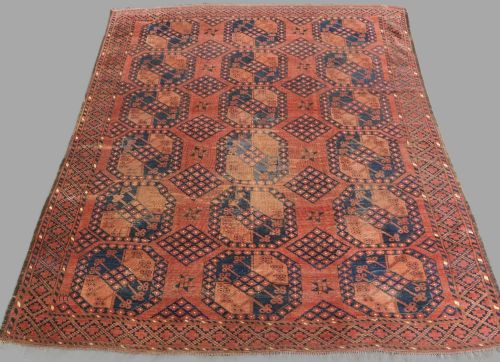
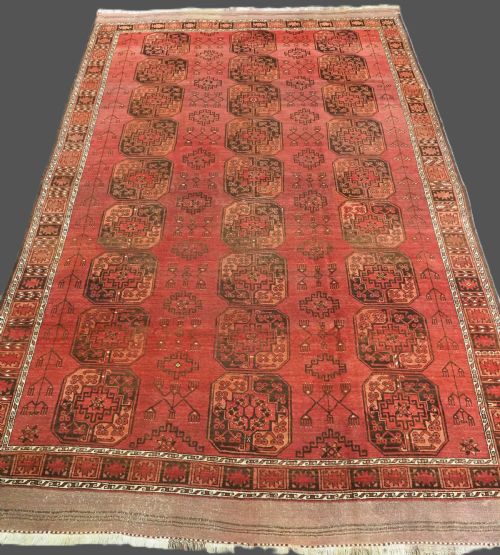
A 19th century ersari rug delivers deep madder reds and bold tribal guls that anchor a room with Central Asian presence.
19th Century Ersari Rug
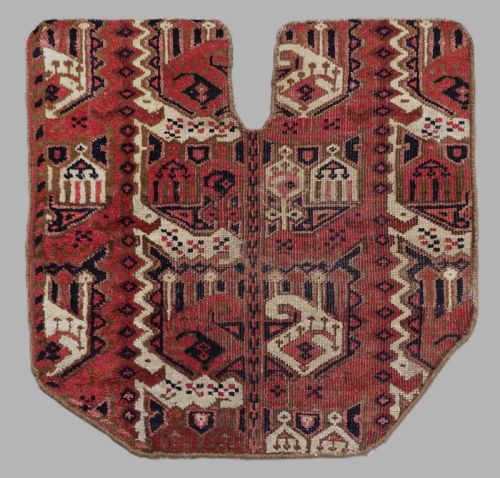
A 19th century ersari rug encompasses tribal main carpets, tent door hangings known as ensis, and smaller utility bags like torbas and chuvals. These woven textiles originate from Central Asian Turkmen tribes, spanning formats from large floor carpets down to compact saddle covers and rug panels.
The pieces encountered most frequently on this page date from the decades between eighteen seventy and eighteen ninety, reflecting the active weaving period of the tribes. Collectors encounter varying structural scales, from expansive main carpets intended for floor placement within a yurt to smaller wall-hanging torbas featuring distinct secondary motifs.
How They Were Made
Weavers constructed these textiles using hand-spun wool for the pile, dyed with natural colorants that produced rich tones of red, brown, and dark blue. Foundations frequently incorporated goat hair or horsehair alongside wool to provide structural durability for daily nomadic use.
The structural weave relies on traditional knotting techniques executed on vertical looms within tribal encampments. Artisans applied natural dye baths to the fleece before spinning, ensuring the depth of colour visible across the surviving carpets and bag faces.
19th Century Ersari Rug Retail Price Guide 2026
Typical asking prices for 19th century ersari rug among the pieces listed under this phrase on Sellingantiques today, from the lower quarter to the upper quarter. They describe what is for sale here now, not the wider market.
Current listings feature textiles spanning the decades from eighteen fifty to nineteen hundred, constructed in wool, goat hair, and horsehair.
What Varies in Quality
The visual strength of a piece depends largely on the saturation and clarity of its natural dyes, which range from deep madder reds to softer secondary shades. Tighter knot density and finer handling of complex gul patterns distinguish superior tribal weaving from simpler utilitarian examples.
Structural integrity also divides the examples, with surviving pieces showing varying degrees of pile retention and foundation stability. The crispness of geometric drawing within medallions like the tauk nuska or chodor guls indicates the weaver's control over the traditional design vocabulary.
The 19th Century Ersari Rug Glossary
- Gul
- A primary medallion motif repeated across Turkmen carpets. Each tribal group utilised distinct geometric forms to signal identity and heritage.
- Ensi
- A specialised tribal rug utilised as a tent door hanging within nomadic dwellings. These pieces display distinct cruciform layouts dividing the field into four panels.
- Chuval
- A large tent storage bag used for household belongings within the yurt. Surviving examples often appear as isolated face panels cut from the original larger container.
- Madder
- A natural red dye derived from the root of the rubia tinctorum plant. It forms the primary colour foundation for the palette of these tribal textiles.
19th Century Ersari Rug: Frequently Asked Questions
How were these rugs used originally?
Nomadic weavers utilised these textiles as floor coverings, tent door hangings, and functional storage bags inside traditional dwellings. Larger main carpets anchored the interior of the yurt, while smaller bags held household possessions.
Door hangings served a protective and decorative function at the entrance, and smaller saddle rugs covered riding animals during transit.
How should I care for a tribal rug?
Protect the textile by placing it in areas of low foot traffic and avoiding direct, prolonged exposure to strong sunlight. Regular gentle vacuuming without a rotating power head removes embedded grit without straining the wool pile.
Professional cleaning tailored to antique dyed wool ensures the natural colours remain stable over decades of display.
How do I identify an ensi rug?
An ensi is identifiable by its distinctive cruciform layout, which divides the central field into four distinct quadrants. This specific geometry marks the textile as a tent door hanging rather than a floor carpet or storage bag.
They also feature specialised border arrangements and lower elem panels not typically found on standard main carpets.
What does Beshir indicate on a label?
The term Beshir points to a specific stylistic subgroup associated with Ersari weavers influenced by regional market centres along the Amu Darya river. These pieces often incorporate non-standard motifs like boteh patterns or ikat-inspired designs.
They stand apart from classic tribal layouts through their use of flowing, less rigid geometric elements.