

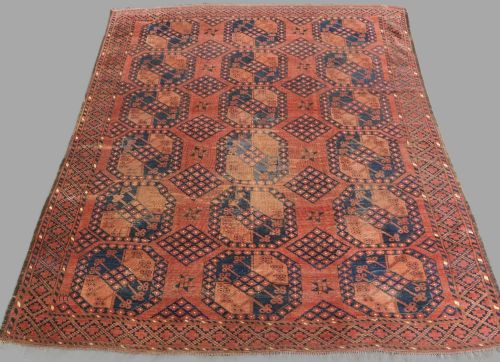
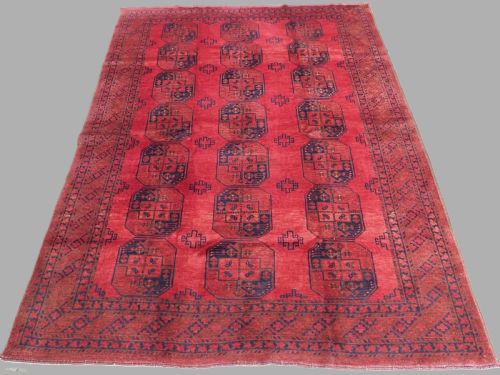


Handwoven Ersari Rug
These handwoven ersari rug pieces are Central Asian tribal textiles offering deep red hues and traditional geometric motifs that anchor a room.
Handwoven Ersari Rug
A handwoven ersari rug represents the rich textile heritage of Central Asian tribal makers, spanning utility items and decorative hangings. Buyers searching this phrase encounter formats ranging from large carpets and main carpets to smaller utilitarian pieces like chuval faces, torba faces, ensis, and kapunuk portiere door hangings.
The selection here draws primarily from nineteenth and early twentieth century periods, specifically covering dates from eighteen fifty through to nineteen thirty. Tribal weavers produced these items within Turkmen and Afghan traditions, often incorporating traditional geometric guls and village styles.
Most examples showcase practical room-sized carpets or smaller rug panels intended for specific nomadic functions within a tent or dwelling. The variety includes formats designed for wall hanging, doorway decoration, and floor placement.
How they were made
Weavers relied on hand-spun wool and natural dyes to build durable pile surfaces, frequently supported by cotton foundations. Artisans utilised soft glossy wool alongside rich red colour palettes to achieve the distinctive warmth characteristic of these textiles.
Production techniques involved meticulous hand-knotting and weaving methods passed through generations of tribal makers. Certain specialist examples incorporate detailed elements such as glass beads or specific geometric motifs like the gul and ikat designs.
Handwoven Ersari Rug Retail Price Guide 2026
Typical asking prices for handwoven ersari rug among the pieces listed under this phrase on Sellingantiques today, from the lower quarter to the upper quarter. They describe what is for sale here now, not the wider market.
The listings span periods from eighteen fifty to nineteen thirty, featuring wool, cotton, natural dyes, and glass beads.
What varies in quality
Quality rests upon the fineness of the wool, the depth and clarity of the natural dyes, and the precision of the tribal design execution. Superior pieces exhibit soft glossy wool with deep rich red tones and crisp geometric drawing within the guls.
The integrity of the weave and the preservation of the original format distinguish standard village pieces from exceptional early examples. Variations in wool preparation and dye saturation create significant distinctions across the range.
The Handwoven Ersari Rug Glossary
- Gul
- A primary octagonal medallion motif repeated across Turkmen and Ersari carpets. These tribal emblems often identify specific tribal subgroups and design lineages.
- Chuval
- A large tribal tent bag face utilised for storage within nomadic dwellings. These square or rectangular panels display intricate primary guls.
- Torba
- A smaller storage bag face produced by tribal weavers for household organisation inside a tent. They share design vocabulary with larger main carpets but on a compact scale.
- Ensi
- A tribal rug specifically designed to hang as a tent door flap. These pieces typically feature a cross-shaped division of the field.
- Kapunuk
- An ornamental doorway hanging piece placed around tent entrances by nomadic groups. They provide decorative framing alongside practical warmth.
Handwoven Ersari Rug: Frequently Asked Questions
What is an ersari rug?
An ersari rug is a handwoven textile produced by Turkmen and Afghan tribal weavers in Central Asia. These pieces are traditionally characterised by warm red colourways and geometric gul designs.
Nomadic and village artisans created these textiles for both practical floor use and specific interior tent furnishings. Their construction relies on hand-spun wool and natural dyes designed for heavy wear.
How were these rugs used?
Nomadic families utilised these textiles as floor coverings, tent door hangings, and storage bag faces within traditional dwellings. Larger formats served as main carpets for living spaces.
Smaller panels functioned as functional containers or decorative architectural elements inside nomadic tents. Their durable construction accommodated daily domestic life.
How do I date an antique rug?
Dating relies on assessing the wool quality, natural dye characteristics, and structural wear patterns visible across the piece. Earlier examples generally display hand-spun wool and specific tribal design proportions.
Comparative analysis with documented periods helps establish a plausible decade of origin. Structural evidence within the weave remains a primary indicator of age.
How do I care for wool rugs?
Wool rugs require gentle cleaning methods and regular vacuuming without rotating brush heads to protect the pile. Keeping them away from direct sunlight prevents natural dye fading over time.
Using a breathable rug underlay helps prevent slipping and reduces friction against hard flooring. Professional cleaning suited for antique textiles ensures long-term preservation.