
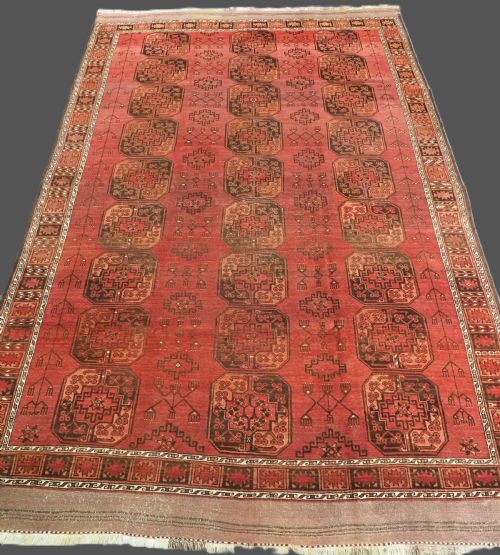
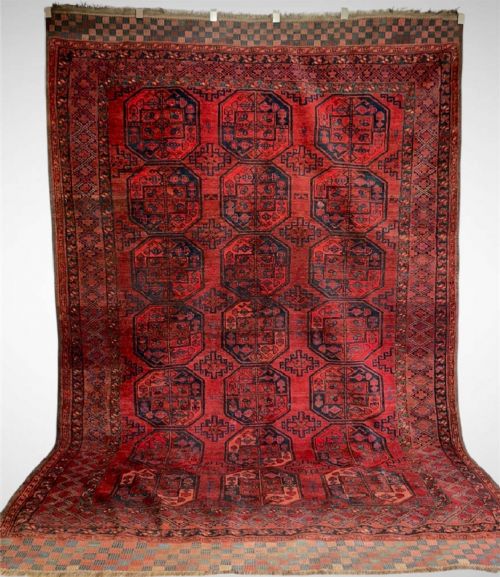


Ersari Main Carpet
An ersari main carpet brings deep tribal character to a room through traditional Central Asian motifs and rich wool pile.
Ersari Main Carpet
An ersari main carpet is a large floor covering woven by Turkmen and Afghan tribal groups, typically displaying classic geometric gul motifs across the field. These textiles originate from Central Asia and span the mid nineteenth century through to the early twentieth century.
The most common version met on this page is the nineteenth century Afghan Ersari main carpet, often featuring traditional tribal designs and natural dyes. Pieces range from large formats down to smaller square sizes and fragments.
Makers include specific sub-groups such as the Kizil Ayak and Beshir, which introduce distinct structural patterns like the tauk nuska gul or curl leaf borders.
Materials and construction
Wool forms the thick pile of these carpets, providing the softness and heavy duty wear needed for a floor covering. Natural dyes supply the depth of colour found across the field and borders.
Foundations frequently incorporate goat hair or horsehair alongside wool, adding structural stability and firmness to the weave. This robust construction helps explain why many examples survive from the eighteen fifties and sixties.
Ersari Main Carpet Retail Price Guide 2026
Typical asking prices for ersari main carpet among the pieces listed under this phrase on Sellingantiques today, from the lower quarter to the upper quarter. They describe what is for sale here now, not the wider market.
Some weavers quietly slipped horsehair into the foundation, ensuring the carpet kept its bounce long after the camels stopped walking.
What separates examples
Quality rests upon the fineness of the weave and the drawing of the design within the guls and borders. Pieces with particularly crisp detailing and balanced proportions stand apart from standard work.
Colour longevity and the brilliance of the natural dyes heavily influence the visual impact of a carpet. Examples retaining deep, saturated tones without heavy fading command stronger appreciation.
The Ersari Main Carpet Glossary
- Gul
- A primary medallion or repeating octagonal motif used in Turkmen carpet design. These major patterns define the central field of the rug.
- Main carpet
- A large format floor rug traditionally woven for domestic use within the tent or home rather than smaller trapping sizes. They often measure over three metres in length.
- Beshir
- A regional style associated with Ersari weavers near the Amu Darya river basin. These pieces frequently incorporate larger scale floral elements or curl leaf borders.
- Foundation
- The underlying grid of warp and weft threads that supports the wool pile. In these carpets, foundations often include goat hair or horsehair.
Ersari Main Carpet: Frequently Asked Questions
Where were ersari main carpets made?
These carpets were produced by Ersari Turkmen tribes residing in regions of Northern Afghanistan and wider Central Asia.
Weavers worked in tribal communities, utilising local materials and traditional designs passed down through generations.
How do I care for an antique wool carpet?
Vacuum gently without a rotating brush bar to remove surface dust and prevent fibre damage. Keep the textile away from direct sunlight to protect the natural dyes.
Rotate the rug periodically to ensure even wear across the heavy duty wool pile.
What does a tauk nuska gul look like?
This specific motif resembles a bird or foot pattern integrated into the repeating octagonal medallions. It is particularly associated with Kizil Ayak tribal weaving.
The design adds intricate geometric detail to the primary field of the carpet.
How can I tell the age of these carpets?
Dating relies on assessing the structure, natural dye palette, and wear patterns visible across the wool and foundation. Mid to late nineteenth century examples typically show softer wool textures and specific older chemical or natural dye signatures.
Later pieces from the early twentieth century often display heavier duty handling and slightly different secondary colours.