



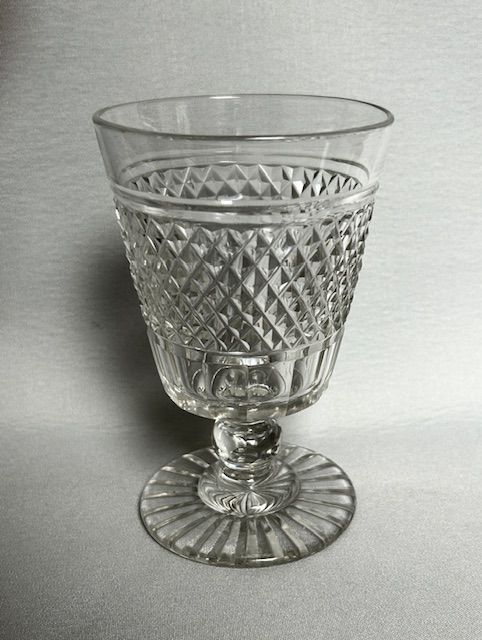


19th Century Chalice
When you handle a 19th century chalice, you hold a piece shaped by ritual, ceremony, and domestic display.
19th Century Chalice
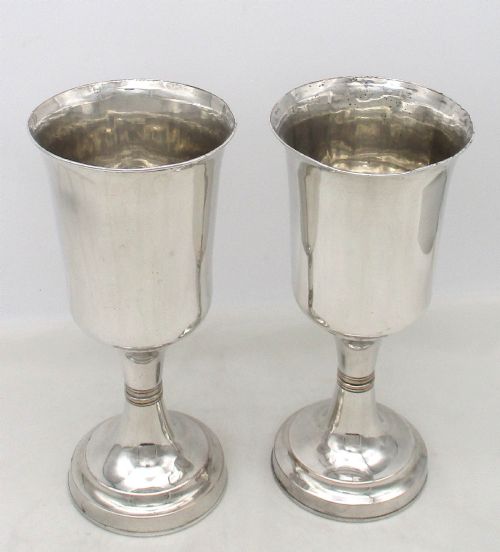
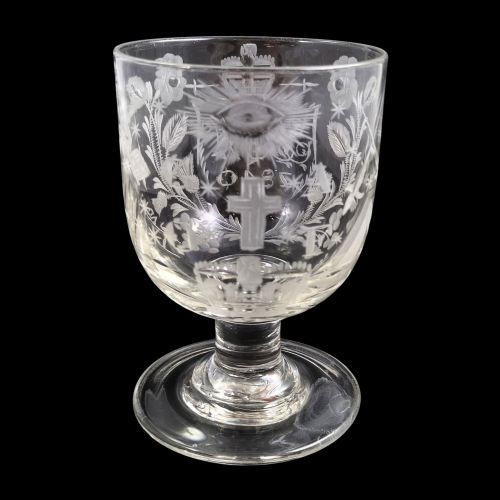
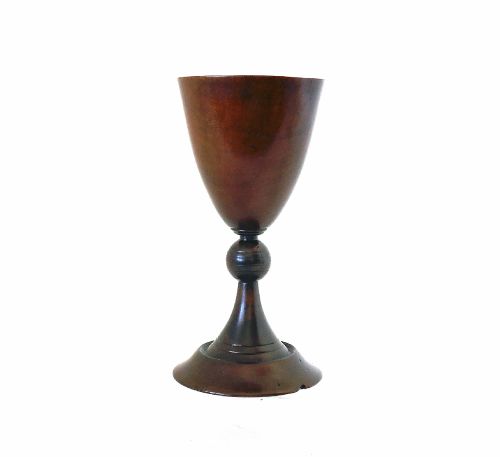
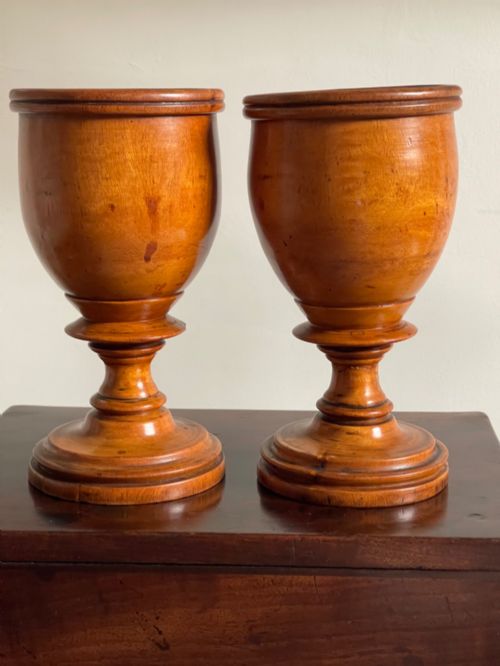
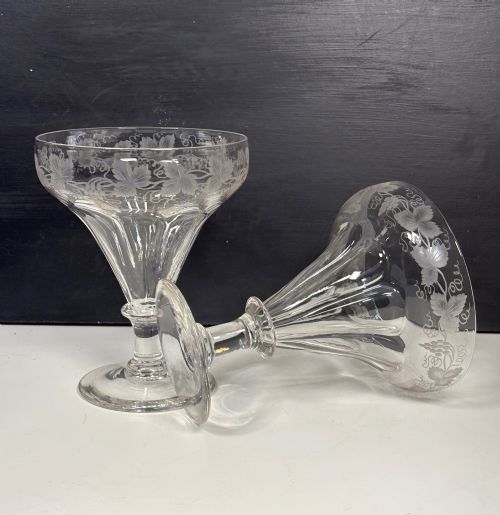
A 19th century chalice encompasses formal church vessels, monumental commemorative cups, and decorative stemmed glassware from the Georgian, Regency, and Victorian periods. The selection on this page leans toward substantial silver-plated communion vessels, carved wooden treen goblets, and decorative cut or enamelled glass rummers.
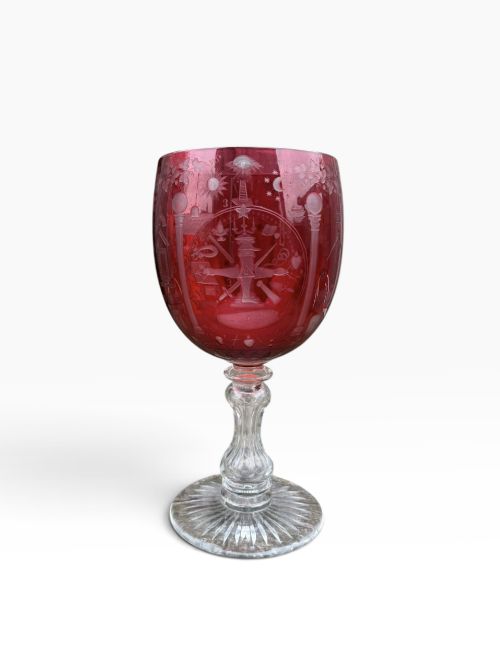
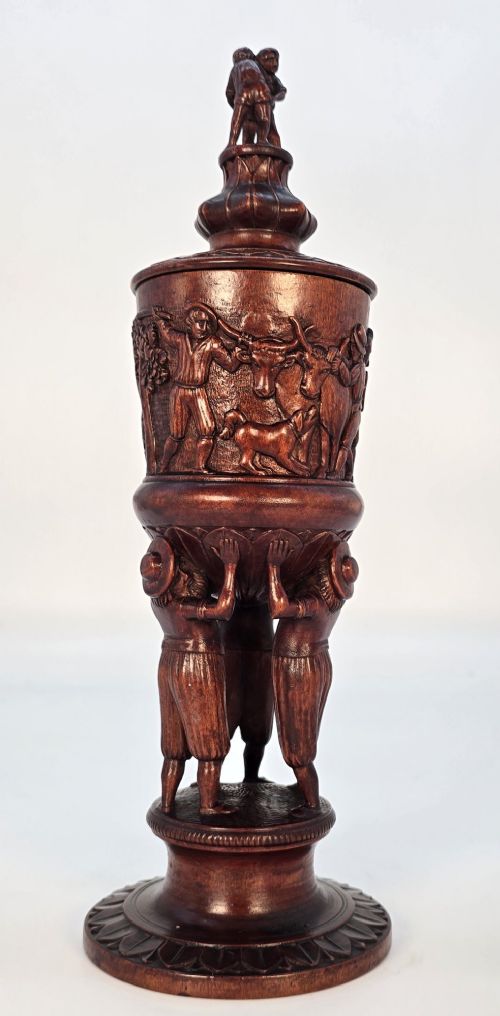
Forms vary from severe ecclesiastical shapes to elaborate Bohemian glass and intricate Asian export silver trophies. Whether intended for the altar or the sideboard, these objects combine functional drinking vessels with sculptural presence.
Materials and Making
Makers utilised diverse materials ranging from lead crystal and silver plate to fruitwood, walnut, and sterling silver. Glass pieces display deep hobnail cutting, intaglio engraving, and vibrant enamelling, while metal objects rely on traditional casting, repoussé, and Old Sheffield plating techniques.
Turned wooden examples demonstrate precise lathe work on fruitwood, oak, and plum wood. Metalwork often incorporates parcel gilding, engraving, and applied decorative elements such as cast handles or botanical motifs.
Listings feature items spanning the Georgian, Regency, and Victorian eras, alongside specific dates from 1800 through 1890.
Assessing Quality
Quality rests upon the crispness of the cutting, the weight of the metal or glass, and the precision of the hand-carved details. Superior glass shows sharp facet edges and balanced proportions, while fine metalwork reveals clean chased lines without thinning of the silver plate.
The sophistication of the design execution separates standard utilitarian items from exhibition pieces. Finer examples feature signed workshop execution, complex armorial enamelling, or intricate figural carving that displays superior hand skills.
George Unite·Lobmeyer·Wang Hing & Co·Zee Wo·Salviati Murano
The 19th Century Chalice Glossary
- Rummer
- A heavy, large-bowled drinking glass popular during the Georgian and Victorian eras, often used for ale, wine, or punch. These sturdy vessels frequently feature cut glass decoration or engraved botanical motifs.
- Old Sheffield Plate
- A method of fusing a thin sheet of sterling silver to a thicker copper base, common in nineteenth-century tableware and church plate. Items made this way show a rich depth of metal over time.
- Treen
- Small handmade wooden objects produced by turning on a lathe or through hand carving. This category includes fruitwood and walnut drinking vessels made for domestic use.
- Parcel Gilt
- Silver or metalwork that is partially gilded with gold leaf, leaving parts of the underlying silver exposed for contrast. This technique highlights engraved inscriptions and armorial details.
- Tazza
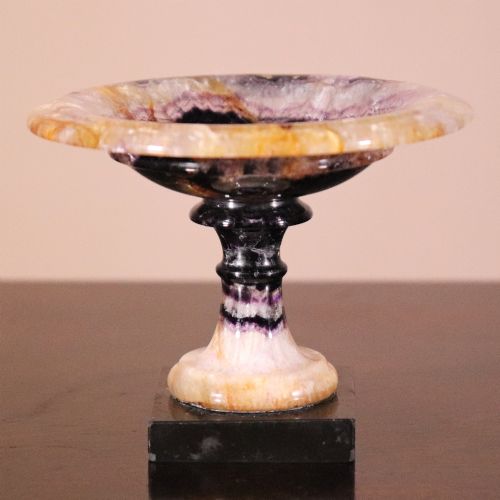
- A shallow ornamental chalice or cup raised on a high foot and stem, frequently utilised for display. These decorative objects appear in glass, bronze, and carved wood.
19th Century Chalice: Frequently Asked Questions
Were all chalices used for communion?
While many metal examples served ecclesiastical functions in churches, a large portion of the nineteenth-century output was secular. Rummers, loving cups, and presentation trophies were made for banquets, toasts, and domestic display.
Ecclesiastical chalices generally bear specific liturgical markers, heavier metal construction, and wider bases for stability on the altar.
How do I distinguish glass periods?
Early nineteenth-century glass tends to feature heavier lead content, deeper pontil marks, and simpler cut or engraved patterns. Later Victorian pieces often incorporate bright colours, enamelling, and more complex chemical glass treatments.
Examine the rim and base for signs of hand-finishing, as machine-pressed glass arrived later in the century and lacks the optical quirks of earlier blown vessels.
How should I care for wooden treen chalices?
Wooden vessels require stable humidity levels and protection from direct sunlight to prevent the timber from splitting or warping. Avoid immersing antique wood in water; clean surfaces with a dry or barely damp cloth.
Occasional application of microcrystalline wax helps preserve the natural sheen of fruitwood and walnut without damaging the historic surface.