

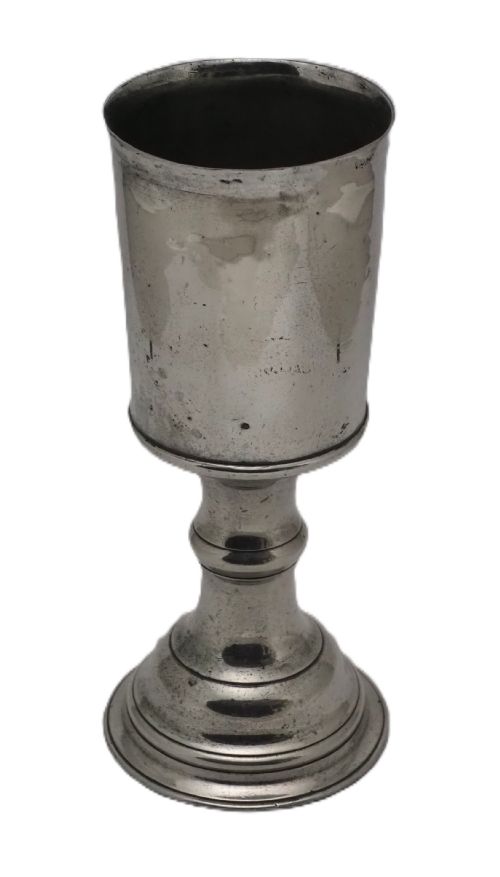
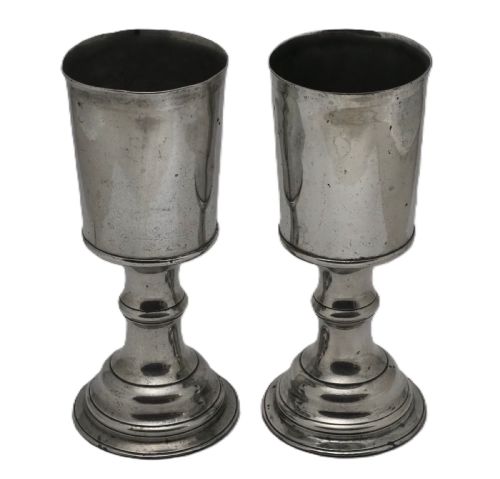


Silver Communion Goblet
A silver communion goblet is a vessel made for sacred service, valued for both its ecclesiastical history and its metalwork.
Silver Communion Goblet
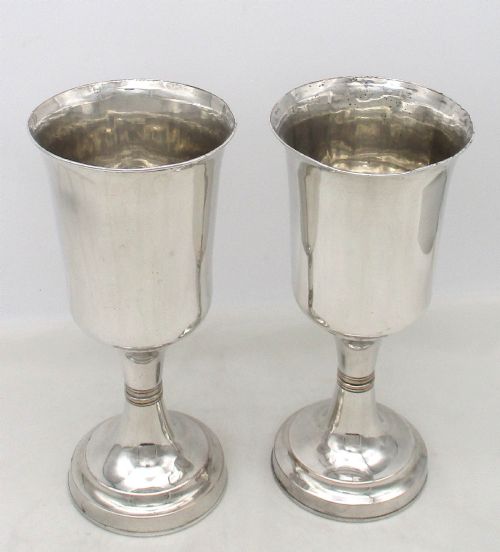
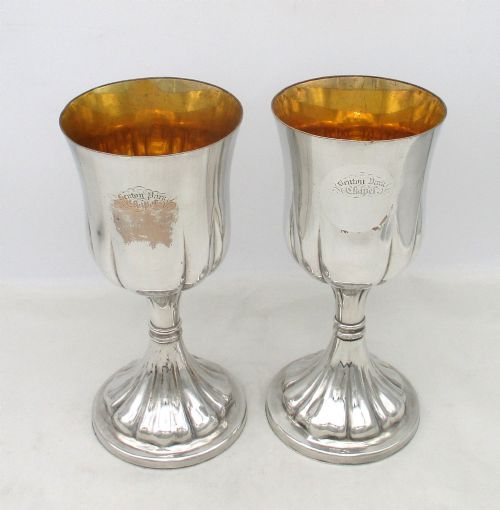
A silver communion goblet is a sacred vessel designed for sacramental use, appearing in forms such as chalices, cups, and sets.
The pieces found here span the eighteenth, nineteenth, and twentieth centuries, incorporating Georgian, Victorian, and Mid-Century Ecclesiastical styles.
Buyers frequently encounter sterling silver and silver plated examples, alongside items in pewter, copper, and Old Sheffield Plate.
How They Were Made
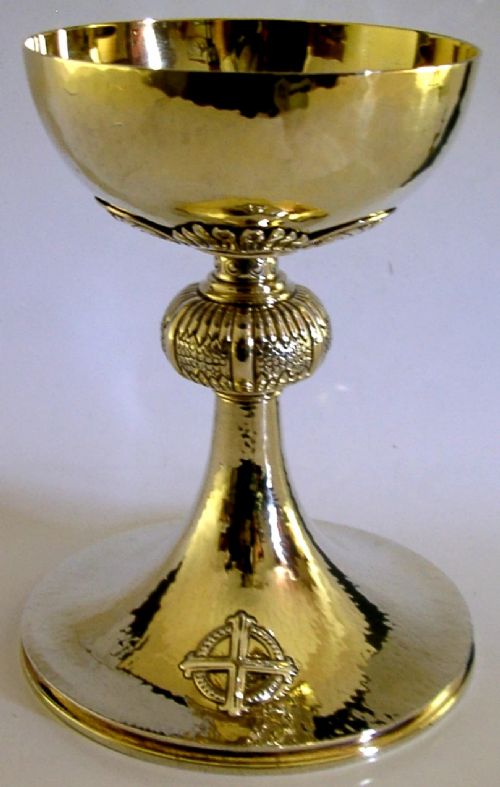
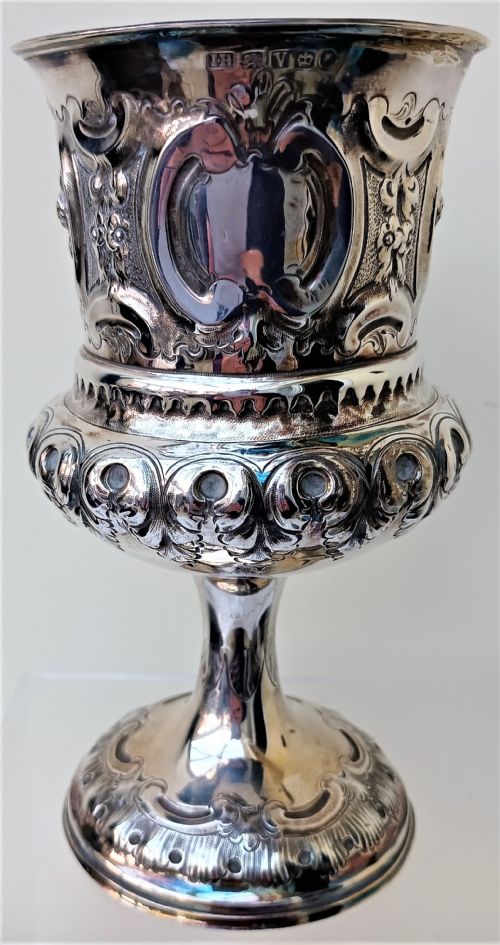
Silversmiths shaped sterling silver and gold gilt through hammer work and casting, often adding bright cut engraving or parcel gilding.
Plated vessels utilise OldSheffield Plate or silver plating over copper or base metals, binding layers together through heat and pressure.
Pewter chalices demonstrate traditional casting methods, producing robust vessels with domed feet and functional liquid capacities.
Listings feature sterling silver, silver plate, pewter, and Old Sheffield Plate across eighteenth, nineteenth, and twentieth-century periods.
What Varies in Quality
The standard of a silver communion goblet depends upon the weight of the precious metal and the crispness of any chased or engraved detail.
Makers' marks and hallmarking clarity distinguish workshop output, while the preservation of original silver gilt or parcel gilt surfaces matters greatly.
John Hunt and Robert Roskell·Elkington Mason·William Eaton·James Deakin and Sons·Richard Gurney·Walker and Hall
The Silver Communion Goblet Glossary
- Chalice
- A large cup or goblet used in Christian communion services. These vessels typically feature a substantial stem and a wide, stable foot.
- Old Sheffield Plate
- An early fusing technique where a thin sheet of silver is fused to a thicker copper core. This method leaves characteristic edges where the base metal shows.
- Parcel Gilt
- Silverware that is partially gilded with gold, usually on the interior bowl or decorative highlights. This technique protects the silver from acidic contents during use.
- Bright Cut
- An engraving style utilising faceted cuts made with a sharp graving tool. It creates sparkling geometric or floral patterns across the metal surface.
Silver Communion Goblet: Frequently Asked Questions
How do I identify the period of a silver goblet?
Makers' marks, town marks, and date letters stamped onto sterling silver pieces provide precise information regarding their year of manufacture.
Stylistic cues, such as the neoclassical proportions of Georgian pieces or the gothic revival details of Victorian examples, also indicate the era.
What is the difference between sterling and plated chalices?
Sterling silver pieces consist of solid precious metal throughout, carrying official hallmarks that verify their silver content. Plated examples utilise a base metal foundation coated with a layer of silver.
Old Sheffield Plate involves a distinct thermal fusion process, whereas later items employ electroplating techniques.
How should I clean an antique silver goblet?
Gentle washing in warm soapy water with a soft cloth removes surface dust without damaging the metal. Proprietary silver polishes should be used sparingly to preserve hallmarks and engraving.
Avoid harsh abrasives, particularly on pieces with silver gilt or Old Sheffield Plate surfaces.