





Victorian Religious Silver
Victorian religious silver brings forth devotional objects forged in sterling silver, silver plate, and gold, offering tangible links to nineteenth-century worship.
Victorian Religious Silver
Victorian religious silver gathers together communion sets, chalices, pyx boxes, and devotional jewellery such as pendants and brooches. Buyers seeking these items encounter ecclesiastical vessels alongside personal adornments reflecting nineteenth-century faith.
The objects appearing here stretch from early Victorian travelling communion sets to later Arts and Crafts pieces and mid-century altar crosses. Sterling silver and silver plate predominate, occasionally paired with tortoiseshell, copper, and gold gilding.
Materials and construction
Silversmiths utilised solid sterling silver and silver plate, often shaping them into substantial chalices, trays, and cased communion sets. Metals were hammered, cast, and engraved, with some pieces incorporating gold inlay, gold gilding, and tortoiseshell pique work.
Makers applied Gothic Revival and Rococo Revival styles alongside Arts and Crafts design principles to ecclesiastical metalwork and jewellery. Details include angel reliefs and intricate cross motifs executed in silver and gold.
The selection includes personal devotional jewellery such as lockets and brooches alongside church plate and chalices.
Distinctions in quality
Quality rests upon the weight of the metal and the precision of the silversmith's hand in engraving or casting. Solid sterling silver pieces with complete, matching boxed components command greater attention than plated alternatives.
The artistry found in detailed silver inlay, gold work, and figural reliefs such as angel plaques separates standard ecclesiastical production from superior commissions.
FA Barrett·Henry Cook
The Victorian Religious Silver Glossary
- Pyx box
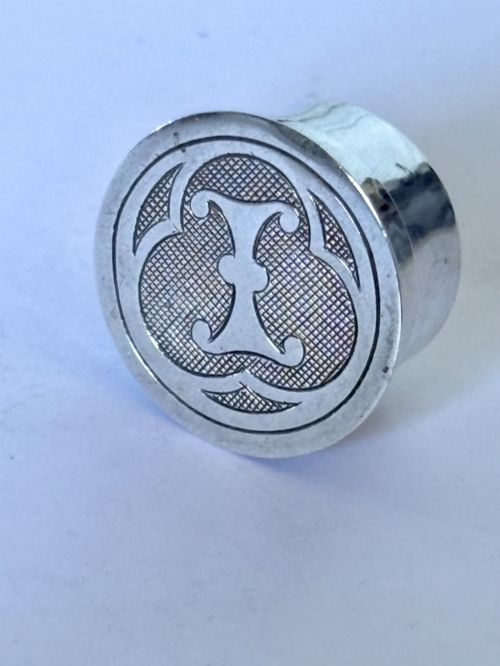
- A small circular container used to carry the eucharist. These portable vessels often feature precious metal inlay or engravings suitable for personal or travel use.
- Communion set
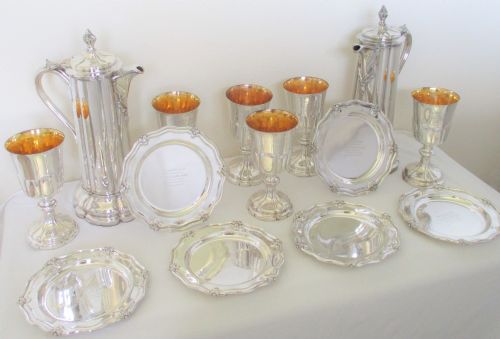
- A portable collection of vessels designed for administering the sacrament outside a church. They typically include a chalice and paten housed in a fitted box.
- Chalice
- A stemmed cup used to hold sacramental wine during religious services. Victorian examples range from modest plated cups to substantial solid sterling silver vessels.
- Pique
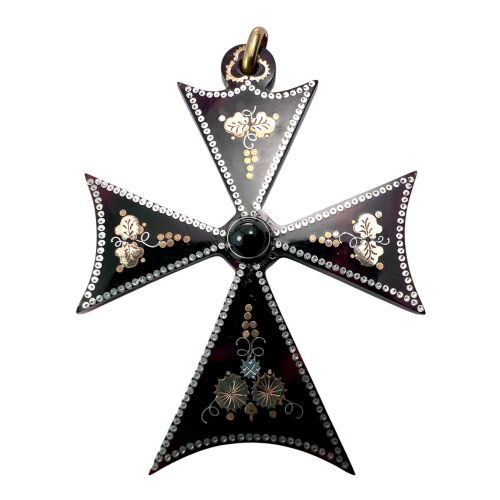
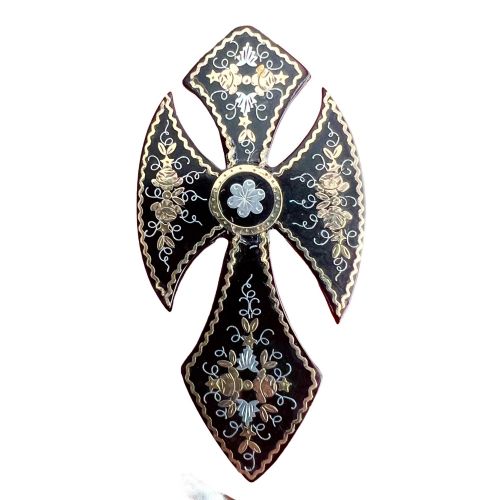
- A technique involving the inlay of gold or silver pins into a non-metallic base such as tortoiseshell. This method appears on devotional crosses and brooches.
- Ablutio box
- A specialised religious container used in church rituals. These sterling silver boxes are part of the broader ecclesiastical silver tradition.
Victorian Religious Silver: Frequently Asked Questions
What is a pyx box used for?
A pyx box serves to hold and transport the eucharist securely for home visits or travel.
These compact silver containers are typically pocket-sized and feature secure lids to protect their contents.
How do I care for silver church chalices?
Silver church chalices require gentle cleaning with appropriate metal care products to preserve the finish.
Storing them away from moisture prevents tarnishing and protects any delicate gilding or inlay.
Were these communion sets made for travel?
Travelling communion sets were specially engineered for clergy on the move.
They are housed in fitted boxes containing all necessary vessels for administering sacraments away from the parish church.
What styles define Victorian ecclesiastical silver?
Ecclesiastical silver from this era primarily draws upon Gothic Revival and Victorian Gothic design elements.
Pieces also reflect Rococo Revival influences and later Arts and Crafts aesthetics through figural reliefs and handcrafted motifs.