




Silver Plated Chalices
Silver plated chalices bring weight and ritual to a room, offering centuries of ecclesiastical and domestic craftsmanship in silver plate and Old Sheffield plate.
Silver Plated Chalices
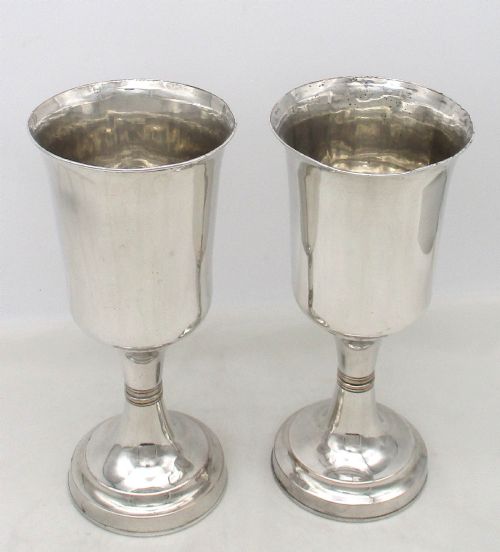
Silver plated chalices span ecclesiastical vessels and secular drinking vessels, appearing across the Georgian, Victorian, and Edwardian eras. When searching for silver plated chalices, collectors encounter church vessels, communion sets, loving cups, and goblets.
The nineteenth century dominates the available forms, particularly pieces created in Old Sheffield plate and standard silver plate over base metal. Alongside these church chalices, military mess hall cups and domestic loving cups surface frequently.
Victorian and Georgian examples range from plain nineteenth century church chalices to ornate Art Nouveau loving cups. Makers such as Elkington Mason, Joseph Rodgers & Sons, Edward & Sons, and Dixons shaped these diverse liturgical and secular forms.
How they were made
Old Sheffield plate pieces rely on an early fusion method where a thin layer of silver is fused to a thick copper base before forming. Standard nineteenth century items utilise later electroplating techniques over base metal cores.
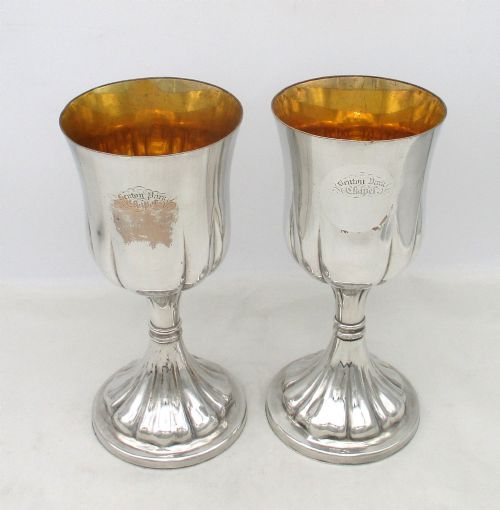
Interior bowls frequently receive gold gilt or gold gilding to protect the metal from acidic wine during communion services. Exterior surfaces display hand-applied chasing, engraving, and applied cast mounts in styles stretching from Georgian to Art Nouveau.
Several military mess halls traded standard regulation cups for silver plated chalices to elevate weekly rations.
What varies in quality
The thickness of the applied silver and the preservation of the underlying copper or base metal dictate the longevity of a vessel. Early Old Sheffield plate reveals thin lines of copper at high wear points where the silver sheet has worn through.
Maker attribution elevates certain ecclesiastical sets and loving cups, particularly marked pieces from established workshops like Elkington Mason or Joseph Rodgers & Sons. The integrity of the interior gilding and the crispness of chased decoration separate utilitarian vessels from high ceremonial commissions.
Elkington Mason·Joseph Rodgers & Sons·Edward & Sons·Dixons
The Silver Plated Chalices Glossary
- Old Sheffield Plate
- A fused bilayer of silver and copper produced before the invention of electroplating. Craftsmen fused the metals under heat before hammering and shaping them into chalices.
- Gilt
- A thin application of gold wash applied to the interior bowl of a chalice. This layer prevented communion wine from reacting directly with the base metal.
- Loving Cup
- A large two-handled drinking vessel used for shared toasts at civic or domestic banquets. These secular forms share manufacturing techniques with ecclesiastical chalices.
- Communion Set
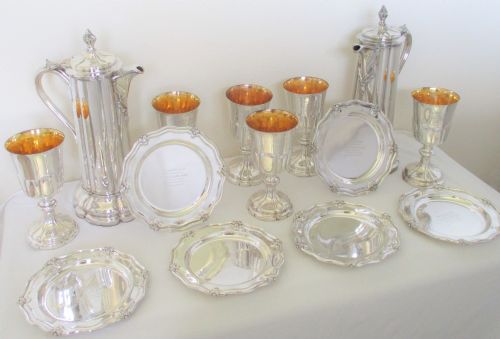
- A matched grouping of liturgical vessels housed in a fitted box. These sets typically include a chalice alongside patens and flagons for church services.
Silver Plated Chalices: Frequently Asked Questions
Can I drink from an antique chalice?
Most antique chalices remain safe for occasional use, provided the interior gold gilt or silver plating remains intact over the base metal.
Avoid leaving acidic liquids inside un-gilded vessels for extended periods to protect the interior surface.
What is the difference between a chalice and a goblet?
Chalices typically serve liturgical functions in church ceremonies and feature deeper bowls set upon substantial knopped stems.
Goblets generally serve secular dining or celebratory purposes, though makers often used the terms interchangeably in historical records.
How do I date an Old Sheffield plate chalice?
Inspect the edges and rim for visible seams or subtle copper bleeding where the fused silver sheet meets the base metal.
Pieces produced before the mid-nineteenth century frequently utilise this fusion method rather than later nineteenth-century electroplating.