




Ecclesiastical Silver Plate
Ecclesiastical silver plate brings the quiet gravity of historic worship into domestic and church settings through durable plated metal liturgical objects.
Ecclesiastical Silver Plate
When you search for ecclesiastical silver plate, you are looking at sacred metalwork produced for religious services, ranging from communion sets and chalices to altar crosses, chargers, and church lamps. The pieces you are most likely to meet on this page date from the nineteenth century, including notable examples in Old Sheffield plate and later silver-plated metal.
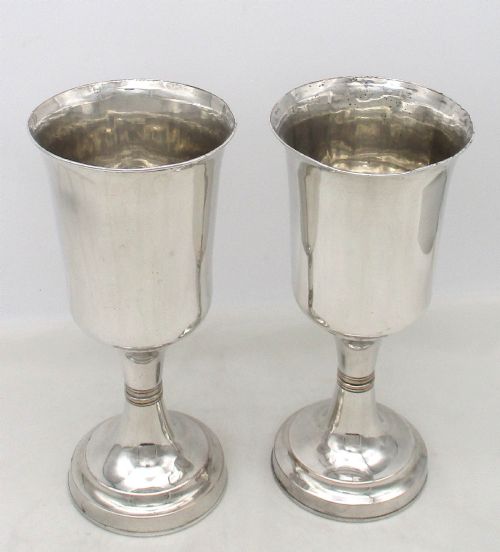
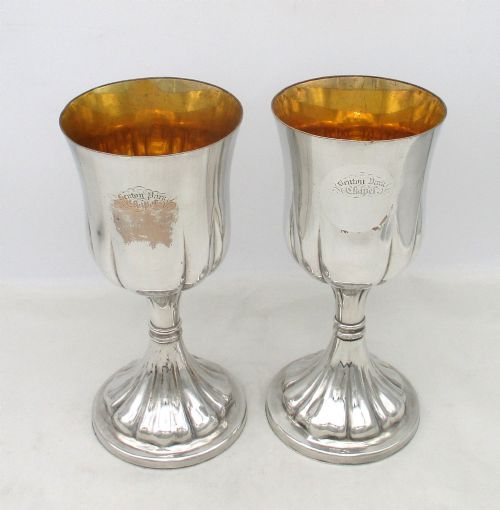
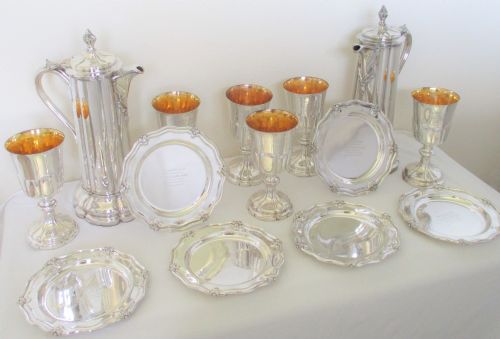
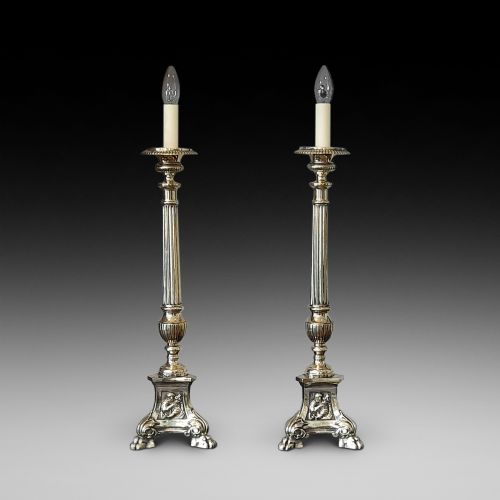
Forms vary from individual communion chalices and matched pairs of goblets to boxed communion sets complete with jugs and plates, alongside larger decorative items such as pricket candlestick lamps and altar crosses. These items reflect distinct stylistic periods from William IV and Victorian Gothic to Rococo Revival, French ecclesiastical, and Art Deco designs.
Originating primarily from nineteenth-century church use, many surviving pieces retain inscriptions naming specific parishes or institutions like Westminster and Poplar. They offer collectors and interior designers substantial metal forms shaped by historic liturgical traditions and nineteenth-century manufacturing methods.
How ecclesiastical silver plate was made
Early nineteenth-century pieces frequently utilise Old Sheffield plate, a material produced by fusing a thin layer of silver onto a thicker copper base before shaping and soldering the components. This technique creates a durable body where the underlying copper occasionally shows through the worn silver surface.
Later nineteenth-century and twentieth-century items employ standard silver plating over base metals such as brass, copper, and general white metal alloys. Many objects also feature interior or partial gold gilding, known as gilt, which protects the metal from the corrosive effects of sacramental wine.
Listings feature items spanning the nineteenth and twentieth centuries, utilising silver plate, Old Sheffield plate, copper, brass, and gold gilding across liturgical forms.
What varies in quality
The distinction between standard commercial pieces and finer items rests largely on the quality of the plating technique and the weight of the underlying metal. Old Sheffield plate generally exhibits a warmer depth and different edge characteristics compared to electroplated wares produced later in the nineteenth century.
Artistry in chasing, engraving, and casting separates simple utilitarian vessels from elaborate liturgical pieces. Heavier gauge metalwork, complete boxed sets with fitted interiors, and pieces retaining crisp ecclesiastical ornamentation command greater interest among collectors.
Elkington Mason
The Ecclesiastical Silver Plate Glossary
- Old Sheffield plate
- An early form of plated metal created by fusing silver and copper sheets together before fabrication. This process produces a characteristic edge where the copper core is visible.
- Chalices
- Sacred cups used during communion services, often featuring deep bowls and knop stems. They appear singly or in matched pairs across nineteenth-century listings.
- Pricket candlestick
- A candlestick featuring a sharp central spike rather than a socket to secure a large altar candle. They frequently appear converted into table lamps.
- Gilt
- A thin layer of gold applied to the interior surfaces of chalices and communion vessels. This finish prevents tarnishing and protects the metal from acidic wine.
Ecclesiastical Silver Plate: Frequently Asked Questions
What is ecclesiastical silver plate?
Ecclesiastical silver plate comprises sacred vessels and metal objects made for church services, predominantly using plated metals over copper or brass during the nineteenth and early twentieth centuries. These items include chalices, communion sets, altar crosses, and church lamps.
Such objects served practical and ritual functions within Christian liturgy, combining durable base metals with decorative silver surfaces and interior gilding to withstand regular sacramental use.
How were communion chalices used?
Communion chalices were utilised by clergy during religious services to hold and distribute sacramental wine to congregants. Their design often included a secure stem with a central knop for ease of handling during rites.
Many surviving chalices formed part of larger boxed communion sets, which allowed clergy to transport sacred vessels safely for services outside the primary church building.
How do I date Old Sheffield plate?
Old Sheffield plate was produced primarily from the mid-eighteenth century until the introduction of electroplating around the middle of the nineteenth century. Examining the edges and construction reveals the fused copper core characteristic of this period.
Items from this era often feature hand-soldered joints, engraved crests or parish inscriptions, and a softer silver layer that wears down naturally over generations of use and polishing.
Can I use church items at home?
Historic church metalwork adapts well to modern domestic interiors as decorative objects, table lamps, or serving vessels. Many collectors display chalices, chargers, and candlesticks to add historical character to living spaces.
Care should be taken with cleaning plated items to preserve the remaining silver layer and any historic gilding, avoiding harsh abrasives that might damage the surface.