




Victorian Communion Cups
Victorian communion cups are sacred vessels designed for liturgical service, prized for their solemn forms and enduring craftsmanship.
Victorian Communion Cups
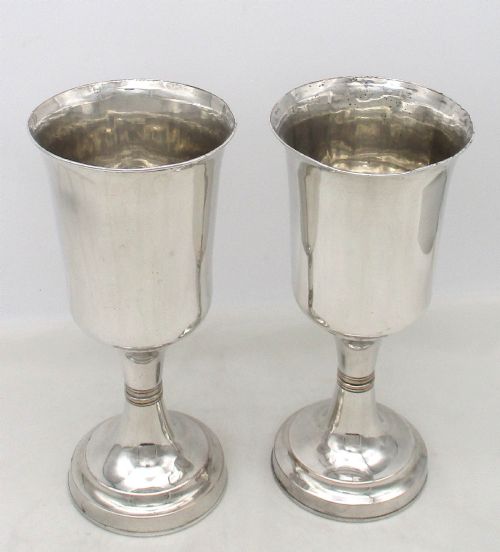
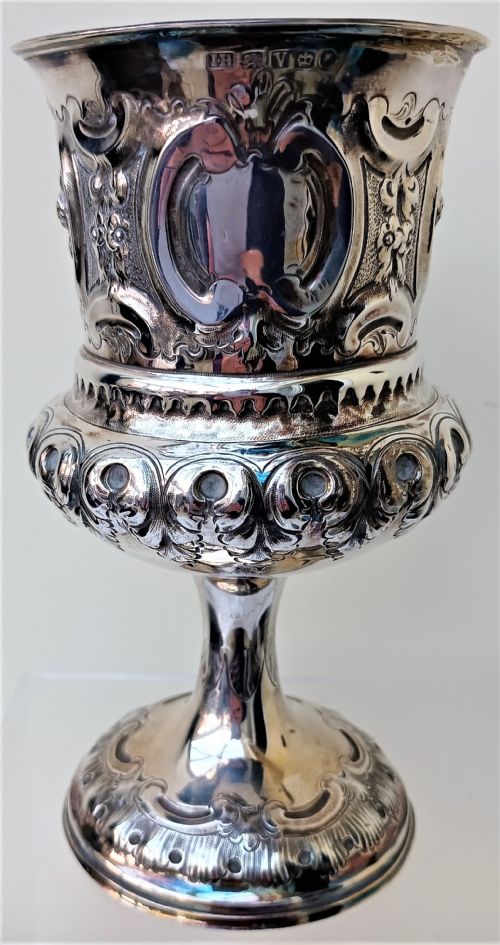
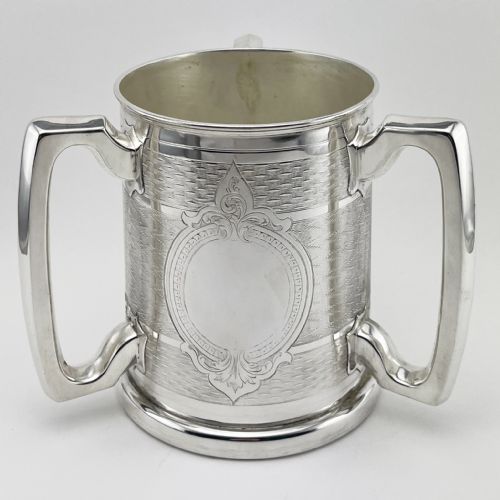
Victorian communion cups appear primarily as chalices, goblets, and loving cups utilised in nineteenth-century religious services. These vessels bear the distinct design influences of the era, ranging from austere Gothic Revival styles to restrained Neoclassical forms.
Most examples found here date across the nineteenth century, including specific years such as 1840, 1843, 1844, 1860, 1871, 1888, 1890, and 1895. Buyers encounter both single pieces and matched pairs or small sets intended for ecclesiastical use.
Materials and construction
Silversmiths and manufacturers utilised sterling silver, Old Sheffield plate, and electroplated nickel silver to construct these chalices and goblets. Metalworking techniques included raising, spinning, and plating to achieve durable, resonant vessels suited to regular handling.
Many silver and plated items feature interior gold gilding, often described as parcel gilt, which provided a hygienic and luxurious finish for liturgical wine. Artisans also turned dense hardwoods on lathes to create warm, organic communion vessels.
Decorative treatments draw directly upon Victorian and Gothic design repertoires, incorporating architectural motifs and clean neoclassical lines into the metal surfaces.
Victorian Communion Cups Retail Price Guide 2026
Typical asking prices for victorian communion cups among the pieces listed under this phrase on Sellingantiques today, from the lower quarter to the upper quarter. They describe what is for sale here now, not the wider market.
Churchgoers once shared sips from vessels sturdy enough to survive centuries of earnest sermons and polished altars.
Evaluating quality and execution
The choice of raw material fundamentally divides the range, distinguishing solid sterling silver and high-grade Old Sheffield plate from later electroplated nickel silver. Sterling pieces offer intrinsic metal value and enduring structural integrity over generations of use.
The finesse of the surface finish and the application of internal gold gilding indicate the level of craftsmanship invested in a vessel. Clean proportions, crisp architectural detailing in Gothic revival pieces, and robust wall thickness elevate superior examples.
George Unite·John Hunt and Robert Roskell
The Victorian Communion Cups Glossary
- Chalice
- A large cup or goblet used for drinking wine during a religious service. These vessels usually feature a prominent stem and a wide foot for stability.
- Old Sheffield Plate
- An early composite material made by fusing a sheet of silver to a thicker copper base. This technique creates a rich surface that wears gracefully over time.
- Parcel Gilt
- A metal object that is partially gilded with gold, particularly on the interior bowl. This treatment protects the silver from tarnishing by the wine.
- Electroplated Nickel Silver
- A base metal alloy of copper, nickel, and zinc coated with a thin layer of pure silver through electrolysis. This process became widespread during the Victorian era for ecclesiastical wares.
- Loving Cup
- A large drinking vessel with two or more handles, occasionally adopted for communion services. It symbolizes fellowship and shared participation.
Victorian Communion Cups: Frequently Asked Questions
How were these chalices used?
These vessels held sacramental wine during church communion services and Eucharistic celebrations. Ministers used them to serve congregations, utilising single cups or matching pairs and sets.
Their substantial stems and wide bases ensured stability when passed among participants during solemn rituals.
How do I care for silver plated cups?
Careful maintenance involves gentle cleaning with non-abrasive silver polishes to preserve the plated surface or gold gilding. Avoid harsh scrubbing that might wear away thin silver layers on plated items.
Displaying them away from direct moisture and handling them with clean hands helps maintain their historic finish.
How can I tell the period?
Dating relies upon hallmarks stamped into the metal, maker marks, and stylistic indicators such as Gothic revival arches. Assay office marks on sterling pieces provide exact years of manufacture.
Plated items and wooden pieces depend more heavily on construction methods and period-specific form to determine their nineteenth-century origins.