



Silver Gilt Chalice
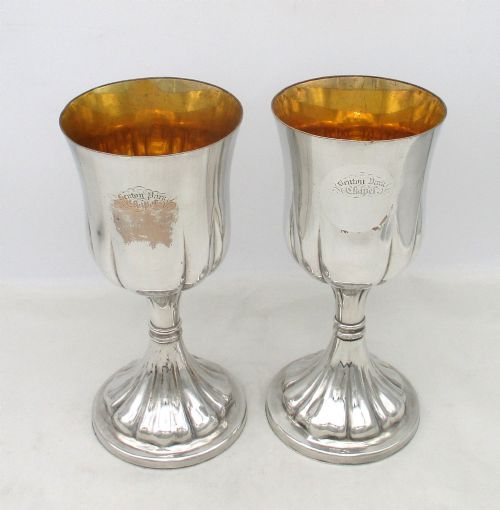
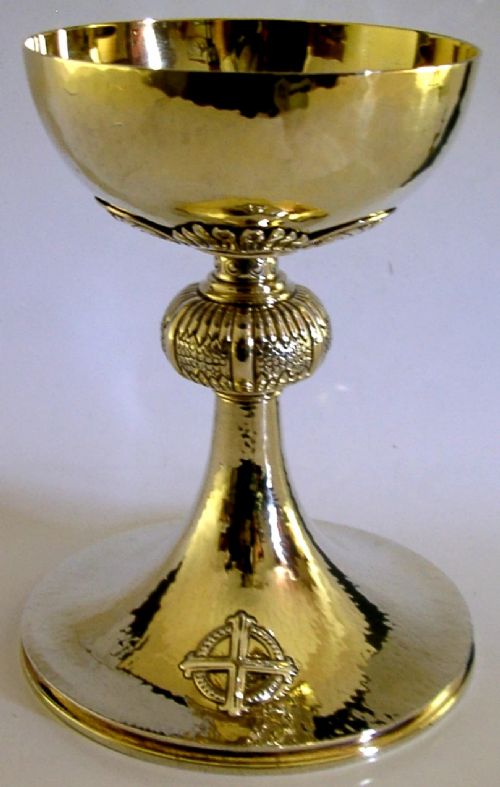
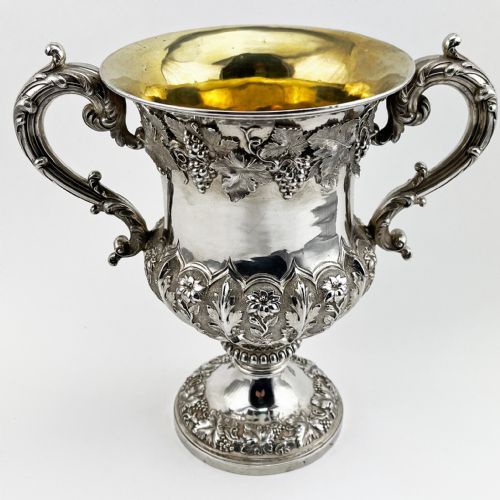
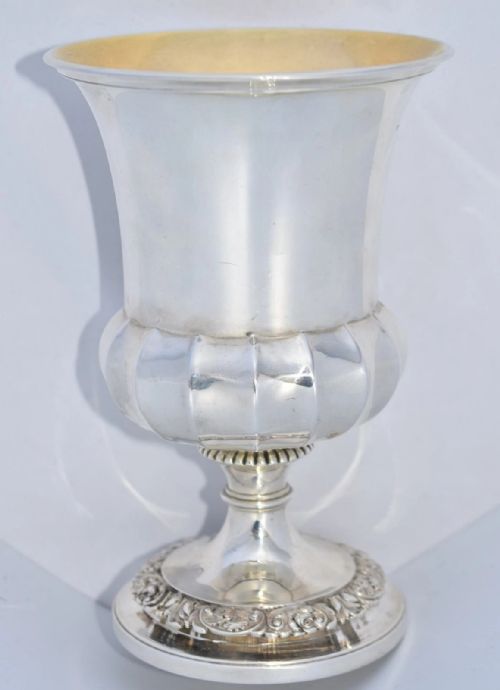
These silver gilt chalice pieces are ceremonial drinking vessels of weight and presence, prized for their gleaming gold-on-silver surfaces and ecclesiastical heritage.
Silver Gilt Chalice
A silver gilt chalice is a substantial standing vessel designed for ceremonial, liturgical, or commemorative use, often taking the form of a deep bowl raised on a knopped stem and a wide foot. Buyers searching this phrase encounter ecclesiastical church plate alongside secular presentation cups and loving cups spanning several centuries.
The pieces appearing on this page most frequently date from the nineteenth century, reflecting both Victorian gothic revival tastes and earlier Georgian forms. These vessels range from single communion cups to matched pairs intended for altar service or grand display.
Makers adapted these forms across different eras, producing heavy sterling silver examples alongside durable silver plated and Old Sheffield plate alternatives. Their shared characteristic is the application of a gold wash over a silver base, creating a rich two-tone warmth that distinguishes them from plain silver.
Evaluating quality and craftsmanship
Quality rests in the weight of the metal and the crispness of the chased or engraved ornamentation, which separates mass-produced items from bespoke workshop commissions. Heavier gauge sterling silver provides a rigid, enduring structure that resists bending at the stem and rim.
The survival of the original gilding indicates the level of care a piece received and the thickness of the initial application. Deeper hand-chased relief work and balanced proportions between the bowl and the foot demonstrate superior maker skill.
Silver Gilt Chalice Retail Price Guide 2026
Typical asking prices for silver gilt chalice among the pieces listed under this phrase on Sellingantiques today, from the lower quarter to the upper quarter. They describe what is for sale here now, not the wider market.
Listings feature pieces spanning the eighteenth to the twentieth centuries, utilising sterling silver, silver plate, and Old Sheffield plate.
Paul de Lamerie·John hunt and Robert Roskell·Elkington Mason·William Eaton·James Deakin and Sons
The Silver Gilt Chalice Glossary
- Silver gilt
- Silver that has been coated with a thin layer of gold. This treatment provides the warm appearance of solid gold while utilising a silver base.
- Old Sheffield plate
- A composite material made by fusing a sheet of silver to a thicker copper base. This early plating method produces a durable surface where copper may show slightly at cut edges.
- Kknop
- A decorative knob or protuberance on the stem of a chalice. It provides a secure grip for the hand during religious or ceremonial use.
- Parcel gilt
- An object that is only partially gilded, leaving parts of the underlying silver exposed to create contrasting patterns and tones.
- Communion set
- A collection of vessels, including chalices and flagons, used during Christian eucharistic services. These sets often share matching decoration and maker marks.
Silver Gilt Chalice: Frequently Asked Questions
What is the difference between a chalice and a goblet?
A chalice traditionally serves an ecclesiastical or sacramental function, often featuring a deep bowl, a prominent knop on the stem, and a wide spreading foot for stability on an altar. Goblets share a similar standing form with a stem and base but are generally secular drinking vessels used for banquets, toasts, and formal dining.
While their physical structures overlap significantly in antique markets, liturgical pieces frequently carry religious iconography or inscriptions relating to communion. Secular examples focus more on decorative chasing, armorial crests, or presentation engraving.
How should I clean a silver gilt chalice?
Cleaning requires extreme caution because aggressive polishing or standard silver dips will wear away the delicate gold layer over the silver base. Gentle dusting with a soft microfiber cloth is usually sufficient for routine maintenance.
If tarnish must be removed, use a specialised non-abrasive silver cleaner designed for gilt surfaces, applying it lightly without heavy rubbing. Professional conservation is recommended for fragile nineteenth-century pieces or items with compromised plating.
How do I identify Old Sheffield plate?
Old Sheffield plate can be identified by examining the edges and high-wear areas for the subtle telegraphing of the underlying copper core. Unlike nineteenth-century electroplating, which covers uniformly, fused plate reveals a distinct reddish line where the silver sheet ends.
Pieces utilising this technique generally date from the eighteenth to the mid-nineteenth century before electroplating became the standard commercial method. The weight is often heavier than standard plated wares due to the thick copper foundation.
Can I still use these chalices for drinking?
Using antique vessels for consumption depends entirely on the metal composition and the condition of the interior surface. Sterling silver and intact silver gilt are generally safe for beverages, provided the piece has been thoroughly cleaned.
Plated items with worn surfaces exposing base metals like copper should be avoided for food and drink use. Most collectors prefer to display these historical objects rather than risk damaging the fragile gilding or historic patina.