



Communion Chalice Cup
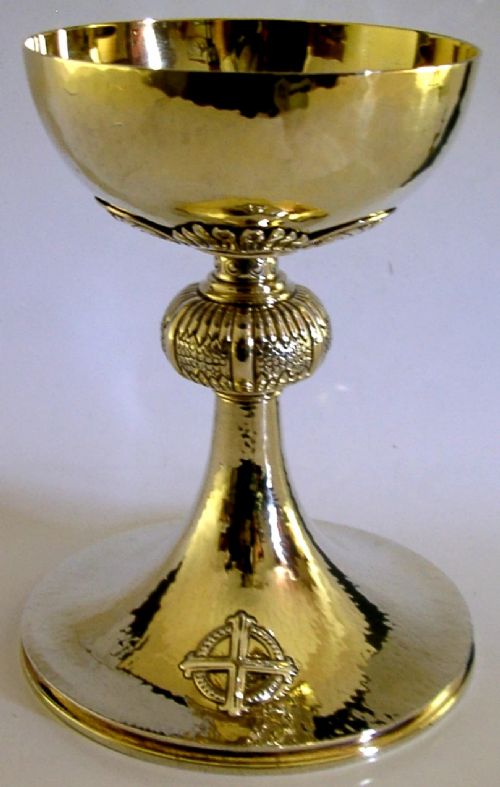
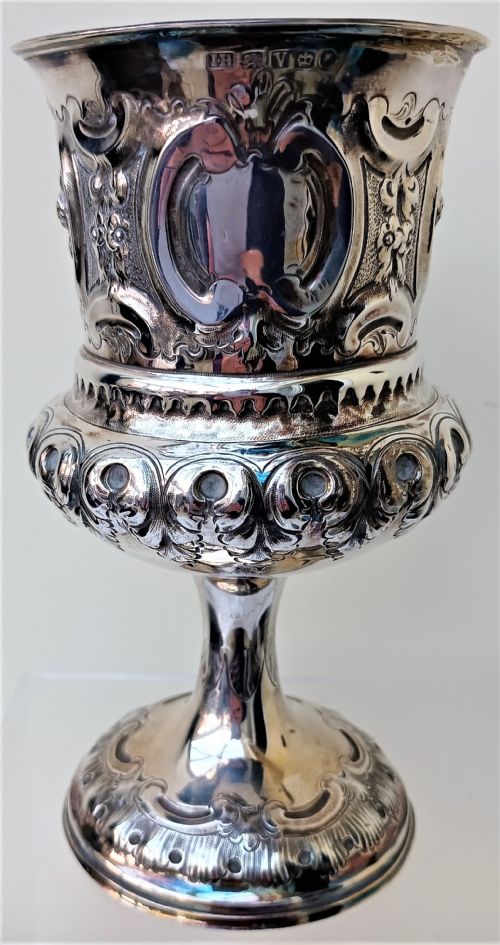
These communion chalice cup examples span centuries of ecclesiastical metalware and turned wood, offering solemn beauty for the table or altar.
Communion Chalice Cup
A communion chalice cup represents centuries of ecclesiastical design, ranging from austere wooden vessels to heavy sterling silver vessels intended for sacred rituals. When you search for a communion chalice cup, you encounter forms that span centuries of church history, domestic presentation pieces, and secular wine vessels.
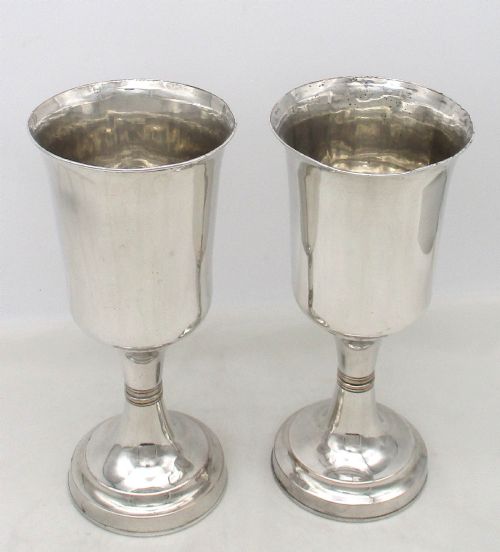
The versions most common on this page include nineteenth-century silver plated church vessels alongside Georgian and Victorian sterling silver goblets. Makers shaped these objects to serve both solemn church services and domestic displays, utilising sturdy bases and deep bowls.
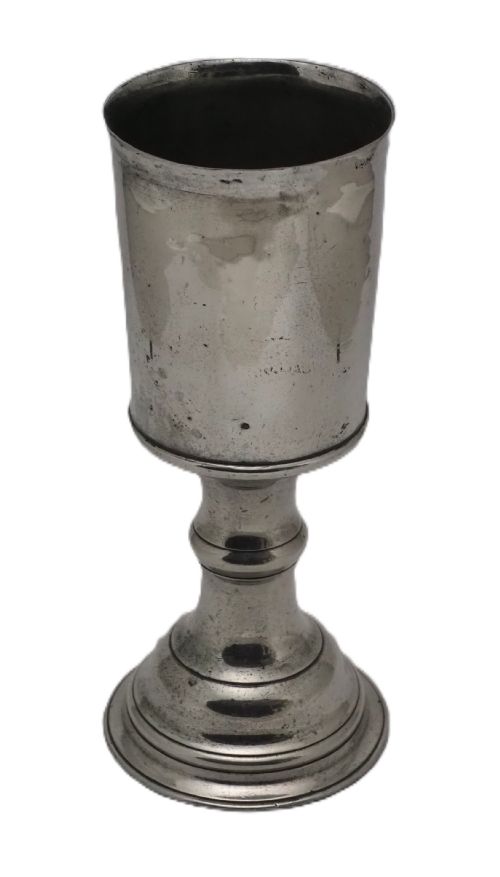
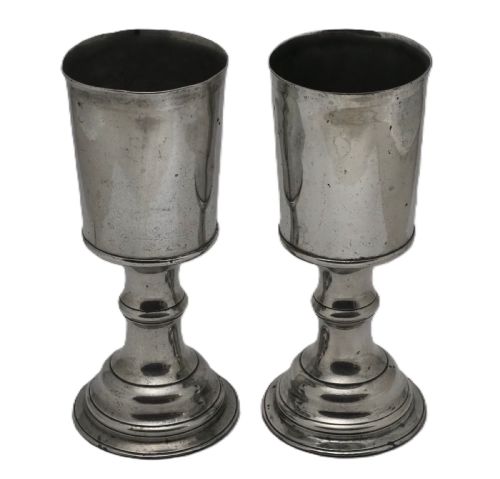
Evidence points to ecclesiastical metalware taking diverse forms, from tall Old Sheffield plated pairs to mid-century sterling silver pieces. Buyers find items originating from English, Irish, Italian, and Spanish workshops, reflecting distinct regional liturgical traditions.
Materials and construction
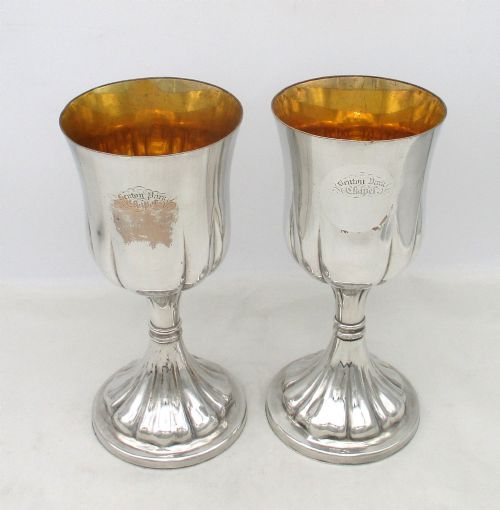
Makers fashioned these objects using sterling silver, silver plate, Old Sheffield plate, copper, brass, pewter, and turned timbers such as fruitwood and walnut. Metal workers utilised techniques like spinning, casting, hammering, and parcel gilding to create durable vessels with rich surface textures.
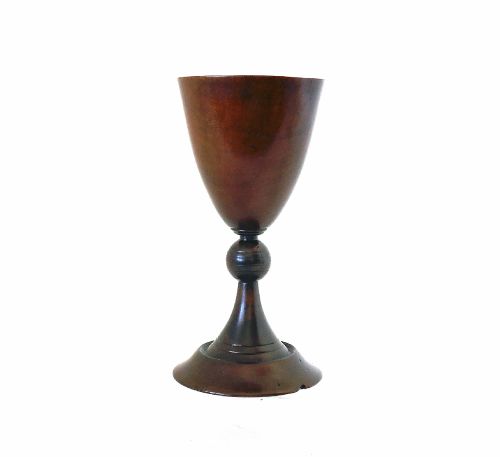
Wooden examples display precise lathe turning from the eighteenth and nineteenth centuries, demonstrating the grain of walnut and fruitwood. Plated items combine base metals like copper with fused silver sheets, while solid silver pieces often carry hallmark stamps detailing assay offices and maker marks.
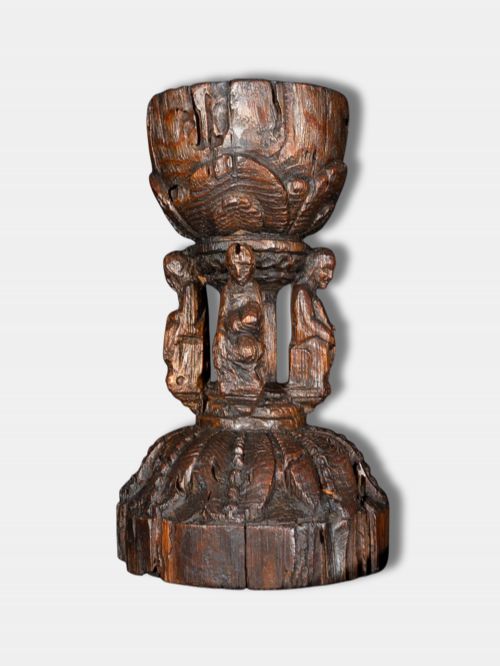
Listings feature items spanning from the sixteenth century to the mid-twentieth century, constructed in sterling silver, pewter, turned wood, and Old Sheffield plate.
Distinctions in quality
Quality rests upon the proportion of the vessel, the weight of the metal or density of the timber, and the crispness of hand-engraved or chased decoration. Heavier sterling silver pieces demonstrate substantial gauge metal and stable domed feet, whereas lesser examples rely on thin plating over base metal.
Artisanal execution separates standard production items from significant works, visible in the balance of the stem, the smoothness of the interior gilding, and clear maker punches. Pieces bearing distinct silversmith marks or fine decorative chasing command greater attention from collectors.
John hunt and Robert Roskell·William Eaton·James Deakin and Sons·George Unite
The Communion Chalice Cup Glossary
- Old Sheffield Plate
- A fused composite material made by melting a sheet of silver to a copper ingot, producing a durable layered metal used before electroplating.
- Sterling Silver
- An alloy containing ninety-two point five percent silver and seven point five percent other metals, typically copper, marked by official assay offices.
- Ciborium
- A covered ecclesiastical vessel designed to hold sacramental bread, similar in material and form to a chalice.
- Parcel Gilt
- A metal object where only specific areas, usually the interior bowl, receive a thin layer of gold leaf or electroplated gold.
- Bright Cut
- An engraving technique utilising angled facets carved into metal to reflect light sharply from geometric or floral patterns.
- Domed Foot
- A raised, sloping base that widens outward to provide stability and visual balance to the stem and bowl.
Communion Chalice Cup: Frequently Asked Questions
How do I clean an old silver chalice?
Clean silver vessels gently with a soft microfibre cloth and a mild, non-abrasive cleaner formulated for antique silver. Avoid harsh scrubbing that removes light parcel gilding or historical patination.
Store the piece in a dry environment away from direct sunlight and rubber materials to prevent rapid tarnishing of the metal surface.
Were these cups used only in churches?
While many examples served ecclesiastical functions during communion services, others served secular purposes as loving cups or presentation goblets. Domestic dining and civic ceremonies frequently utilised similar chalice forms.
Inscriptions and religious motifs often clarify whether a specific vessel belonged to a parish church or a private household.
How can I tell pewter from silver?
Pewter exhibits a duller, dark grey finish with a soft lustre, whereas silver reflects light brightly and maintains a whiter metallic sheen. Silver pieces frequently display hallmarks, while pewter items often show maker touchmarks or capacity stamps.
Pewter is also significantly softer and lighter than solid sterling silver of equivalent dimensions.
What is Old Sheffield plate?
Old Sheffield plate is an early form of plating created by thermally fusing a thin layer of sterling silver onto a thick copper core. This technique predates nineteenth-century electroplating methods.
Examining the rim or worn areas often reveals a thin copper line beneath the silver layer.