




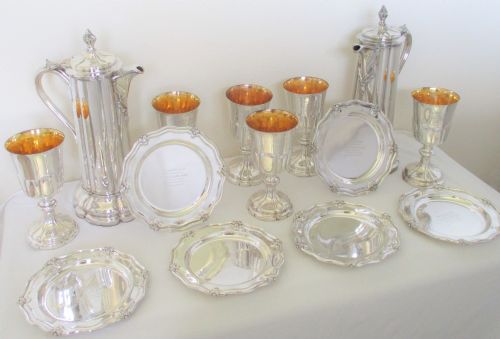

Victorian Silver Communion
Victorian silver communion pieces bring solemn ceremony into domestic display, offering tactile links to nineteenth-century ecclesiastical craft.
Victorian Silver Communion
Victorian silver communion pieces encompass chalices, goblets, pyx boxes, wine jugs, and complete travelling sets created for liturgical use during the nineteenth century. The selection ranges from domestic sterling silver parcels to large church vessels plated with silver on copper bases.
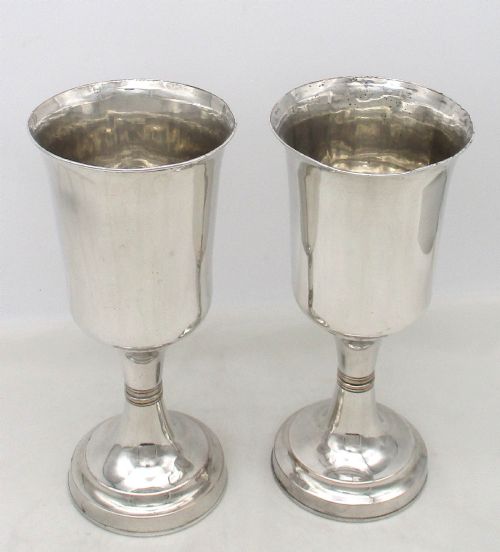
Goblets and chalices dominate the inventory, often appearing in matched pairs or larger sets dating from the middle and late decades of the era. Buyers frequently encounter Old Sheffield plate alongside solid sterling items marked with provincial or London assay details.
Travelling communion sets provide portable kits housed in fitted boxes, designed for clergy administering sacraments outside the parish church. These smaller pieces bring intimate religious silver into private hands while retaining strict ecclesiastical utility.
Materials and Techniques
Makers shaped solid sterling silver or applied silver layers over copper bases using Old Sheffield plating and later electroplating methods. Gold gilt interiors, often described as parcel gilt, protected the silver from acidic sacramental wine.
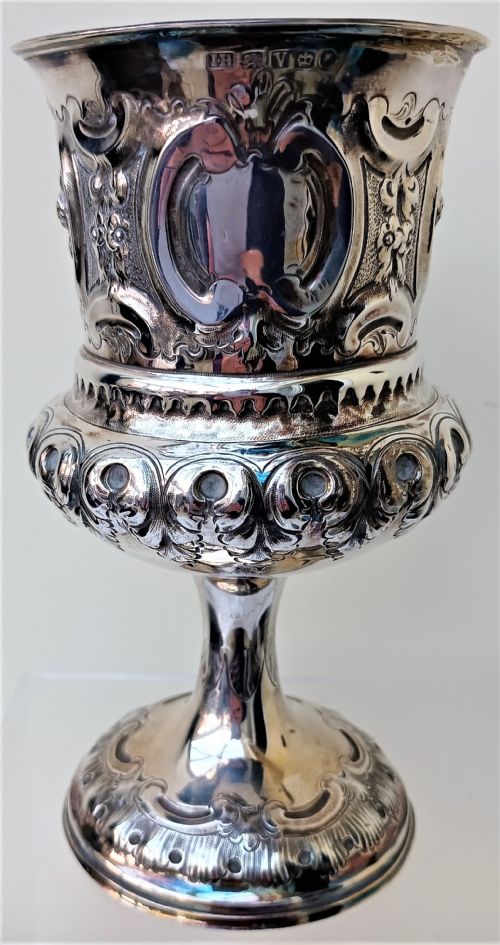
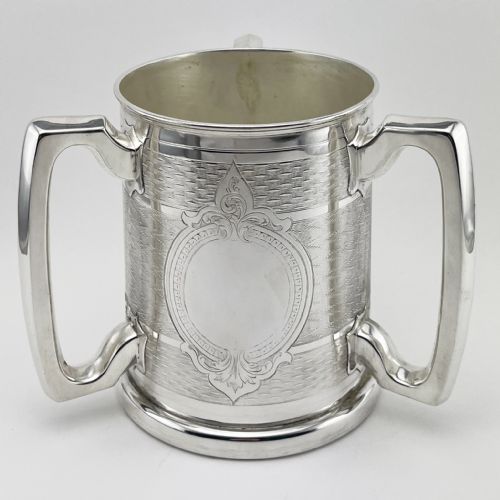
Silversmiths utilised hammering, spinning, and casting techniques to produce deep bowls, knopped stems, and spreading feet. Engraved inscriptions, gothic motifs, and neo-classical details were applied by hand to individual vessels.
Church plate occasionally retains faint liquid drop marks inside the bowl, left by nineteenth-century parishioners taking the sacrament.
Evaluating Craftsmanship and Preservation
The weight of the metal and the integrity of the base material distinguish heavy sterling items from plated wares. Old Sheffield plate displays a characteristic copper bleed where the outer silver layer thins through decades of polishing.
The clarity of maker marks and assay stamps provides a clear measure of provenance and standard. Intact gilding inside chalice bowls and complete fitted boxes with original velvet linings elevate the standing of surviving sets.
FA Barrett·George Unite·John Hunt and Robert Roskell·Elkington Mason·George Maudsley Jackson·Walker and Hall
The Victorian Silver Communion Glossary
- Pyx Box
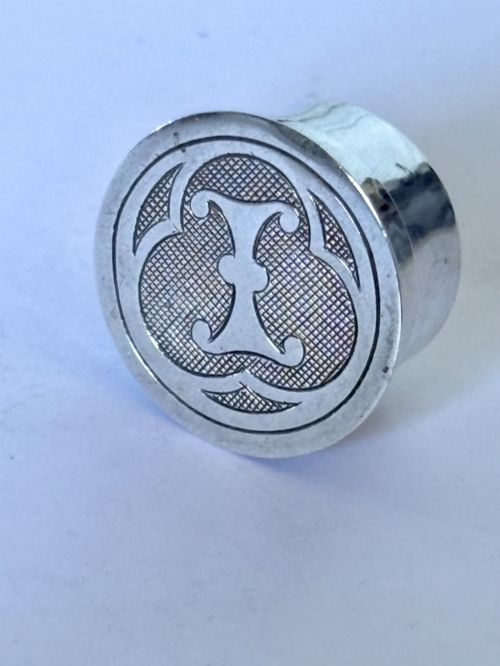
- A small round container used to carry sacramental bread or wafers. These boxes often feature tight-fitting lids and engraved Christian iconography.
- Old Sheffield Plate
- A composite material made by fusing a sheet of silver to a thick copper ingot before rolling. This early plating method produces a rich tone distinct from later electroplate.
- Parcel Gilt
- Silverware that is partially covered in a thin layer of gold. The interior of communion chalices frequently received this treatment to prevent the wine from tarnishing the silver.
- Knoop
- The decorative swelling or knob on the stem of a chalice. It provides a secure grip for the hand during the liturgy.
- Assay Office
- A body charged with testing the purity of precious metals. British pieces bear stamped hallmarks indicating the town of testing, the maker, and the year.
Victorian Silver Communion: Frequently Asked Questions
What is a pyx box used for?
A pyx box is a small vessel designed to hold communion wafers securely for transport. Clergy used them when visiting the sick or homebound.
These pieces usually feature tight lids to protect the bread from damage during travel.
How do chalices differ from goblets?
Chalices are strictly liturgical vessels intended for sacramental wine during church services. They often possess heavier stems and deeper bowls than standard drinking goblets.
Many bear religious engravings or gilt interiors specific to ecclesiastical use.
What does Old Sheffield plate mean?
Old Sheffield plate is an early fusion material where silver and copper are melted together and rolled into sheets. It differs from later electroplating by showing subtle copper edges.
This technique produces a warm lustre valued by collectors of nineteenth-century metalwork.
What is a travelling communion set?
A travelling communion set is a portable kit containing a chalice, paten, and wine bottle fitted inside a lined box. Clergy carried these sets for field services and private home visits.
Complete sets retain all original components nestled tightly in velvet or silk.