




Victorian Silver Chalice
A victorian silver chalice brings solemn ritual weight to a room, functioning as a drinking vessel or devotional object shaped by nineteenth-century silversmiths.
Victorian Silver Chalice
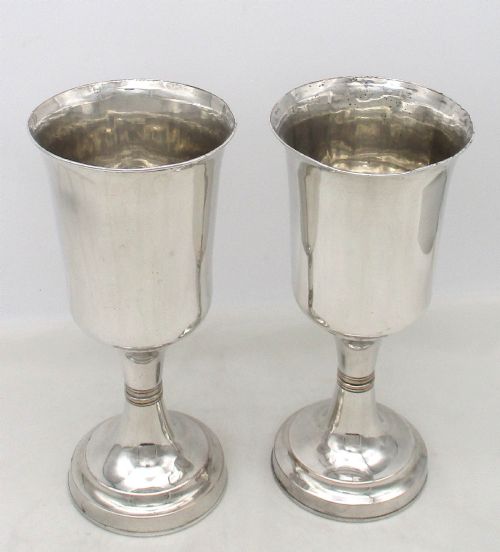
A victorian silver chalice represents a distinct category of drinking vessel and ecclesiastical object produced during the nineteenth century. The examples found here span formal communion chalices, travelling communion sets, secular presentation cups, and decorative goblets.
Most pieces date from the Victorian period, though related items stretch from early Victorian workshops into the Edwardian era. Forms range from plain devotional vessels to heavily chased trophy cups and parcel-gilt drinking vessels.
Materials and Construction
Makers utilised sterling silver and silver plate, often combining them with copper cores in Old Sheffield Plate or adding gold gilt and parcel-gilding to interior bowls. Velvet frequently lines fitted presentation boxes for travelling communion sets.
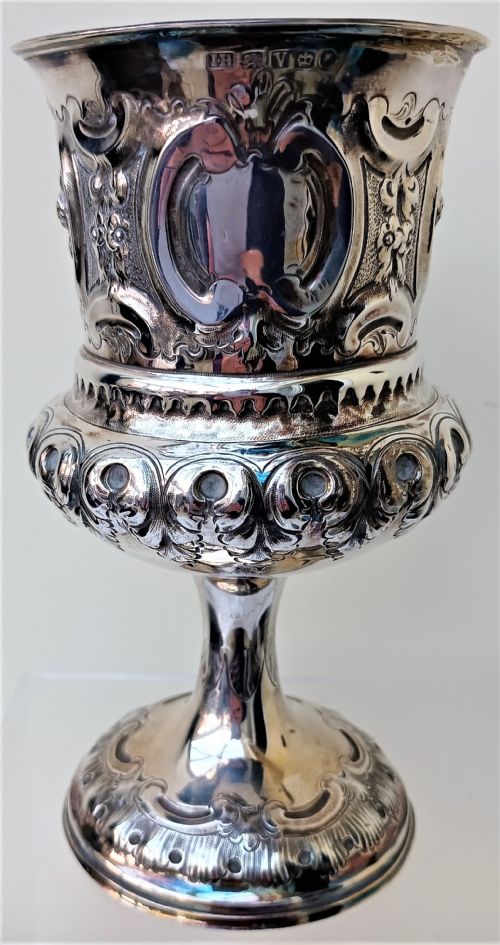
Surface decoration relies on traditional techniques such as engraving, arabesque motifs, floral wriggle-work borders, and chasing. Silversmiths shaped the metal through raising and spinning before applying applied mounts and cast handles or stems.
Listings feature sterling silver, silver plate, copper, velvet, and gold gilt across styles including Gothic, Renaissance Revival, and Neoclassical.
Evaluating Quality and Craftsmanship
Quality reveals itself in the crispness of the chased decoration and the weight of the metal used in the bowl and stem. Superior pieces display deeply struck hallmarks, balanced proportions, and cleanly executed hand engraving rather than shallow machine stamping.
The integrity of the gilding and the preservation of original surfaces distinguish finer examples. Worn silver plate exposing the underlying copper tells a different story of utility compared to well-maintained sterling silver.
George Unite·John Hunt and Robert Roskell·Elkington Mason·Henry Tatton and Son·D and J Wellby·Charles Hougham·Henry Holland·Henry Wilkinson and Co·Charles Stuart Harris
The Victorian Silver Chalice Glossary
- Parcel Gilt
- Silver objects that have portions highlighted with gold plating, usually the interior bowl of a chalice.
- Old Sheffield Plated
- A fused composite material made by melting a layer of silver to a thicker copper base before rolling into sheets.
- Wiggle Work
- A decorative engraving technique created by rocking a graver back and forth across the metal to produce a zigzag line.
- Paten
- A small shallow plate designed to hold the bread, frequently found paired with communion chalices in church sets.
- Chasing
- A metalworking technique where a hammer and punches push the design into the front surface in relief.
Victorian Silver Chalice: Frequently Asked Questions
How were these chalices used?
Many of these vessels served in liturgical contexts for holy communion within churches or private chapels. Others functioned as secular presentation pieces, sports trophies, or ceremonial drinking cups.
Over time, many ecclesiastical chalices transitioned into domestic collections or decorative display items while retaining their formal silhouettes.
Are silver plated chalices antique?
Old Sheffield Plate and silver plated examples from the nineteenth century are genuine antiques produced contemporaneously with solid sterling pieces. Makers applied high standards of craftsmanship to plated church wares.
Assay office hallmarks appear on sterling silver, whereas plated items typically carry maker marks or manufacturer stamps.
How do I clean an antique silver chalice?
Gentle maintenance using a soft cloth and mild silver cleaner preserves the aged patina without removing delicate engraving or gilding. Avoid harsh chemical dips that strip away desirable historical character.
Storing pieces away from direct moisture and rubber materials helps prevent rapid tarnishing of the silver surface.
What is the difference between a chalice and a goblet?
A chalice generally refers to a vessel with a deep bowl and knop stem intended for sacramental use or formal presentation. A goblet often implies a secular drinking vessel, though the terms overlap frequently in nineteenth-century cataloguing.
Ecclesiastical chalices often include wider bases and distinct architectural nodes designed for secure liturgical handling.