



Silver Presentation Goblet
These silver presentation goblets carry the weight of sport and ceremony, crafted to mark victories and milestones.
Silver Presentation Goblet
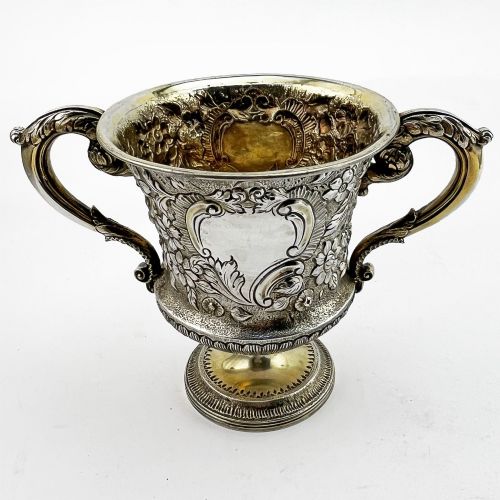
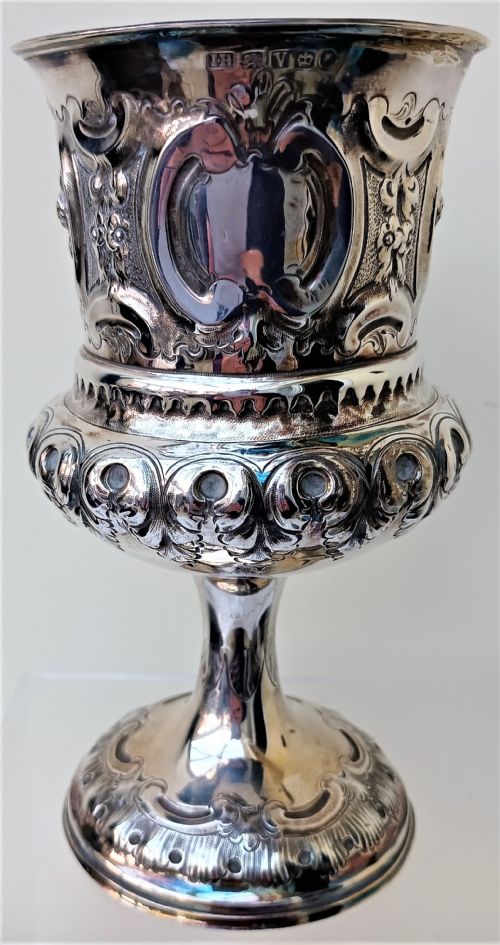
A silver presentation goblet takes the form of a standing vessel intended for commemorative display or communal toast rather than everyday drinking. When you search for a silver presentation goblet, you encounter pieces spanning the Georgian, Victorian, and Edwardian eras, alongside later twentieth-century examples.
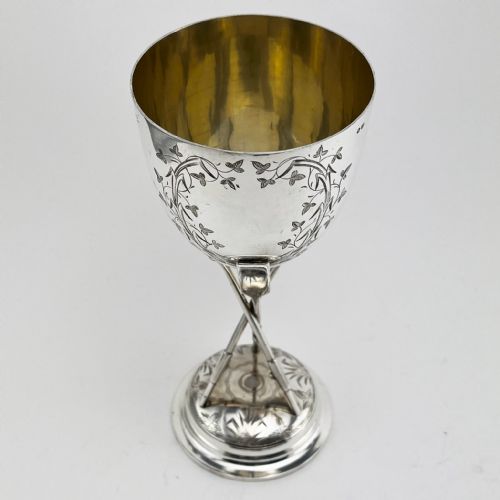
The selection ranges from two-handled campana cups and covered loving cups to slender chalices and rowing or cricket trophies. Many carry period engraving detailing the sporting victories, regiments, or personal milestones they originally marked.
Origins stretch from English provincial assay offices to Chinese Export workshops and Indian Kutch silversmiths. The form adapts to local tastes while retaining the distinctive raised bowl and stem of the traditional goblet.
Evaluating craftsmanship and integrity
Quality rests in the weight of the metal and the crispness of the hand-chased ornament, from scrolling foliage to swimming koi carp. Thicker gauge silver resists dents and maintains the structural integrity of the stem and foot over centuries of handling.
The precision of the maker's mark and the clarity of the assay punches indicate the standing of the workshop. Engraving depth and artistry also separate standard utilitarian prizes from bespoke commissions produced by prominent silversmiths.
Listings include items fashioned from sterling silver, silver plate, Old Sheffield plate, solid silver, silver gilt, and copper.
James Deakin & Sons·Henry Tatton & Son·Zee Wo·Richard Gurney·Joseph Rodgers & Sons
The Silver Presentation Goblet Glossary
- Sterling silver
- An alloy consisting of ninety-two point five percent silver and seven point five percent other metals, typically copper. This standard ensures durability while maintaining a bright metallic lustre.
- Sheffield plate
- An early form of composite metal made by fusing a thin layer of silver to a thicker copper base. Edge seams and copper telegraphing often reveal this layered construction.
- Campana
- A bell-shaped vessel profile widening towards the rim, common in classical and Georgian silver design. This silhouette provides a balanced proportion for two-handled presentation pieces.
- Chasing
- A metalsmithing technique where punches and hammers displace metal from the front to create raised surface relief. This method ornaments the body without removing material.
- Loving cup
- A large drinking vessel featuring two or three handles, designed to be passed among guests during toasts. They frequently appear as presentation pieces with lids and detailed armorial engravings.
Silver Presentation Goblet: Frequently Asked Questions
What were silver presentation goblets used for?
These vessels served as prizes for sporting events, military achievements, and community competitions, or as tokens of esteem. Recipients displayed them on sideboards and mantelpieces to record their accomplishments.
During banquets and formal dinners, some large loving cups and chalices circulated among guests for communal toasts before returning to the display table.
How do I clean a silver presentation goblet?
Use a soft cloth and a reputable silver polish formulated to lift tarnish without being overly abrasive. Avoid harsh scrubbing that can thin delicate hand-engraving or wear away old silver plate.
Take care around applied handles and wooden bases, keeping moisture away from glued or pinned joints. Wash away residual polish with warm soapy water and dry thoroughly with a lint-free cloth.
How can I tell the date of a piece?
British pieces typically bear hallmarks indicating the assay office, the standard mark, and a date letter corresponding to a specific year. Examining these stamps alongside maker's marks provides a reliable method for dating the silver.
Stylistic cues such as Art Deco geometric lines or Victorian floral chasing further narrow down the decade of manufacture when hallmarks are worn or absent.
Can I use an antique goblet for drinking?
While structurally capable of holding liquids, many older vessels have interior gilt loss or residues from centuries of polishing. Pieces featuring old Sheffield plate may also expose the underlying copper base inside the bowl.
Most owners prefer to keep them as display objects to preserve their finish and historical engraving rather than putting them back into everyday service.