


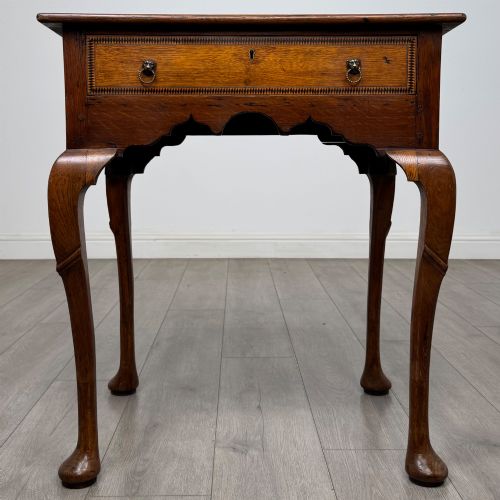

18th Century Inlaid Table
An 18th century inlaid table brings warmth through figured timber and precise marquetry.
18th Century Inlaid Table
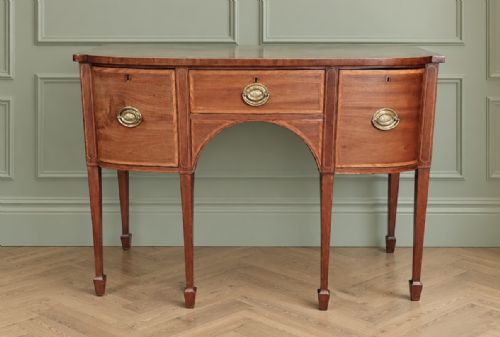
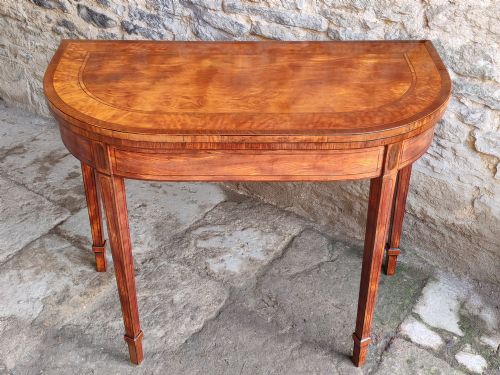
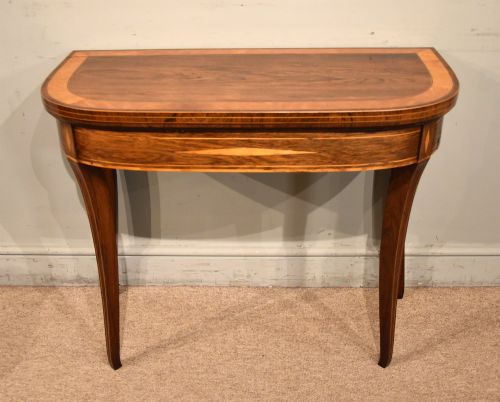
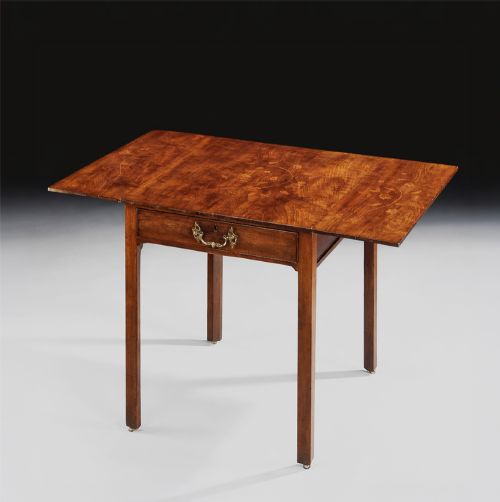
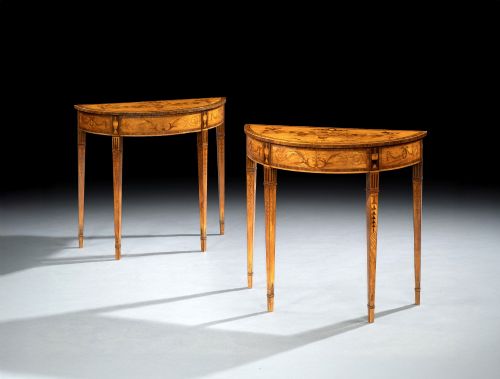
An 18th century inlaid table encompasses a variety of domestic forms designed for dining, writing, and display. The selection on this page leans heavily toward Pembroke tables, card tables, and console tables from the Georgian and Sheraton periods.
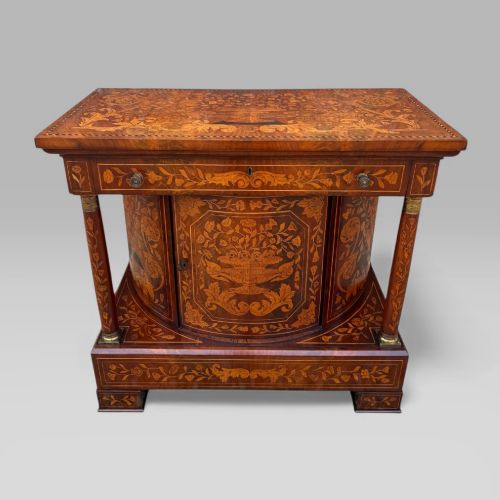
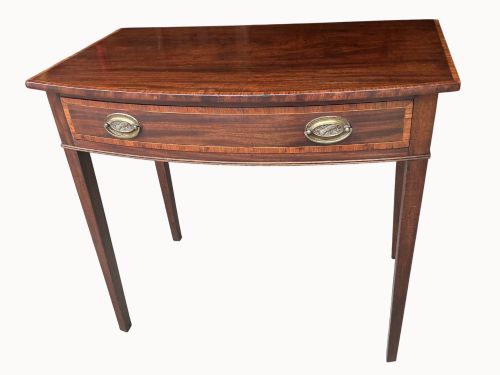
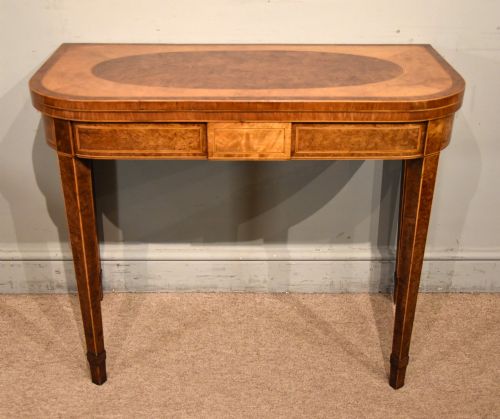
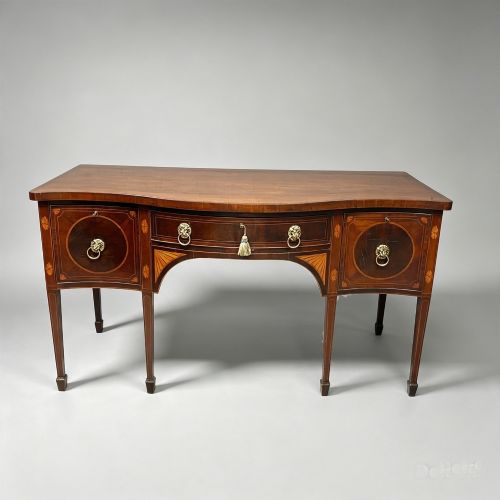
Makers of this era utilised forms such as the demi-lune, drop-leaf, and serpentine front to showcase complex wood selection. Walnut, oak, and mahogany provide the structural carcases, while contrasting timbers create decorative borders and pictorial panels.
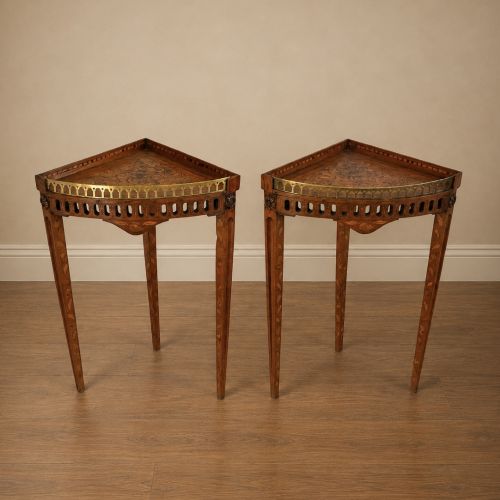
Regional variations span British Georgian workshops and Dutch marquetry centres. Each piece reflects the prevailing neoclassical taste for symmetry and geometric or floral inlay.
How they were made
Cabinet makers built these tables using solid timber frames overlaid with carefully selected veneers. Mahogany and oak formed stable carcases, while decorative surfaces relied on satinwood, rosewood, and burr yew.
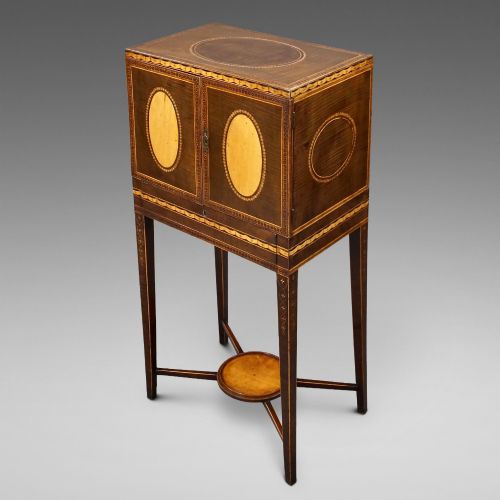
Inlay and marquetry required precise hand-cutting of contrasting woods like boxwood and fruitwood. Craftsmen fitted these elements into recessed channels or veneer grounds to create floral motifs and geometric banding.
Listings feature oak, mahogany, satinwood, and walnut across card tables, Pembroke tables, and sideboards from Georgian and Sheraton periods.
What varies in quality
The sophistication of the timber selection dictates the visual impact of the surface. Highly figured mahogany, fiddleback sycamore, and detailed marquetry panels elevate certain examples above plain domestic pieces.
Structural integrity and the retention of original brass hardware or patination define the survival state. Subtle execution in the cutting of the inlay separates standard cabinet work from exceptional output.
Donald Ross
The 18th Century Inlaid Table Glossary
- Marquetry
- The art of forming decorative patterns by fitting together small pieces of veneer into a ground wood. This technique creates pictorial or floral designs across tabletops.
- Demi-lune
- A half-moon shape characteristic of console and card tables designed to stand flat against a wall. Many examples open with a fold-over top for games.
- Satinwood
- A durable exotic timber known for its yellowish-gold sheen and fine grain. It served extensively for contrasting panels in late period pieces.
- Stringing
- Thin lines of contrasting wood inlay used to outline geometric panels and drawer fronts. This linear detail defines Sheraton and neoclassical design.
18th Century Inlaid Table: Frequently Asked Questions
How do I use a Pembroke table today?
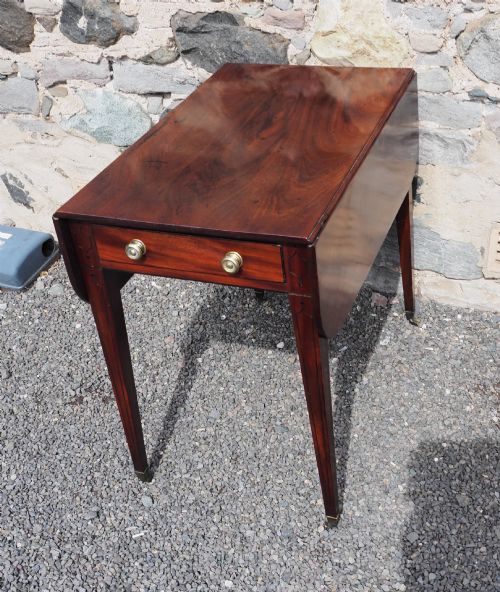
A Pembroke table functions well as a compact writing desk or a side table in a hallway. The drop leaves allow the footprint to adapt to smaller spaces.
Folded down, the leaves sit neatly against a wall. Raising them provides extra surface area when needed.
What is a card table used for?
Historic card tables featured a fold-over top designed for evening games of whist or chess. Many retain lined interiors tailored for play.
In a modern setting, these pieces serve as console tables against a wall. Opening the top reveals the original playing surface.
How do I tell Sheraton style from earlier Georgian pieces?
Sheraton pieces often feature lighter woods like satinwood and delicate stringing. The proportions tend to be slender and refined.
Earlier Georgian furniture relies more heavily on solid mahogany and walnut with carved rather than inlaid ornamentation.
How should I care for an 18th century veneered table?
Keep wooden tables away from direct sunlight and heat sources to prevent the veneers from lifting. Consistent indoor humidity protects the historic timbers.
Apply natural beeswax occasionally to nourish the surface and maintain the historic patination without using harsh modern polishes.