

Rococo Marquetry Table
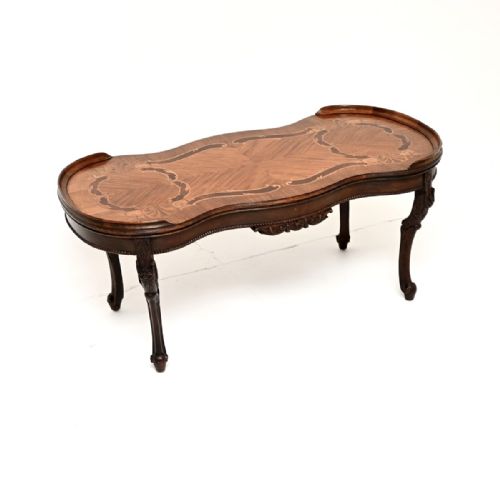
A rococo marquetry table brings curving French revival elegance into a room through intricate wood mosaics and gilded bronze mounts.
Rococo Marquetry Table
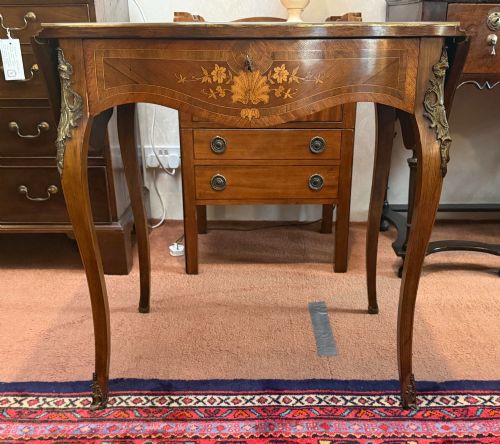
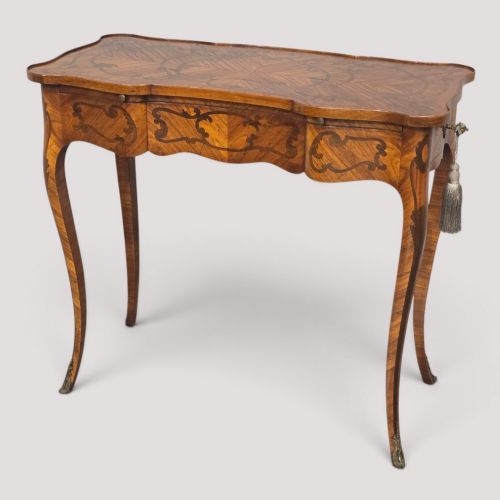
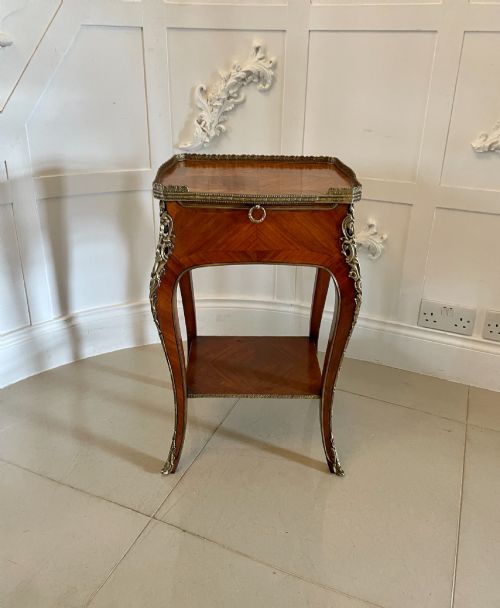
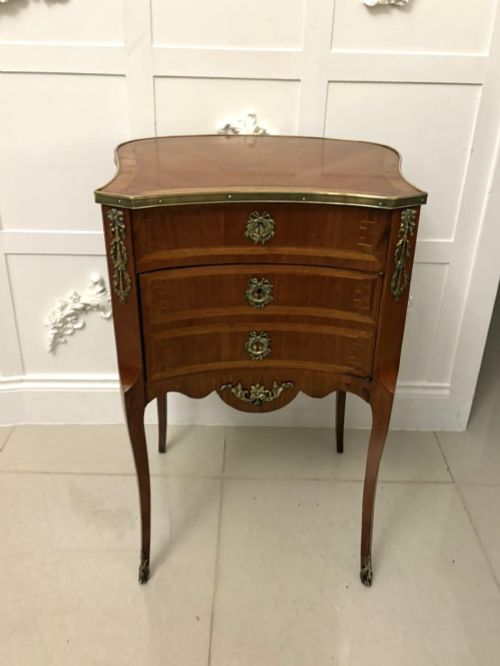
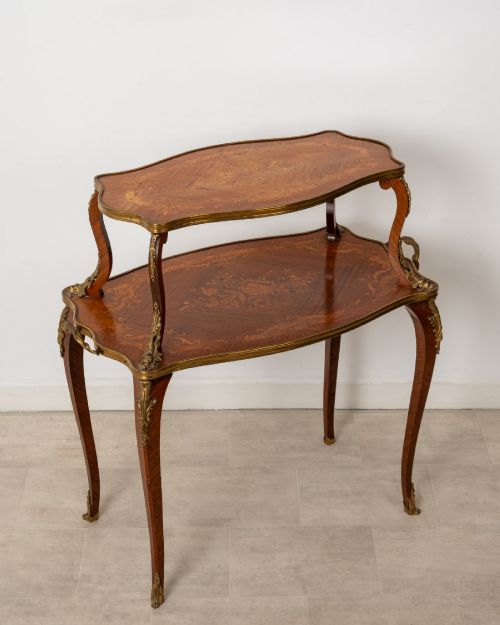
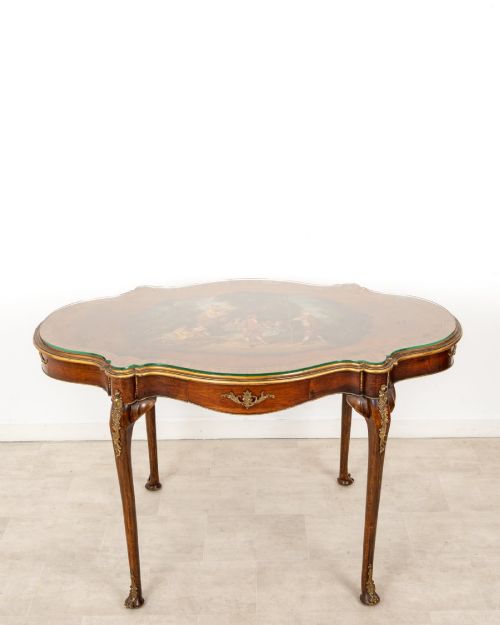
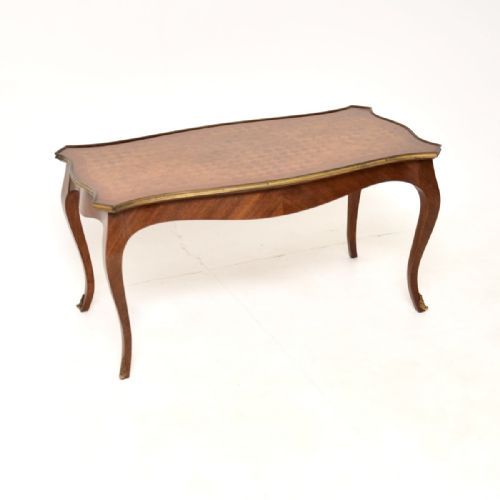
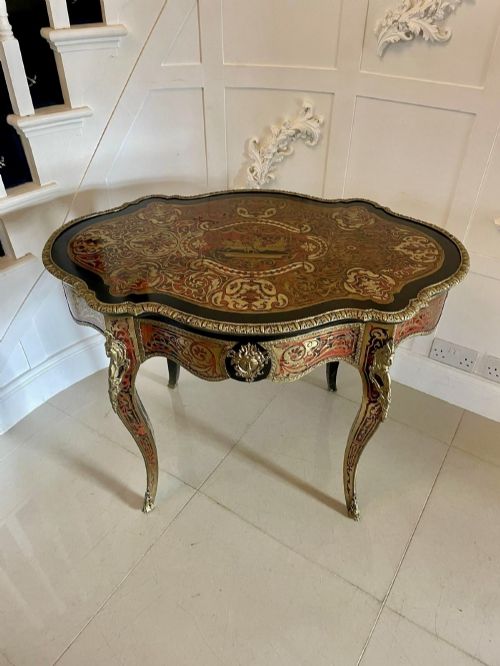
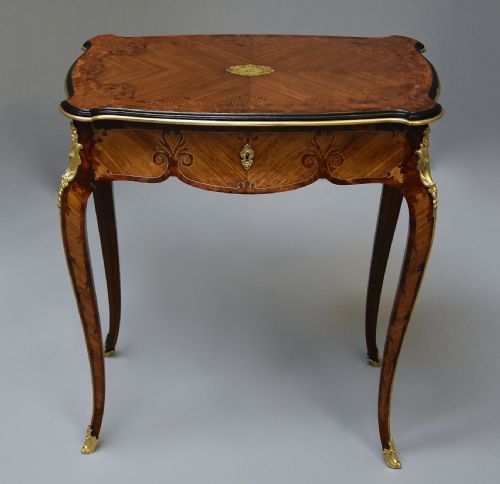
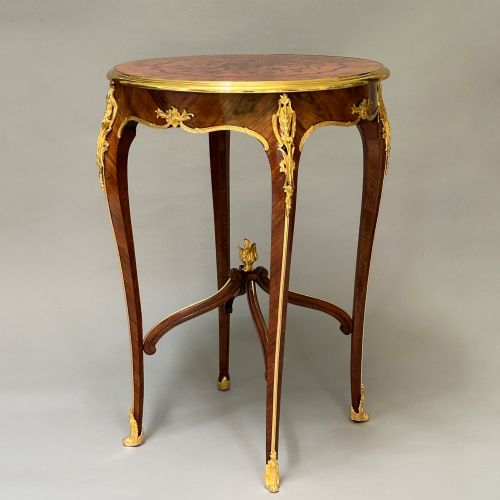
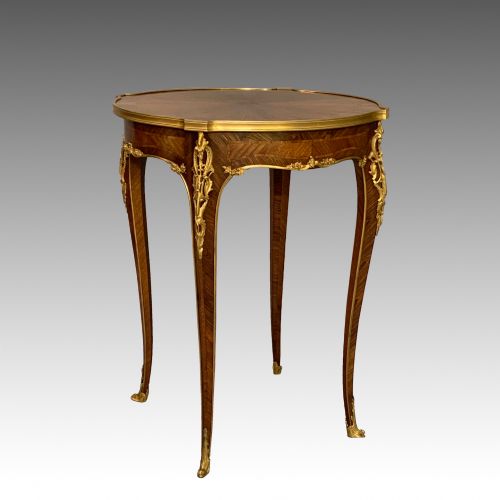
A rococo marquetry table sits within the broader landscape of French Louis XV revival furniture, drawing on historic 18th-century design principles executed largely during the nineteenth and early twentieth centuries. These pieces appear in numerous formats on this page, including side tables, occasional tables, centre tables, writing desks, and card tables.
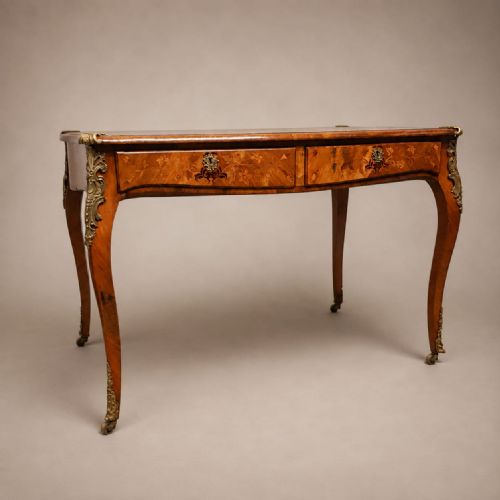
The dominant aesthetic relies on serpentine outlines, asymmetric floral wood inlay, and flamboyant mounts that recall the reign of Louis XV. Examples range from compact bedside tiers to substantial freestanding bureau plats intended for the middle of a room.
Makers and workshops from the nineteenth century enthusiastically adopted these flowing forms, producing walnut and kingwood pieces that merge functional utility with ornamental complexity.
Judging Quality
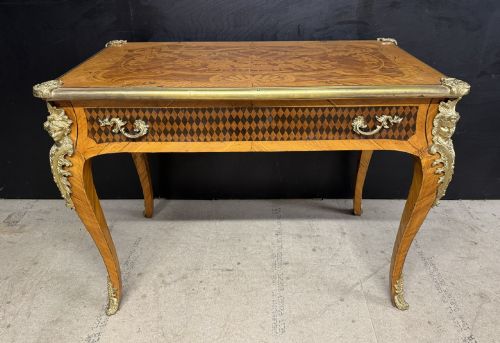
The distinction between standard commercial output and superior craftsmanship lies primarily in the crispness of the cast ormolu mounts and the depth of the marquetry shading. Better examples exhibit finely hand-chased bronze details that integrate seamlessly with the contours of the wood.
The choice and execution of the timbers also dictate standard; superior pieces employ richly grained kingwood and rosewood with tightly fitted, coherent veneer patterns that follow the complex curves without buckling or lifting.
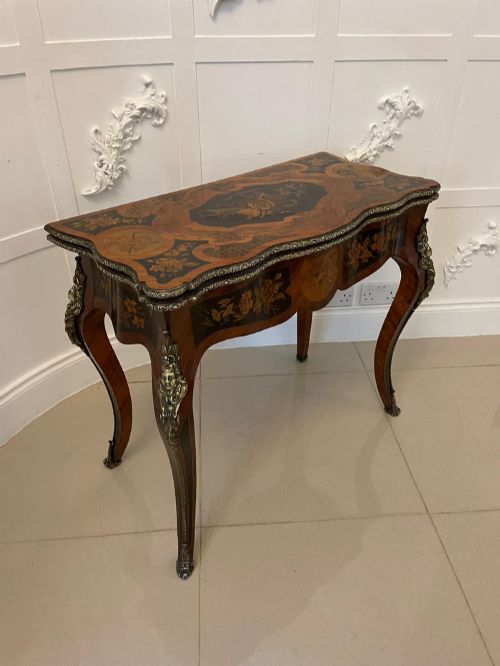
Sophisticated internal mechanisms on writing surfaces or card tables further separate workshop excellence from mass production, showing careful mechanical engineering behind the decorative veneer.
Some nineteenth-century tables hide sophisticated internal mechanisms beneath their floral veneers, ready to surprise anyone who pulls the right lever.
Joseph-Emmanuel Zwiener·Durand·François Linke·Millet
The Rococo Marquetry Table Glossary
- Marquetry
- Decorative veneer applied to a furniture structure in patterns resembling pictures or designs. This technique utilises various tinted and textured woods to achieve pictorial depth.
- Ormolu
- Gilded bronze mounts applied to furniture edges and corners. The term derives from the French for ground gold.
- Bureau Plat
- A freestanding writing desk with drawers in the frieze. These tables are finished on all sides to allow placement in the centre of a room.
- Cabriole Leg
- A furniture leg featuring a double curve, typically swelling outward at the knee and tapering inward toward the foot. This shape is a defining characteristic of the Louis XV style.
- Boulle
- Marquetry technique utilising tortoiseshell and brass inlay developed during the seventeenth century and revived later. It adds a metallic shimmer to dark wood surfaces.
Rococo Marquetry Table: Frequently Asked Questions
Where should I place a centre table?
A centre table is finished on all sides, making it ideal for the middle of a reception room or a large hallway. It functions effectively as a standalone display surface or a striking focal point.
Ensure there is enough surrounding floor space to walk completely around the piece and appreciate the marquetry work from every angle.
How do I care for kingwood and marquetry?
Keep these tables away from direct sunlight and strong heat sources to prevent the wood veneers from drying out or lifting over time. Gentle dusting with a dry, soft cloth is sufficient for routine maintenance.
Avoid applying modern silicone polishes, as they can degrade historic finishes and accumulate in the fine crevices of the marquetry.
What is the difference between parquetry and marquetry?
Parquetry consists of geometric wood patterns such as cubes, diamonds, or chequers assembled like a mosaic. Marquetry forms more organic, pictorial compositions, typically depicting flowers, foliage, or musical instruments.
Both techniques appear frequently on the surfaces of revival furniture from the nineteenth century.
Are writing desks practical for daily use?
Bureau plats and writing tables offer generous surface areas and often include integrated drawers for storage. Many feature leather-lined writing surfaces that provide a smooth, durable pad for correspondence.
Care should be taken with antique leather surfaces by using blotters and avoiding moisture spills during daily tasks.