



Continental Marquetry Table
A continental marquetry table brings together patterned wood veneers and formal historic styling to anchor a room.
Continental Marquetry Table
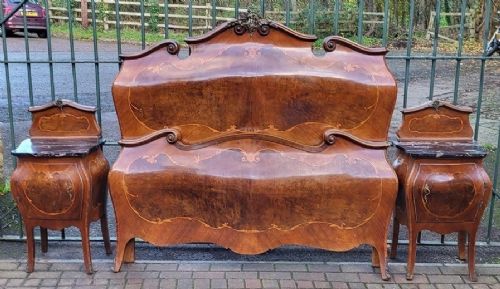
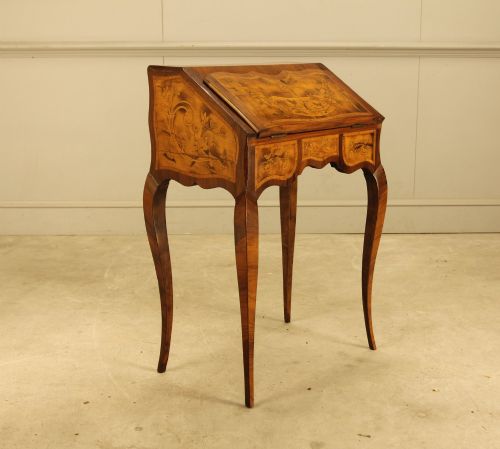
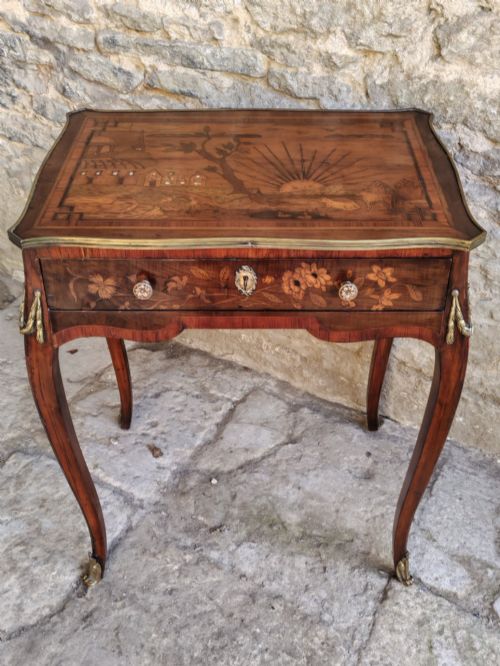
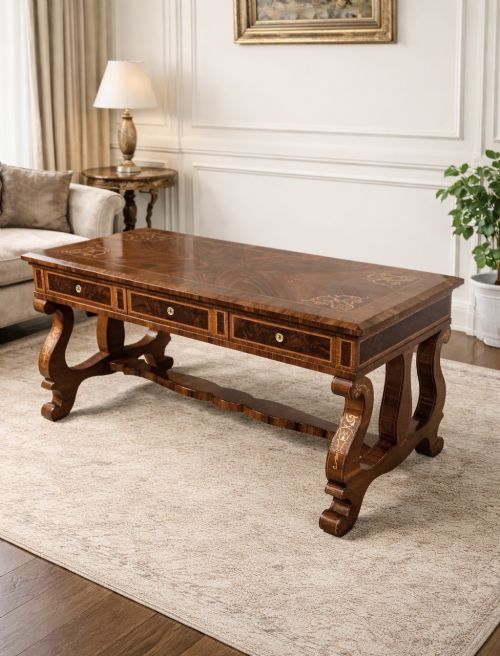
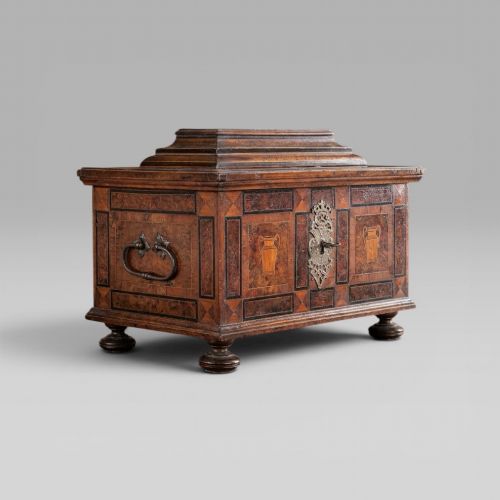
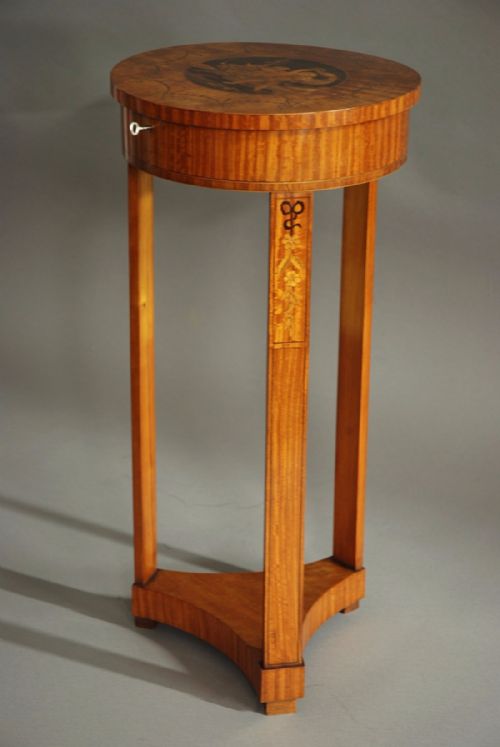
A continental marquetry table displays detailed inlaid wood patterns across surfaces spanning centre tables, side tables, and writing desks. These pieces originate from periods including the seventeenth, eighteenth, and nineteenth centuries.
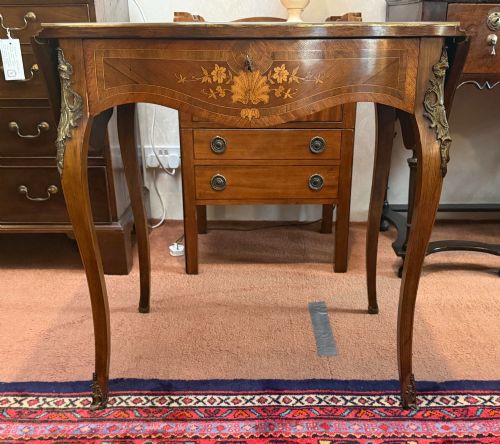
The version most commonly met on this page is the centre table or occasional table, often shaped in styles such as Dutch Rococo, Louis XV, or Baroque. Walnut, burr walnut, and fruitwood provide the primary foundations for these inlaid designs.
Materials and construction methods
Craftsmen built these tables using robust carcases of walnut, oak, or ebonised wood to support decorative surfaces. Marquetry inlay and parquetry geometric patterns utilise contrasting timbers such as fruitwood and satinwood.
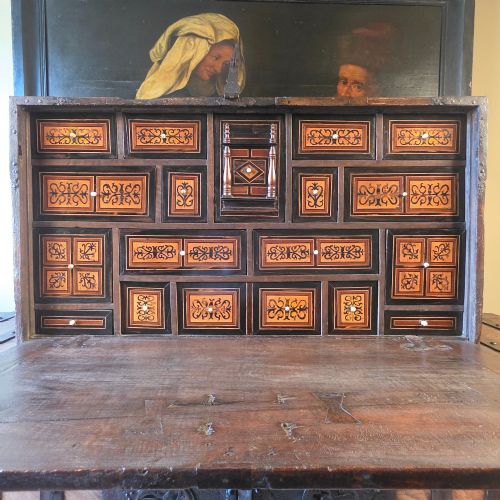
Metal mounts in brass and ormolu frequently accent the structural corners and legs of nineteenth-century examples. Iron components occasionally appear in foundational support elements of earlier seventeenth-century forms.
Continental Marquetry Table Retail Price Guide 2026
Typical asking prices for continental marquetry table among the pieces listed under this phrase on Sellingantiques today, from the lower quarter to the upper quarter. They describe what is for sale here now, not the wider market.
The listings span periods from the 17th century through the 20th century, utilising walnut, satinwood, and ormolu.
Markers of quality and execution
Quality rests in the precision of the veneer cutting and the harmonious natural tones of the contrasting woods within the marquetry design. Finer examples display intricate floral or architectural motifs that align seamlessly across the joins of the timber.
The sophistication of the underlying furniture form, whether a serpentine Louis XV frame or a robust Baroque base, dictates the overall architectural success of the piece. Integrated bronze or ormolu mounts show superior chiselling in higher-tier examples.
The Continental Marquetry Table Glossary
- Marquetry inlay
- Decorative patterns formed by fitting together small pieces of wood veneer onto a structural surface. This technique creates pictorial or geometric designs across tabletops and cabinet fronts.
- Ormolu
- Gilded bronze mounts applied to furniture for decorative enrichment. These metallic elements appear frequently on nineteenth-century continental pieces.
- Parquetry
- Geometric wood inlay patterns arranged in repeating grids or shapes. This technique distinguishes surfaces on tables and occasional furniture.
- Centre table
- A freestanding piece designed to be viewed from all sides rather than pushed against a wall. These forms serve as prominent focal points in historic interiors.
- Burr walnut
- Timber taken from the abnormal growth of a walnut tree, yielding swirling grain patterns. Cabinetmakers utilised this highly figured wood for primary decorative surfaces.
Continental Marquetry Table: Frequently Asked Questions
What is a continental marquetry table?
A continental marquetry table is a historic surface decorated with intricate wood veneer patterns, originating from workshops across Europe.
These pieces encompass forms such as centre tables, side tables, and writing desks spanning several centuries of European cabinetmaking.
How do I date a marquetry table?
Dating relies on examining the underlying wood construction, the furniture style, and the complexity of the veneer work.
Seventeenth-century examples often feature heavier architectural forms, while eighteenth and nineteenth-century pieces frequently display fluid Rococo or neoclassical stylistic influences.
Where should I place a centre table?
A centre table works best in an open space where its patterned top and finished sides remain fully visible from all angles.
These tables function well in entrance halls or large reception rooms as standalone display surfaces.
How do I care for antique veneer?
Maintaining veneer requires keeping the wood away from direct sunlight and maintaining stable indoor humidity levels.
Regular dusting with a dry cloth protects the historic polish without introducing moisture to the delicate wood joints.