
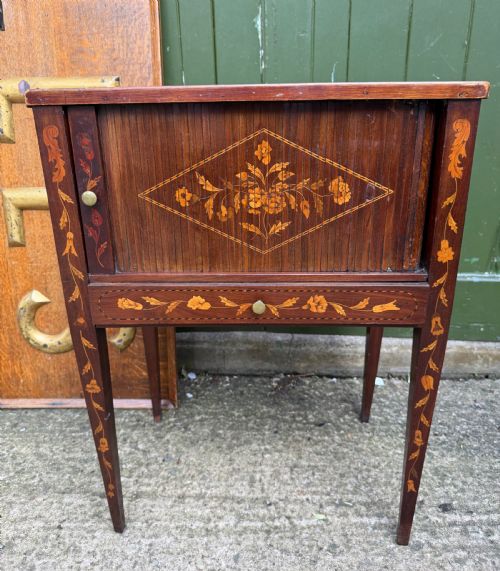


Dutch Marquetry Side Table
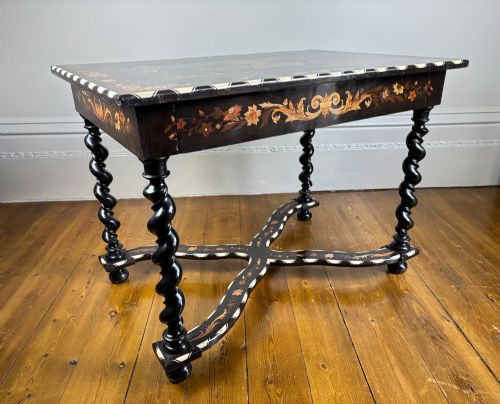
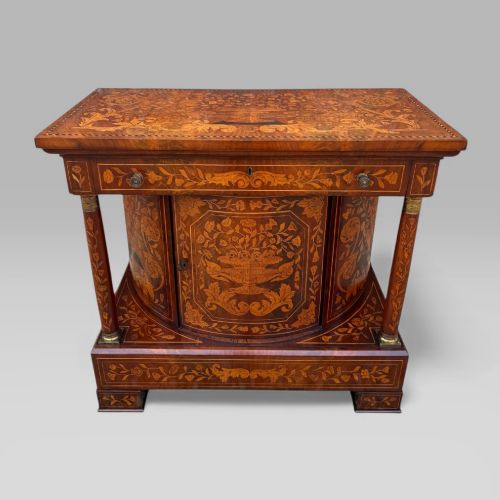
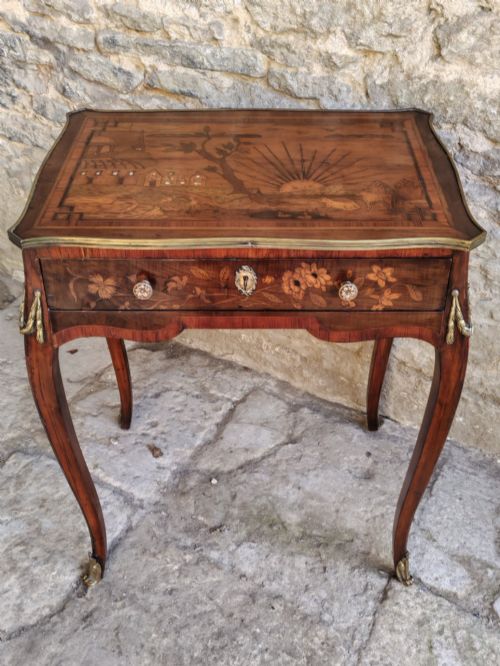
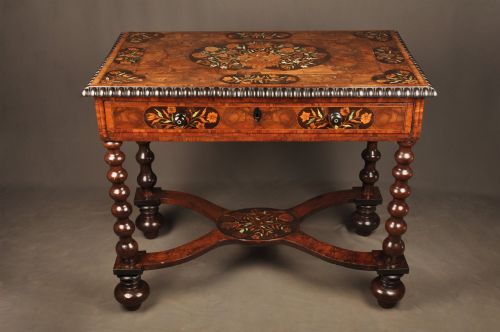
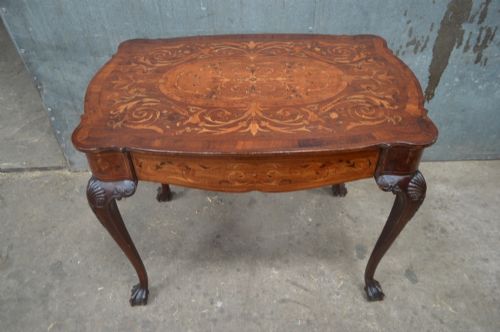
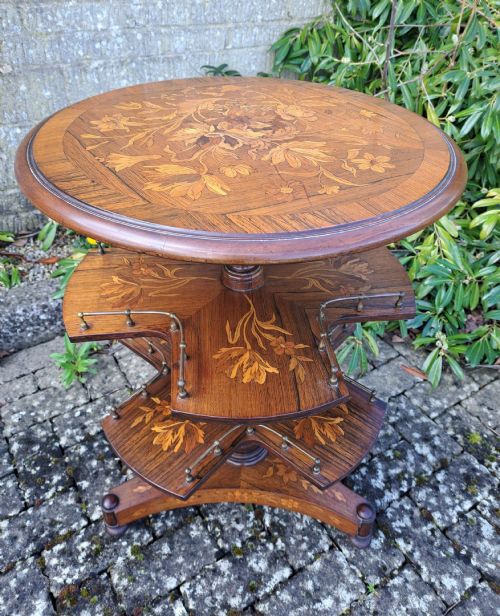
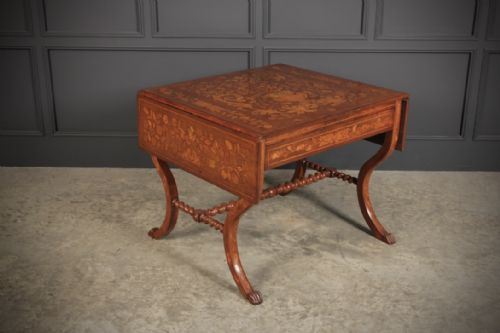
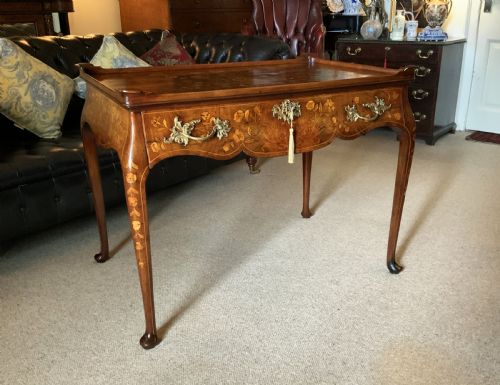
A dutch marquetry side table brings intricate floral and bird designs together on walnut or mahogany surfaces.
Dutch Marquetry Side Table
A dutch marquetry side table combines functional surface space with elaborate wood inlay depicting floral motifs, birds, and urns. Pieces span from the seventeenth century through the nineteenth century, including Georgian examples and Victorian interpretations.
The form appears in various configurations, including standard side tables, card tables, console tables, library tables, and bedside cabinets. Walnut and mahogany provide the primary foundation for these inlaid compositions.
Examples from the eighteenth century often display Rococo or Baroque influences with serpentine lines, while nineteenth-century variations include ebonised finishes and bone or satinwood detailing.
Materials and construction
Cabinet makers utilised foundational woods like walnut, mahogany, and fruitwood to build the structural carcass and legs of each table. These timbers provided stable dark grounds for decorative surface work.
Craftsmen applied fruitwood, boxwood, ebony, and bone veneers to create complex floral and bird marquetry patterns. Individual pieces of contrasting timber were cut and fitted by hand into recessed channels across the top and drawer fronts.
Periods represented range from seventeenth-century Baroque origins through Georgian and Victorian eras.
Judging the execution
The refinement of the marquetry cutting separates standard production from superior work. Precision in the floral and bird details indicates the skill level of the original workshop.
Choice of underlying timbers and secondary materials like bone or satinwood alters the character of the piece. Crispness in the carved legs and stability of the joined walnut or mahogany structure define the standard.
The Dutch Marquetry Side Table Glossary
- Marquetry
- Decorative veneer work forming pictures or patterns on a wooden surface. Craftsmen cut thin sheets of contrasting wood to assemble floral and bird motifs.
- Parquetry
- Geometric wood inlay forming repeating patterns such as cubes or chequered designs. This technique differs from the pictorial floral compositions found on marquetry tables.
- Serpentine
- A curved line bending inward and outward, typical of eighteenth-century furniture shapes. This contour appears frequently on walnut side table fronts.
- Ebonised
- Wood treated with a dark finish to imitate ebony. This technique creates a dense black ground that highlights lighter inlaid boxwood or bone details.
Dutch Marquetry Side Table: Frequently Asked Questions
How do I date a dutch marquetry side table?
Examination of the primary timber, structural form, and inlay style helps determine the period. Eighteenth-century pieces frequently show walnut bases with floral rococo carving, while nineteenth-century items often utilise mahogany or ebonised woods.
Secondary woods and construction methods inside drawers provide additional clues regarding age. Comparing the specific floral motifs against known period designs confirms the timeline.
What is the difference between marquetry and parquetry?
Marquetry involves pictorial inlay depicting natural subjects like flowers, birds, and urns using various coloured woods. These compositions form detailed scenes across the table top.
Parquetry relies on geometric shapes arranged in repeating patterns such as cubes or stripes. Both techniques appear on these tables, sometimes combined on the same surface.
Where were these tables placed historically?
These tables served decorative and practical functions in principal rooms, hallways, and bedchambers. Console and side variants stood against walls beneath mirrors or paintings.
Card and library versions stood further into rooms to accommodate social activities. Bedside cupboards provided enclosed storage next to sleeping quarters.
How do I care for inlaid wood?
Maintaining stable humidity levels prevents the delicate fruitwood and bone inlays from lifting or cracking. Direct sunlight causes fading in walnut and mahogany grounds.
Regular dusting with a dry cloth preserves the finish without moisture damage. Occasional application of appropriate wax protects the historical surface.