

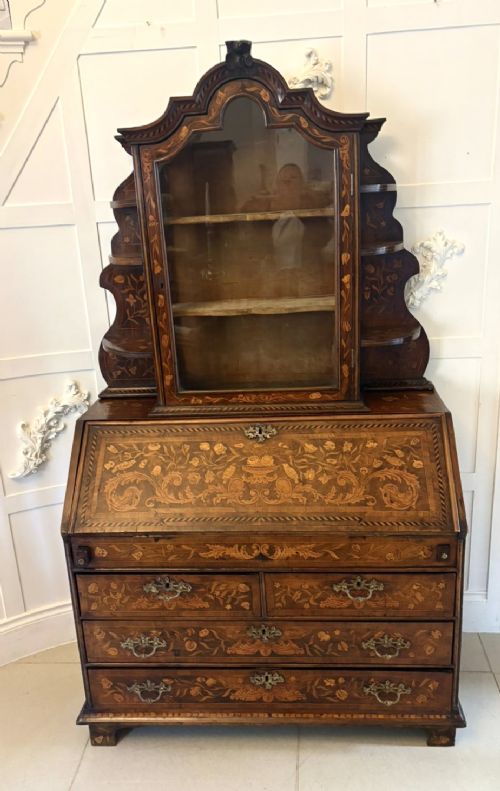


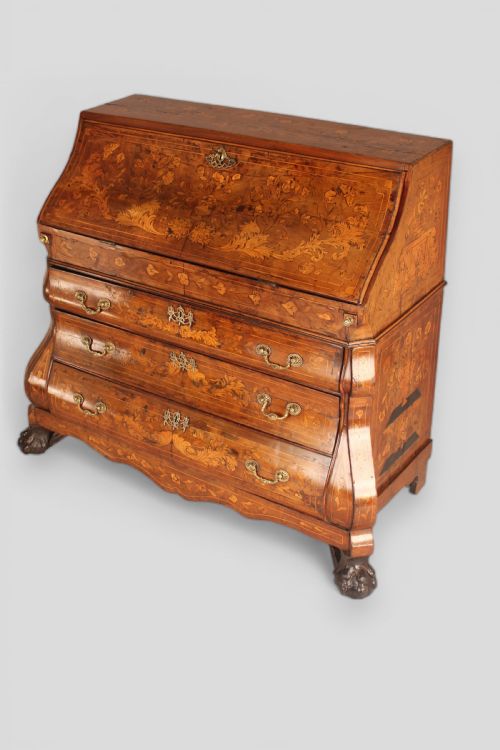


Dutch Marquetry Writing Desk
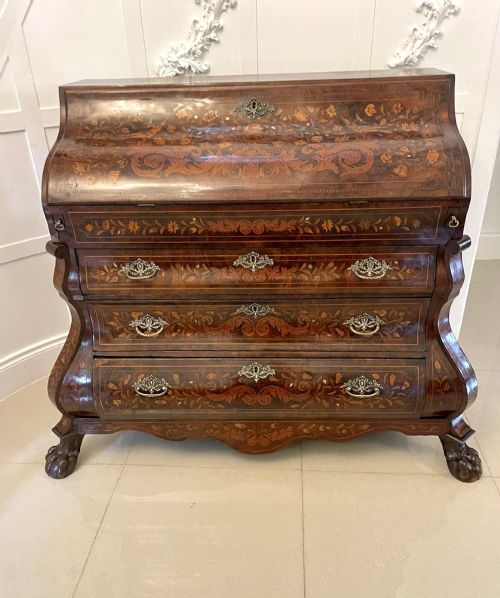
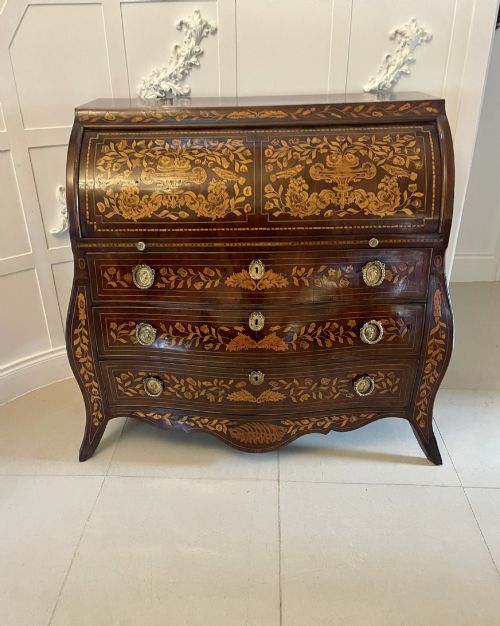
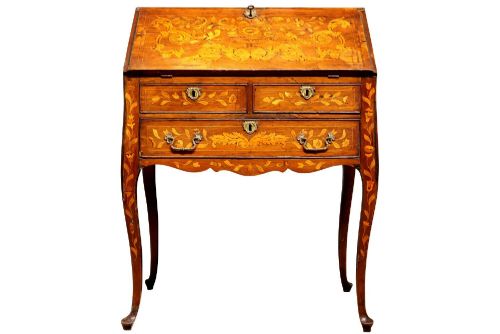
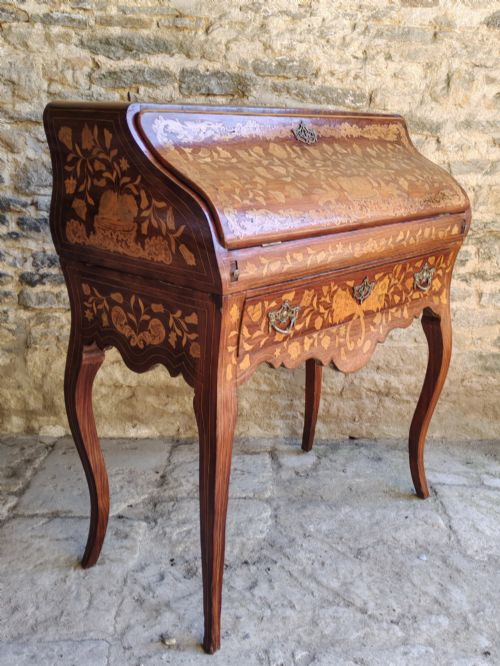
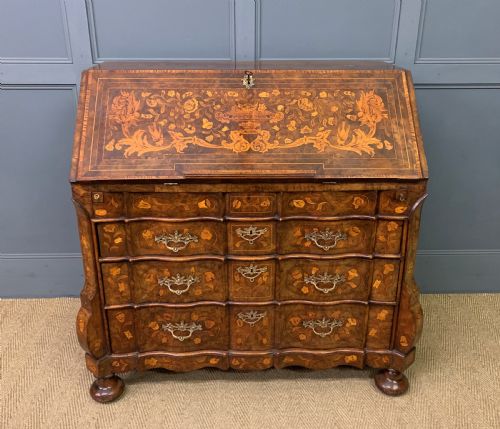
A dutch marquetry writing desk brings elaborate floral imagery and walnut timber together into a functional workspace.
Dutch Marquetry Writing Desk
When you search for a dutch marquetry writing desk, you encounter pieces intended for correspondence and record-keeping that display intricate inlaid surfaces. The selection relies heavily on bureaux, bureau bookcases, and standard desks originating from the eighteenth and nineteenth centuries.
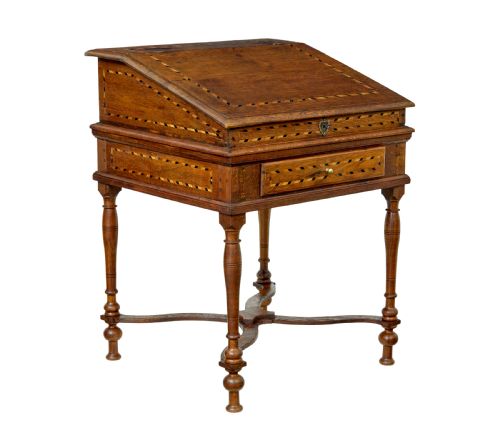
The most common form on this page is the bureau, frequently shaped with a bombe front or cylinder action. These items combine sloping writing flaps with numerous internal compartments, often supporting upper display cabinetry in the taller bookcase configurations.
Materials and Construction
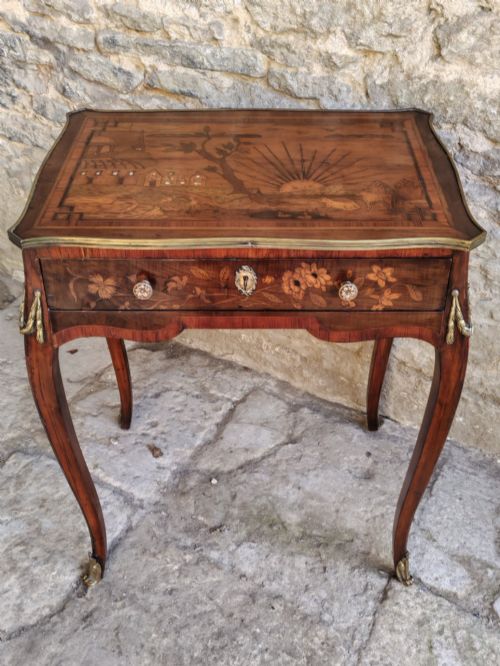
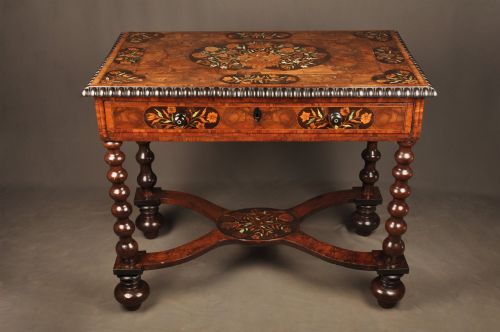
Carpenters utilised primary woods such as walnut, burr walnut, mahogany, oak, and fruitwood to build the structural carcases. Surfaces then received detailed floral marquetry and fruitwood inlay, creating contrasting botanical patterns across the drop fronts and tabletops.
Brass hardware typically provides handles and key escutcheons, anchoring the timber sections. The joinery combines solid wood foundations with carefully applied veneers that frame the pictorial inlay work.
The inventory spans the seventeenth century through to the early twentieth century.
Evaluating Execution
The standard of a dutch marquetry writing desk depends upon the precision of the floral inlay and the depth of the timber grain. Burr walnut and rich mahogany provide a superior visual ground for the contrasting fruitwood marquetry compared to plain secondary timbers.
Bombe shaping requires advanced cabinetmaking skill to achieve the swelling curved fronts without compromising structural integrity. Pieces demonstrating refined proportions and unbroken inlay patterns occupy the higher tier of the range.
Morison of Edinburgh
The Dutch Marquetry Writing Desk Glossary
- Marquetry
- Decorative veneer applied to a furniture structure in patterns resembling pictures or designs. This technique utilises varied timbers to create pictorial floral motifs across writing surfaces.
- Bombe
- A swelling, outward-curved profile on the lower section of a bureau or cabinet. This contour defines many eighteenth-century continental forms.
- Bureau
- A writing desk featuring an angled hinged flap that drops down to reveal a fitted interior of pigeonholes and small drawers. It serves as a compact workspace with concealed storage.
- Escritoire
- A tall writing cabinet or desk equipped with a fall-front writing surface. It provides vertical storage alongside a fold-down desktop.
- Cylinder bureau
- A desk featuring a quarter-circle rotating wooden cylinder that conceals the writing surface when closed. The mechanism rolls back into the body of the desk.
Dutch Marquetry Writing Desk: Frequently Asked Questions
How do I identify a bureau bookcase?
A bureau bookcase combines a lower writing desk fitted with a sloping flap and an upper glazed or paneled cabinet for storing books.
These taller combination pieces provide integrated display shelving above the enclosed working area.
What is a cylinder desk?
A cylinder desk encloses the writing area behind a curved rolling shutter rather than a flat folding flap.
Rotating this wooden cylinder upward reveals the fitted interior and sliding writing slide.
Where were these desks made?
The majority of these pieces originate from the Netherlands, reflecting traditional continental cabinetmaking methods.
Workshop production centered around distinct regional styles spanning the eighteenth and nineteenth centuries.
How do I care for walnut veneer?
Walnut surfaces require stable indoor humidity levels and protection from direct sunlight to prevent timber drying and veneer lifting.
Applying occasional appropriate wax polish maintains the lustre of the grain without building up heavy residue.