


Dutch Marquetry Console Table
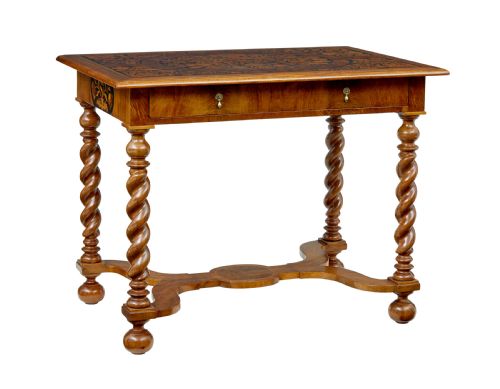
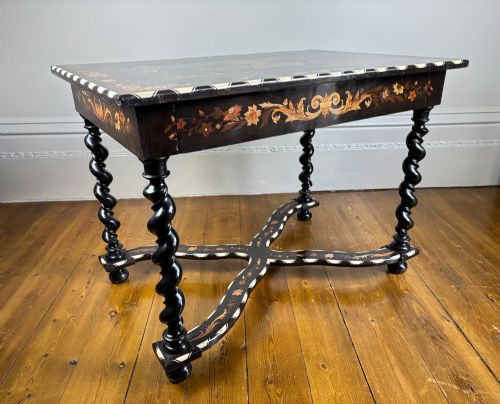
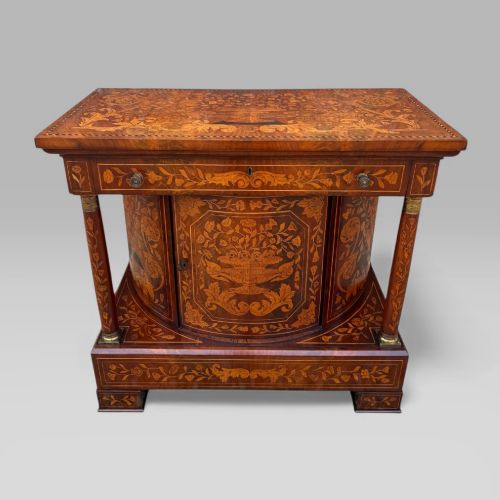
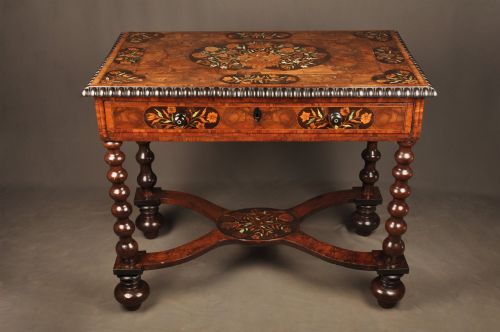
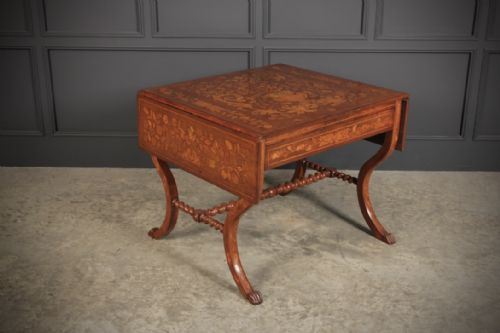
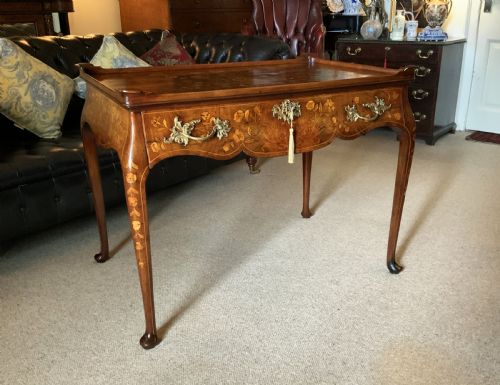
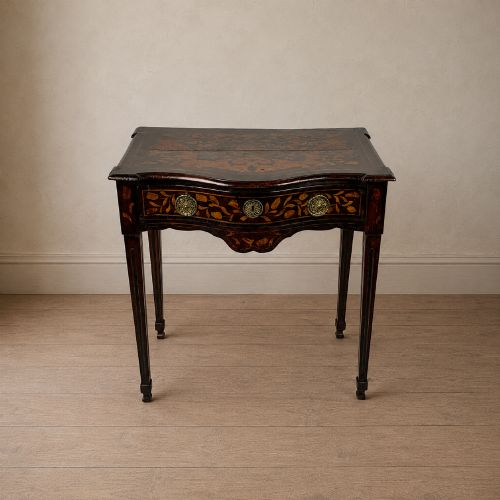
A dutch marquetry console table brings floral and bird imagery into a room through intricate fruitwood and bone inlay.
Dutch Marquetry Console Table
A dutch marquetry console table combines surface decoration with functional forms including side tables, card tables, and wall cabinets.
Examples span the seventeenth, eighteenth, and nineteenth centuries, taking influences from baroque, rococo, and neoclassical styles.
Walnut, mahogany, and ebonised wood provide the primary structures for these decorated surfaces.
Materials and technique
Craftsmen applied fruitwood and bone inlay onto walnut, mahogany, and ebonised wood foundations.
Marquetry techniques rendered detailed floral and bird motifs across the tops and sides of the tables.
Tables often conceal their card-playing purpose beneath cheerful displays of inlaid birds and flowers.
Judging quality
The precision and complexity of the fruitwood and bone inlay determine the visual depth of the surface decoration.
The choice of primary timber, from plain walnut to figured mahogany and ebonised wood, dictates the overall character of the piece.
The Dutch Marquetry Console Table Glossary
- Marquetry
- Decorative woodwork where pieces of veneer are fitted into a ground to form floral and bird designs.
- Console table
- A table designed to stand against a wall, sometimes supported by brackets.
- Ebonised wood
- Timber treated to resemble ebony, providing a dark contrasting ground for inlay.
- Serpentine
- A curved line shape featuring a convex centre flanked by concave ends, seen on table edges.
Dutch Marquetry Console Table: Frequently Asked Questions
What is a dutch marquetry console table?
These pieces are decorative tables featuring elaborate inlaid fruitwood and bone motifs depicting flowers and birds.
They function as wall tables or side pieces within a room.
How were these tables used?
Owners placed these items against walls for display purposes or utilised folding tops for games.
They served as decorative focal points in formal rooms.
How do I date a table?
Dating relies on observing structural forms and stylistic influences ranging from baroque to neoclassical periods.
Timber choices also help indicate whether a piece belongs to the seventeenth, eighteenth, or nineteenth century.
What woods were used?
Walnut and mahogany form the primary structural bodies of these tables.
Fruitwood and bone provide the contrasting materials for the detailed marquetry inlay.