
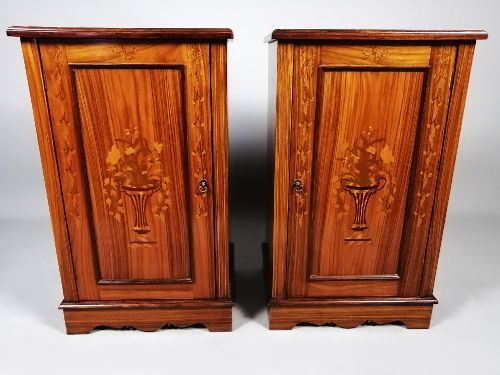
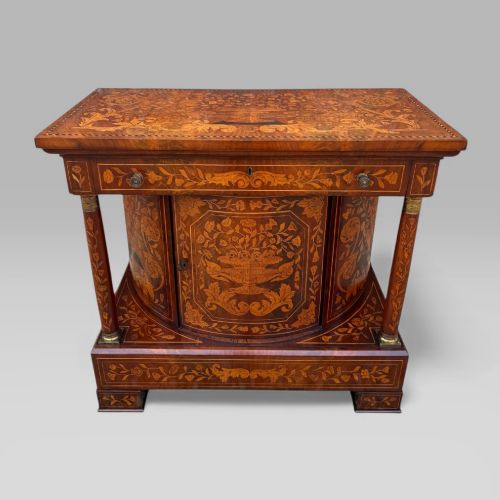
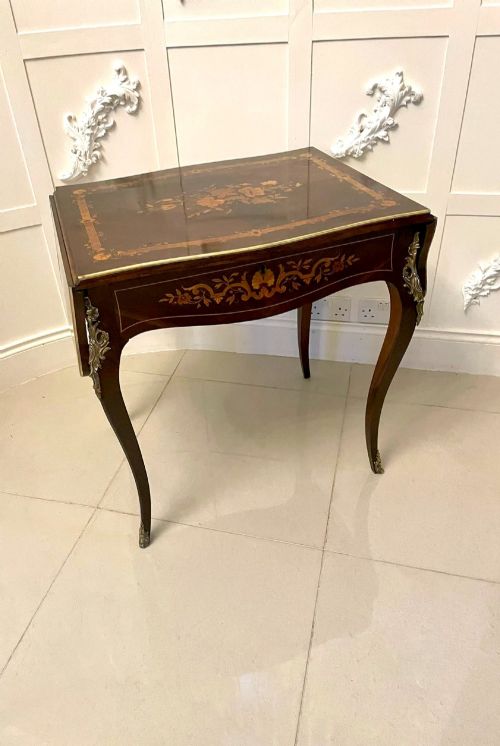
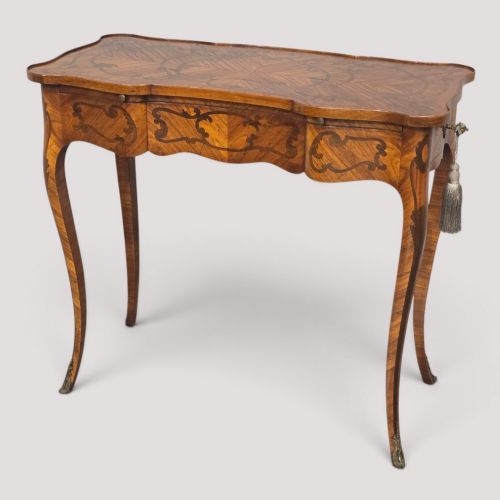
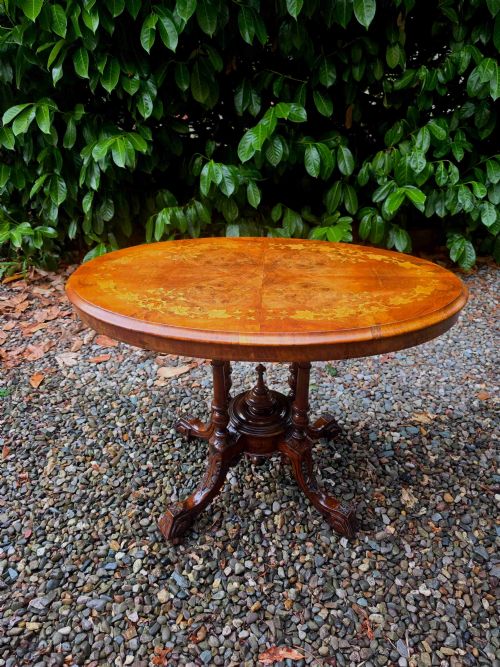
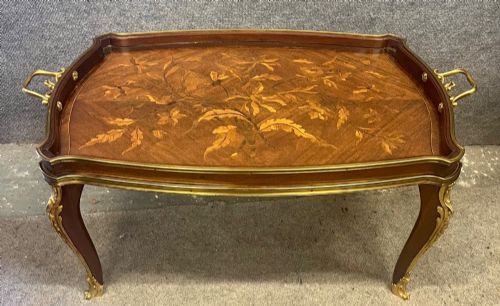
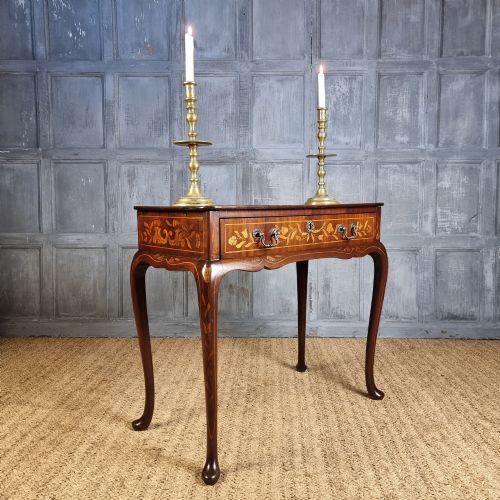
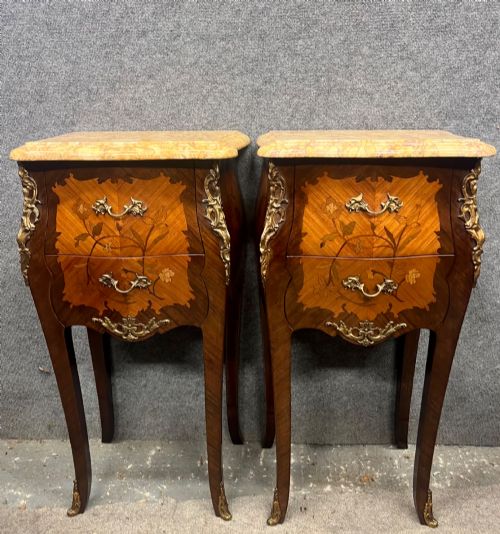
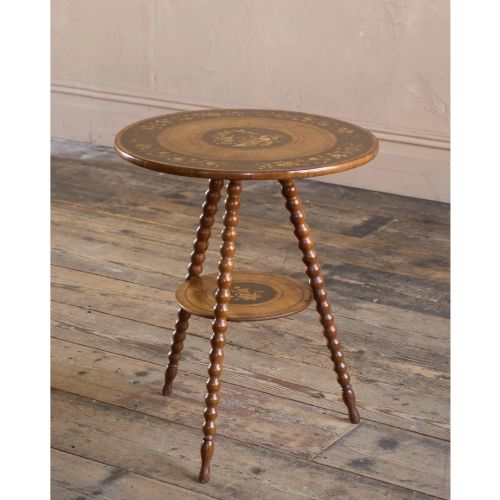
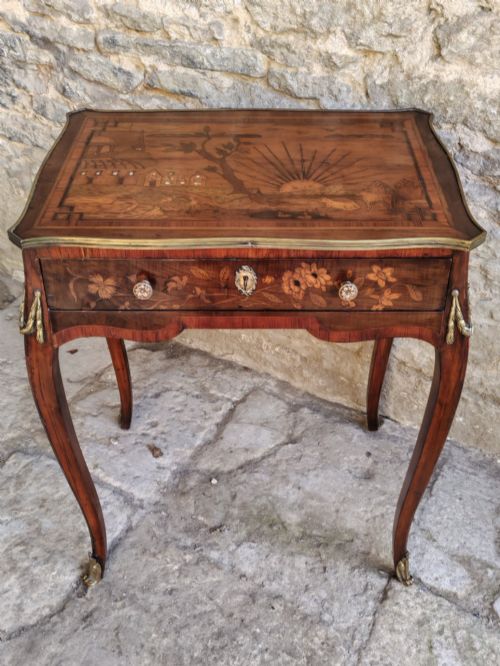
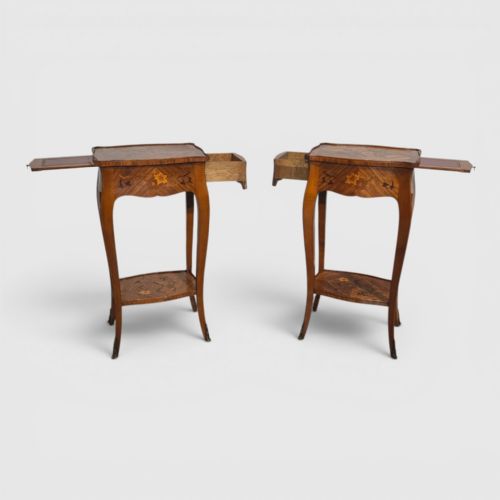
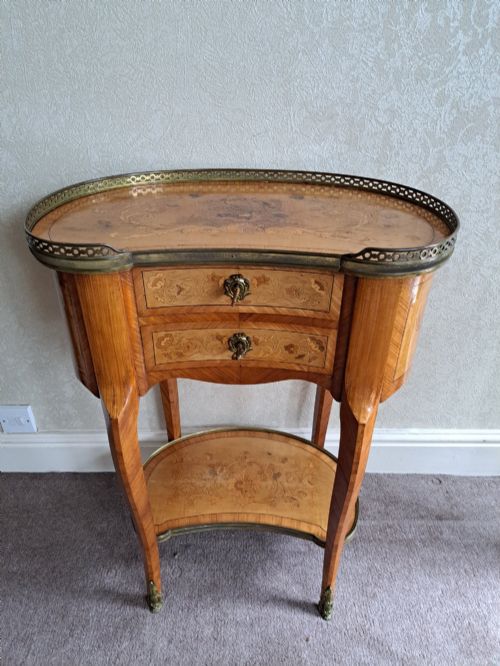
Brown Floral Marquetry Table
A brown floral marquetry table brings together intricate wood inlay and functional form, offering a distinctive centrepiece for traditional rooms.
Brown Floral Marquetry Table
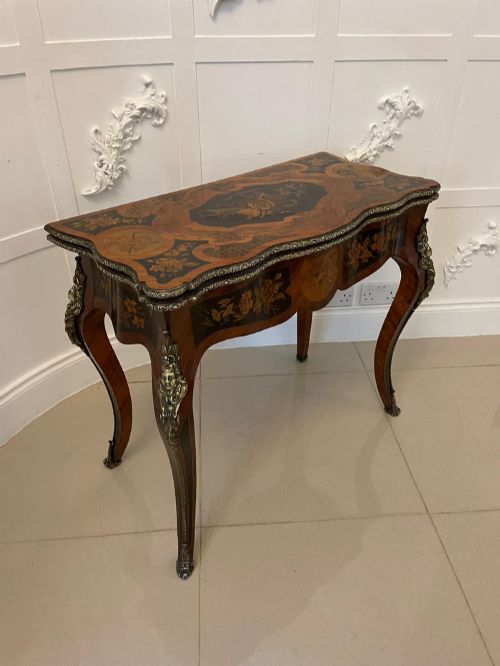
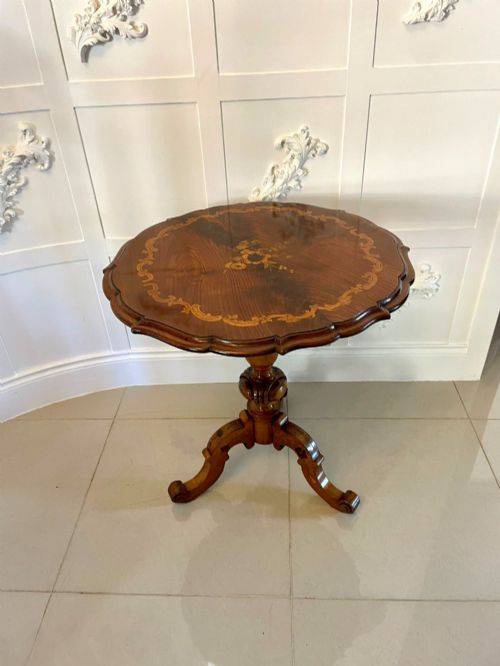
A brown floral marquetry table encompasses a variety of domestic forms, ranging from compact bedside cabinets and writing desks to larger centre tables and games tables. These pieces emerge primarily from 18th-century and 19th-century workshops, spanning Victorian, Edwardian, and continental revival styles.
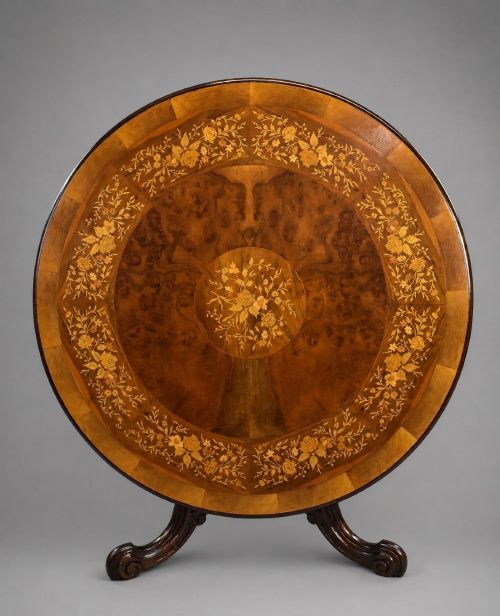
The most common examples on this page are French and Dutch creations, utilising rich timbers to display elaborate floral ornamentation across oval, rectangular, and kidney-shaped surfaces.
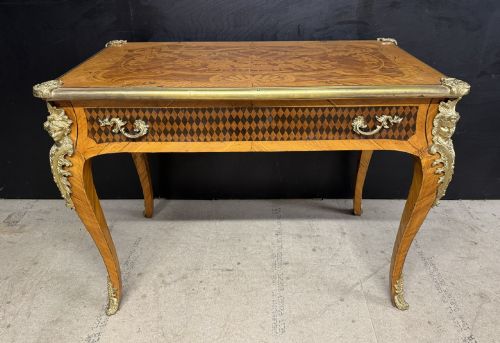
Makers utilise traditional forms such as the bureau plat, console wall table, and Sutherland table, adapting floral marquetry panels to suit both formal reception rooms and intimate bedroom settings.
Materials and Construction
Cabinet makers construct these tables using foundational carcases of mahogany, walnut, or fruitwood, overlaid with decorative veneers of burr walnut, kingwood, and rosewood.
Floral marquetry patterns are formed by meticulously cutting contrasting thin wood veneers and assembling them into pictorial floral motifs before pressing them onto the table top.
Many pieces incorporate cast or gilt ormolu mounts, brass details, and fine hardware to accent the curved lines of French Rococo and Dutch Baroque designs.
Several tables depict lively birds perched among floral marquetry, adding permanent winged companions to the parlour.
Evaluating Execution
The distinction between average and superior examples lies in the precision of the veneer cutting and the depth of the floral detailing across the marquetry panel. Finer pieces display tight, seamless joints within the multi-timber inlay and balanced natural shading that gives flowers a three-dimensional quality.
Structural integrity also separates workshop standards, evidenced by the crispness of ormolu mounts, the smoothness of drawer actions in desks and tables, and the stability of turned or cabriole legs.
Holmes Baldock
The Brown Floral Marquetry Table Glossary
- Marquetry
- The art of forming decorative patterns by fitting together thin slices of wood, shell, or ivory onto a structural surface. This technique allows artisans to create complex pictorial scenes, particularly floral bouquets.
- Ormolu
- Gilded bronze used for decorative mounts and feet on furniture, especially popular in French cabinet making. It provides a metallic contrast to dark woods and floral inlays.
- Bureau Plat
- A freestanding writing table fitted with one or more drawers in the frieze, common in French interior design. These desks often feature leather-lined tops and elaborate marquetry borders.
- Burr Walnut
- Wood taken from a walnut tree growth or burl, yielding swirling, highly figured grain patterns. It serves as a prized background veneer for floral marquetry panels.
- Demi-Lune
- Half-moon shaped furniture designed to stand flush against a wall. This profile appears frequently in serving and console tables.
Brown Floral Marquetry Table: Frequently Asked Questions
How do I clean a marquetry table top?
Dust the surface regularly with a soft, dry cloth to prevent dirt accumulation in the veneer seams. Avoid harsh chemical cleaners and excessive moisture, which can loosen the delicate wood inlays.
Apply a quality beeswax polish occasionally to nourish the timber and protect the finish. Buff gently with a clean cloth to maintain a natural lustre without building up heavy residues.
Where should I place a centre table?
Position a centre table in the middle of a spacious room where its decorated top can be viewed from all sides. Ensure adequate walkway clearance around the perimeter to let the piece function naturally.
Keep the table away from direct sunlight and heating vents to prevent the wood veneers from drying out and cracking. Stable indoor humidity preserves both the structure and the inlaid details.
How do I distinguish Dutch and French styles?
Dutch tables typically feature dense, pictorial floral and bird marquetry across darker walnut or mahogany grounds, often reflecting 18th-century Baroque influences. The inlay work tends to cover the entire surface including edges and legs.
French pieces from the 19th century lean towards Louis XV and Rococo revivals, utilising kingwood and rosewood veneers with ormolu mounts. The floral panels are usually framed within cartouches rather than covering the whole top.
Can I use an antique games table daily?
Antique games tables with folding or swivel tops can handle occasional card games or general use if operated with care. Lift hinged leaves properly rather than placing heavy downward pressure on unsupported edges.
Protect the surface with decorative runners or pads when placing objects on the table for long periods. Regular checks of the hinge mechanisms ensure the folding leaves remain secure.