

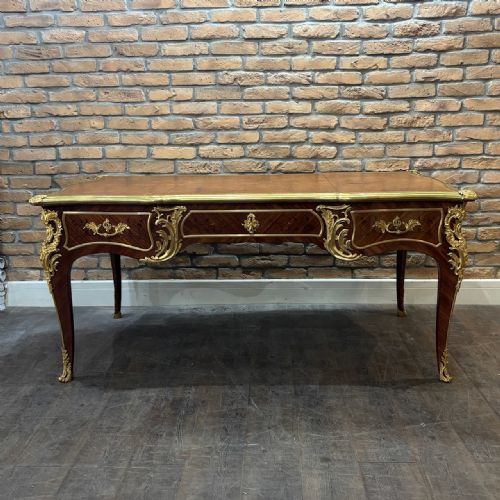


Rococo Style Writing Desk
These rococo style writing desks bring serpentine lines, lavish veneers and ornate mounts straight from nineteenth-century parlours into modern studies.
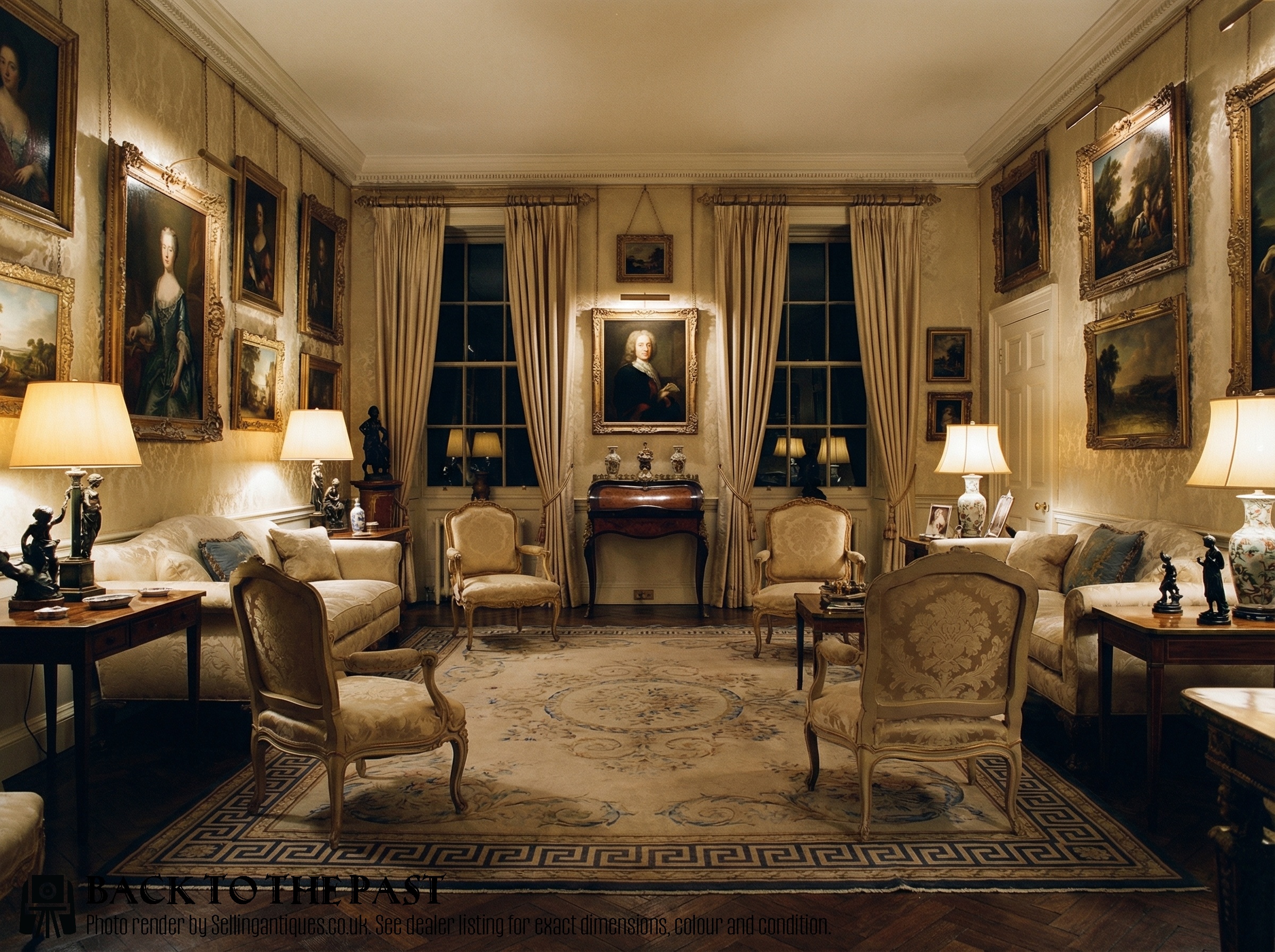
What these desks are
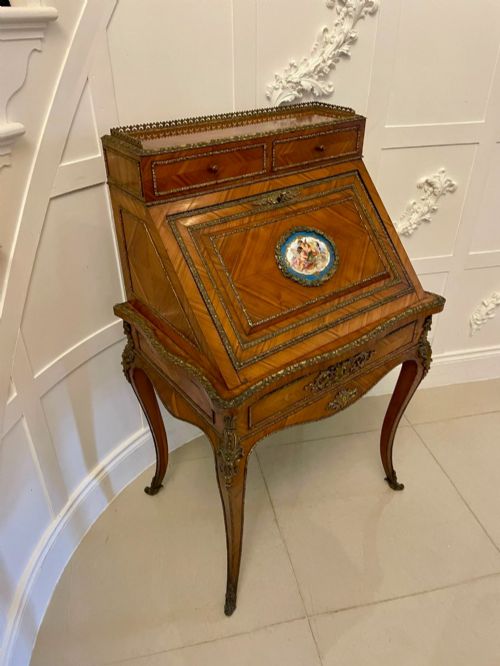
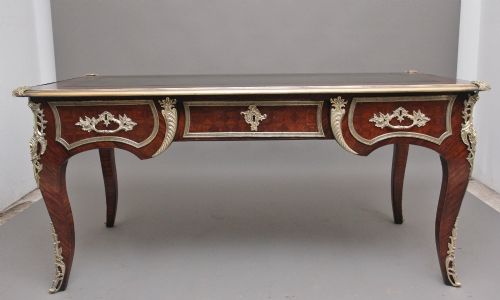
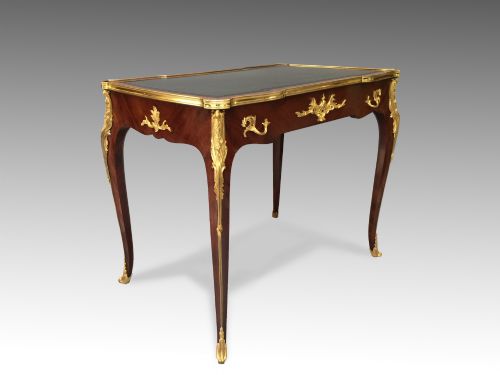
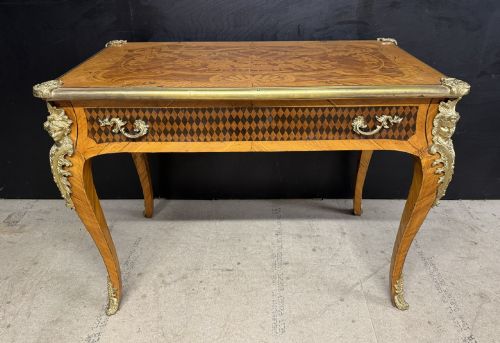
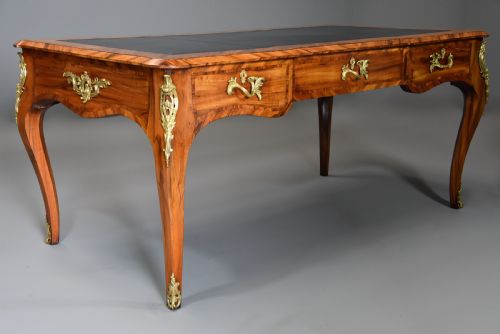
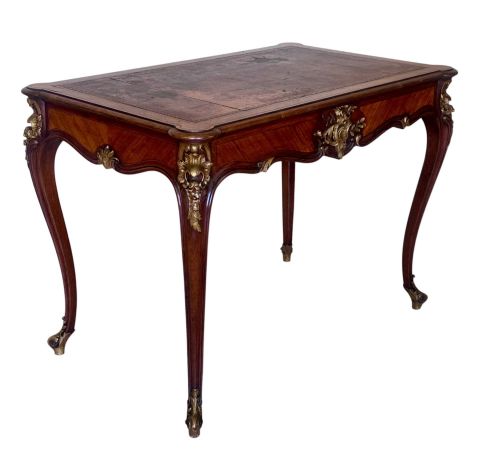
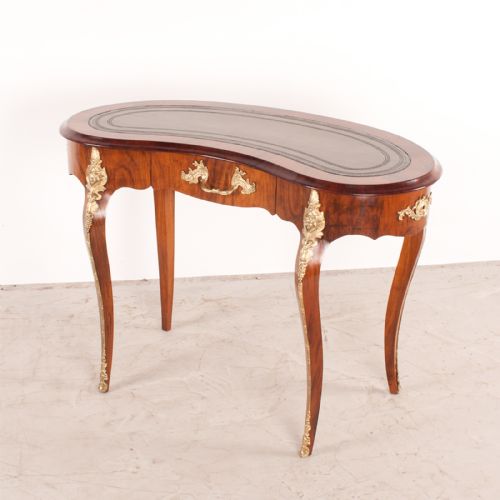
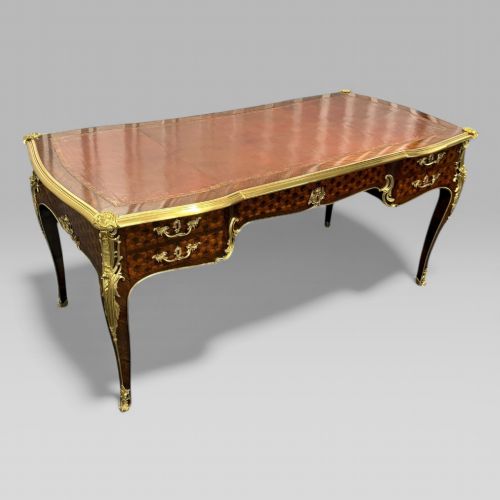
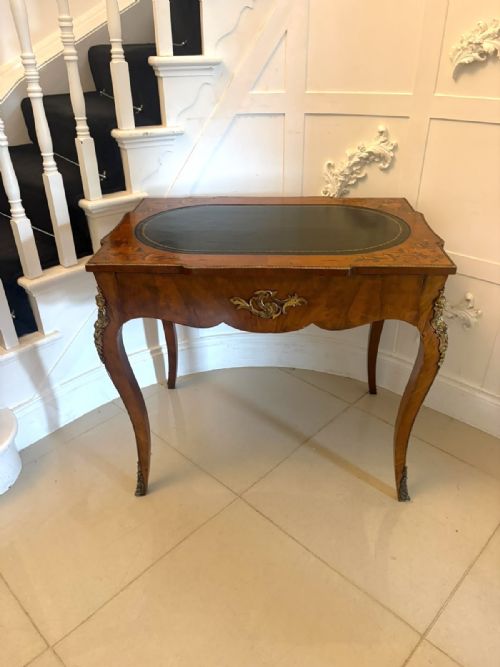
A rococo style writing desk combines the sweeping curves and asymmetrical flourishes of eighteenth-century French design with the sturdy construction methods of the Victorian era. These pieces arrive in various forms, including bureau plats, bureau de dames and freestanding centre tables equipped with leather writing surfaces.
The versions most commonly met on this page date from the nineteenth century, particularly around eighteen-sixty, alongside later twentieth-century interpretations. They combine practical workspace with dramatic decorative presence through shaped aprons and cabriole legs.
Origins span across French provincial and chateau styles to English interpretations executed in figured walnut. Each piece showcases the enduring appeal of Louis XV aesthetics adapted for nineteenth-century domestic interiors.
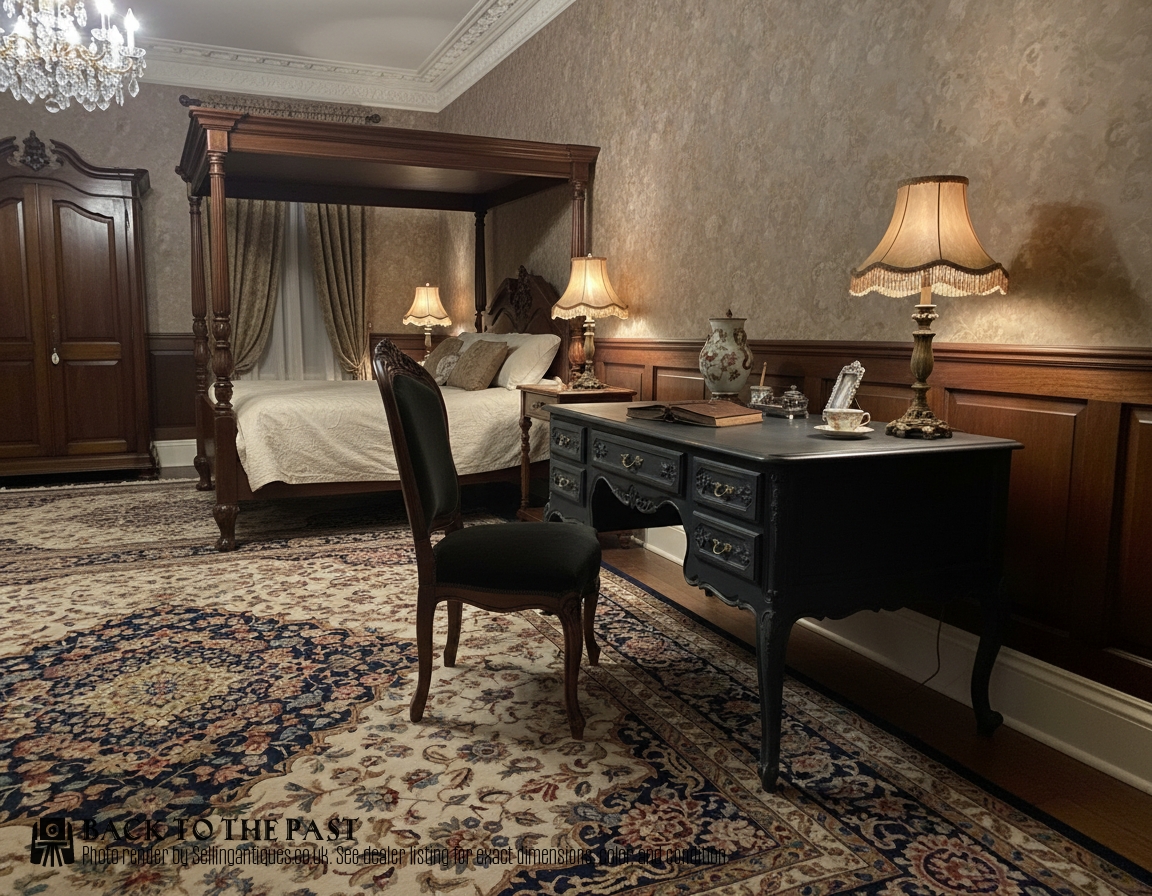
How they were made
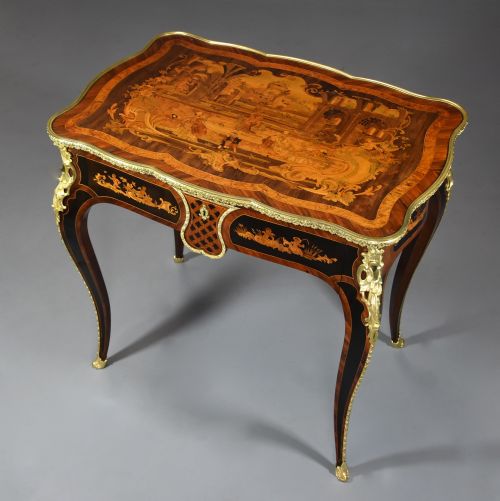
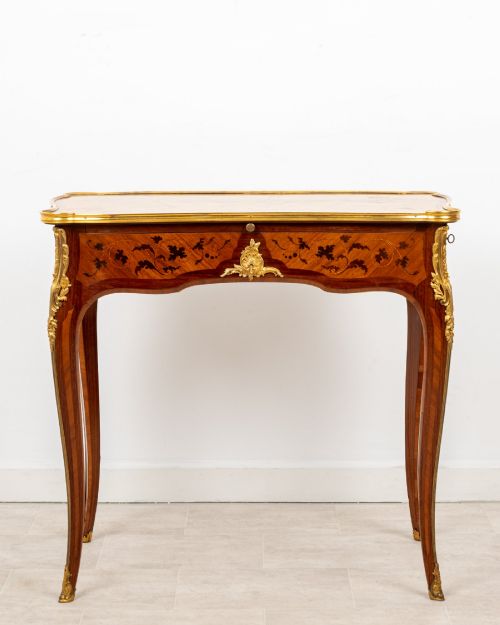
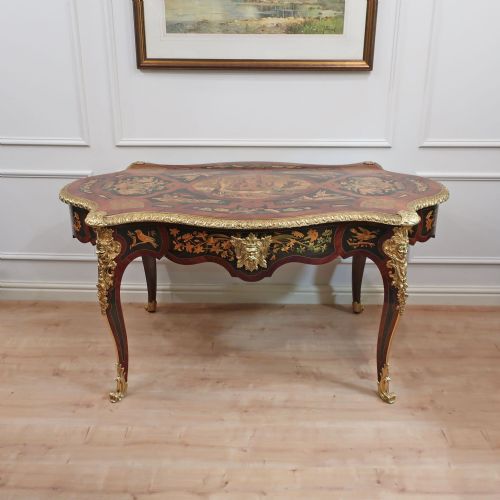
Cabinet makers built these desks using solid timbers like oak and walnut as a structural base, applying decorative veneers such as burr walnut, kingwood, tulipwood and satinwood over the surface. Marquetry inlays added intricate geometric or floral patterns across the tops and drawers.
Metal ornamentation played a crucial role in the construction, featuring cast brass, ormolu and gilt bronze mounts secured to corners, legs and handles to accentuate the flowing contours. Leather inserts were carefully fitted into the upper writing surfaces to provide a durable and tactile writing area.
Retail Price Guide 2026
Typical UK retail prices for rococo style writing desk, calculated from the Sellingantiques database of over a million retail prices indexed since 2003. This retail price guide relies exclusively on Sellingantiques data; no external sources or auction records are used, so the figures do not describe the wider market.
Some desks hide their inkwells in slide-out compartments just waiting to spill on your best rug.
What varies in quality
The standard of a rococo style writing desk rests on the ambition of its timber selection and the crispness of its metal mounts. Richly figured burr walnut and complex marquetry displays separate ambitious cabinet work from simpler painted or plain timber constructions.
Execution of the serpentine shaping and the fluidity of the cabriole legs determine overall refinement. Heavily chased ormolu and gilt bronze mounts that integrate smoothly with the wooden contours indicate superior craftsmanship compared to mass-produced alternatives.
The Rococo Style Writing Desk Glossary
- Bureau Plat
- A freestanding writing table, typically featuring drawers beneath the writing surface and finished on all sides for placement in the centre of a room. This form became popular in France during the eighteenth century.
- Ormolu
- Gilded bronze ornamentation applied to furniture mounts, feet and handles to highlight decorative contours. The technique involves applying a mercury and gold amalgam to bronze.
- Cabriole Leg
- A furniture leg that curves outward at the knee and tapers inward toward the foot, mimicking animal limbs. It is a defining feature of rococo and Louis XV design.
- Marquetry
- Decorative veneer work arranged in patterns and pictures using thin slices of various coloured woods. Craftsmen cut and fitted these pieces together meticulously before applying them to the carcase.
Frequently Asked Questions
What is a bureau plat?
A bureau plat is a flat-topped writing table finished on all sides so it can stand in the middle of a room rather than against a wall. These desks usually feature shallow drawers built into the frieze.
They provide a generous working surface paired with decorative ornamentation, making them both practical and visually striking centrepieces.
How do I care for the leather top?
Leather writing inserts require gentle cleaning with a damp cloth and occasional treatment with specialist leather balms to prevent drying and cracking. Avoid using harsh chemical solvents or placing hot mugs directly onto the surface.
Keeping the leather conditioned preserves its supple texture and maintains the traditional appearance of the desk.
Where should I place a freestanding desk?
Because these pieces feature finished backs and ornate mounts all round, they suit placement in the middle of a study or drawing room. Positioning them away from walls allows the serpentine lines and cabriole legs to be appreciated from every angle.
Ensure the location avoids direct sunlight to protect delicate veneers and gilt mounts from fading.
How do I distinguish French styles?
French provincial pieces tend to display simpler carved wooden details and sturdier frames, while chateau and Louis XV revival styles incorporate lavish ormolu mounts and complex marquetry. Look at the boldness of the curves and the complexity of the wood grain.
Examining the metalwork and timber selection reveals much about the intended grandeur of the piece.