

18th Century Carved Chest
When you handle an 18th century carved chest, you touch thick English oak panels shaped by hand centuries ago.

18th Century Carved Chest
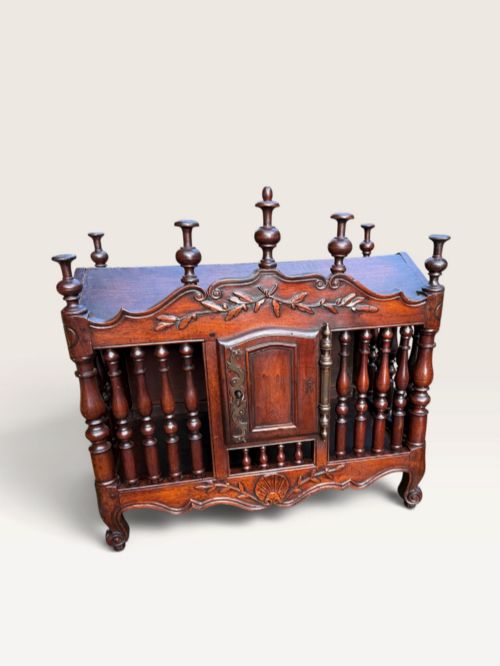
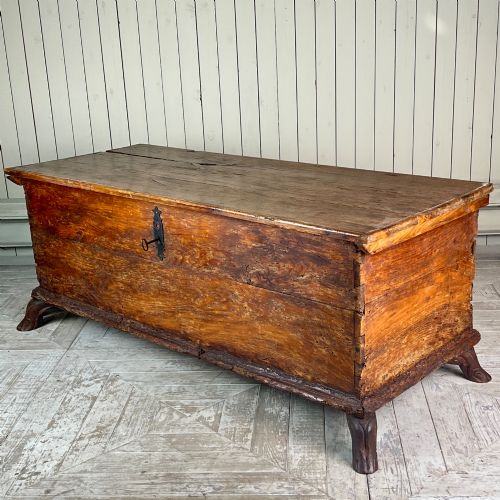
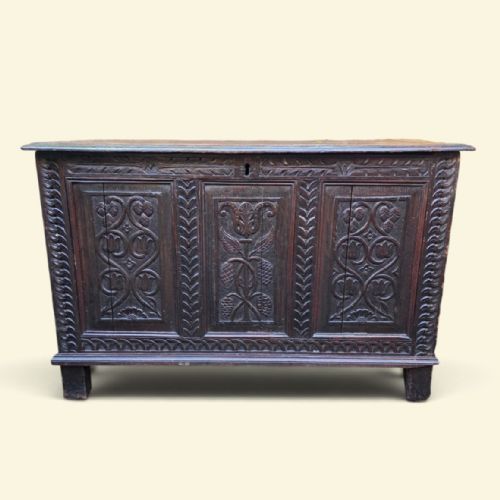
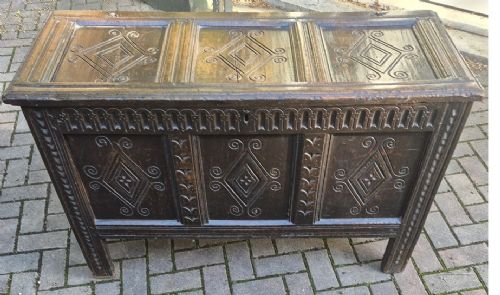
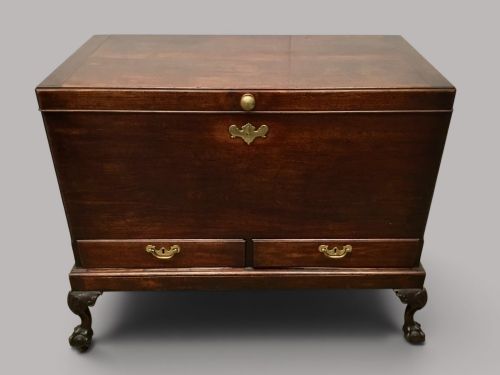
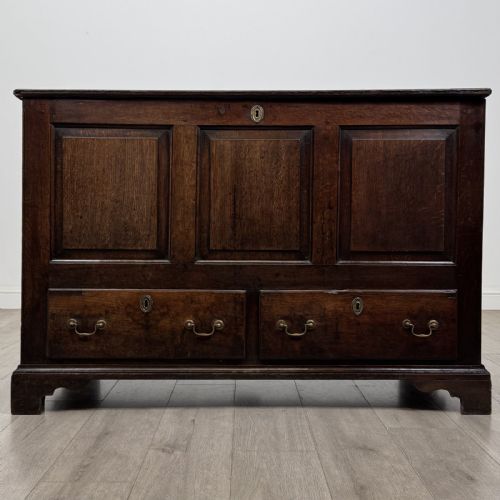
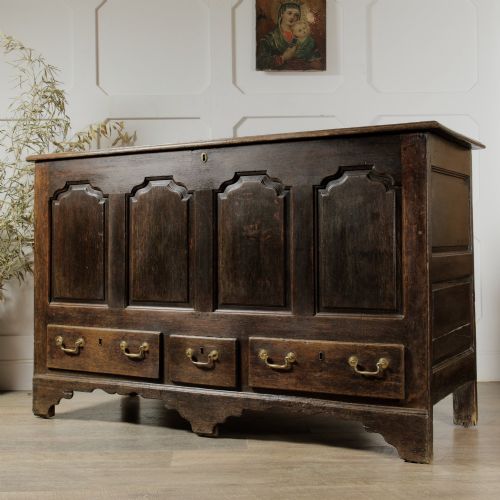
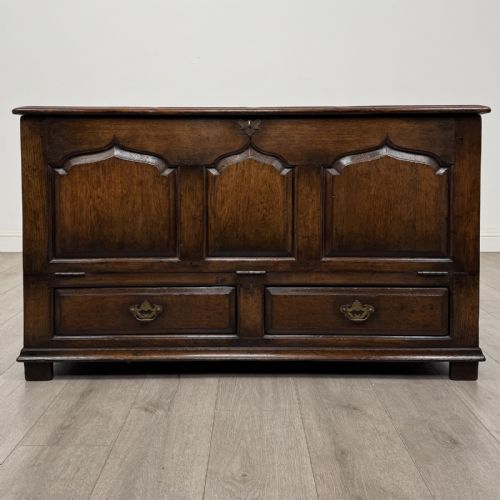
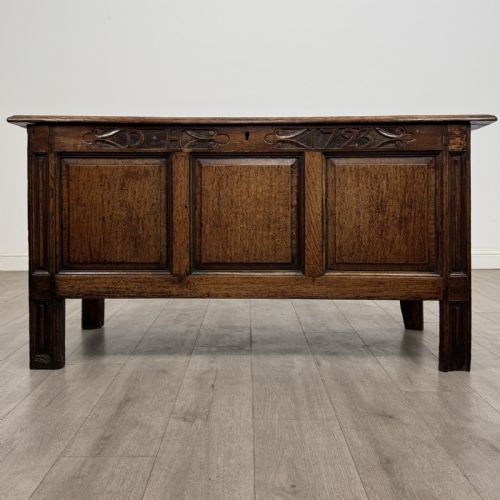
The 18th century carved chest serves as a primary survival of domestic storage, spanning sturdy regional coffers, mule chests with lower drawers, and panelled blanket boxes. These pieces emerge predominantly in solid oak, often bearing chip carving, geometric mouldings, or deeply recessed architectural panels created to secure family linens and valuables.
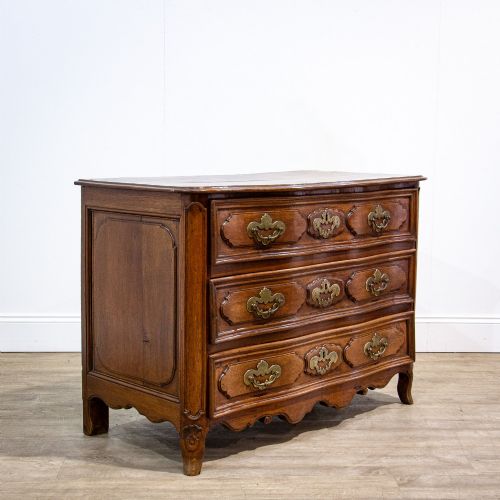
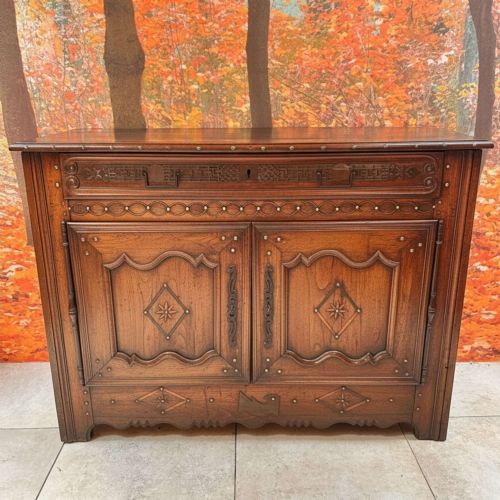
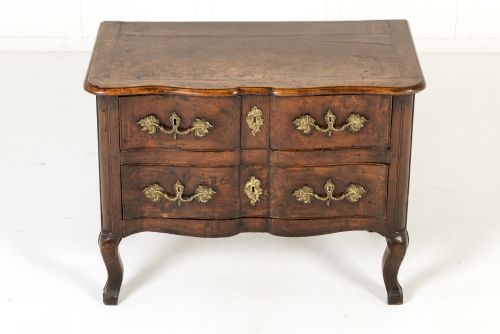
Buyers browsing this specific category most frequently encounter British country oak examples alongside continental walnut and chestnut commodes, each displaying the tool marks of provincial joinery. The selection bridges simple boarded document boxes and elaborate marriage chests dated with initials or significant years.
Regional variations define the offerings, from West Country panelled chests to Welsh mule chests equipped with lower storage compartments. The forms range from low resting floor chests to elevated versions mounted on stands or short legs.
Materials and construction methods
Makers relied on native timber, selecting quarter-sawn oak for its durability and decorative medullary rays, alongside walnut and burr elm for finer cabinet pieces. Planks were joined using traditional mortise and tenon joints secured with wooden pegs rather than metal nails, accommodating the natural seasonal expansion of the wood.
Carving was executed directly into the solid wood panels using gouges and chisels, producing low relief motifs such as lunettes, scrolling foliage, and mythical beasts. Secondary woods like pine or deal often appear in internal partitions and drawer bases.
Surface finishing involved hand-planing and repeated applications of wax or oil, building a deep patination over generations of daily use. Iron strap hinges and brass escutcheons were hand-forged or cast, pinned securely to the lids and doors.
18th Century Carved Chest Retail Price Guide 2026
Typical asking prices for 18th century carved chest among the pieces listed under this phrase on Sellingantiques today, from the lower quarter to the upper quarter. They describe what is for sale here now, not the wider market.
Several items retain their original keyholes, reminding us that early owners locked up their cheese and stockings.
Distinctions in craftsmanship and survival
Quality rests upon the integrity of the timber and the depth of the original joinery, where crisp, hand-cut carving distinguishes superior pieces from later provincial copies. Superior examples retain their original hinges, locks, and internal till boxes without excessive timber replacement.
The proportion and balance of the piece dictate its standing, with well-chosen board widths and harmonious panel divisions reflecting the maker's eye. Lower quality items often suffer from severe timber shrinkage, inappropriate board substitutions, or stripped surfaces that remove centuries of accumulated patina.
The 18th Century Carved Chest Glossary
- Coffer
- A heavy wooden chest traditionally used for storing valuables, linens, or documents. Most examples feature a hinged lid and boarded or panelled construction.
- Mule chest
- A chest featuring one or more drawers built into the base beneath the main storage well. This transitional form emerged before standard chests of drawers became common.
- Cassone
- An ornate chest associated with marriage and dowries, originating in continental Europe. These pieces often display intricate carving, marquetry, or painted decoration.
- Chip carving
- A primitive decorative technique where small chips are removed from a single solid piece of wood to form geometric patterns. It appears frequently on early regional boxes and foot stoves.
- Till
- A small internal compartment or lidded box built into the interior corner of a larger chest. It kept small items like coins and documents separate from the main contents.
18th Century Carved Chest: Frequently Asked Questions
How do I date an oak chest?
Examine the construction methods visible on the interior and underside, looking for hand- split panels, pegged joints, and forged iron hardware rather than machine-cut screws.
Tool marks left by pit saws and primitive adzes provide strong physical evidence of age, while the depth of the wax patination builds up naturally over centuries of handling.
What is a mule chest?
A mule chest combines the traditional lift-top storage compartment of a coffer with one or more functional drawers built into the base below.
This hybrid form became popular as living spaces demanded more organised storage without abandoning the utility of the deep blanket chest.
Where were these chests made?
The pieces originate from domestic workshops across the British Isles and continental Europe, with distinct regional styles emerging from areas like Wales, the West Country, and French provinces.
Local timber availability heavily influenced the choice of material, resulting in robust oak in England and walnut or chestnut in France and Italy.
How should I care for antique oak?
Keep the wood away from direct heat sources and sudden temperature fluctuations to prevent the aged timber from splitting or warping.
Apply a traditional beeswax polish sparingly and buff with a soft cloth to maintain the protective surface without stripping the accumulated patina.