


17th Century Oak Panel
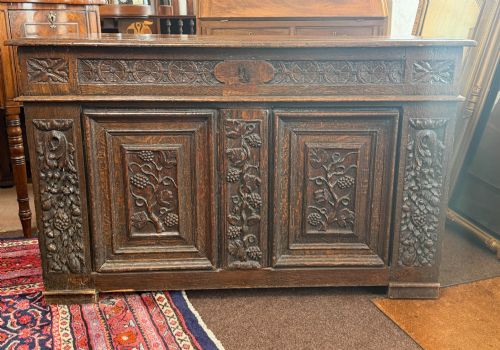
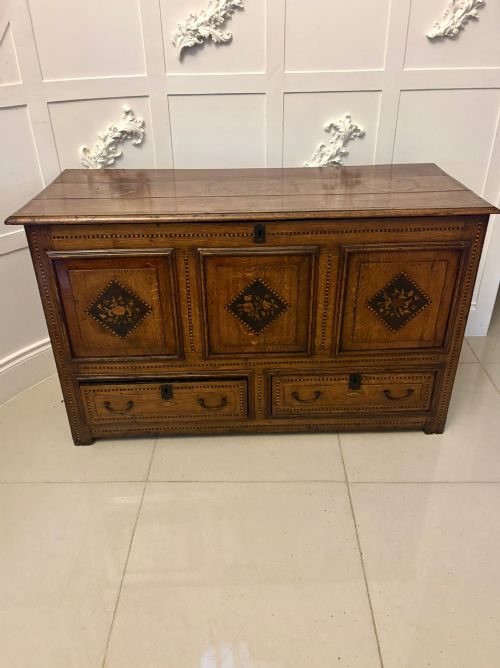
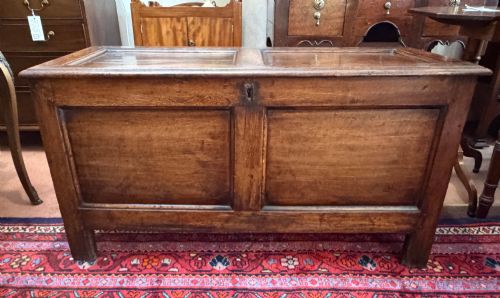
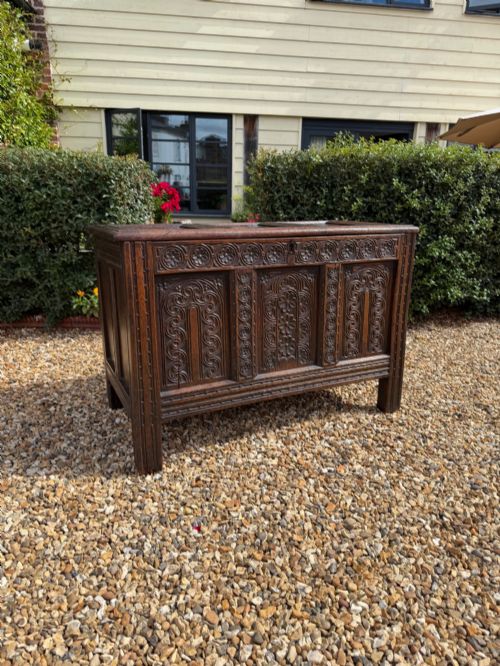
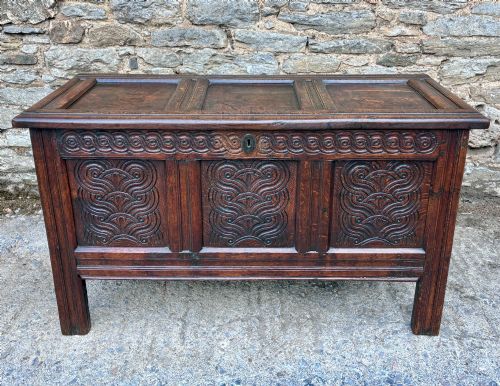
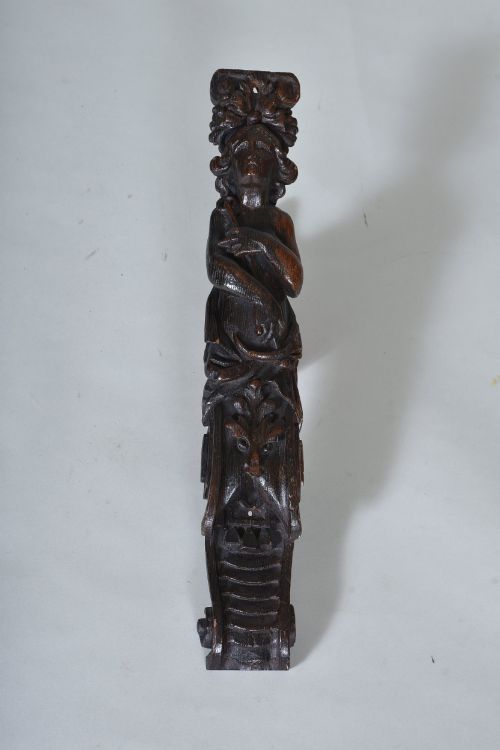
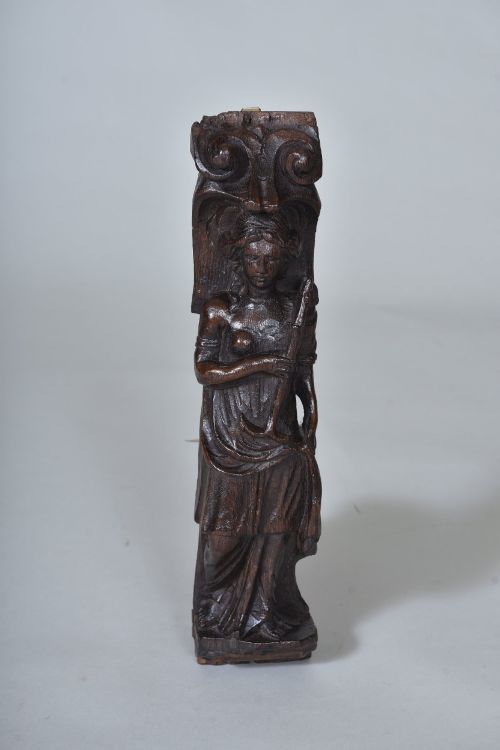
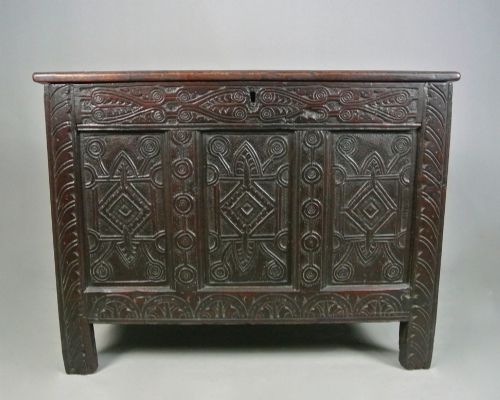
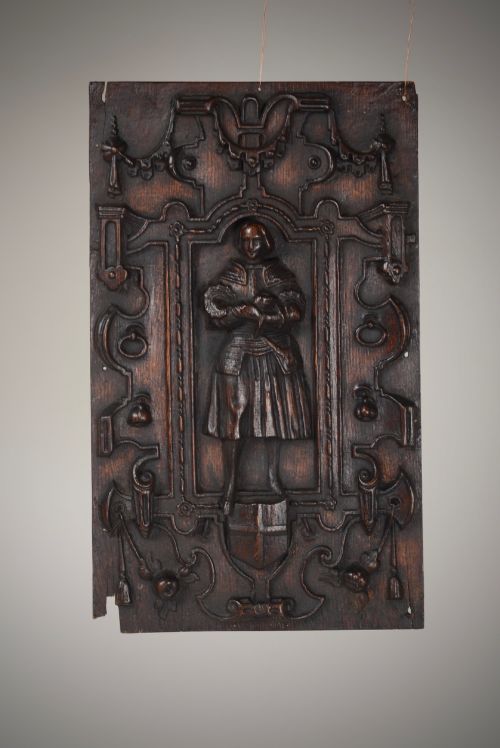
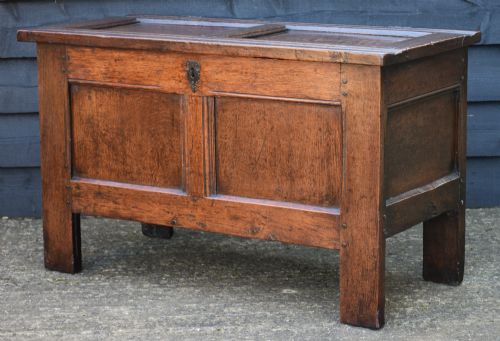
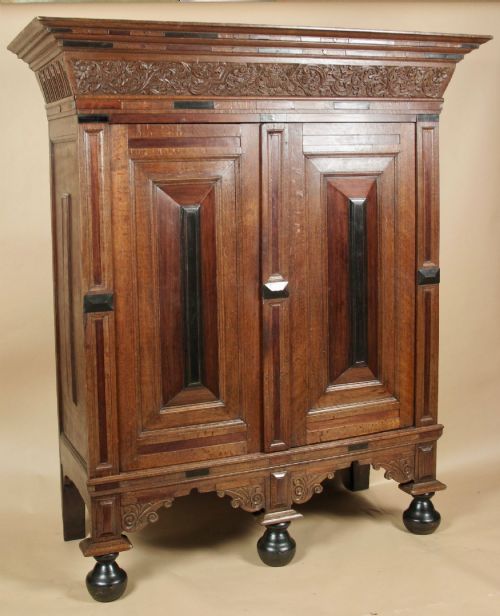
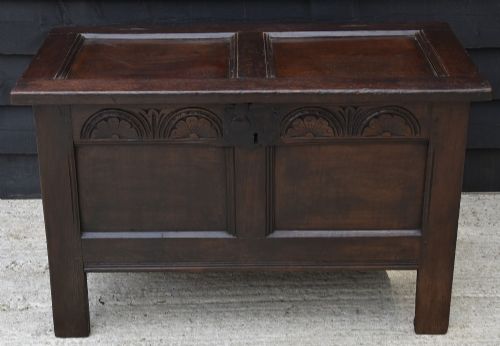
These 17th century oak panel examples are carved architectural fragments, coffers, and wall reliefs that bring heavy timber texture to a room.
Understanding 17th century oak panel pieces
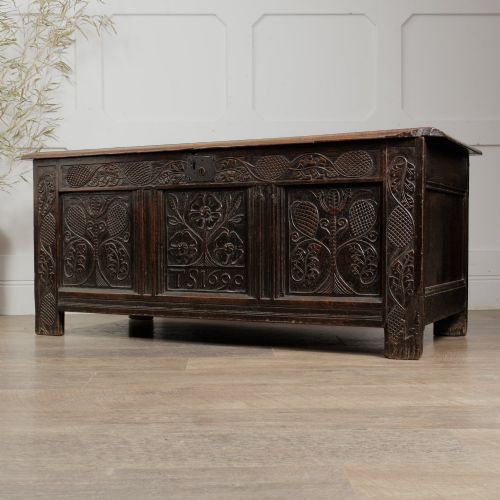
A 17th century oak panel search brings up carved architectural salvage, wall reliefs, and furniture fronts spanning the sixteenth to the eighteenth centuries. The items range from individual linenfold and daisy carved inserts to large staircase panels and complete coffer chests.
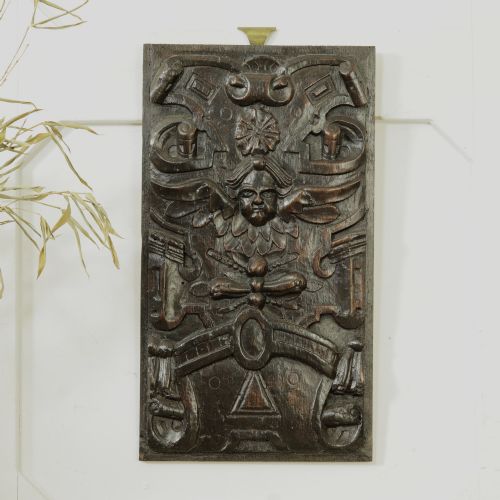
Buyers commonly meet individual carved panels featuring motifs such as the Tudor rose, geometric cushion patterns, and mythological creatures like griffins and seahorses. These pieces originate from domestic interiors, overmantels, and storage chests.
Beyond flat inserts, the category includes functional items converted or built with timber fragments, such as early hook racks and armchairs. The primary materials remain solid timber alongside iron fixings.
Materials and construction methods
Carpenters utilised slow-grown native and continental timber, shaping boards using hand axes and pit saws before smoothing surfaces with drawknives. Joinery relied on traditional mortise and tenon joints secured with wooden pegs.
Carvers decorated the wood using gouges, chisels, and parting tools to execute low and high relief designs directly into the solid grain. Iron hardware such as hinges and hooks frequently accompanied chests and functional rack forms.
Retail Price Guide 2026
Typical UK retail prices for 17th century oak panel, calculated from the Sellingantiques database of over a million retail prices indexed since 2003. This retail price guide relies exclusively on Sellingantiques data; no external sources or auction records are used, so the figures do not describe the wider market.
Listings feature oak and iron materials spanning the sixteenth, seventeenth, and eighteenth centuries across architectural salvage, wall reliefs, and coffer forms.
Distinctions in craftsmanship and survival
Quality rests in the crispness and depth of the hand carving, where confident depth separates master work from mechanical repetition. Figures such as allegorical panels, heraldic arms, and detailed mythological beasts display superior artistic ambition.
Surface preservation dictates the standing of a piece, favouring items retaining original tool marks and undisturbed patination over heavily restored or stripped timber. The integrity of the surrounding frame and original joinery further separates standard survivals from exceptional examples.
Edward Pearce
The 17th Century Oak Panel Glossary
- Linenfold
- A style of carving resembling folded vertical parchment or cloth. It dominated late medieval and transitional timberwork.
- Cushion panel
- A raised, protruding panel with bevelled edges resembling a soft pillow. This treatment frequently appeared on seventeenth-century drawer fronts and coffer lids.
- Jacobean
- The stylistic period spanning the reign of James I, characterised by robust geometric mouldings and strapwork. It forms a core aesthetic in seventeenth-century furniture.
- High Baroque
- An ornate continental style featuring dynamic movement, dramatic relief, and classical allegorical subjects. It contrasts with plainer domestic English joinery.
- Architectural salvage
- Elements removed from historic buildings during alterations or demolition. These components survive as decorative wall reliefs or furniture elements.
Frequently Asked Questions
What are 17th century oak panels?
These items are solid timber boards removed from historic buildings, wall panelling, or furniture fronts such as coffers and overmantels. They display hand-carved decoration ranging from geometric patterns to figurative motifs.
Carpenters shaped the timber using traditional joinery techniques, creating durable architectural elements designed to ornament elite and vernacular interiors alike.
How were these panels used originally?
Historic interiors utilised carved panels within wainscot wall schemes, overmantels above fireplaces, and as structural components of storage chests and armchairs. They demonstrated status and provided insulation.
Individual panels also served as decorative wall reliefs or formed parts of grand staircase assemblies in substantial houses.
How do I live with an oak panel?
Panels work well mounted securely on interior walls as focal artworks or integrated into traditional and modern room schemes to add historical texture. They require stable indoor humidity away from direct heat sources.
Heavy architectural pieces need proper wall fixings to support the weight of the solid timber securely.
How can I tell periods apart?
Stylistic clues such as linenfold carving point towards earlier sixteenth-century traditions, while geometric cushion moulding and heavy strapwork indicate late seventeenth-century production. Continental Baroque pieces often display more dynamic figurative carving than standard English domestic work.
Tool marks, joinery methods, and wood patination provide further evidence for dating individual items accurately.