
A 2026 Guide by Sellingantiques
Geneva emerged as the main European centre for decorating cases. Swiss workshops turned out thousands of painted pieces during the eighteenth and nineteenth centuries.
High demand in the Chinese market changed production significantly. Makers adapted their designs to suit export tastes, often producing matched pairs.
Shifting from early champlevé work to painted scenes. The technique changed as tools and firing methods improved over the decades.
Thick metal cases required for portable timekeeping made an ideal canvas. Enamellers quickly filled this blank space with miniature portraits.
Surviving antique enamel watches often map directly to historical trade routes. The Ottoman empire took delivery of scalloped designs featuring specific local motifs.
Ilbery of London operated during the late eighteenth and early nineteenth centuries. He became known for producing decorated pieces aimed at the Asian export market.
Working extensively in Fleurier and Canton from the 1820s. Bovet specialised in matched pairs with elaborate floral backs.
The Huaud family painted cases in Geneva throughout the late seventeenth century. Their signed work often features classical and religious figure scenes.
The 2026 retail price guide for Antique Enamel Watches is drawn from a proprietary archive of over 1.1 million retail prices indexed by Sellingantiques since 2003. This guide relies exclusively on their own internal data; no external sources or auction records are used.
Analysing nearly 25 years of UK antique market history alongside current retail values, the data indicates that typical UK retail prices for Antique Enamel Watches range between £200 and £1,000. Entry-level prices generally fall under £200 and premium examples upwards of £1,000.
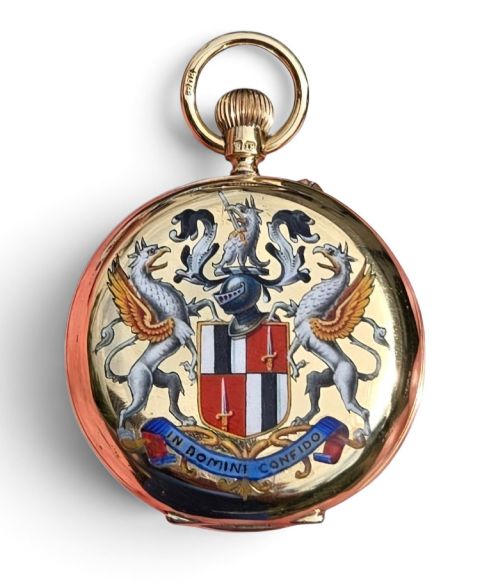
Miniature painted portraits feature on many hinged case backs. Artisans used tiny brushes to build up layers of colour before the final firing.
Sitting over engine-turned metal grounds. Translucent layers create a shifting pattern as light hits the ribbed surface beneath the glaze.
Split pearls often border the main decorative panels. These small half-spheres frame the artwork and protect the raised glass edges.
Firing these pieces required multiple trips to the kiln. Lighter colours went in last because they burned off at higher temperatures.
Early wire-cell construction gave way to freehand painting. Swiss artists developed binders that allowed them to paint with the glass powder like oil paints.
Mixing the raw silica required precision. Small changes in metallic oxide content altered the final shade upon cooling.
"Tiny brushes used for the smallest portrait details were sometimes made from a single animal hair."
"Painters often worked under glass globes filled with water. This primitive lens magnified the curved case back to help them see microscopic details."
"Many artists worked independently of the watchmakers. They completed the decorated covers in their own homes before returning them to the main workshop."
Based on almost 25 years of Sellingantiques UK antique market data, Antique Enamel Watches appeared 627 times (out of 1,100,000 antiques) which gives it a rarity score of 88/100.
This score measures scarcity within the Sellingantiques archive only and is not a survey of the entire antiques market, so these statistics may not be indicative of the general availability of Antique Enamel Watches elsewhere.
Dust the surface lightly with a dry sable brush. Avoid water or liquid solvents as moisture can seep into microscopic hairline cracks and cause underlying copper rust.
Never use abrasive cloths on the artwork. The glass layer might feel hard but the painted surface can suffer micro-scratches over time.
Stop trying to force the cover open. The metal pin inside the hinge has likely seized from decades of sitting idle, and pushing it puts pressure directly on the brittle glass decoration.
Take it to a horologist who can apply a microscopic drop of penetrating fluid to the joint. Once the metal carcase flexes from too much force, the decorated surface will crack and flake away from the edge.
Daily use poses risks to antique enamel watches. Modern life involves hard surfaces causing damage.
Keep them for occasional wear. Dropping one on a hard floor usually shatters the outer decoration.
The trade adapted to local market preferences. Buyers in the Chinese market favoured intricate botanical patterns and symmetrical geometric designs over the classical European portraits that sold well in London or Paris.
Workshops in Geneva adjusted their output accordingly. They developed specific templates featuring lotuses and complex scrollwork to fill orders for the merchant ships heading east.
Please note: This Antique Enamel Watches guide and its associated pricing data are provided for general informational purposes only. It does not constitute formal financial, investment, or appraisal advice and should not be relied upon as the sole basis for any commercial activity, purchasing, or sales decisions. Sellingantiques.co.uk accepts no liability for any actions taken in reliance on this information. Always consult with a qualified professional or independent appraiser.
