

Antique Enamel Watches
Watches carrying fired vitreous enamel, usually as the white dial and sometimes as decorative case work, on pieces made to be pocketed, hung from a chain or worn at the wrist.
Antique Enamel Watches
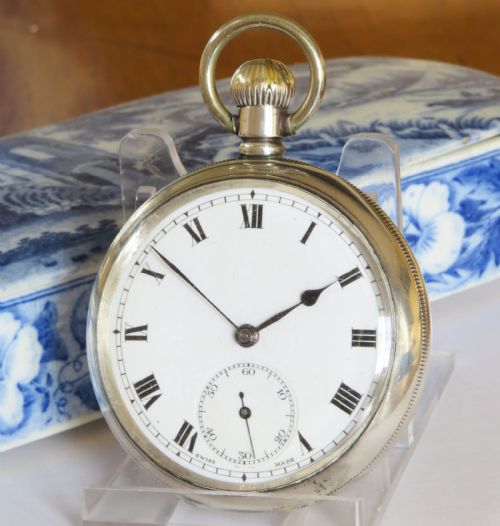
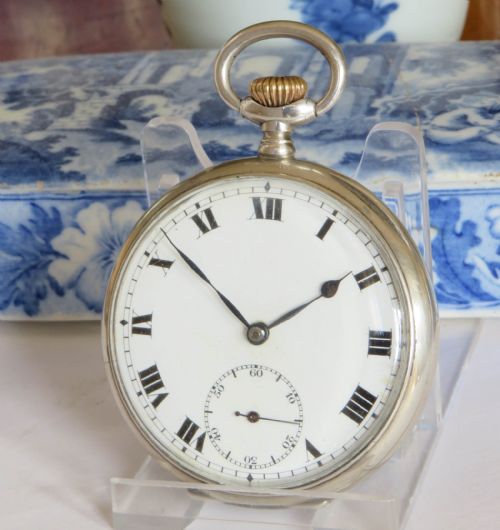
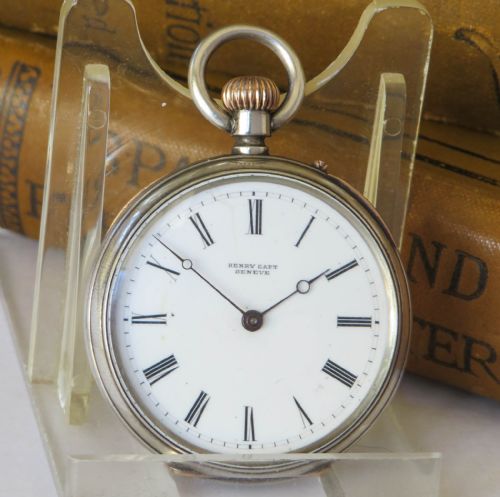
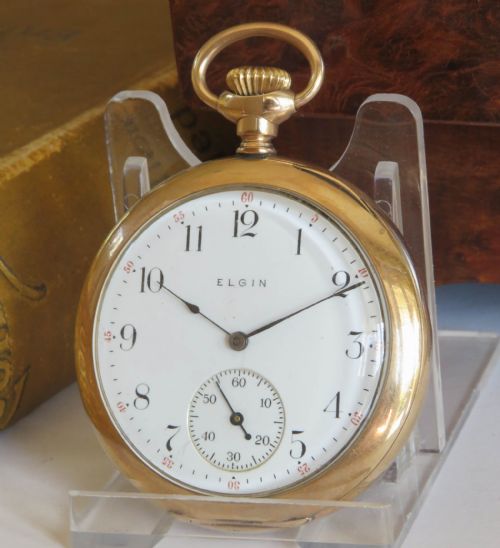
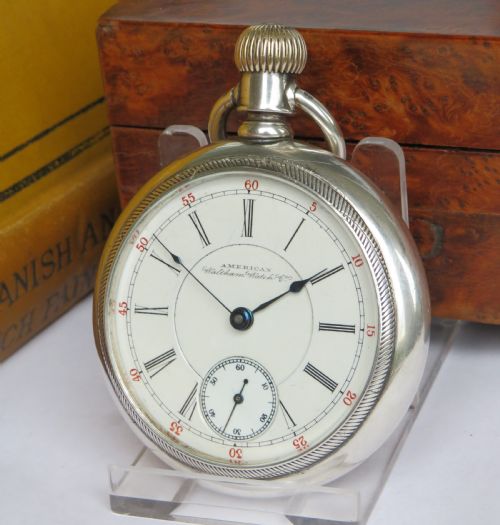
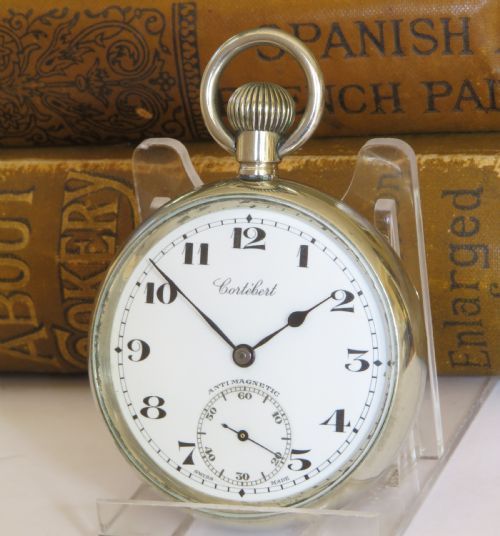
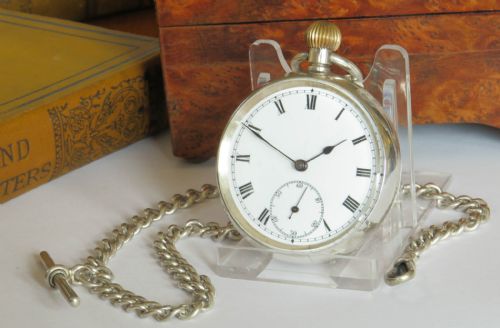
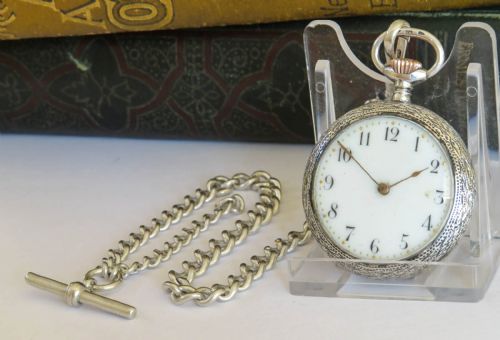
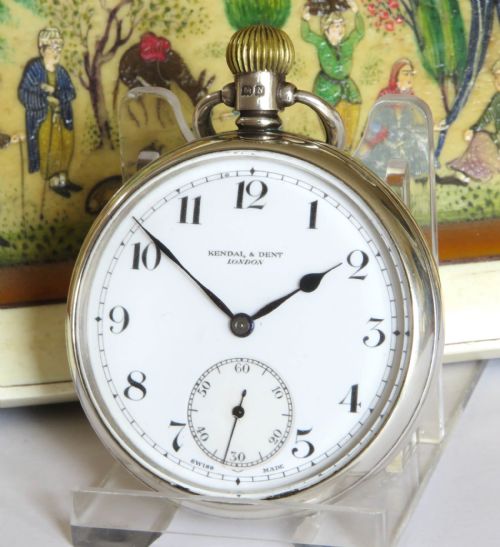
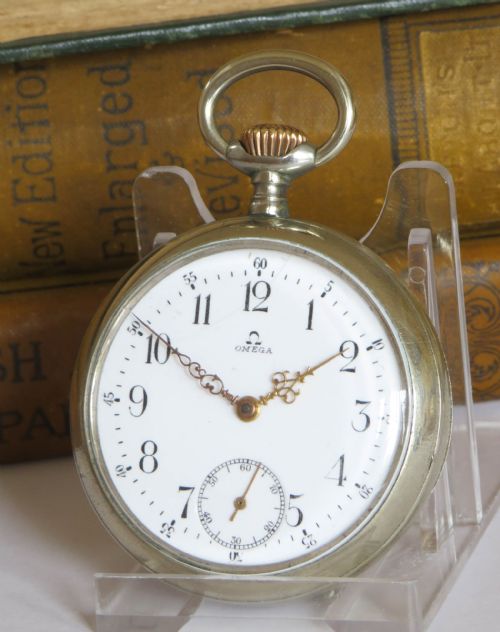
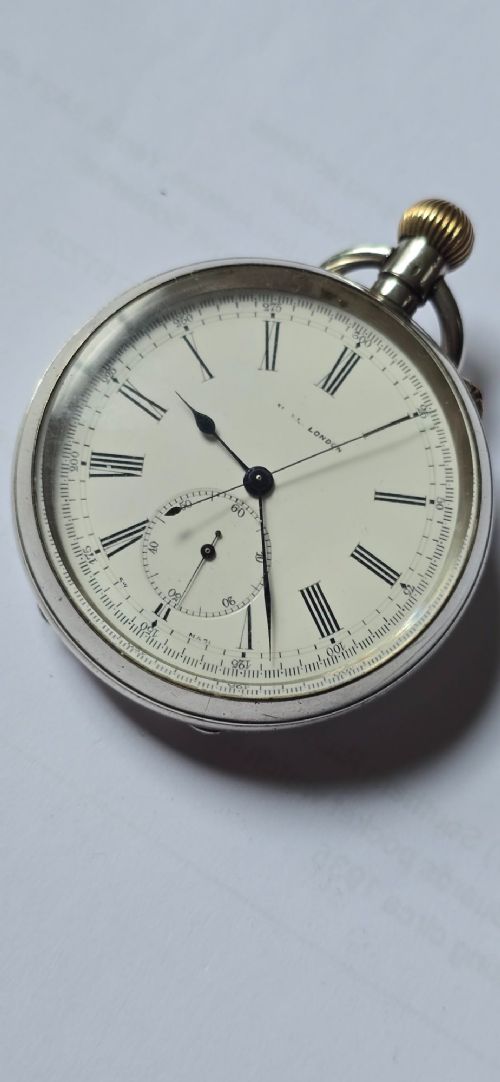
The heading covers enamel on watches, and what dominates is the antique pocket watch: 106 of 126 titles say "pocket". Enamel is doing the work on the dial, white vitreous enamel fired onto a metal plate and printed or painted with numerals, rather than on the case. Only a minority of listings name enamel in the title at all.
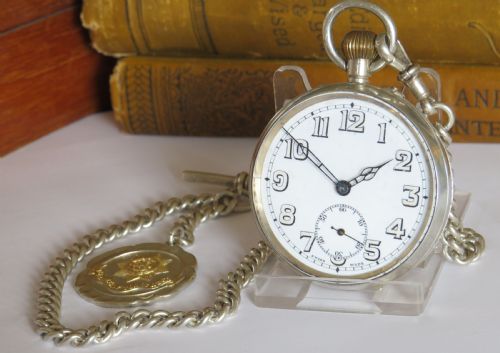
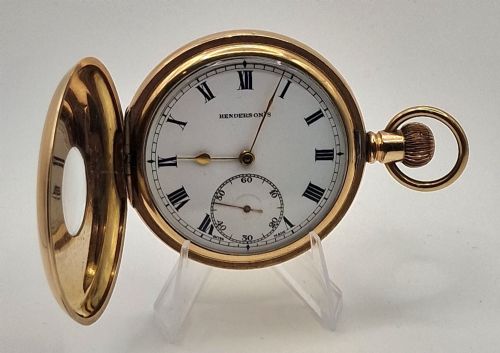
The form you'll meet most often is an open-faced Swiss or American pocket watch, silver-cased in 36 titles, often sold with an albert chain. Hunter cases are the main variant, appearing in 21 titles and splitting evenly between full hunter, with a solid cover, and half hunter, with a glazed aperture.
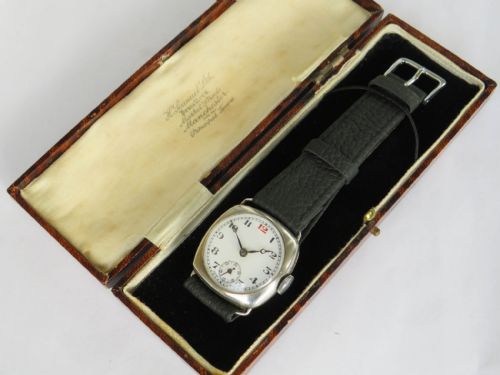
Enamel as decoration shows up in a small run of Art Deco ladies' watches from the 1920s and 1930s, geometric and coloured enamel on wrist and cocktail pieces, nine titles in all. Ladies' fob watches sit alongside them. American factory watches form another cluster, with Waltham and Elgin the recurring names.
Dates run 1860 to 1950, and 99 listings carry a clean year. Eighty-eight of those fall between 1900 and 1939, so the Edwardian and inter-war decades are the spine. Nineteenth-century material is thin, and two titles claiming the eighteenth century with pair cases sit outside the dated range. Goliath watches, oversized and often 8-day, turn up four or five times.
The Range
Case metal sorts the category faster than anything else. Gold appears in 16 titles, 18ct, 18k and 14k, and clusters at the top. Silver holds the middle, gun metal and gold-plated cases the bottom. A plain early twentieth-century silver or plated pocket watch is the floor here.
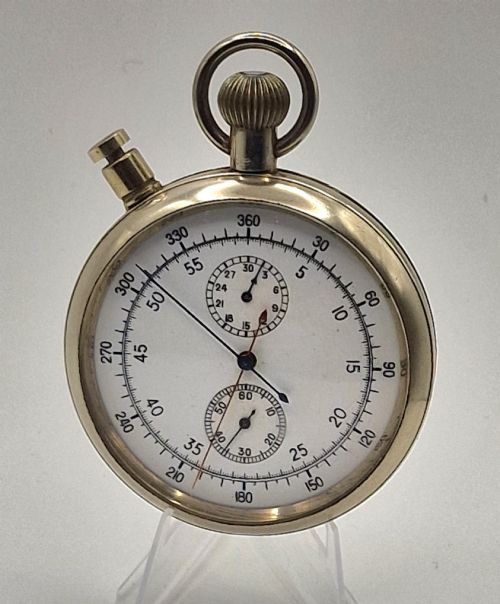
Above that, case form and mechanism separate things out. Hunter and half-hunter cases sit above plain open-faced watches of the same metal. Complications lift further: quarter repeaters, chronographs and calendar moonface work all appear near the top, while the bulk of the category names no complication at all.
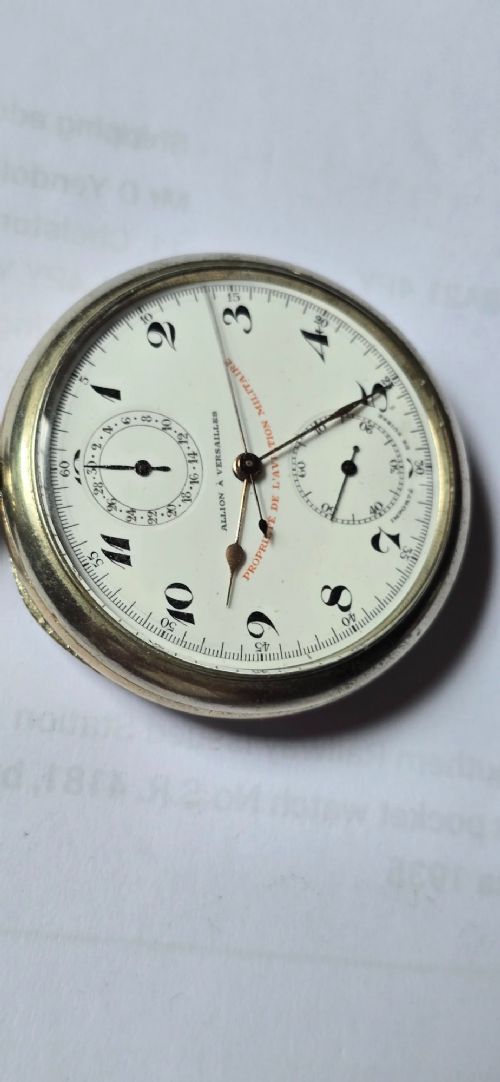
Age pulls hard in the same direction. Fusee and verge movements and pair-cased survivors sit well above the 1900 to 1939 mass. So does documented issue: railway watches with their own numbers, Great Northern, Taff Vale, Dublin and South East, each appearing once, and military or cockpit issue numbers, all rank above comparable undecorated pocket watches.
Antique Enamel Watches Retail Price Guide 2026
Typical UK retail prices for enamel watches, calculated from the Sellingantiques database of over a million retail prices indexed since 2003. This retail price guide relies exclusively on Sellingantiques data; no external sources or auction records are used, so the figures do not describe the wider market.
One-offs from the archive: a Turkish full hunter, a Swiss silver watch with Ottoman military arms and a Cyrillic inscription, and one made in Rangoon.
The Antique Enamel Watches Glossary
- Full hunter
- A hinged metal cover closing over the whole dial, so the watch must be opened to read the time. Nine titles use it.
- Half hunter
- The same hinged cover, but with a glazed aperture in the centre so the hands can be read while it stays shut. Also nine titles.
- Open faced
- No cover, dial exposed under the crystal. This is the default when no hunter term appears in a title.
- Fob watch
- A smaller watch, commonly a lady's, hung from a brooch or short chain rather than carried in a pocket.
- Albert chain
- The watch chain fitted with a T-bar for the waistcoat buttonhole, named in 12 titles alongside fob and pocket watches.
- Goliath
- An oversized pocket watch, made for a desk or travelling case, often paired with an 8-day movement that runs a week and a day between winds.
Antique Enamel Watches: Frequently Asked Questions
Are these watches actually enamelled?
Enamel is present, but usually as the dial rather than the case. White vitreous enamel fired onto a metal plate, then printed or painted with numerals, was standard through the pocket-watch era.
Decorative enamel on the case is the smaller story. It shows up mainly in the Art Deco ladies' watches, where coloured and geometric enamel is the point of the piece.
What period do most of them date from?
The dated field runs 1860 to 1950, and 99 of the 126 listings carry a clean year. Eighty-eight of those fall between 1900 and 1939.
So the Edwardian and inter-war decades carry the category. Nineteenth-century pieces are thin on the ground, and post-war examples barely register.
What's the difference between full and half hunter?
Both have a hinged metal cover over the dial. On a full hunter the cover is solid and the watch has to be opened. On a half hunter there's a glazed aperture in the middle, so the time reads through it.
In the titles the split is exactly even, nine of each, out of 21 that mention a hunter case.
Which makers turn up in this category?
American factory watches form a visible cluster. Waltham appears in nine titles and Elgin in eight. Hamilton and New York Standard also show up in the sample.
Swiss work makes up much of the rest, frequently unnamed in the title and described simply as a silver pocket watch of a given date.
Do watches come with their chains?
Sometimes. Twelve titles name a chain, usually an albert with a T-bar for the waistcoat buttonhole, sold as a pair with the watch.
The rest are listed as the watch alone.
How often do these come up for sale?
Twenty-one dealers have listed in this category on Sellingantiques, and roughly five pieces come to market in a year. Broadly stocked, slow-moving.
The unusual entries are single appearances: a Turkish full hunter, a Swiss silver watch with Ottoman military arms and a Cyrillic inscription, and one made in Rangoon.