

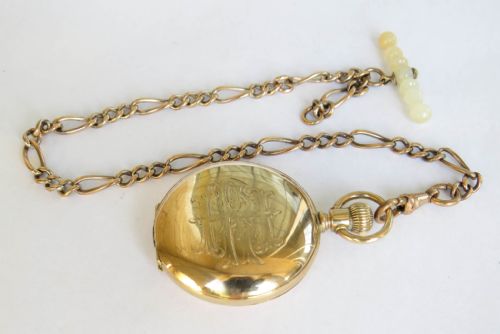
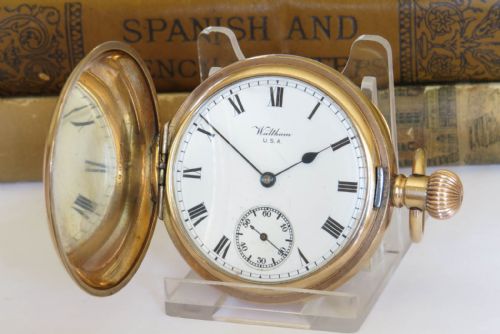
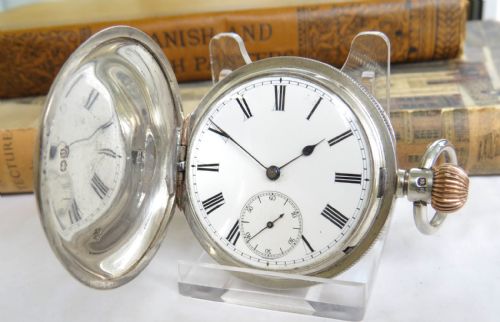
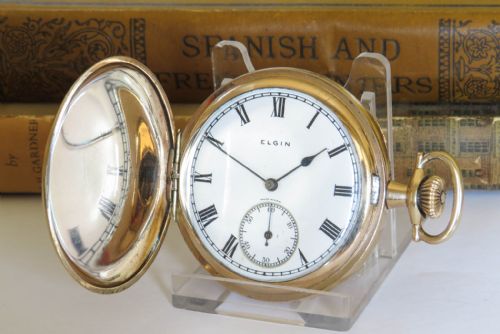

Antique Hunter Pocket Watches
A pocket watch with a hinged metal lid closing over the dial, made to protect the glass and hands in the pocket, either solid or with a glazed window so the time reads shut.
Antique Hunter Pocket Watches
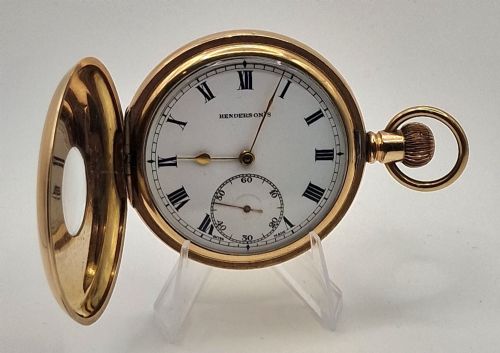
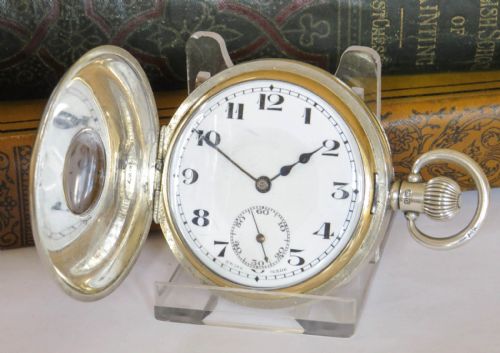
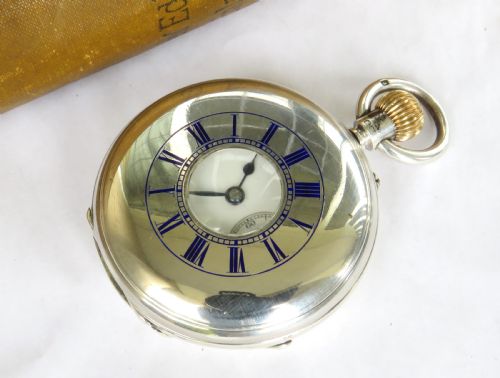
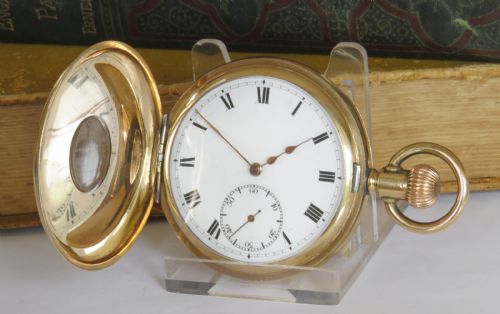
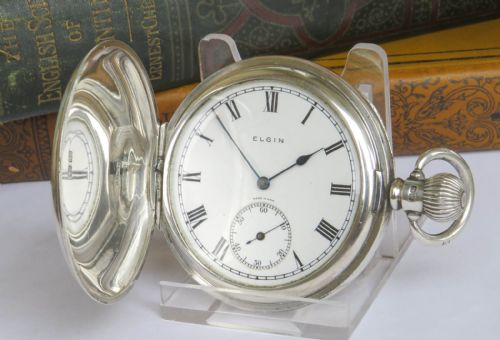
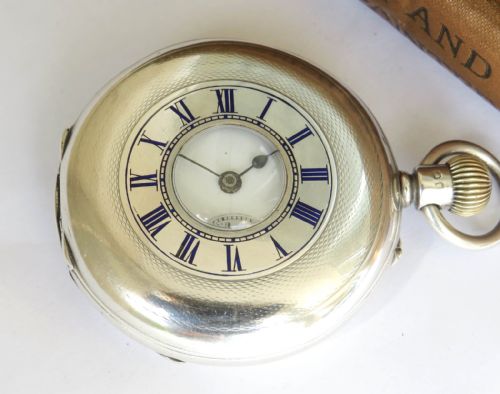
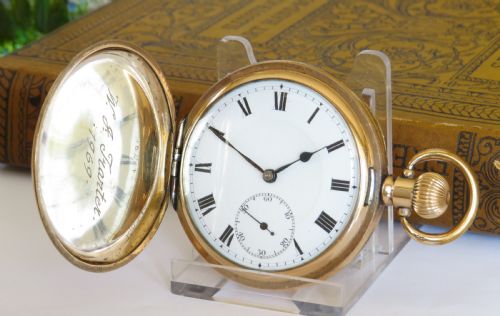
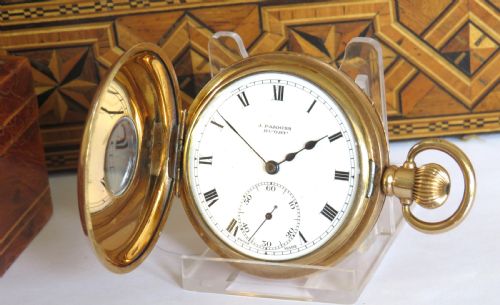
Two case types sit under the heading. A full hunter has a solid hinged cover that must be opened to read the time; a half hunter has a glazed aperture in the centre of the lid with numerals engraved around it, so the hands can be read with the cover shut. Full hunters outnumber half hunters roughly two to one across the archive, though current stock is close to an even split.
The watch you are most likely to meet is an early 20th-century keyless full hunter, wound by the crown, with a maker or retailer name in the title and no case metal stated. Dealers' own dating runs from 1850 to 1950, but nearly nine in ten dated listings fall between 1900 and 1939, and the 1920s alone account for 243 of them. The 19th century is thin here and the mid-century thinner still.
Four groups do most of the work. American movements, above all Waltham and Elgin, make up roughly a third of the archive, often sold under grade names like Traveler, P S Bartlett or Riverside. Swiss movements under trade or house names form a large second group. British retailer-signed watches account for around one in eight, and hallmarked silver cases, dated in the title by assay year and office, a quarter of titles.
Solid gold is a small top slice. Gold appears in 44 titles against silver's 188, and 18ct or 14K is stated in only about a dozen titles in the whole archive. Plated and laminated cases, described as gold filled, silver filled or gold plated, sit at the other end. About 88 of these watches are listed on Sellingantiques in a year, across 18 dealers.
What Sets Them Apart
Case metal separates the two ends more cleanly than anything else. Every listing at the very top of the range is 9ct, 14K or 18ct gold. Silver spreads across the middle, and titles stating gold plated, gold filled or silver filled sit near the bottom. A title that names no metal at all is commonly a plain plated or base-metal case.
After metal, it is the name. A plain Waltham full hunter clusters low, while the same firm's named grades push upward: P S Bartlett, Riverside, Crescent St, Marquis, Royal. Swiss and English houses such as Omega and Longines run well above the trade-name Swiss group, and a Swiss movement signed for a British retailer like J W Benson sits higher again.
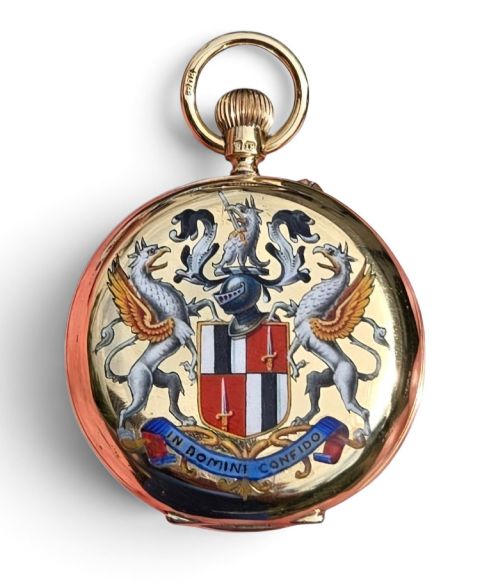
Smaller things move the needle in the same direction. An engraved, engine-turned or niello case lists above the plain equivalent, and a watch sold with its albert chain generally lists above one without. Complications are the once-in-a-blue-moon entries: among 739 listings there is a quarter repeater, a five-minute repeater and a pair of eight-day visible-escapement Hebdomas watches, all in the upper part of the range.
Antique Hunter Pocket Watches Retail Price Guide 2026
Typical UK retail prices for hunter pocket watches, calculated from the Sellingantiques database of over a million retail prices indexed since 2003. This retail price guide relies exclusively on Sellingantiques data; no external sources or auction records are used, so the figures do not describe the wider market.
Full hunters outnumber half hunters roughly two to one across the Sellingantiques archive, 456 titles against 241.
Waltham·J W Benson·Elgin·Cyma·Thomas Russell·Omega·Longines·Record·Vertex·Revue Thommen
The Antique Hunter Pocket Watches Glossary
- Full hunter
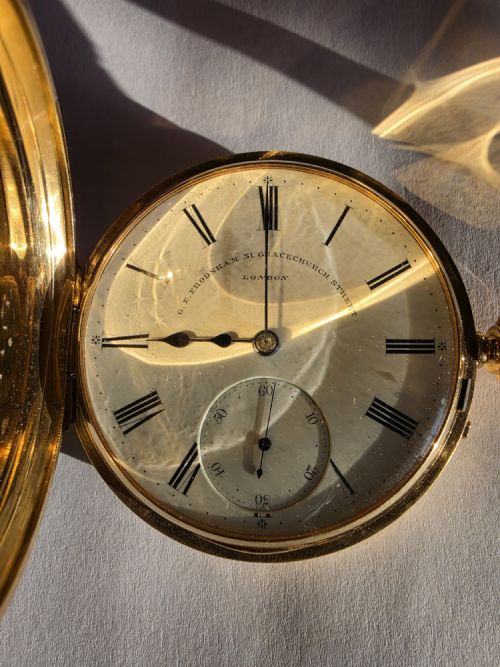
- A solid hinged cover over the dial, opened to read the time. It is the commoner of the two forms in this category.
- Half hunter
- A cover with a glazed central aperture and chapters engraved around it, so the hands read with the lid closed.
- Keyless
- Wound by the crown rather than a separate key. Titles occasionally spell it out as button wind or keyless pin-set.
- Gold filled
- A laminated or plated case, stated as such in titles alongside silver filled and gold plated. Not solid metal.
- Assay year and office
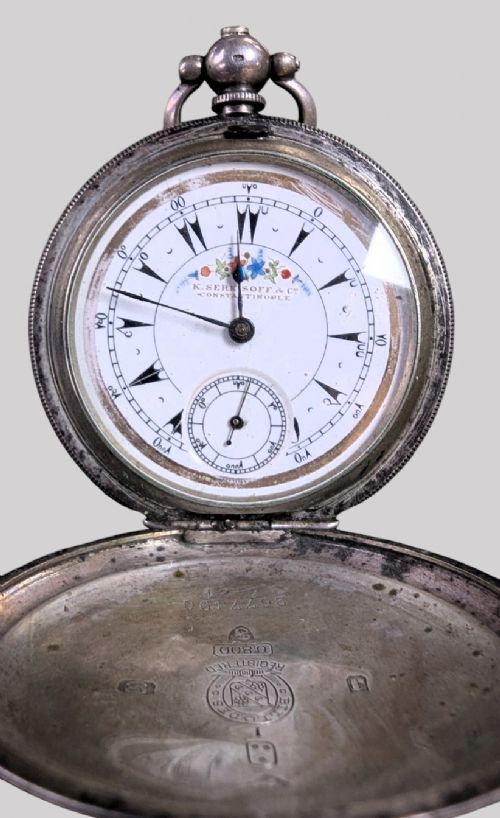
- The hallmark date on a silver case, quoted in titles as Glasgow 1917, London 1915 or Edinburgh.
- Grade name
- An American movement grade used as a model name, so Traveler, P S Bartlett, Riverside, Seaside, Equity, Marquis and Royal all read like models.
- Niello
- Black inlay decoration on a silver case, appearing in a handful of titles as niello or niello-ware.
Antique Hunter Pocket Watches: Frequently Asked Questions
What's the difference between full and half hunter?
A full hunter has a solid lid; you open it to see the dial. A half hunter has a glazed window in the centre of the lid with numerals around it, so the time reads with the cover shut.
Full hunters dominate the archive, 456 titles against 241 for half hunters. Current stock on Sellingantiques is closer to an even split.
Which makers turn up most often?
Waltham is the single commonest name, in 221 of 739 titles. Elgin follows among the American firms, and both are often sold under grade names rather than a model number.
On the Swiss side Cyma leads a group that includes Revue, Vertex, Record and Buren. British retailer names run to J W Benson and Thomas Russell more than any others.
When were most of these watches made?
Dealers date them from 1850 to 1950, but the mass sits between 1900 and 1939, about nine in ten dated listings.
The 1920s are the single biggest decade with 243 listings, followed by the 1910s, 1900s and 1930s. Victorian examples are scarce in this archive and post-war ones scarcer.
Are hunter cases usually silver or gold?
Silver appears in a quarter of titles and covers the middle of the range, often with its assay year and office quoted.
Gold is in only 44 titles, and 18ct or 14K in about a dozen across the whole archive. A large share of titles state no metal at all, which points to plated or base-metal cases.
What does a grade name like Traveler mean?
It is an American maker's name for a movement grade, used in listings much as a model name would be. Traveler turns up in 40 titles, P S Bartlett in 16 and Riverside in 8.
Others appear once or twice: Seaside, Ensign, Equity, Beacon, Marquis, Royal, Bond Street, Crescent St. Named grades list above the plain equivalents.
Do these watches come with a chain?
Sometimes. Chain appears in 36 titles, with albert and double albert in a few more.
The same watch offered with its chain generally lists above one offered on its own.