


Antique Vintage Watches
Two things share this heading: the pocket and fob watch, carried on a chain for three centuries, and the mid-century wristwatch that replaced it after the First World War.

Antique Vintage Watches
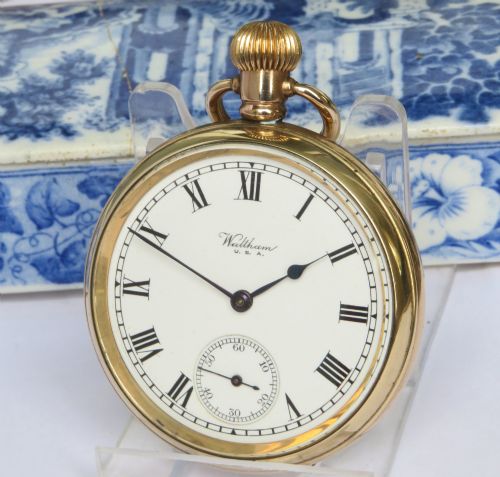
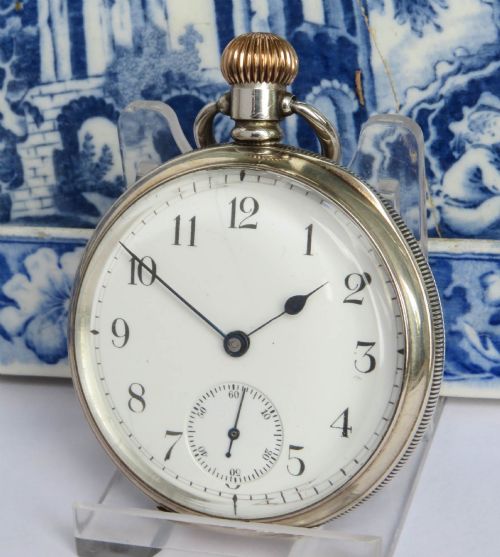
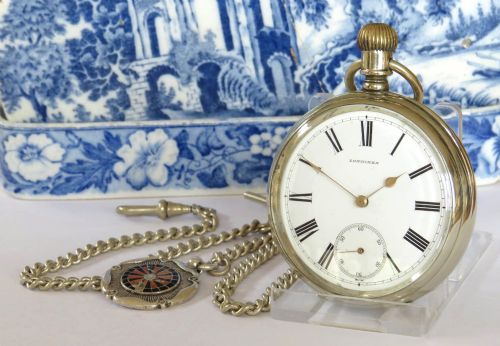
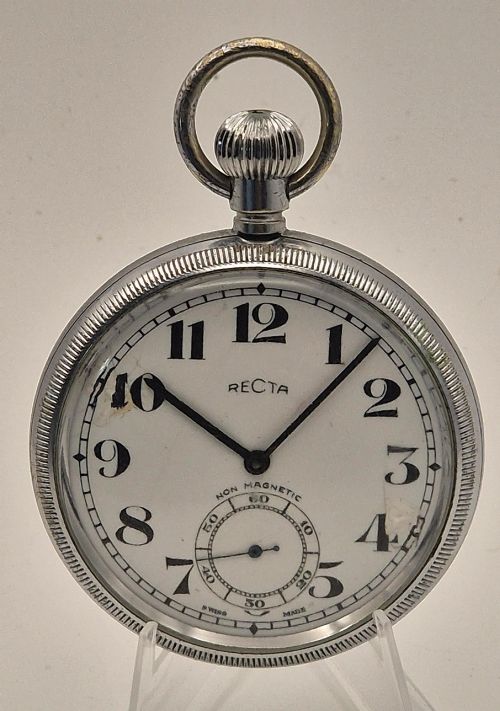
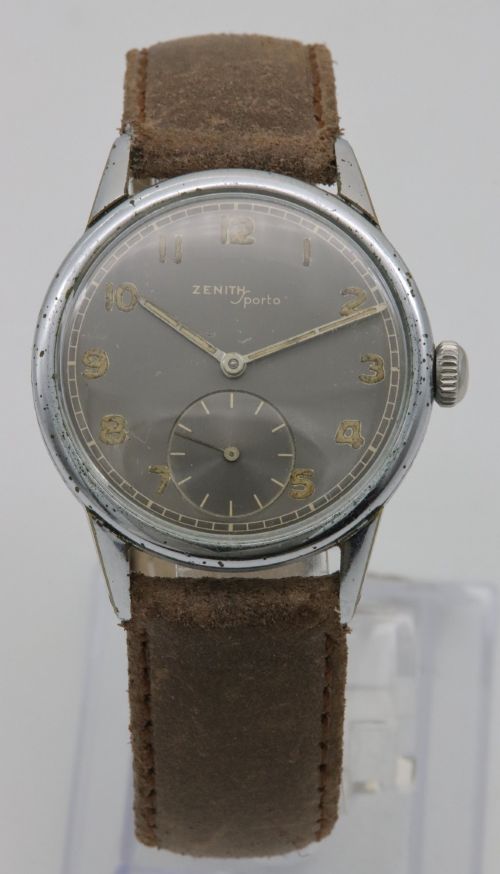
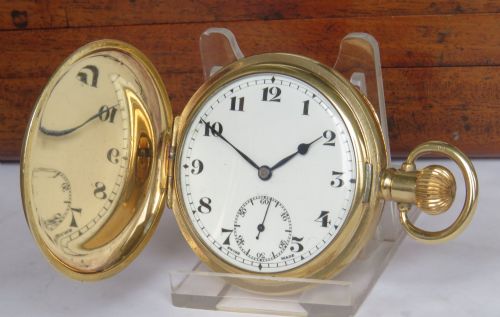
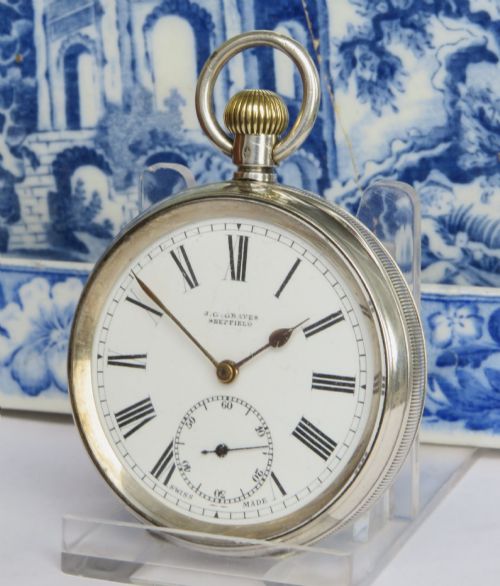
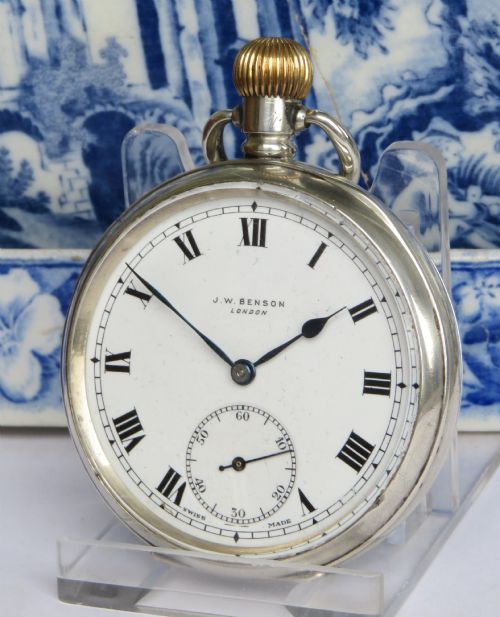
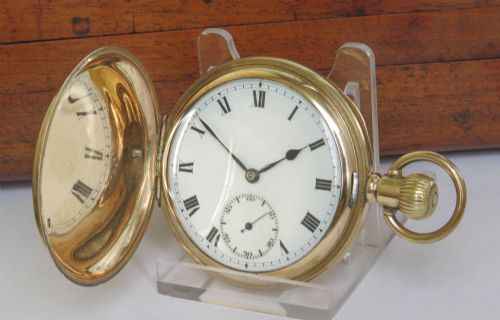
Roughly a third of listings are pocket and fob watches, open faced or hunter cased, in silver, gun metal or plated metal, and a good number come with the albert chain that carried them. The rest are wristwatches, and the weight there falls on gents' Swiss models of the 1950s and 60s.
Omega dominates the wristwatch side, appearing in about a third of all titles on Sellingantiques, with the Seamaster the single most repeated model, followed by Geneve, De Ville and Constellation. Longines comes second by a distance, and behind those sit other Swiss and American names across a large minority of the wrist listings.
Dating is more precise than in most antique categories, because cases and movements carry their own dates: nearly all listings quote a clean year, and the field runs from 1860 to 1960. The 1950s and 60s together account for over half, so mid-century is the centre of gravity rather than the Victorian pocket watch. Pre-1900 material is thin, and where a listing says only "19th Century" that is an estimate.
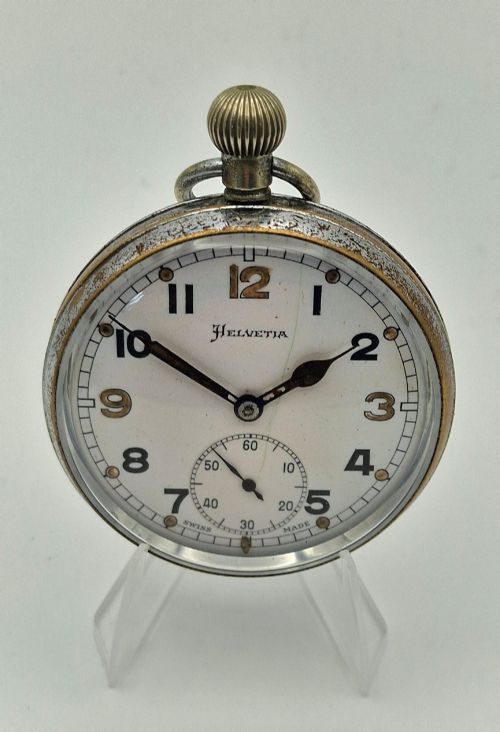
Smaller seams run through the category. Ladies' and Art Deco cocktail watches, some diamond set and platinum cased, make up under a tenth. Military and railway issue turns up steadily: RAF, Admiralty, ATP and Dirty Dozen WWW models, and pocket watches issued to the Great Northern, Taff Vale, North British and Dublin & South Eastern railways with their issue numbers stamped up.
The Range
Case metal does the first sorting. Solid gold sits at the top and titles are careful about it, saying solid 9ct, solid 18ct or 18k rather than leaving it open, while gold plated, gold filled, rolled gold and gun metal cluster lower down. Around a quarter of titles mention gold in some form; solid gold is roughly one in seven.
A named maker pushes a watch up. Omega and Longines titles hold the upper part of the range, while the bottom carries unnamed Swiss pocket watches and jeweller's house names like H Samuel Acme, Everite, Limit and Bravingtons Renown. Documentation works the same way: eighty titles quote a movement calibre, and a reference number with calibre plus box and papers reads as the most complete kind of listing.
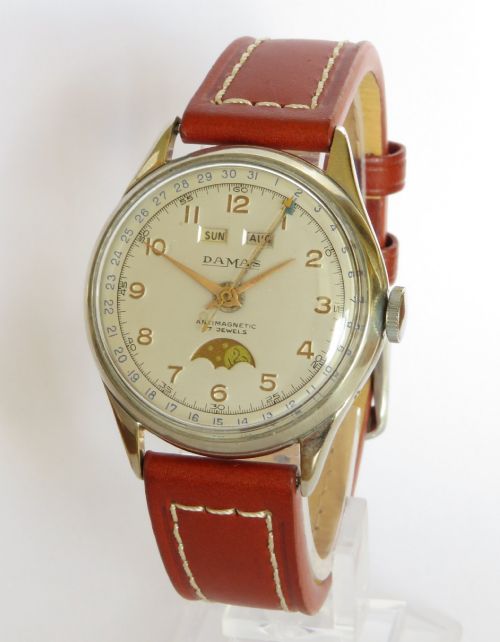
Complication and provenance take it further. Chronographs recur, and the one-off repeaters, moonphase triple calendars and a split-second rattrapante sit at the high end. Documented military or railway issue lifts a watch well above a plain equivalent, and on the ladies' side diamond and platinum cocktail watches lead, with weights quoted up to four carats. Top of the whole range: steel sports Rolexes and an Omega Speedmaster Professional with the calibre 321. Bottom: unbranded 1960s automatics and plain 1920s-30s Swiss pocket watches.
Antique Vintage Watches Retail Price Guide 2026
Typical UK retail prices for vintage watches, calculated from the Sellingantiques database of over a million retail prices indexed since 2003. This retail price guide relies exclusively on Sellingantiques data; no external sources or auction records are used, so the figures do not describe the wider market.
Omega is the name that turns up from the most dealers on Sellingantiques, with Longines second, then Waltham and Elgin.
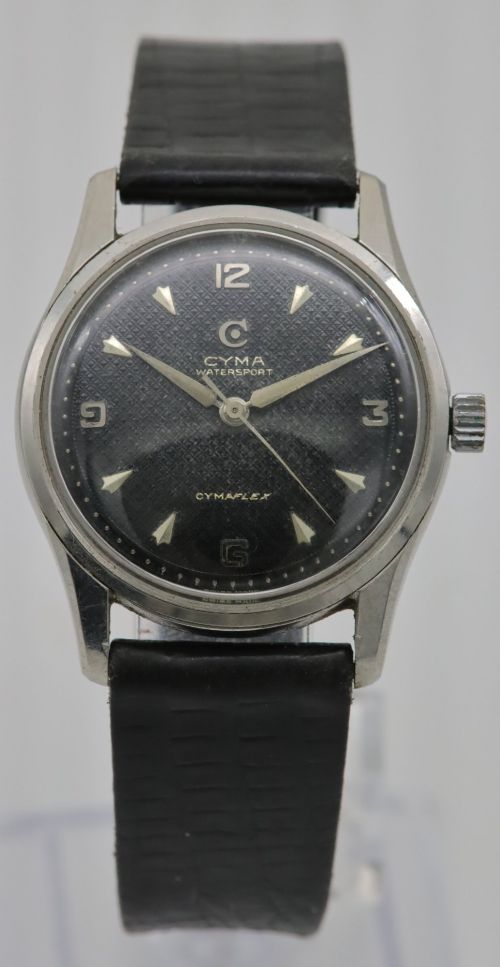
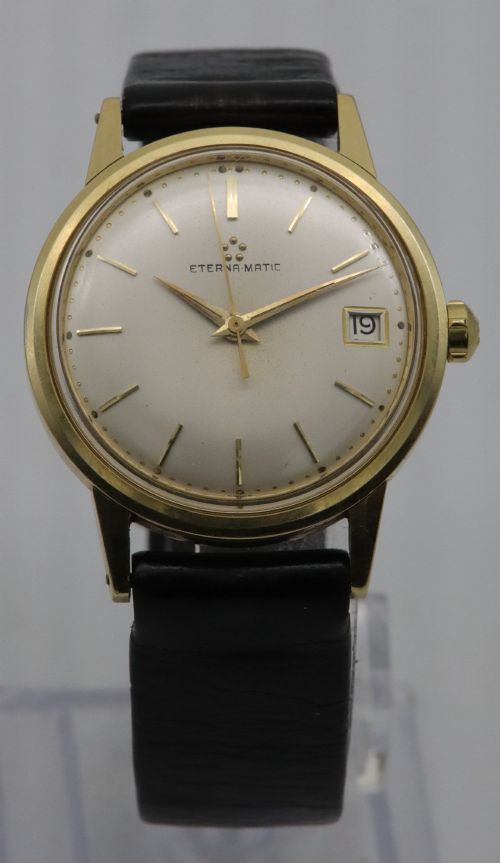
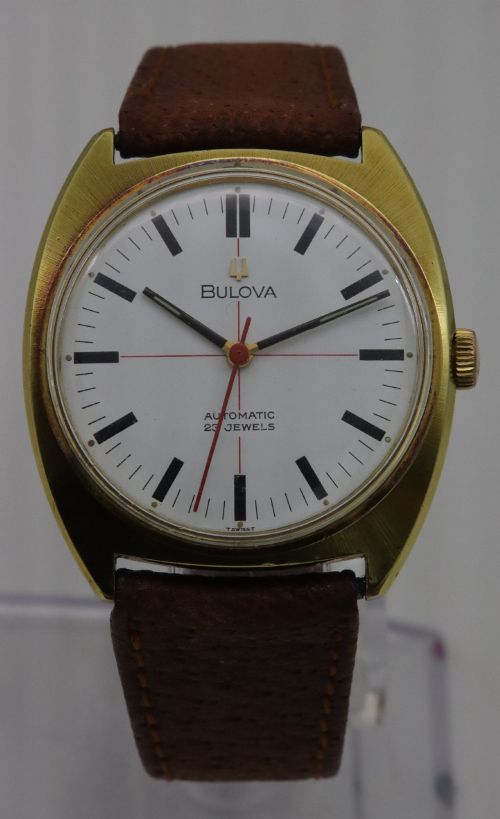
Omega·Longines·Waltham·Elgin·Zenith·Rolex·Smiths·Cyma·Tudor·Bulova·Eterna·IWC·Tissot·Revue·Jaeger-LeCoultre
The Antique Vintage Watches Glossary
- Calibre (cal.)
- The movement's model number, quoted in eighty titles and the usual way a wristwatch is identified. Cal. 267, 552 and 321 all appear.
- Full hunter
- A pocket watch with a hinged solid cover over the dial. Eighteen titles say full hunter, thirty-nine simply hunter.
- Half hunter
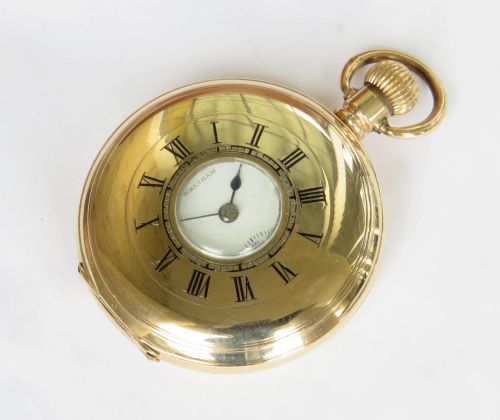
- The same hinged cover, but with a glazed aperture so the time reads without opening it.
- Open faced
- No cover, dial permanently exposed. The commonest pocket form in this category.
- Bumper automatic
- Early self-winder whose weight swings between springs instead of rotating fully. Twenty-seven titles use the term, mostly of Omegas.
- Goliath
- An oversized pocket watch, sometimes eight-day. Four have passed through.
Antique Vintage Watches: Frequently Asked Questions
Are most of these pocket watches or wristwatches?
Pocket and fob watches are about a third of listings, and a larger share of what's currently for sale. Wristwatches make up the rest.
The pocket side is mostly open faced and hunter cased, in silver, gun metal or plated metal. The wrist side is mostly gents' Swiss, and automatic is the term that turns up throughout.
Why does Omega appear so often?
Omega is in about a third of all titles on Sellingantiques, and over half the sold archive on the wrist side. No other name is close.
The Seamaster is the most repeated model, with Geneve, De Ville and Constellation behind it. Longines is the second name by frequency, at a fraction of Omega's count.
What period do these watches come from?
The dealer dating runs 1860 to 1960, and nearly all listings carry a clean year rather than a vague period.
Just over half of the dated pieces fall in the 1950s and 60s. The 1930s and 20s follow, then the 40s, 1910s and 1900s. Pre-1900 pieces are scarce, and the earliest single item is a railway-issued pocket watch put at 1860.
How is case metal described?
Titles are specific. Silver, gun metal, gold plated, gold filled and rolled gold are all named as such, and solid gold is stated as solid 9ct, solid 18ct, 18k or 14ct.
White gold and rose gold each appear in a smaller run of titles. Platinum turns up mainly on the diamond-set cocktail watches.
Do military and railway watches turn up?
They're a small recurring seam. Military runs from a WW1 trench watch with a shrapnel guard through RAF 6B/159, Admiralty A.P.300, ATP and Dirty Dozen WWW models to a French Air Force Type 20 chronograph, with Luftwaffe, Kriegsmarine and Swedish issue pieces too.
Railway issue shows as pocket watches for the Great Northern, Taff Vale, North British and Dublin & South Eastern, each carrying its own stamped issue number.
What sizes are the cases?
Where a size is stated, wristwatch cases sit between 26mm and 37mm, and titles often quote it alongside the year and calibre.
The largest are the 1940s-50s Omegas described as jumbo or oversize. On the pocket side, a massive silver-cased watch of about 1910 is the biggest recorded.