


Antique Fusee Pocket Watches
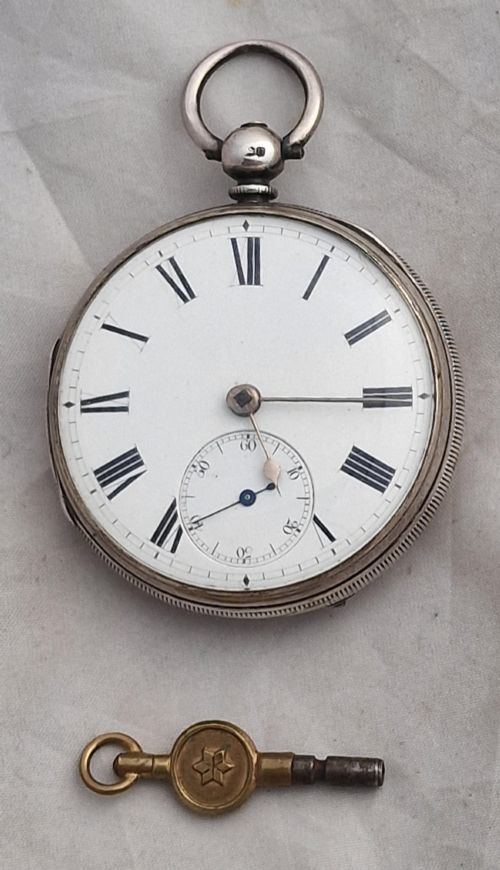
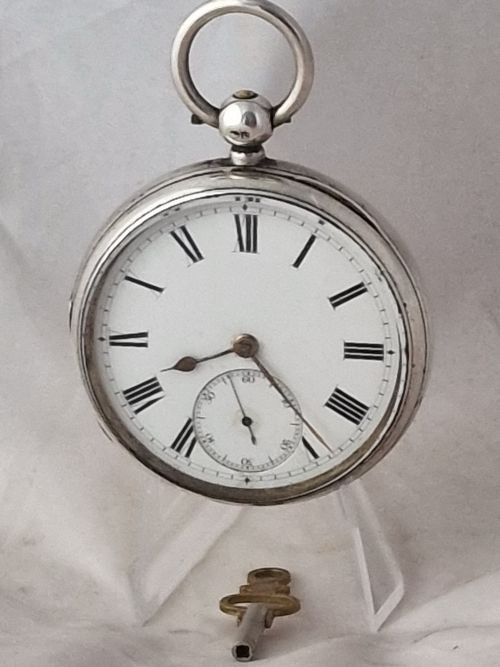
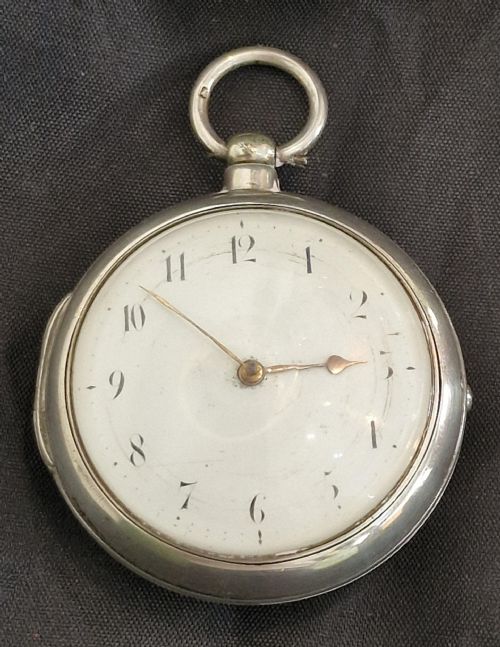
An English key-wound pocket watch driven by a fusee and chain, the tapered spool that evens out the mainspring's pull as it unwinds.
Antique Fusee Pocket Watches
The fusee is a tapered, grooved spool joined to the mainspring barrel by a fine chain. As the spring runs down and loses force, the chain pulls on a wider part of the spool, so the drive to the escapement stays steady. English makers kept the arrangement long after Continental workshops had left it behind, and it carried on in English pocket watches through most of the 19th century.
What you'll meet most often is a silver-cased watch of the mid-to-late 1800s. Silver appears in 25 of 40 titles on Sellingantiques, and the 1860s through the 1890s account for 19 of the dated listings, with the 1870s the busiest single decade. The standard title runs form, metal, year, then sometimes a name and a town.
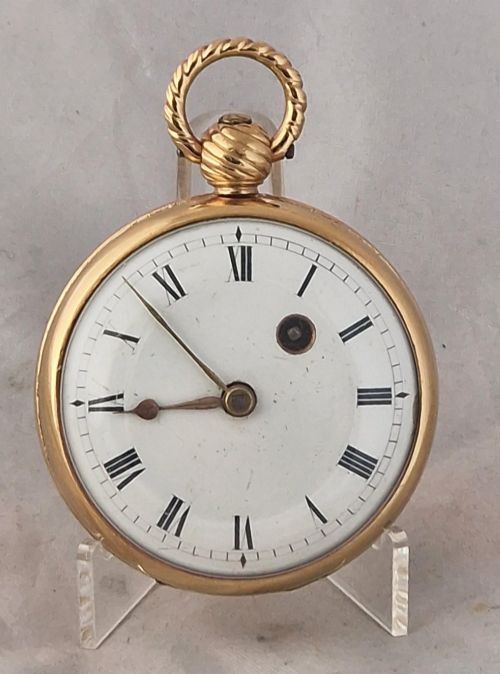
A quarter of titles add the word verge, the older escapement, and those cluster in the earlier group: 1809, 1812, 1816, 1830, 1833, 1834. Gold cases are a much smaller strand, five watches in 18ct. Pair cased and full hunter each turn up twice, and one silver watch of 1879 carries a chronograph.
Dating is unusually firm for a watch category, because the hallmark supplies it: 28 of the 40 listings carry a clean year. The rest are placed only as 19th Century, Victorian or Georgian, and shouldn't be read as precisely fixed. One dealer's dated field and title disagree, so the two aren't always in step.
Where The Range Splits
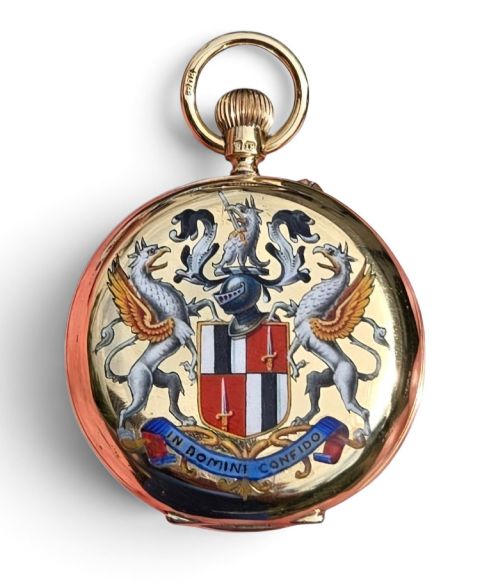
Case metal does the heaviest work. The five 18ct gold watches in this archive sit at the top of the range, clear of every silver example. Below them, silver is the default, and an anonymous open-face silver watch of the 1870s is where the range bottoms out.
Within silver, two things lift a watch. One is a name and a town in the title, Dublin, Glasgow, London and others, which reads above the plain dated description. The other is age: verge watches and the 1800s to 1830s entries occupy the upper half of the silver run, while later plain silver sits under them.
After that it comes down to how the watch is put together and what it can do. Pair-cased and full-hunter titles are set above plain open-face silver. A documented line of descent or an added complication such as the chronograph separates a watch from the ordinary runs altogether, and a stated size, Large or a measurement in millimetres, gives a modest lift.
Antique Fusee Pocket Watches Retail Price Guide 2026
Typical UK retail prices for fusee pocket watches, calculated from the Sellingantiques database of over a million retail prices indexed since 2003. This retail price guide relies exclusively on Sellingantiques data; no external sources or auction records are used, so the figures do not describe the wider market.
Fusee comes from the French fusée, a spindle wound with thread - which is more or less what the little chain-wrapped cone inside the watch looks like.
The Antique Fusee Pocket Watches Glossary
- Fusee
- A tapered, grooved spool linked to the mainspring barrel by a chain, evening out the force as the spring unwinds.
- Verge
- The earlier escapement, named in 10 of 40 titles and pulling almost entirely toward the pre-1840 watches.
- Key wind
- Watches of this type are wound with a separate key rather than a crown, which the archive implies rather than spells out.
- Pair cased
- An inner case holding the movement, sitting inside a separate outer case. Two titles use the term.
- Full hunter
- A case with a hinged metal cover over the dial, protecting it when the watch is in a pocket. Two titles use it.
- Improved Patent
- A trade legend engraved on some later English movements, appearing in three titles across this archive.
Antique Fusee Pocket Watches: Frequently Asked Questions
How common are fusee pocket watches on Sellingantiques?
They come up at a rate of about two a year, and only eight dealers have ever listed one.
The archive stands at 40 listings, which makes this a thin category rather than a busy one.
What years do these watches cover?
The dated field runs from 1800 to 1900. The earliest year quoted in a title is 1809, on a verge fusee signed for London, and the latest is 1894.
The 1870s is the single busiest decade with 10 listings. Just one entry is placed as late as the 1900s.
Why do so many titles carry an exact year?
The hallmark supplies it. Silver and gold cases were assayed and date-stamped, so a year can be read off the case rather than guessed from style.
That gives 28 clean years out of 40 listings. The remaining dozen are described only as 19th Century, Victorian or Georgian.
Are gold cases usual in this category?
No. Silver appears in 25 of the 40 titles and is the default.
Only five watches in the whole archive are cased in 18ct gold, and those five sit at the top of the range.
Which towns turn up in the listings?
Chester and London appear as hallmarking offices, which is how the year in a title is usually arrived at.
Maker towns reach well beyond London: Coventry, Durham, Bath, Colchester, Carmarthen, Newport, Glasgow, and Dublin twice.
Does verge mean the same thing as fusee?
They describe different parts. The fusee is the spool-and-chain arrangement that regulates the mainspring's pull; the verge is an escapement, and the older of the two designs found here.
A quarter of titles say verge fusee, meaning the watch has both. The rest simply read fusee.