




A 2026 Guide by Sellingantiques
Developed in the nineteenth century for timing horse races and astronomical observations.
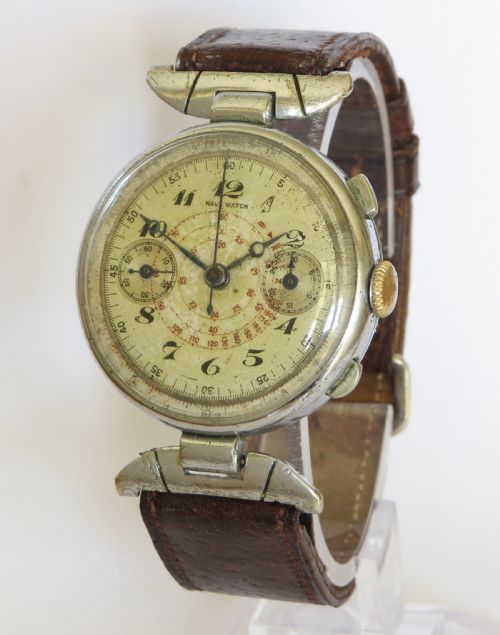
Look for the transition from bulky pocket chronographs to wrist-worn models designed for artillery officers in the trenches.
Most surviving antique chronographs date from the late nineteenth to mid-twentieth centuries.
Longines produced complex in-house chronograph calibres from the late nineteenth century through the mid-twentieth century.
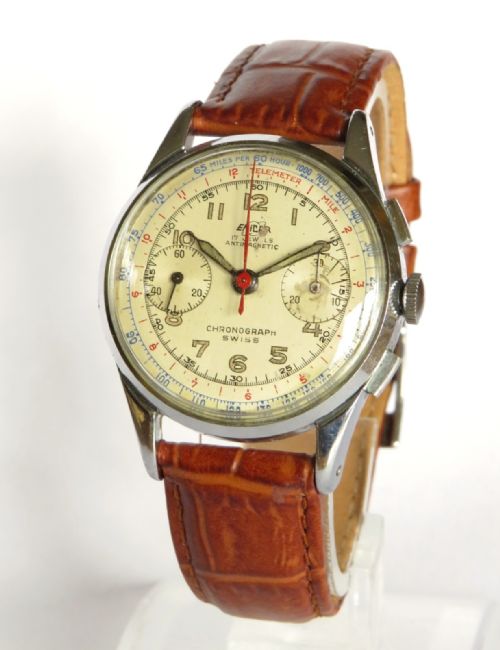
Find movements supplied by raw movement makers like Valjoux, which were then cased and dialled by retail brands.
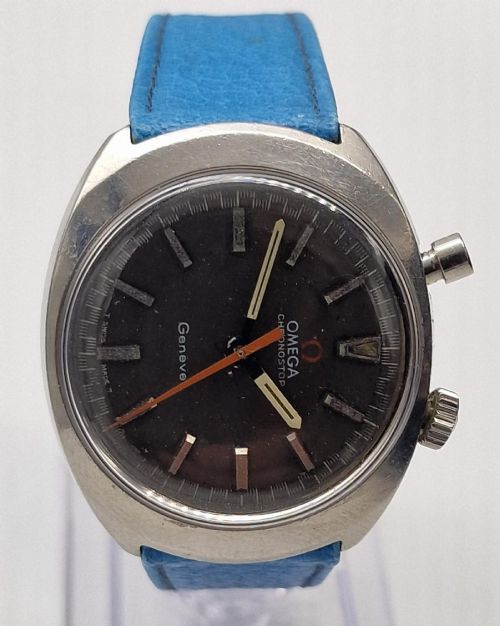
Omega is well documented making heavy-duty chronographs for both civilian sports and military contracts during the early twentieth century.
The 2026 retail price guide for Antique Chronographs is drawn from a proprietary archive of over 1.1 million retail prices indexed by Sellingantiques since 2003. This guide relies exclusively on their own internal data; no external sources or auction records are used.
Analysing nearly 25 years of UK antique market history alongside current retail values, the data indicates that typical UK retail prices for Antique Chronographs range between £400 and £3,500. Entry-level prices generally fall under £400 and premium examples upwards of £3,500.
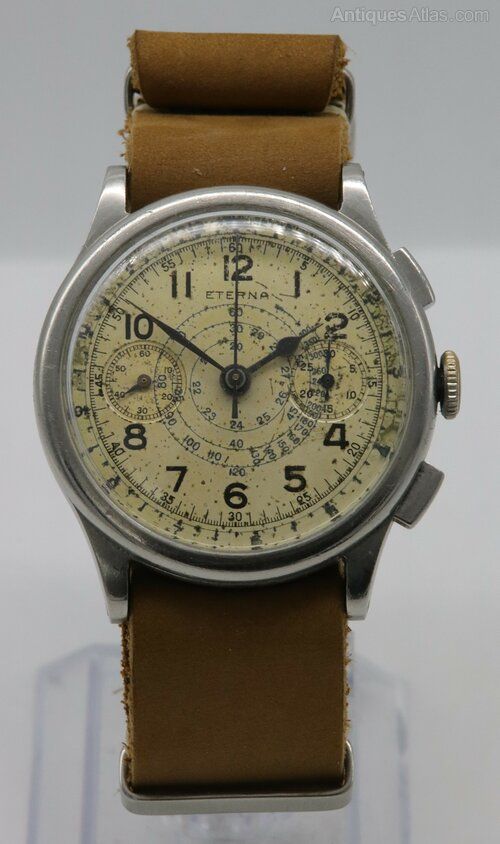
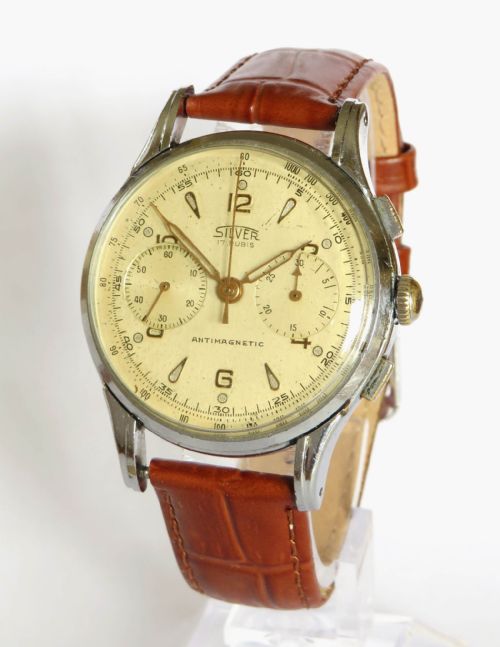
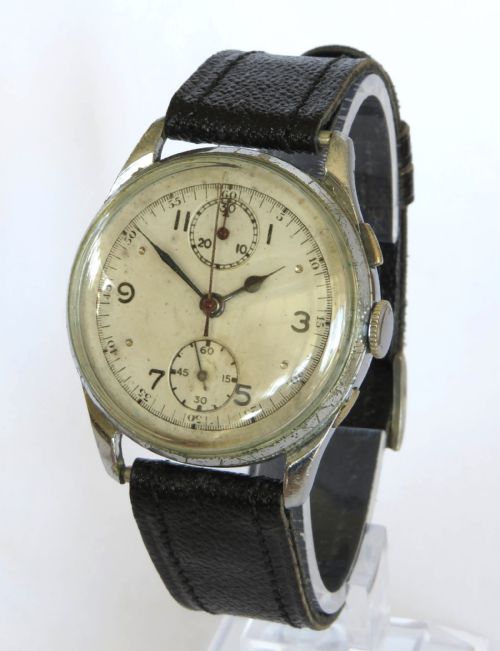
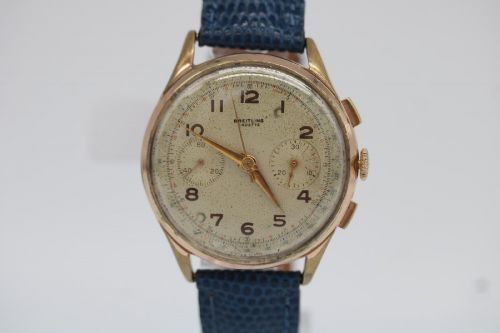
Pushers on the case edge control the start, stop and reset functions of the central sweep hand.
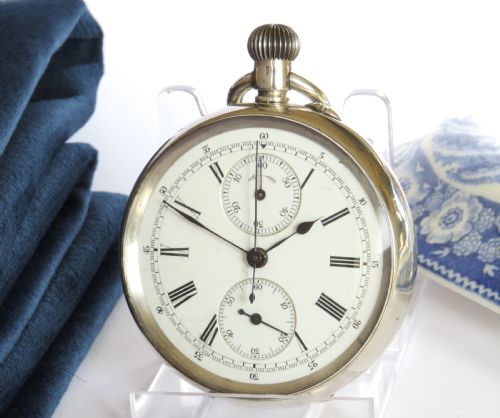
Auxiliary dials usually track elapsed minutes or continuous running seconds.
Notice the telemetric or tachymetric scales ringing the outer edge of the main face to calculate distance or speed.
Early mechanisms were often distinct modules bolted onto the back of a standard pocket watch calibre.
Swiss watchmakers eventually integrated the chronograph gearing directly into the main movement plate to reduce thickness.
Examine the hand-bevelled edges on the steel levers. These mark the transition from rough factory stamping to high-grade hand finishing.
"Some early dial scales were explicitly calibrated for physicians to count a patient's pulse within a few heartbeats."
"Watchmakers sometimes hid their production year codes under the balance wheel where only a service technician would spot them."
"Look out for complicated pocket models that included a minute repeater chime working independently of the stopwatch gearing."
Based on almost 25 years of Sellingantiques UK antique market data, Antique Chronographs appeared 459 times (out of 1,100,000 antiques) which gives it a rarity score of 91/100.
This score measures scarcity within the Sellingantiques archive only and is not a survey of the entire antiques market, so these statistics may not be indicative of the general availability of Antique Chronographs elsewhere.
You wind it much like a standard manual watch. Turn the crown clockwise while it rests in the neutral position.
Stop turning the moment you feel firm resistance. Overwinding can damage the mainspring, especially on older movements where the metal has aged.
Leaving the sweep hand running constantly puts unnecessary strain on the mechanism. The gearing in these was designed for timing short intervals rather than continuous operation.
Keeping it engaged drains the mainspring power reserve much faster. You will also accelerate wear on the clutch and the delicate teeth of the driving wheels.
It is always better to leave the chronograph stopped and reset to zero when you are just reading the time of day.
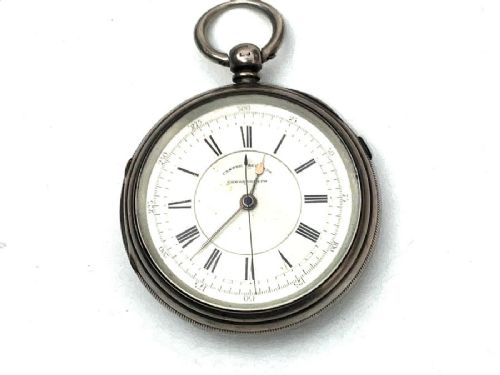
A snail-shaped spiral in the centre of the dial is usually a tachymeter. It allows the scale to track speeds over a longer duration by spiralling inward as elapsed time increases past one minute.
Makers used this layout to fit a wider range of calculations onto a small watch face without cluttering the outer track.
Adding oil from the outside will likely make the problem worse. The stiffness usually comes from old lubricants drying into a sticky residue or from a bent pusher stem rubbing inside its tube.
Chronograph mechanisms rely on precise friction and complex lever interactions. Blindly applying oil can migrate onto the hairspring or the dial, causing serious mechanical faults.
A watchmaker needs to dismantle the case. They will then clean the pushers in solvent before applying the correct specialised grease.
Please note: This Antique Chronographs guide and its associated pricing data are provided for general informational purposes only. It does not constitute formal financial, investment, or appraisal advice and should not be relied upon as the sole basis for any commercial activity, purchasing, or sales decisions. Sellingantiques.co.uk accepts no liability for any actions taken in reliance on this information. Always consult with a qualified professional or independent appraiser.
