


A 2026 Guide by Sellingantiques
Invented before the widespread use of matches. Striking the time was the only practical way to check the hour at night.
The earliest examples sounded small bells mounted inside the case back.
Abraham-Louis Breguet introduced wire gongs in the late eighteenth century. It saved space and made the cases much thinner.
English makers dominated the early trade in antique repeater watches before Swiss workshops adopted the complication in volume.
Daniel Quare patented an early quarter repeating mechanism in 1687. His design operated from a single push pendant.
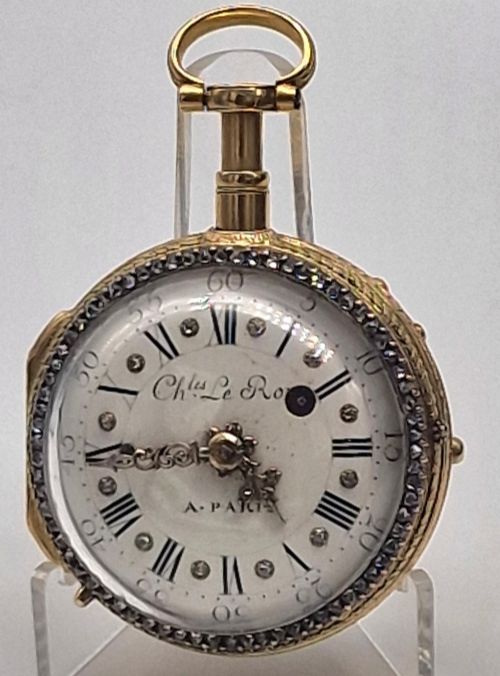
Julien Le Roy built well regarded examples in Paris during the mid-eighteenth century.
Swiss firms like Patek Philippe perfected the minute repeater in the late nineteenth century. They produced highly sophisticated movements.
The 2026 retail price guide for Antique Repeater Watches is drawn from a proprietary archive of over 1.1 million retail prices indexed by Sellingantiques since 2003. This guide relies exclusively on their own internal data; no external sources or auction records are used.
Analysing nearly 25 years of UK antique market history alongside current retail values, the data indicates that typical UK retail prices for Antique Repeater Watches range between £2,000 and £7,500. Entry-level prices generally fall under £2,000 and premium examples upwards of £7,500.
A slide on the side of the case winds the mainspring for the strike. Releasing it sets off the sequence.
Quarter repeaters strike the hour on a low note, followed by a double strike for each quarter past.
Minute repeaters go further. They chime the hours and quarters, followed by the specific minutes on two different gongs.
Early movements use a full plate layout. The strike works sit under the dial, hidden from view.
Later Swiss makers adopted bridge calibres. This exposes the intricate gear trains and striking hammers.
Finer antique repeater watches often feature jewelled bearings on the repeating train. This reduces friction during the complex chiming sequence.
"Many visually impaired owners found these mechanisms highly practical for checking the time independently."
"Some examples play melodies rather than simple notes. These carillon repeaters use three or four gongs to ring complex tunes."
"The acoustic properties of the case actively amplify the sound. Gold produces a warmer tone than silver."
Based on almost 25 years of Sellingantiques UK antique market data, Antique Repeater Watches appeared 39 times (out of 1,100,000 antiques) which gives it a rarity score of 99/100.
This score measures scarcity within the Sellingantiques archive only and is not a survey of the entire antiques market, so these statistics may not be indicative of the general availability of Antique Repeater Watches elsewhere.
Yes. The slide winds the small mainspring dedicated to the chiming mechanism.
If you release it halfway, the all-or-nothing piece prevents the watch from striking. This stops it from giving you the wrong time. You must push it until you feel a firm stop.
It sounds like the slide is not being pushed all the way home, or the mechanism needs a service. Dried oils in the striking train often cause the governor to stall.
These movements are complex and sensitive to dust. A watchmaker can clean the pivots and apply fresh synthetic oils to get the train running smoothly again.
Tone depends on the case material and the state of the gongs.
Sometimes they become loose at the mounting block. An adjustment by a specialist usually improves the resonance.
Dumb repeaters do not strike a bell or a wire gong. Instead, the hammer hits a solid metal block attached directly to the inside of the case.
You feel the time rather than hear it. The owner presses the watch against their palm, feeling the vibrations of the hours and quarters. They turn up mostly in late eighteenth-century French and English work.
Please note: This Antique Repeater Watches guide and its associated pricing data are provided for general informational purposes only. It does not constitute formal financial, investment, or appraisal advice and should not be relied upon as the sole basis for any commercial activity, purchasing, or sales decisions. Sellingantiques.co.uk accepts no liability for any actions taken in reliance on this information. Always consult with a qualified professional or independent appraiser.
