


A 2026 Guide by Sellingantiques
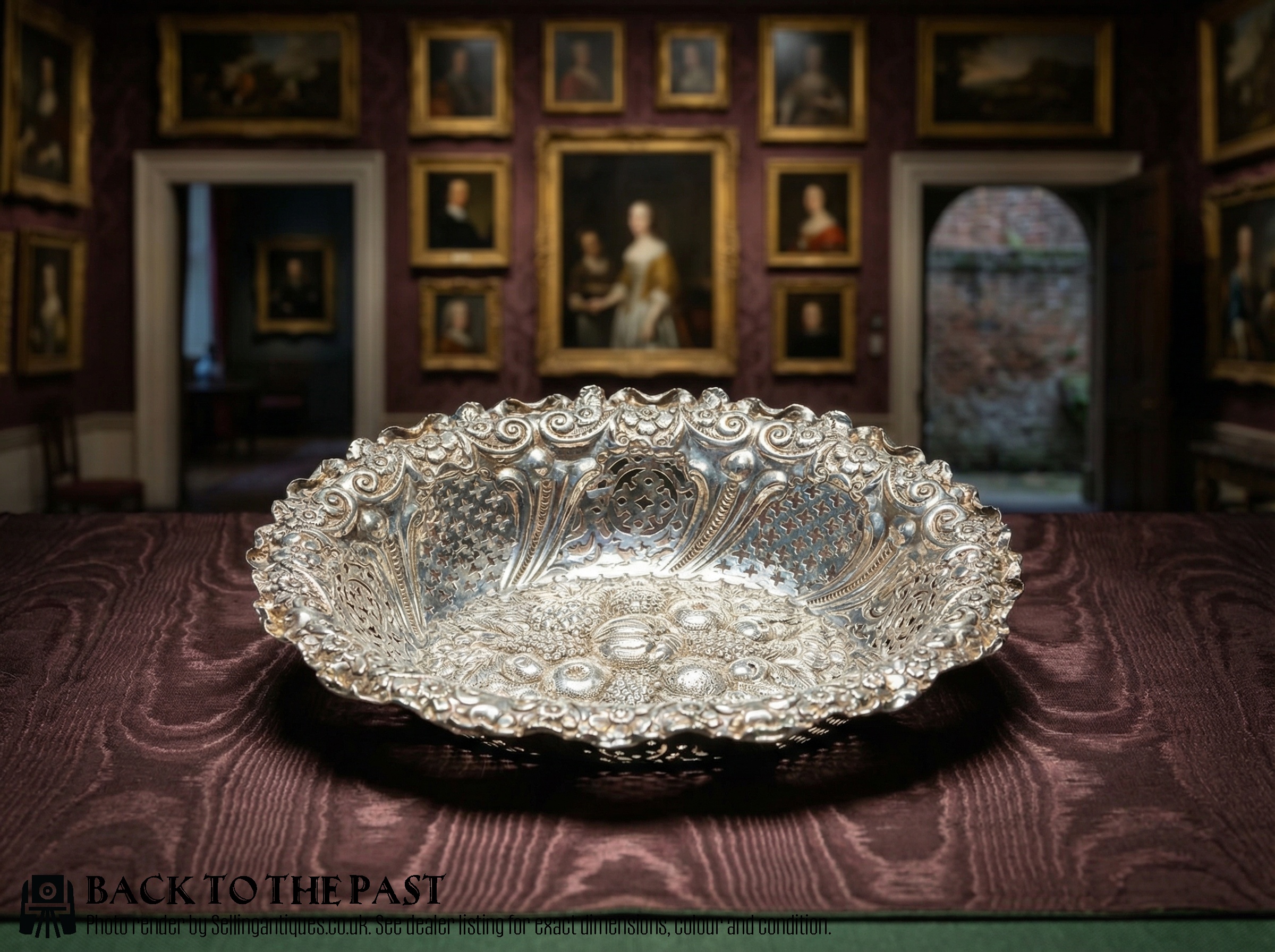
Antique Victorian Silver Bon Bon Dish, Victorian
Priced at £275 from Rebecca Sarah Antiques
Dining habits shifted during the seventeenth century. Silver dishes moved from royal necessity to wealthy domestic tables.
Entrée dishes arrived later. The introduction of service à la française required matching sets for formal presentation.
Look at nineteenth-century table settings. The Victorians demanded specialised silver dishes for everything from butter to bonbons.
Paul de Lamerie produced heavy rococo examples. His workshops turned out elaborately chased dishes during the mid-eighteenth century.
Paul Storr dominated Regency production. Workshops supplied massive matching sets of silver dishes to the royal household.
Hester Bateman managed a highly successful family firm. Her workshop produced lighter neoclassical dishes with bright-cut engraving.

Antique Silver Viking Longship Dish, Victorian
Priced at £250 from The Silver Cabinet
The 2026 retail price guide for Antique Silver Dishes is drawn from a proprietary archive of over 1.1 million retail prices indexed by Sellingantiques since 2003. This guide relies exclusively on their own internal data; no external sources or auction records are used.
Analysing nearly 25 years of UK antique market history alongside current retail values, the data indicates that typical UK retail prices for Antique Silver Dishes range between £200 and £1,300. Entry-level prices generally fall under £200 and premium examples upwards of £1,300.
Rims dictate the overall shape. Gadrooned or reeded edges add strength while hiding hammer marks.
Covers sit inside or outside the rim. Many feature detachable handles that twist off to create a second serving dish.
Engraved armorials often dominate the centre. The crest announces who owned the silver dish.
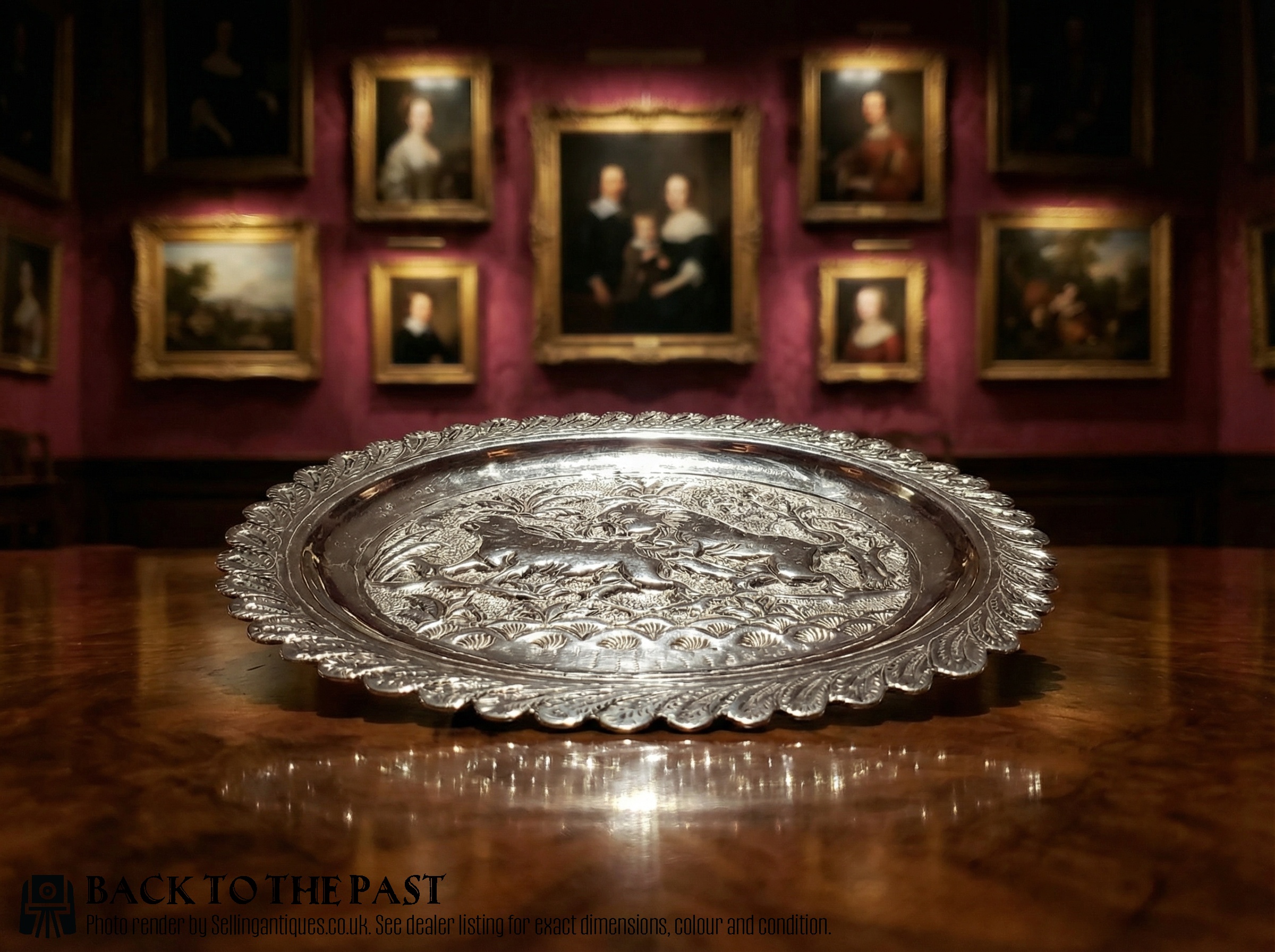
Indian Dish with Hunting Scene, 1910
Priced at £90 from TJR Trading
Early silver dishes were raised by hand. Silversmiths hammered flat discs over anvils to form the deep well.
Casting took over for heavier borders. Molten silver poured into moulds provided thick decorative rims that soldering attached later.
Spinning became common later. Sheet metal pushed over a wooden chuck on a lathe sped up production times.
"Hallmarks sometimes hide in the decoration. Makers struck them into borders so they wouldn't mar the smooth central well."
"You can detach the handle on many covers. Turning the lid over gives you an extra serving vessel for the table."
"Some dishes have double skins. A hollow space between the layers held hot water to keep the food warm."
Based on almost 25 years of Sellingantiques UK antique market data, Antique Silver Dishes appeared 4738 times (out of 1,100,000 antiques) which gives it a rarity score of 39/100.
This score measures scarcity within the Sellingantiques archive only and is not a survey of the entire antiques market, so these statistics may not be indicative of the general availability of Antique Silver Dishes elsewhere.
Use a soft cloth and mild silver polish. Apply the paste sparingly and rub in straight lines rather than circles to avoid swirling scratches.
Rinse the dish under warm water and dry it immediately. Leaving water on the surface encourages tarnishing.
This indicates the dish is likely made of Old Sheffield Plate or worn electroplate. The manufacturing process layered silver over a copper core.
Decades of polishing wear away the soft outer silver layer. This reveals the darker copper underneath, a phenomenon dealers refer to as bleeding.
Many collectors appreciate this worn look. It shows the age and working history of the piece.
Salt and egg yolks cause immediate issues. They react quickly with the metal and leave dark pitting on the surface.
If you serve these items, line the dish with a napkin or wash it immediately after the meal.
Never force a stuck or loose lock-handle. The bayonet fitting inside the mechanism often accumulates dried polish or grease over the decades.
Try running warm soapy water around the base of the finial. This softens any old residue and might free up the locking action.
If it still resists, leave it alone. A silversmith can reset the mechanism without damaging the cover.
Please note: This Antique Silver Dishes guide and its associated pricing data are provided for general informational purposes only. It does not constitute formal financial, investment, or appraisal advice and should not be relied upon as the sole basis for any commercial activity, purchasing, or sales decisions. Sellingantiques.co.uk accepts no liability for any actions taken in reliance on this information. Always consult with a qualified professional or independent appraiser.
