


A 2026 Guide by Sellingantiques

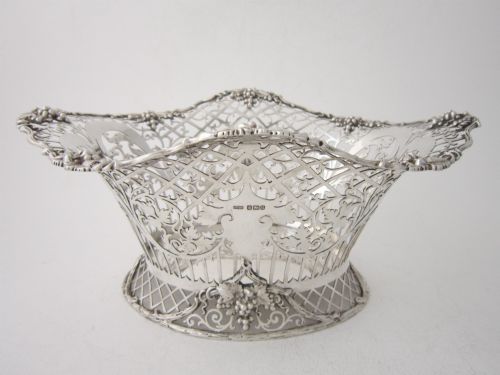
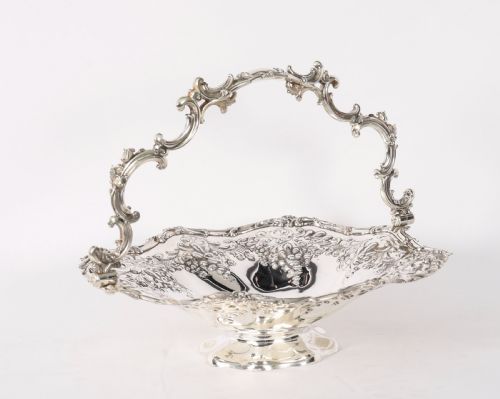
Antique Victorian Sterling Silver Sugar Basket / Bowl 1879, Victorian
Priced at £445 from Robert Bush Antiques
Early examples appear in the seventeenth century. Sweetmeat baskets were often smaller, passing down the table during the dessert course to guests who wanted a final sweet treat.
Look for the shift in the mid-eighteenth century. Bread and fruit baskets grew larger to suit more elaborate dining habits.
Georgian dining required impressive table centres. Antique silver baskets filled this role.
Wirework styles gained ground later. They offered a lighter look than the heavy pierced sheet silver of earlier decades.
Victorian makers revived many earlier forms. You'll often see them copying George II designs closely.
Paul de Lamerie produced heavily ornamented examples in the early eighteenth century. His rococo antique silver baskets feature elaborate cast borders.
Hester Bateman made elegant, lighter baskets. Her workshop dominated late eighteenth-century production with bright-cut engraving and beaded edges.
Nineteenth-century maker Paul Storr favoured robust, classical designs. He relied on heavy casting rather than delicate piercing to build his pieces.
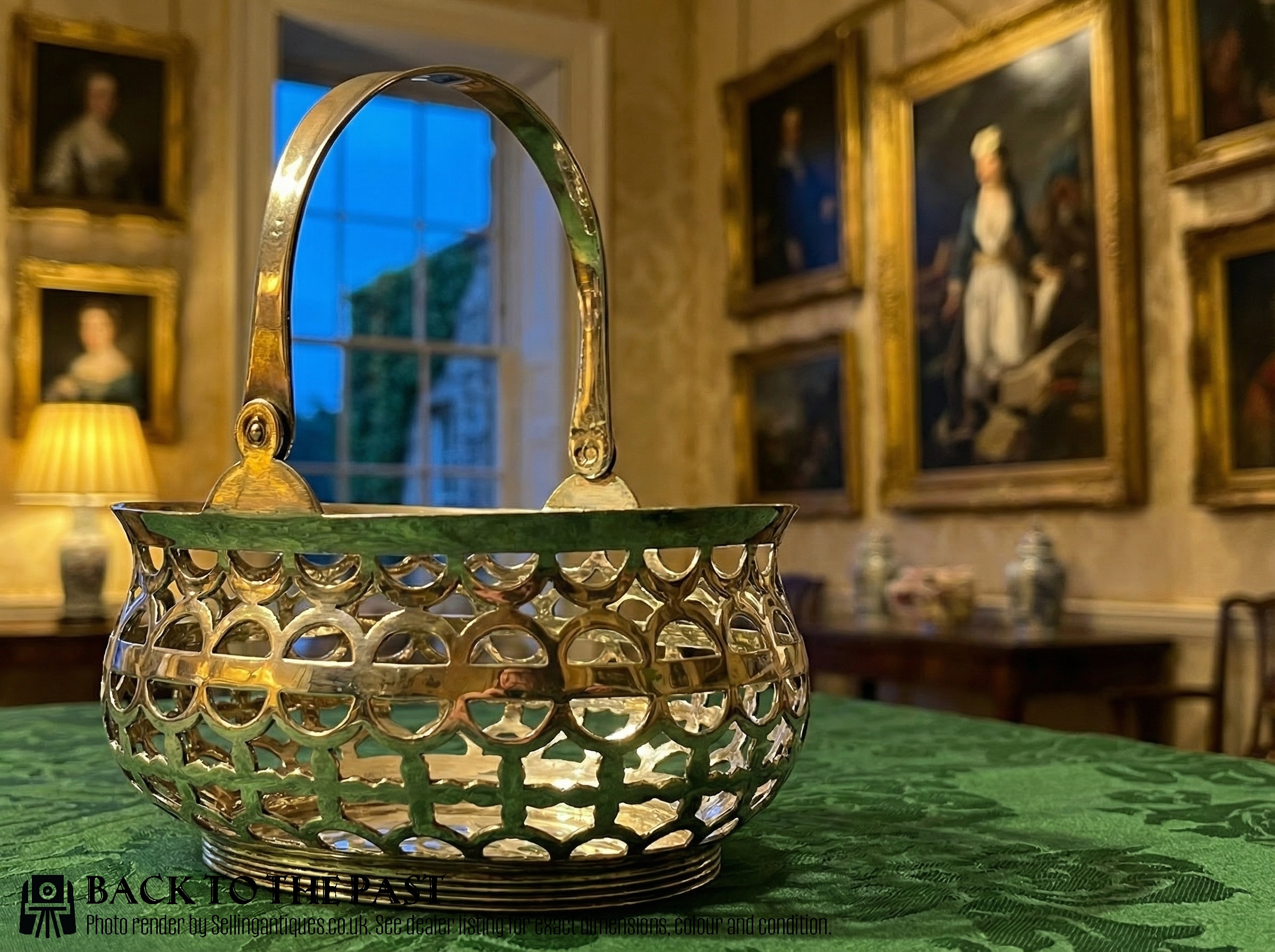
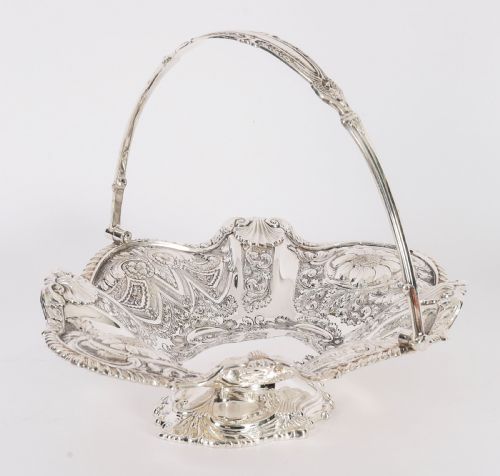
Victorian Antique Silver Bonbon Basket, Birmingham 1894, Victorian
Priced at £295 from Highland Antiques Ltd
The 2026 retail price guide for Antique Silver Baskets is drawn from a proprietary archive of over 1.1 million retail prices indexed by Sellingantiques since 2003. This guide relies exclusively on their own internal data; no external sources or auction records are used.
Analysing nearly 25 years of UK antique market history alongside current retail values, the data indicates that typical UK retail prices for Antique Silver Baskets range between £200 and £1,300. Entry-level prices generally fall under £200 and premium examples upwards of £1,300.
Swing handles arch across the top. They drop down to the side for easier storage and access to the contents.
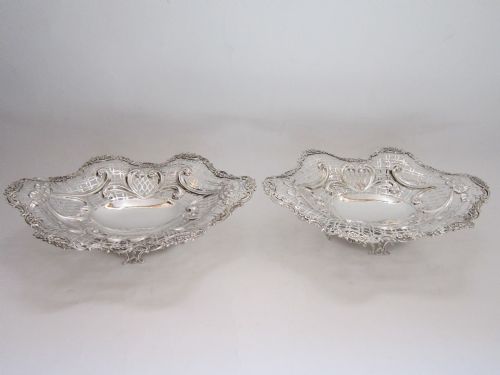
Pierced decoration lightens the visual weight of antique silver baskets. Patterns range from simple geometric crosses to complex scrolling foliage.
Applied borders strengthen the upper rim. These cast additions stop the thin pierced sides from buckling under heavy daily use.
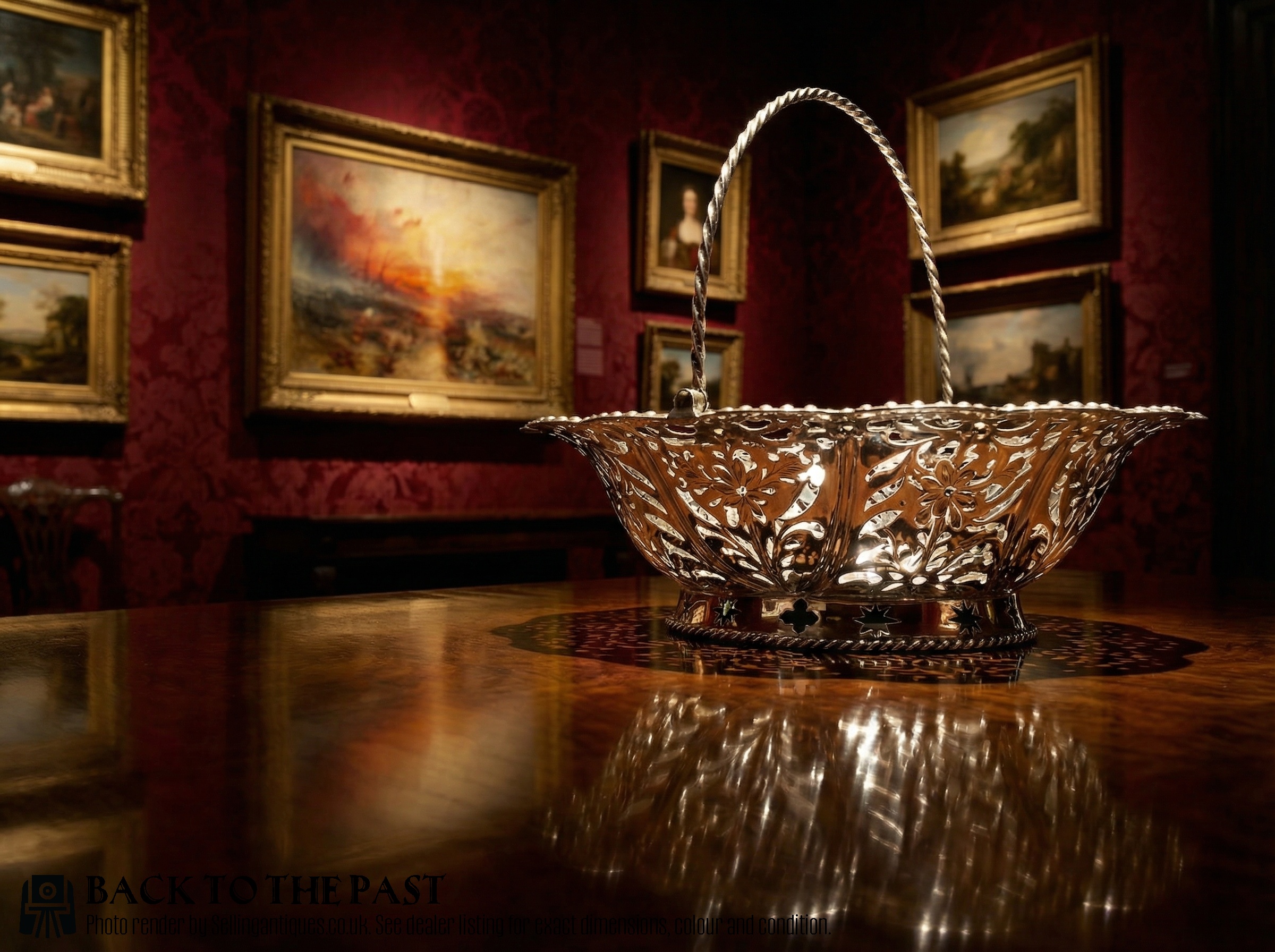
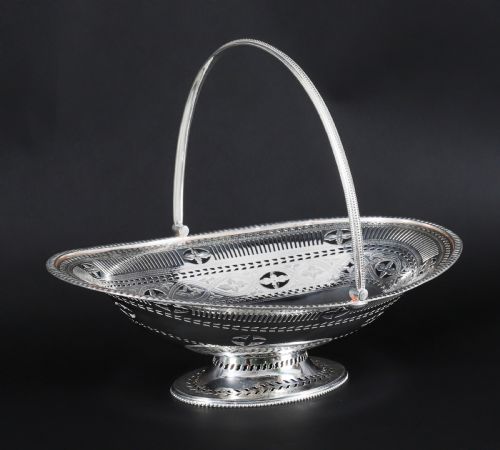
George III Antique Silver Bonbon Basket, London 1769, Georgian
Priced at £595 from Highland Antiques Ltd
Early piercing involved drilling and sawing by hand. A craftsman cut every gap individually from a single sheet of silver.
Wirework baskets use drawn metal threads. Makers soldered these wires together to form the bowl instead of cutting into sheet metal.
Stamping became common in the nineteenth century. Factories used steel dies to punch out repetitive decorative borders quickly.
"Many retain their original coat of arms. Engravers worked these into the solid silver cartouche left in the centre of the piercing."
"Some were made in nested sets. A large fruit basket might match two smaller ones for sweetmeats."
"Wirework designs mimic woven willow. Silversmiths copied the over-and-under weaving techniques of country basket makers."
Based on almost 25 years of Sellingantiques UK antique market data, Antique Silver Baskets appeared 1710 times (out of 1,100,000 antiques) which gives it a rarity score of 71/100.
This score measures scarcity within the Sellingantiques archive only and is not a survey of the entire antiques market, so these statistics may not be indicative of the general availability of Antique Silver Baskets elsewhere.
Use a soft brush rather than a cloth. It'll catch on the sharp edges of the pierced silver and pull the thin sections out of shape.
Apply polish sparingly. If paste gets stuck in the intricate gaps, it dries white and takes hours to pick out with a wooden stick.
Glass liners are a standard feature on many antique silver baskets. Makers supplied them so the vessel could hold sugar or soft fruits that would otherwise fall through the pierced sides.
Blue glass is the most common colour. It provides a strong visual contrast against the polished silver wirework.
Finding an original liner adds interest to the piece. Replacing a broken one requires a glassblower to make a custom mould.
A fixed handle doesn't pivot. It is soldered directly to the rim of the basket and stays fixed upright.
This style is typical of early eighteenth-century work. It requires more storage space in a silver chest than a swing handle.
The placement of hallmarks depends on the assay office rather than the silversmith. The assay master struck the punches wherever they found a flat surface on the base.
Silversmiths sometimes engraved the decoration after the basket returned from the assay office. The engraver might run a pattern across the existing marks to keep the design symmetrical.
Please note: This Antique Silver Baskets guide and its associated pricing data are provided for general informational purposes only. It does not constitute formal financial, investment, or appraisal advice and should not be relied upon as the sole basis for any commercial activity, purchasing, or sales decisions. Sellingantiques.co.uk accepts no liability for any actions taken in reliance on this information. Always consult with a qualified professional or independent appraiser.
