


A 2026 Guide by Sellingantiques
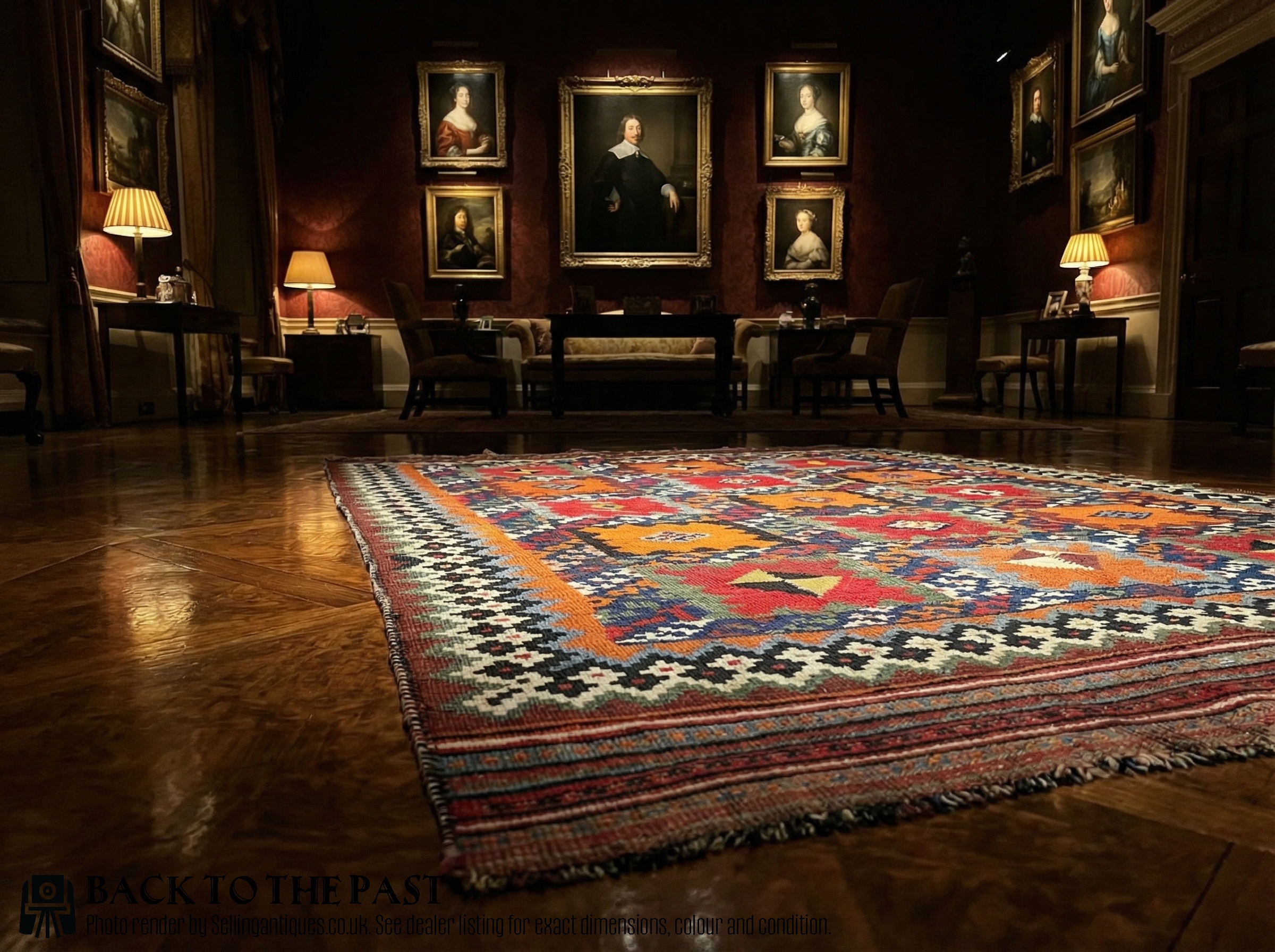
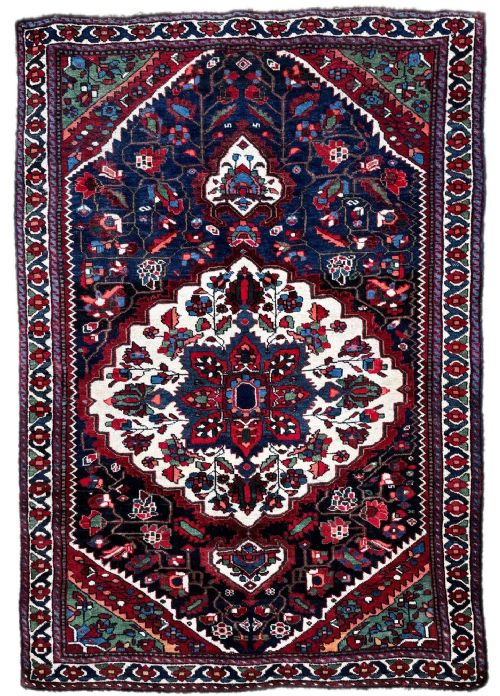
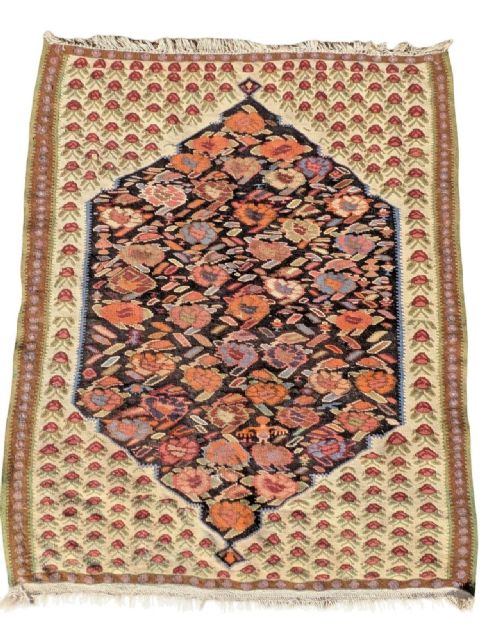
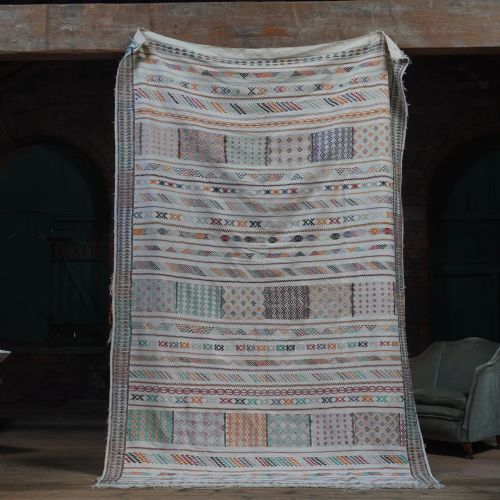
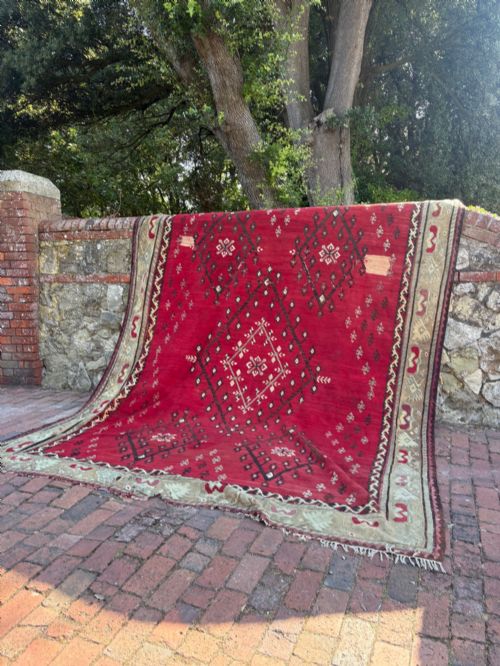
Antique Qashqai Kilim 2.30m X 1.59m, 1920
Priced at £850 from Rug Addiction
Nomadic women wove these across the rug belt from Anatolia to Afghanistan. The portable looms travelled easily with the changing seasons.
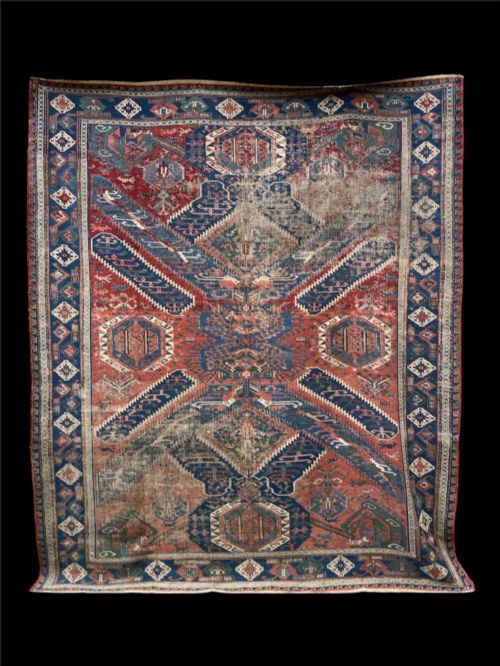
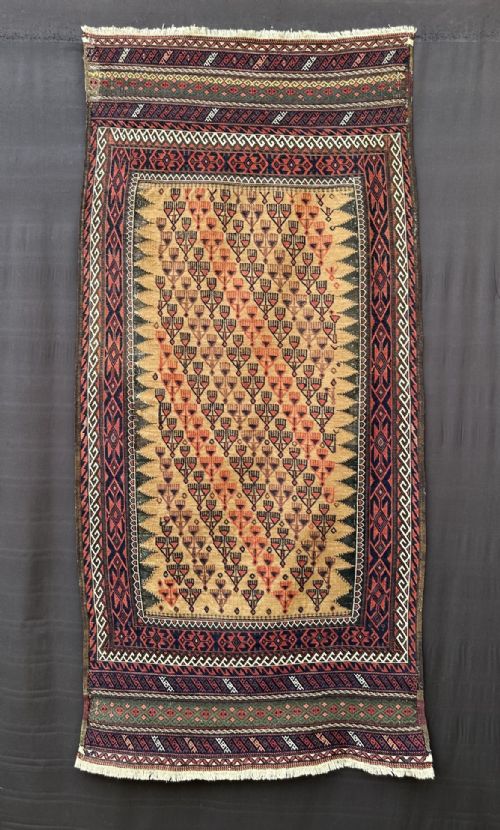
Look at the regional variations. Caucasian pieces often show bold geometry, while Persian examples lean towards intricate diagonal stripes.
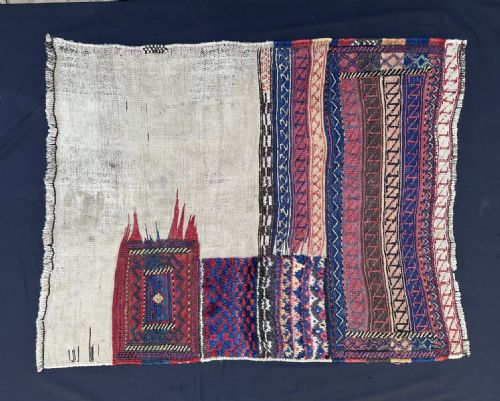
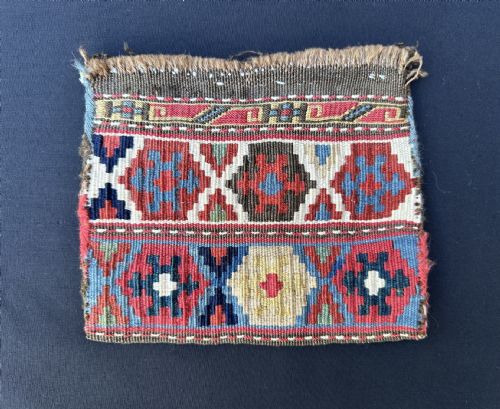
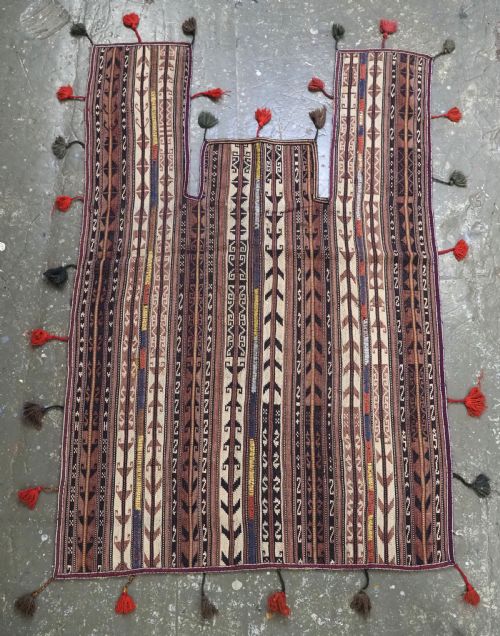
Many antique kilim rugs started life as utilitarian grain sacks or saddle bags before entering the Western market.
Dates on older pieces require caution. Islamic calendar dates sometimes appear woven into the borders, but weavers occasionally copied older dates from previous designs.
Individual weavers rarely signed their work. These communities passed traditional motifs down through generations rather than celebrating named designers.
Anatolian tribes produced some of the most recognisable antique kilim rugs. Specific villages often held distinct colour palettes and border arrangements.
Identify the Kurdish output by its heavier construction. Those weavers favoured thicker yarns and darker saturated tones for winter tent insulation.
The 2026 retail price guide for Antique Kilim Rugs is drawn from a proprietary archive of over 1.1 million retail prices indexed by Sellingantiques since 2003. This guide relies exclusively on their own internal data; no external sources or auction records are used.
Analysing nearly 25 years of UK antique market history alongside current retail values, the data indicates that typical UK retail prices for Antique Kilim Rugs range between £800 and £4,900. Entry-level prices generally fall under £800 and premium examples upwards of £4,900.
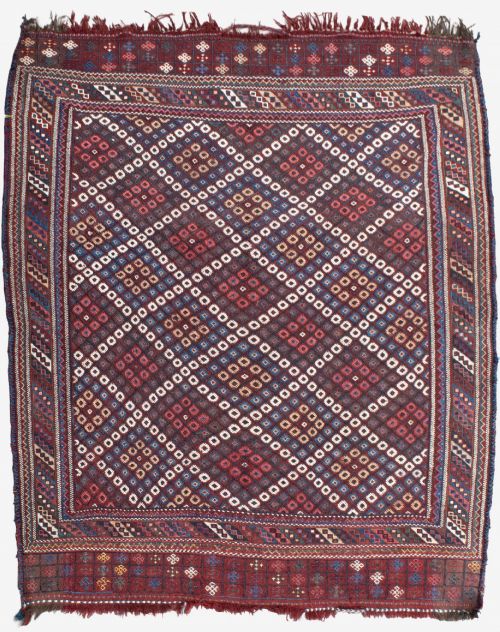
Slit weave is the defining characteristic. Tiny vertical gaps appear where two blocks of colour meet along the warp.
You'll find stepped edges on diagonal patterns. This stepping technique prevents the slits from becoming long structural weaknesses in the fabric.
Fringes indicating the foundation. The loose threads extending at both ends show you the skeleton of the entire rug.
Horizontal ground looms dictated the width. A weaver could only make a piece as wide as her arms could comfortably reach.
Notice the interlocking joins on some pieces. Weavers linked different coloured weft threads around a shared warp to avoid gaps entirely.
Longer antique kilim rugs are often two narrow panels. They're woven separately and stitched together down the centre.
"They often serve brilliantly as upholstery fabrics. The dense flatweave construction resists stretching when pulled taut over chair frames."
"Turn them over. True flatweaves are reversible, giving you a second surface to use if one side needs a rest."
"Geometric motifs hold deep cultural meanings. Many symbols act as subtle talismans for protection, fertility, or a good harvest."
Based on almost 25 years of Sellingantiques UK antique market data, Antique Kilim Rugs appeared 839 times (out of 1,100,000 antiques) which gives it a rarity score of 85/100.
This score measures scarcity within the Sellingantiques archive only and is not a survey of the entire antiques market, so these statistics may not be indicative of the general availability of Antique Kilim Rugs elsewhere.
Never put them in a washing machine or use harsh carpet shampoos. The natural dyes can bleed into adjacent pale areas.
Vacuum both sides on a low suction setting without a beater brush. If a spill happens, blot it quickly with a dry cloth and consult a specialist rug cleaner for the stain.
Nailing them directly to the wall will tear the weave. The concentrated pressure on individual warp threads causes the fibres to snap under the weight.
Stitch a heavy cotton casing strip along the entire top edge of the back. You can then insert a wooden batten or metal rod through this sleeve. The rod takes the weight and distributes it evenly across the whole width.
Castors and sharp chair legs will puncture the flatweave structure. Once a thread breaks, a hole develops rapidly.
Use wide rubber floor protectors under the feet. Always lift heavy items rather than dragging them across the surface.
Underfloor heating can dry out the natural lanolin in the wool over several years. This makes the fibres brittle and more prone to snapping under heavy foot traffic.
You need a good quality rug underlay designed specifically for heated floors. This barrier protects the textile from direct heat while stopping it from slipping around on hard surfaces.
Rotate the piece every few months. This ensures any environmental stress affects the whole surface evenly.
Please note: This Antique Kilim Rugs guide and its associated pricing data are provided for general informational purposes only. It does not constitute formal financial, investment, or appraisal advice and should not be relied upon as the sole basis for any commercial activity, purchasing, or sales decisions. Sellingantiques.co.uk accepts no liability for any actions taken in reliance on this information. Always consult with a qualified professional or independent appraiser.
