



A 2026 Guide by Sellingantiques
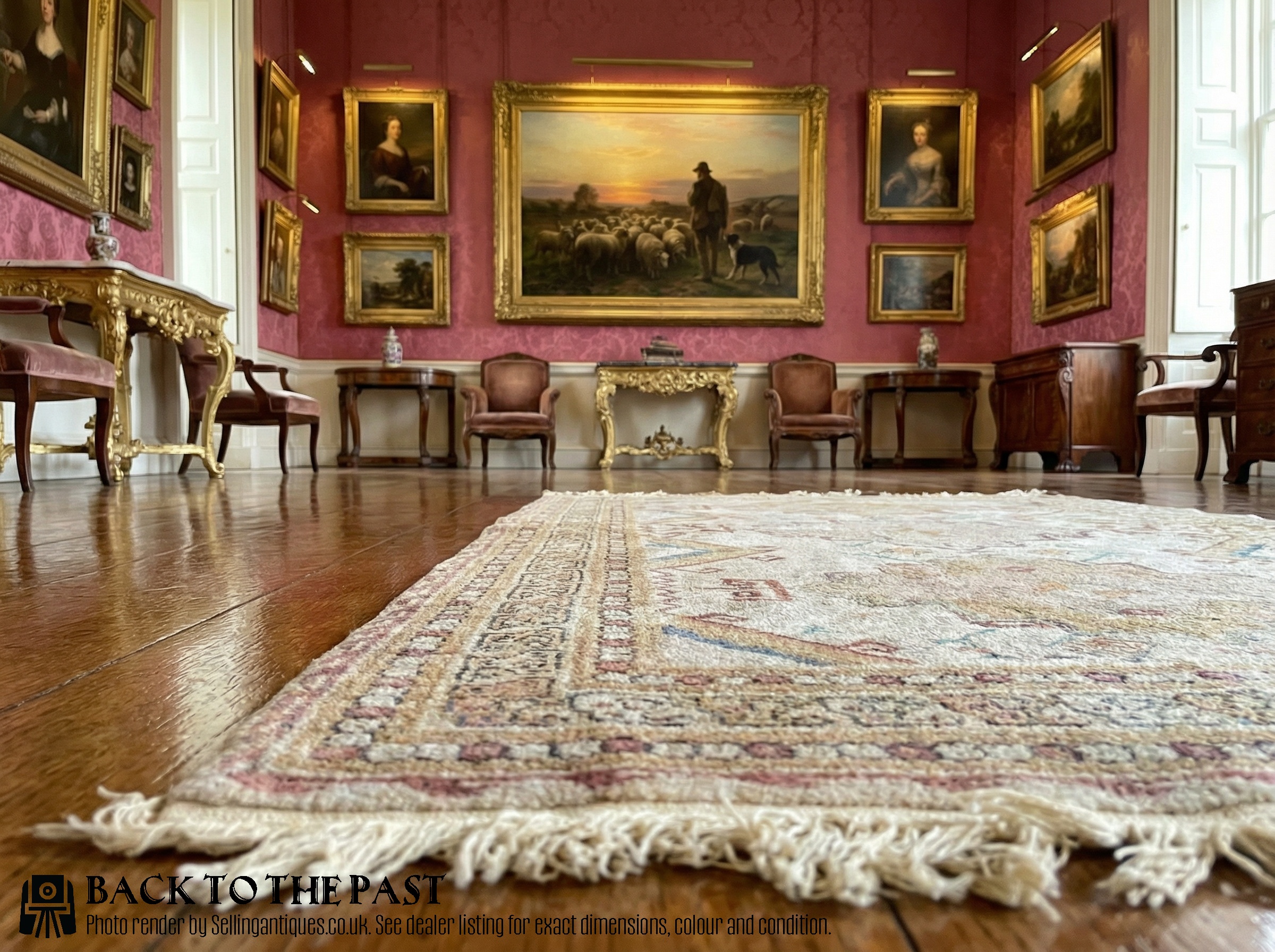
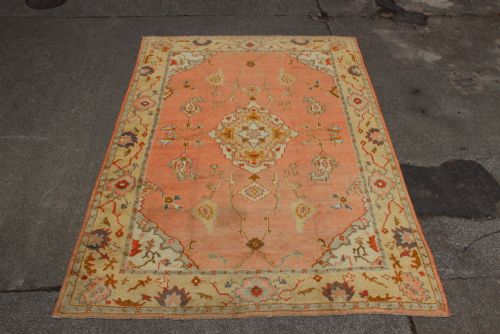
Elegant Beige Oushak Rug, Hand Knotted., 1910
Priced at £395 from Buckingham Interiors
Production of antique Oushak rugs started centuries ago in the city of Uşak, a major textile hub.
The late nineteenth century brought a massive revival in weaving these carpets to satisfy rising Western demand.
Commercial companies eventually stepped in to organise local village weavers, changing how the workshops operated.
Look at early Renaissance paintings and you will spot similar Anatolian star carpets draped over tables.
Patterns shifted over time to suit European room sizes and changing decorative tastes.
Individual weavers almost never signed their work, so these carpets are categorised entirely by their regional origin.
Late nineteenth-century production was heavily organised by Western merchant houses based in Smyrna directing local looms.
Village women did the actual weaving, passing traditional knotting techniques down through local families.
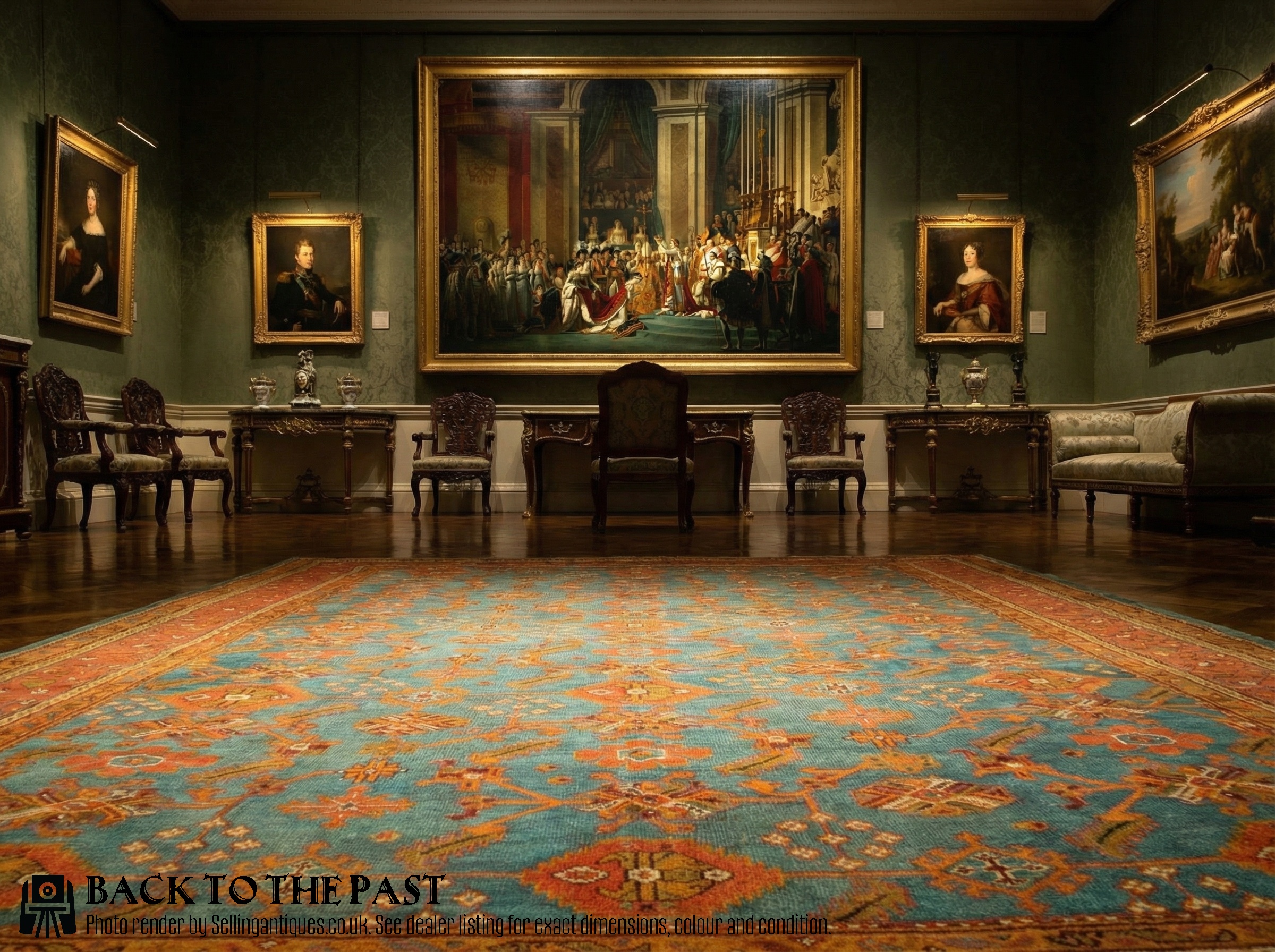
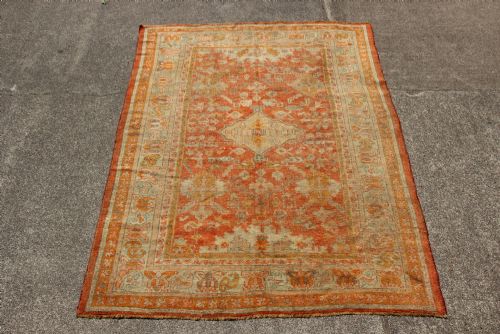
369 X 595cm Antique Oushak Carpet, 1900
Priced at £25,000 from James Cohen Antique Carpets
The 2026 retail price guide for Antique Oushak Rugs is drawn from a proprietary archive of over 1.1 million retail prices indexed by Sellingantiques since 2003. This guide relies exclusively on their own internal data; no external sources or auction records are used.
Analysing nearly 25 years of UK antique market history alongside current retail values, the data indicates that typical UK retail prices for Antique Oushak Rugs range between £4,000 and £35,000. Entry-level prices generally fall under £4,000 and premium examples upwards of £35,000.
Large geometric medallions or palmettes float across an open, uncluttered field.
Soft apricot, pale green, terracotta and muted blue tones make up the standard colour palette.
The weave feels loose and floppy compared to tightly knotted Persian carpets from the same period.
Early classical designs featured complex central medallions based on Persian court carpets but adapted for coarser weaves.
Nineteenth-century patterns grew larger and more open, relying on angular palmettes and trailing vines.
Construction methods stayed broadly similar, though commercial looms allowed for wider carpets than domestic frames could support.
"The faded pastels that define their modern appeal actually started out as rich, saturated dyes."
"Many of the grandest examples were woven in sections on narrow domestic looms and carefully joined together later."
"Sometimes weavers deliberately changed a motif halfway through a border simply because they got bored of repeating it."
Based on almost 25 years of Sellingantiques UK antique market data, Antique Oushak Rugs appeared 201 times (out of 1,100,000 antiques) which gives it a rarity score of 96/100.
This score measures scarcity within the Sellingantiques archive only and is not a survey of the entire antiques market, so these statistics may not be indicative of the general availability of Antique Oushak Rugs elsewhere.
A solid felt underlay is standard for these. The loose weave means they slip easily on hard floors without something gripping the back.
Make sure the pad is slightly smaller than the rug itself. You do not want the edges of the underlay showing.
Vacuum them without using the beater bar. The heavy brush can catch the loose pile and pull the knots right out of the foundation.
Take it to a specialist rug cleaner every few years. They wash them flat in cold water to stop the dyes running.
Those diagonal breaks are called lazy lines. They happen when a single weaver works on one section of the rug at a time, building up a wedge of knots before moving across the loom.
Finding them is a good sign. It shows the piece was woven by hand on a traditional loom rather than machine-made in a factory. You will often see them in large areas of plain colour where the weaver had room to work in segments.
The fringe is just the end of the warp threads that run the entire length of the carpet. Cotton provides a strong, rigid skeleton for the foundation, keeping the rug square and flat on the floor.
The wool pile is tied onto these cotton strings. Wool takes dye well and resists wear, making it the practical choice for the surface you walk on. Mixing the two materials gives you the structural benefits of both.
Please note: This Antique Oushak Rugs guide and its associated pricing data are provided for general informational purposes only. It does not constitute formal financial, investment, or appraisal advice and should not be relied upon as the sole basis for any commercial activity, purchasing, or sales decisions. Sellingantiques.co.uk accepts no liability for any actions taken in reliance on this information. Always consult with a qualified professional or independent appraiser.
