

A 2026 Guide by Sellingantiques
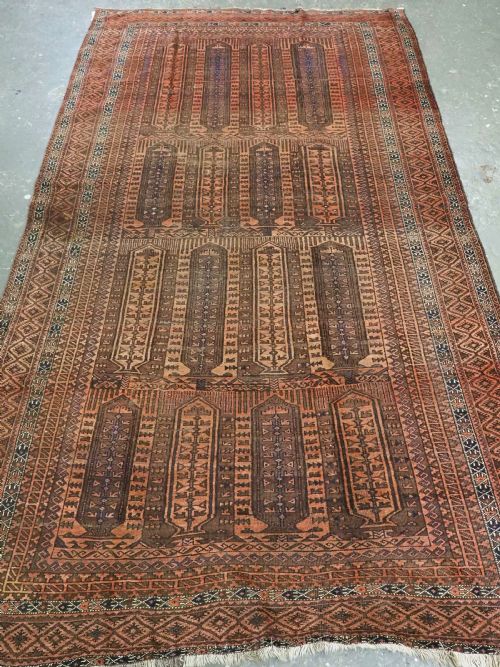
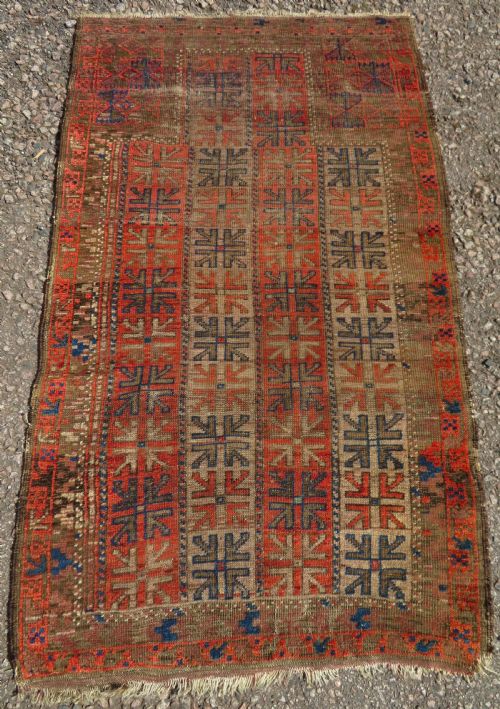
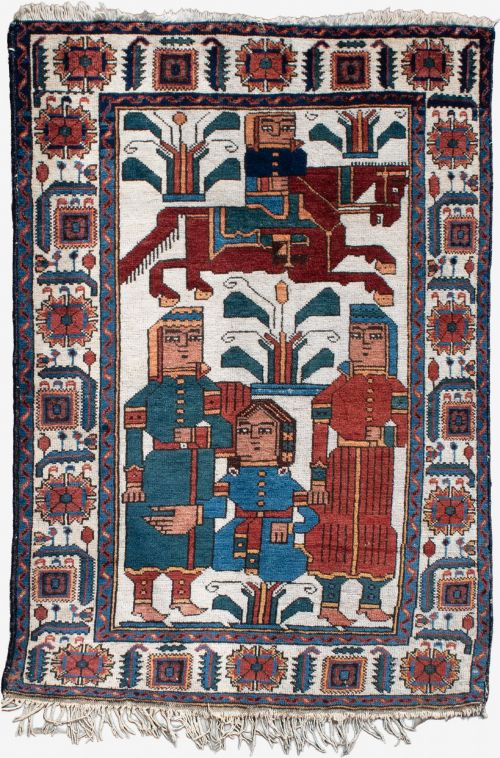
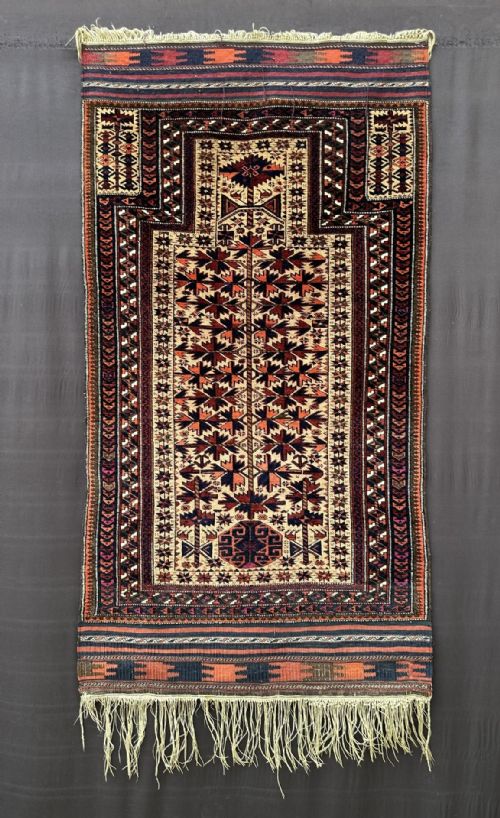
Antique Khorasan Baluch Rug, 19th Century
Priced at £650 from Siez Gallery
Nomadic weavers produced most antique Baluch rugs during the nineteenth and early twentieth centuries. They moved their flocks across the harsh terrains of Khorasan and western Afghanistan.
Trade routes eventually carried these tribal weavings into provincial market towns like Mashhad. Merchants then bundled them for export to Western buyers.
Look at the size of them. The narrow looms required for a mobile lifestyle meant large room-sized carpets were rarely woven.
Borders shifted constantly in this region. Attributing a specific piece to a precise modern nation state is often impossible.
Individual makers left no signatures. Production was usually anonymous and fell to the women of various loosely affiliated sub-tribes wandering the border regions.
The Mushwani tribe produced some of the thickest piles. Their work often blends pile knots with flat-woven tapestry techniques.
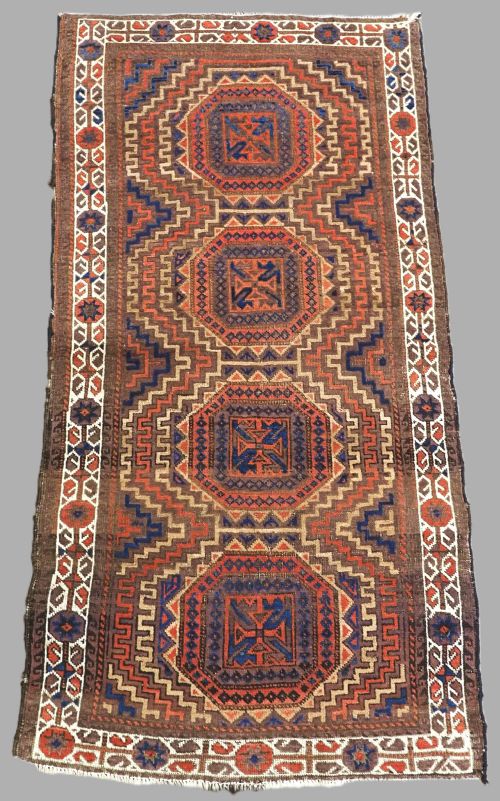
Timuri weavers inhabited the western Afghan borderlands. They favoured large geometric latch-hook medallions in their main fields.

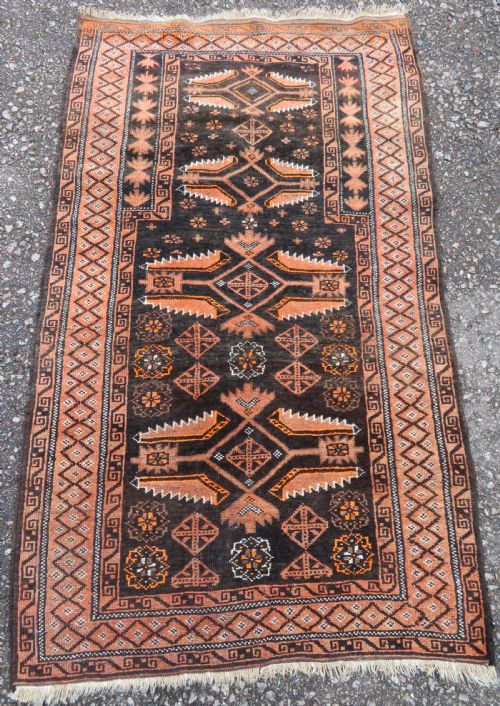
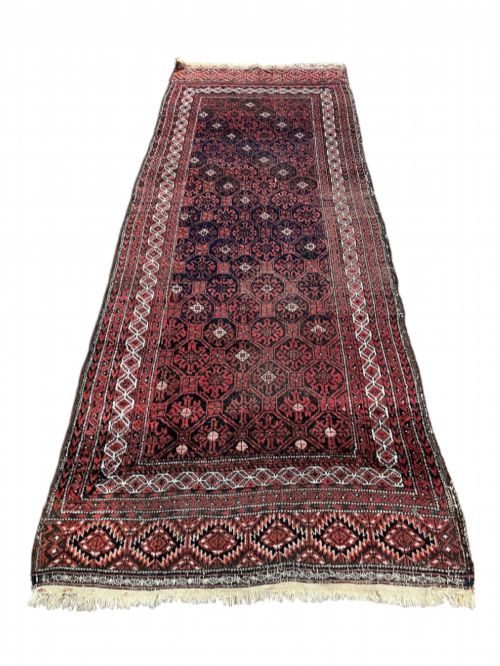
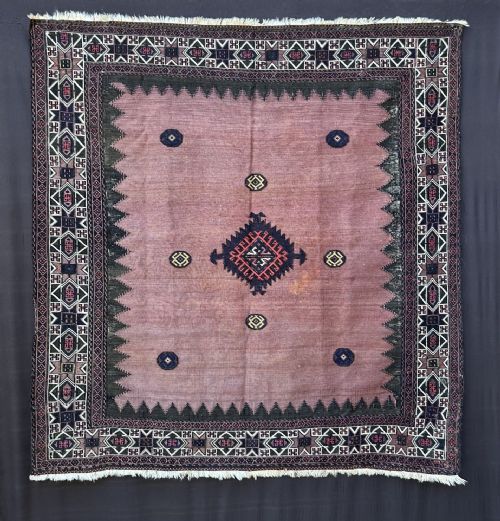
Antique Baluch Rug. 160cm X 86cm., 1900
Priced at £325 from Country House and Eastern Interiors
The 2026 retail price guide for Antique Baluch Rugs is drawn from a proprietary archive of over 1.1 million retail prices indexed by Sellingantiques since 2003. This guide relies exclusively on their own internal data; no external sources or auction records are used.
Analysing nearly 25 years of UK antique market history alongside current retail values, the data indicates that typical UK retail prices for Antique Baluch Rugs range between £600 and £2,500. Entry-level prices generally fall under £600 and premium examples upwards of £2,500.
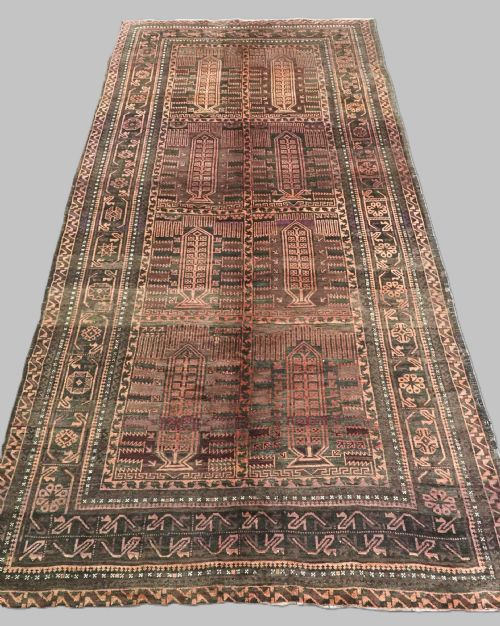
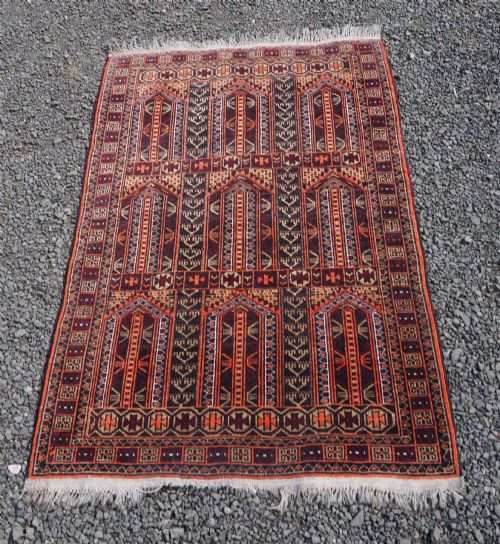
Geometric repeating patterns fill the field. The Mina Khani trellis and repeating medallions are standard motifs found across antique Baluch rugs.
A dark, subdued aesthetic. Sombre reds, aubergines and deep blues absorb the light.
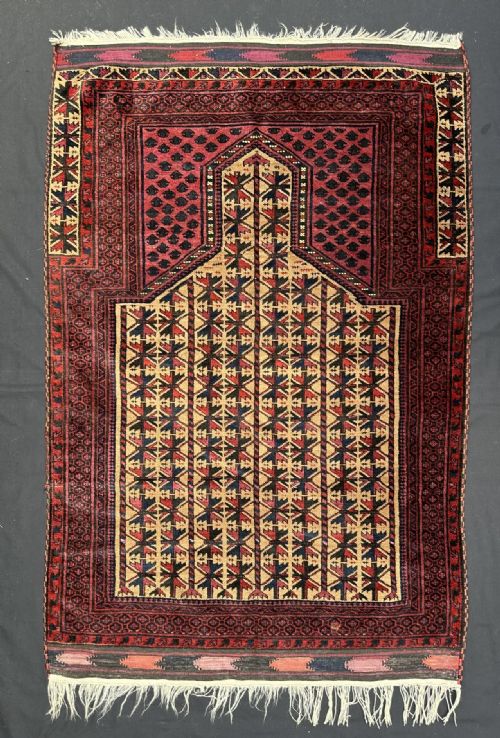
Notice the wide flat-woven ends on many pieces. These kilim skirts protected the vulnerable pile knots from fraying during daily use.

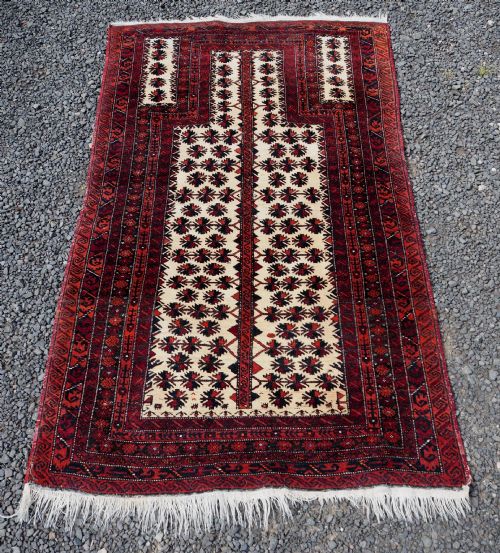
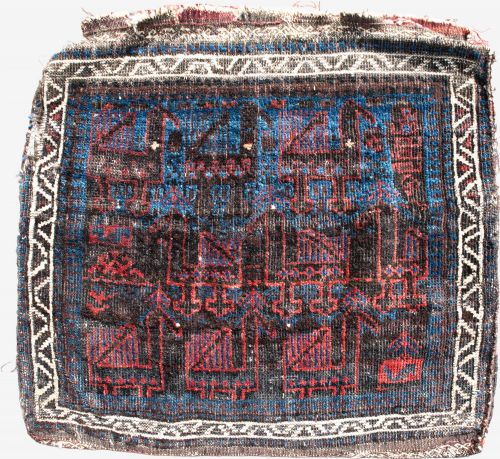
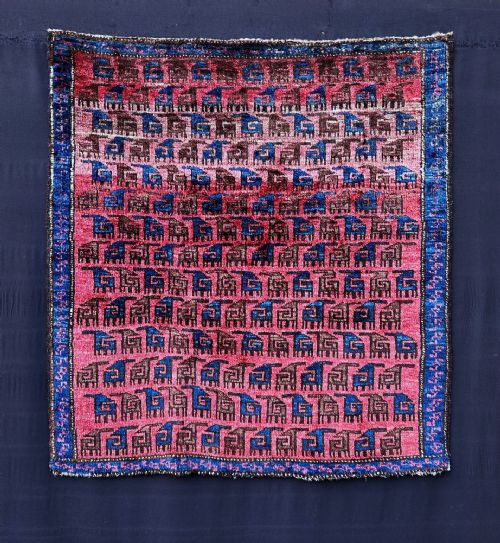
Antique Baluch Rug, 19th Century
Priced at £795 from Siez Gallery
Horizontal ground looms were pegged directly into the dirt. This simple equipment allowed the weavers to roll up unfinished work when the camp needed to move.
Irregularities in shape are common. Tension varies naturally when a loom is repeatedly dismantled and reassembled outdoors.
Feel the flexibility of the fabric. The loosely spun wool and single weft shoots create a supple handle rather than a stiff board-like rug.
"Many of them were woven as functional bags rather than floor rugs. Once separated from their flat-woven backs, the pile faces serve as small decorative mats."
"The weavers incorporated tiny charms into the borders. You sometimes find an odd bead or a single mismatched knot woven in for good luck."
"A surprising amount of camel hair appears in the undyed tan sections of older pieces. It retains a soft texture that sheep wool cannot match."
Based on almost 25 years of Sellingantiques UK antique market data, Antique Baluch Rugs appeared 702 times (out of 1,100,000 antiques) which gives it a rarity score of 87/100.
This score measures scarcity within the Sellingantiques archive only and is not a survey of the entire antiques market, so these statistics may not be indicative of the general availability of Antique Baluch Rugs elsewhere.
Vacuum the front and back using a suction-only setting. Beater bars on modern vacuums tear at the hand-knotted pile and damage the foundational threads.
For ground-in dirt, find a specialist who washes textiles by hand in shallow pools. Dry cleaning chemicals strip the natural lanolin from the wool.
Yes, they slide easily on hard surfaces. The wool foundation offers no grip against modern polished floorboards or tiles.
You should buy a good quality underlay to sit between the rug and the floor. This stops the slipping and prevents the rug from buckling when you walk on it.
A decent pad also protects the antique Baluch rug from friction. Dirt caught between the floor and the rug acts like sandpaper on the structural knots.
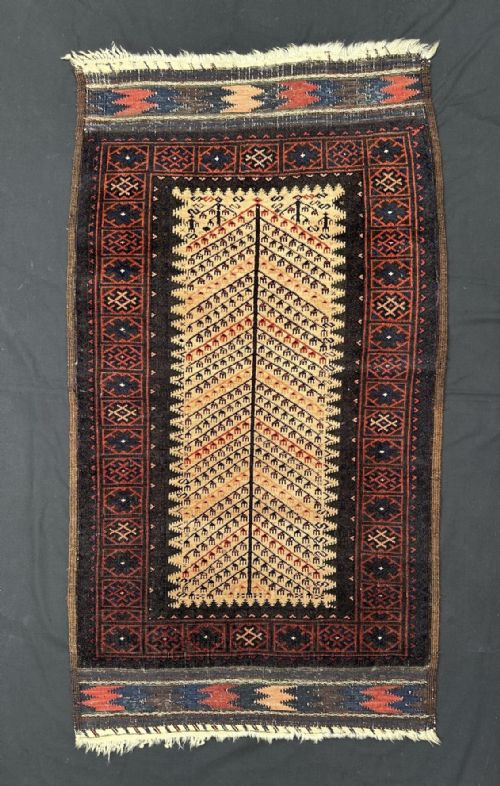
It features a directional arch design at one end. This shape mimics the prayer niche found in a mosque.
You orient the arched end towards Mecca. Weavers made them for daily use.
Fringes are just the exposed ends of the vertical warp threads. When they wear down to the pile, the structural knots begin to slide off the foundation.
A restorer can secure the ends using a blanket stitch to stop any further loss. They wrap strong wool around the remaining warps to lock the final rows of pile in place.
Adding artificial fringes alters the original proportions. A simple securing stitch remains the better option for preservation.
Please note: This Antique Baluch Rugs guide and its associated pricing data are provided for general informational purposes only. It does not constitute formal financial, investment, or appraisal advice and should not be relied upon as the sole basis for any commercial activity, purchasing, or sales decisions. Sellingantiques.co.uk accepts no liability for any actions taken in reliance on this information. Always consult with a qualified professional or independent appraiser.
