

A 2026 Guide by Sellingantiques
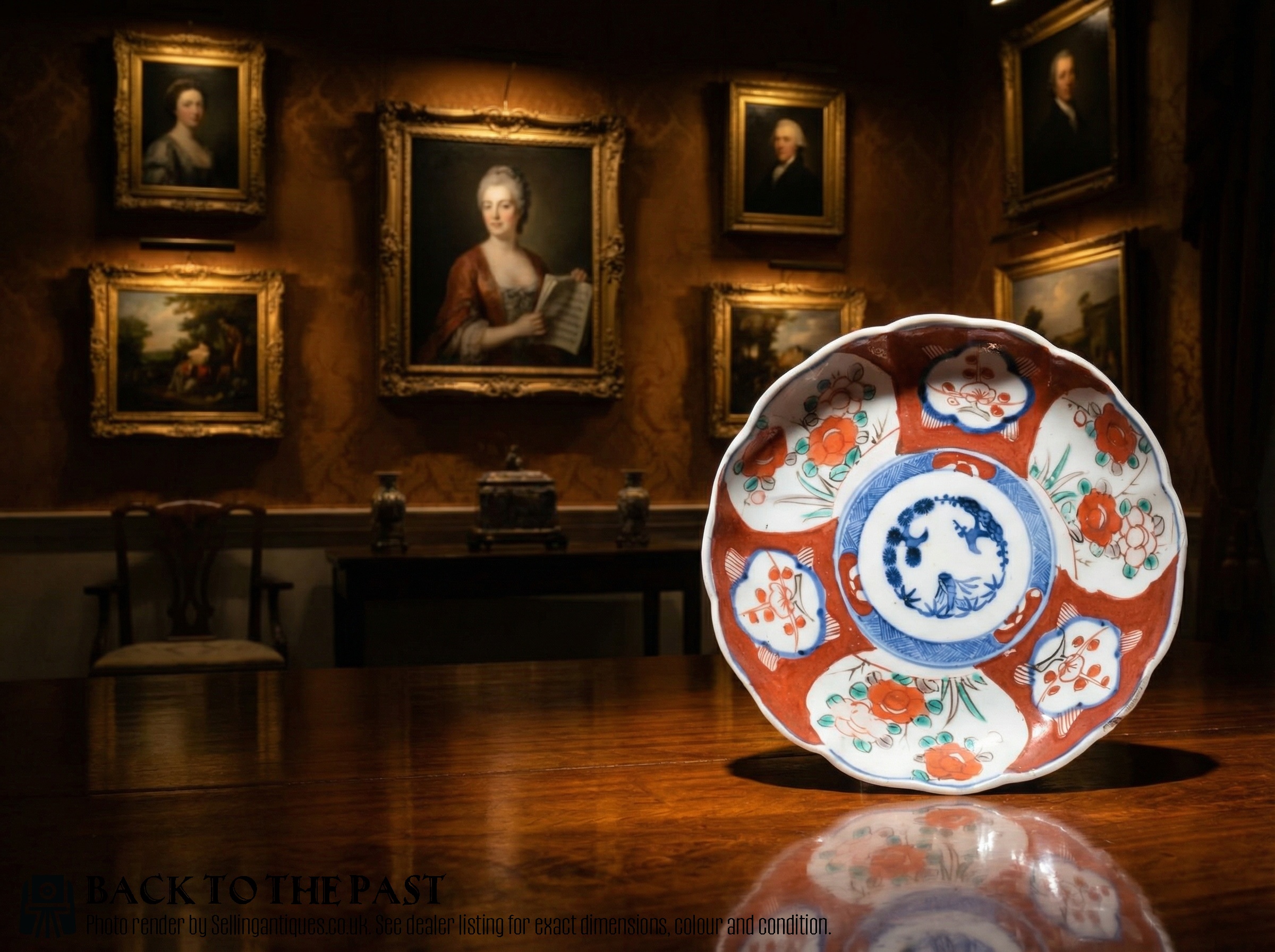
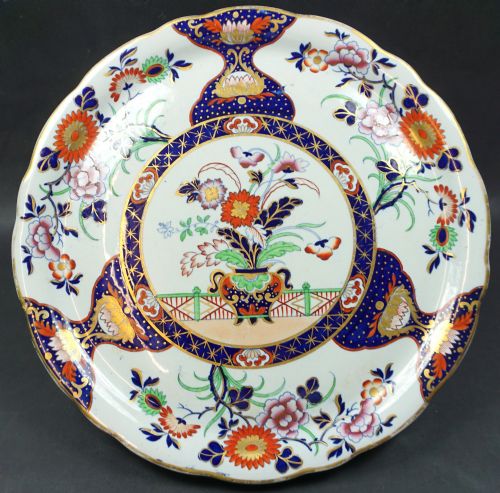
19th Century Japanese Imari Plate, 19th Century
Priced at £45 from Baggott & Co.
Early imports from China drove European demand for hard-paste ceramics during the seventeenth century.
Look at the rise of European factories trying to copy the Asian recipe.
Bone ash was added in Britain to create bone china, making antique porcelain plates stronger and cheaper to produce.
Dinner services expanded into massive sets during the Georgian period, with wealthy households demanding specific shapes for every single course of a formal meal.
The Meissen factory in Germany solved the hard-paste recipe in 1710.
Look for Sèvres marks on French soft-paste examples, heavily funded by royal patronage to dominate the luxury market.
Josiah Spode introduced standard bone china to the English market around 1800.
Two Antique Japanese Quality Imari Plates, 1900
Priced at £235 from London City Antiques
The 2026 retail price guide for Antique Porcelain Plates is drawn from a proprietary archive of over 1.1 million retail prices indexed by Sellingantiques since 2003. This guide relies exclusively on their own internal data; no external sources or auction records are used.
Analysing nearly 25 years of UK antique market history alongside current retail values, the data indicates that typical UK retail prices for Antique Porcelain Plates range between £200 and £1,200. Entry-level prices generally fall under £200 and premium examples upwards of £1,200.
A prominent foot rim gives the base stability and keeps heat away from polished table surfaces.
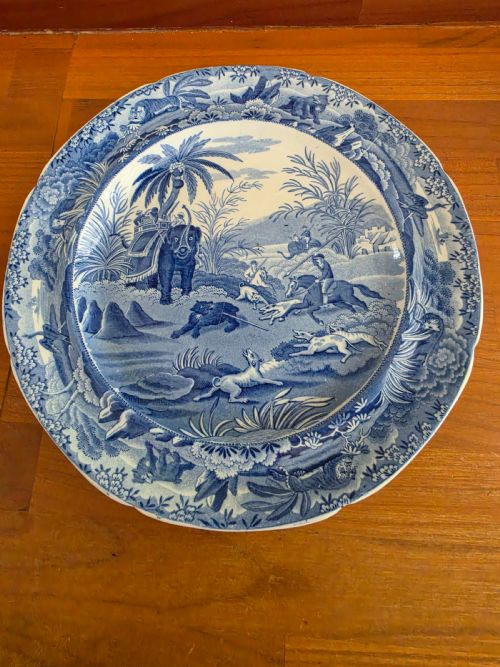
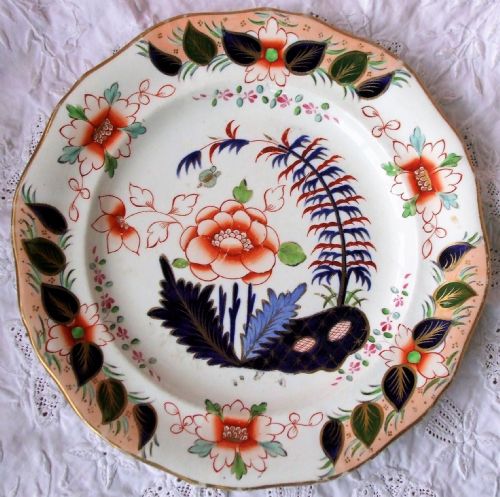
Hand-painted decoration sits either under the glaze in blue or on top of it in coloured enamels.
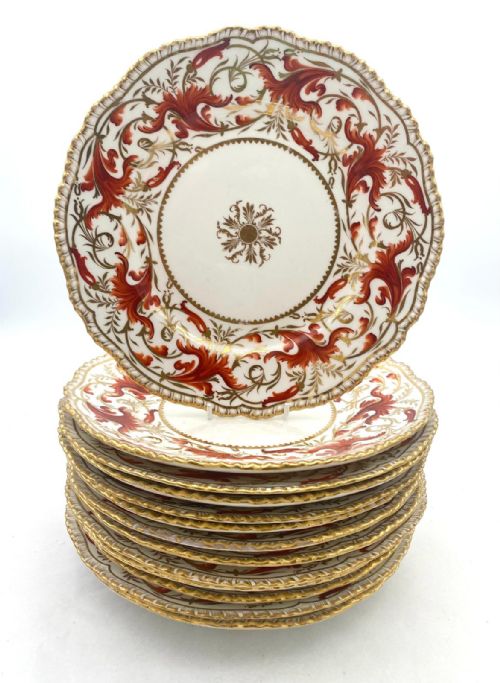
Feel the edge for gilding. This was applied last and fired at a lower temperature to finish the antique porcelain plates.
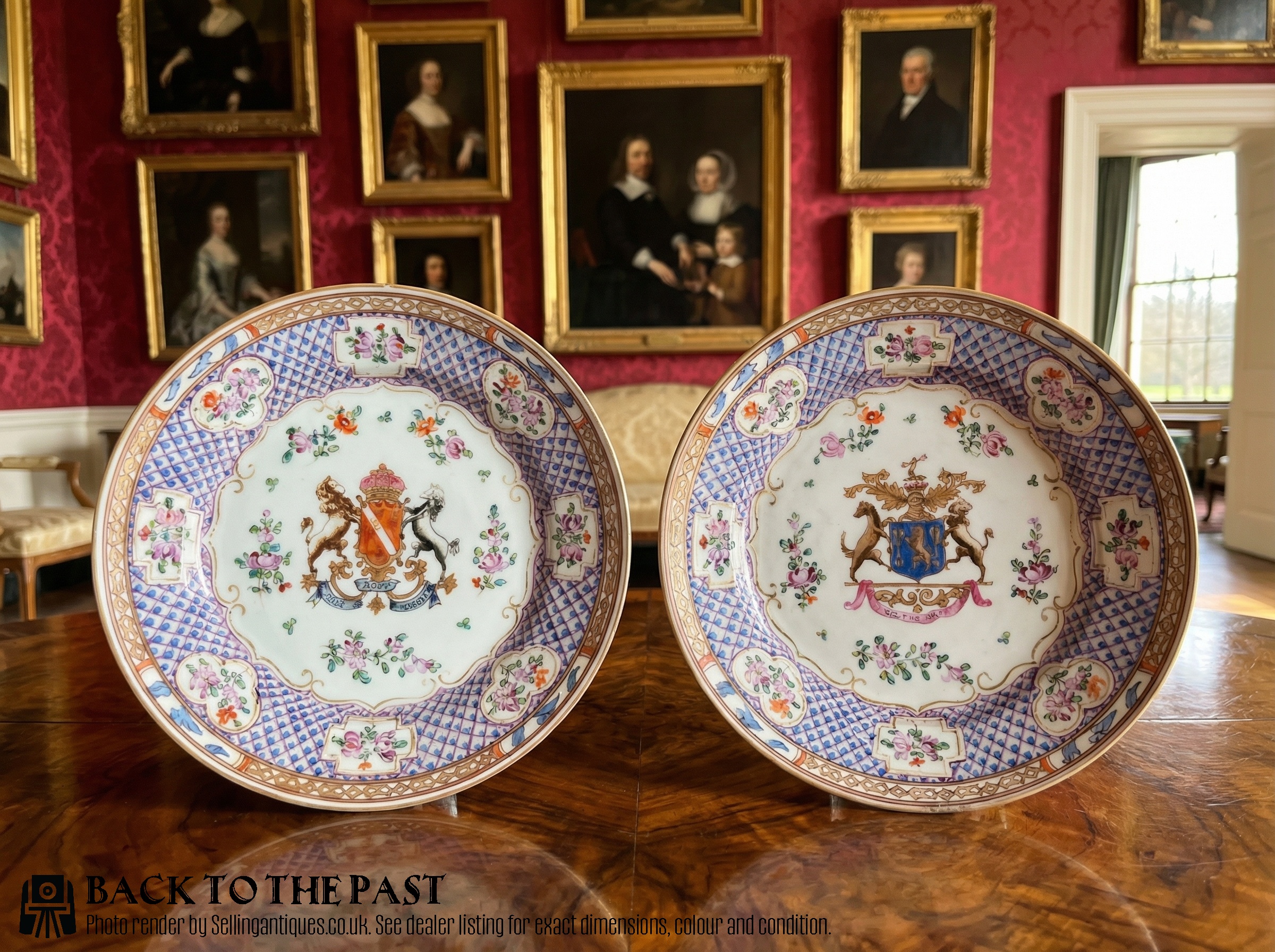
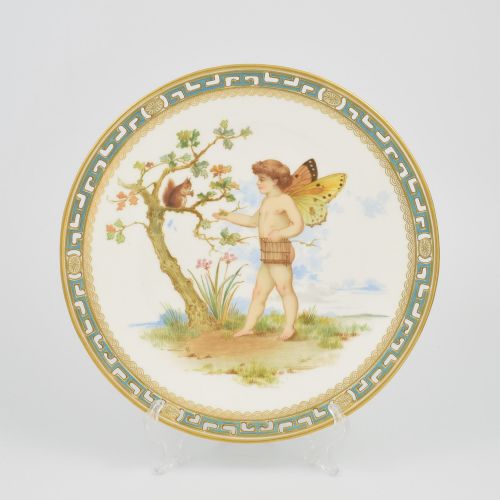
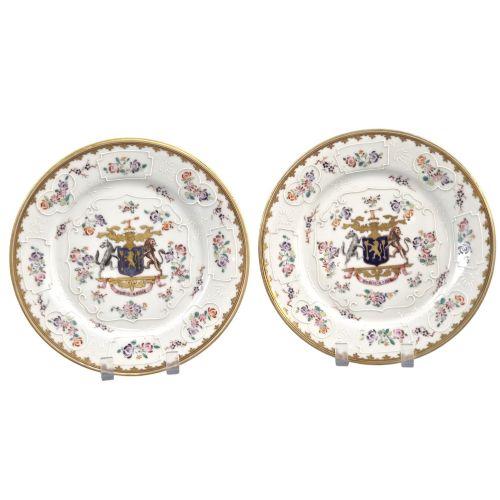
Attractive Pair of 19thc Samson Armourial Plates, 19th Century
Priced at £120 from Lee Sherman Antiques
Throwing clay on a wheel gave way to press-moulding for faster, uniform production.
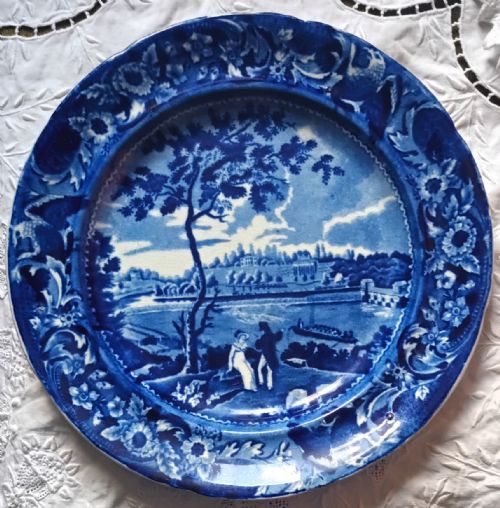
Transfer printing revolutionised decoration. Engraved copper plates applied ink to tissue paper, which was then rubbed onto the ceramic surface.
Note the gilding techniques. Early examples used honey gold, later replaced by mercury gilding for a harder finish that withstood wear better.
"Many factories painted tiny numerals near the rim to identify the individual gilder who finished the piece."
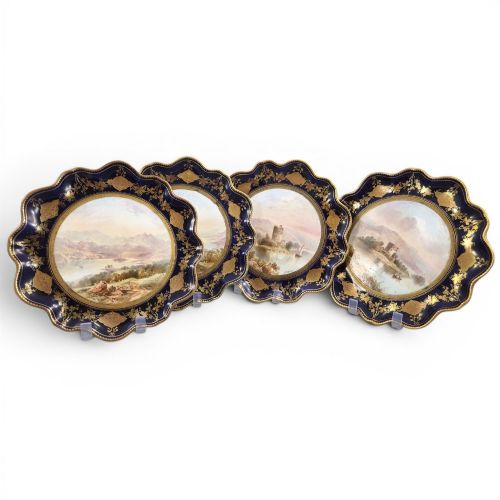
"Look closely at painted landscapes. Some feature local topography that helps identify exactly where the factory operated."
"High firing temperatures fused the body and glaze together, creating a dense barrier that stops food bacteria from penetrating the surface of the antique porcelain plates."
Based on almost 25 years of Sellingantiques UK antique market data, Antique Porcelain Plates appeared 1752 times (out of 1,100,000 antiques) which gives it a rarity score of 70/100.
This score measures scarcity within the Sellingantiques archive only and is not a survey of the entire antiques market, so these statistics may not be indicative of the general availability of Antique Porcelain Plates elsewhere.
Wash them by hand in warm soapy water using a soft cloth. Modern dishwashers use harsh detergents and high heat that strip the delicate overglaze enamels and gilding.
Avoid leaving them submerged for long periods. If the base has an unglazed foot rim, water can seep into the ceramic body and cause staining.
Most antique porcelain plates are safe for occasional use. The high firing temperatures used for hard-paste porcelain seal the glaze, preventing dangerous leaching into your food.
Acidic foods can sometimes react with soft-paste glazes. If you plan to serve citrus or vinegar-based dishes, it is safer to use modern dinnerware and display the older pieces.
Never put them in a microwave. The metallic gilding around the rims will spark.
This causes permanent damage to both the appliance and your antique porcelain plate.
Crazing happens when the glaze shrinks faster than the clay body over time. The brown lines are organic matter that has seeped into those microscopic cracks.
Bleach will weaken the structure of the plate. It is better to accept the staining as part of the history rather than risk destroying a brittle ceramic.
Please note: This Antique Porcelain Plates guide and its associated pricing data are provided for general informational purposes only. It does not constitute formal financial, investment, or appraisal advice and should not be relied upon as the sole basis for any commercial activity, purchasing, or sales decisions. Sellingantiques.co.uk accepts no liability for any actions taken in reliance on this information. Always consult with a qualified professional or independent appraiser.
