


A 2026 Guide by Sellingantiques

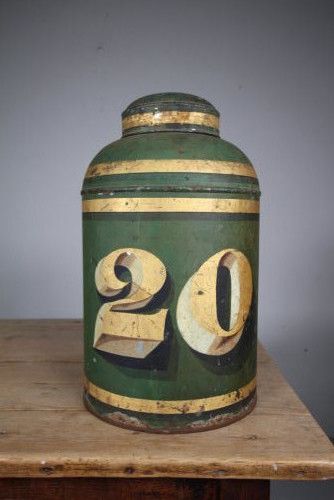
Large Victorian Toleware Hot Water Can, 1900
Priced at £110 from In A Nutshell Antiques and Interiors
Pontypool in Wales birthed the British trade during the late seventeenth century.
Cheaper tinplate production shifted the industry towards the Midlands. Wolverhampton factories soon dominated the output.
Look at early American toleware. You spot the direct influence of migrating tin-smiths continuing old patterns.
Demand peaked in the early nineteenth century. Households needed lightweight containers that repelled rust.
Changing tastes reduced the trade to basic utility wares by the 1850s.
The Allgood family managed the primary workshops in Pontypool and Usk during the eighteenth century.
Henry Loveridge set up in Wolverhampton, stamping his wares underneath.
Pennsylvania became the hub for American production, though makers rarely signed individual pieces.
The 2026 retail price guide for Antique Toleware is drawn from a proprietary archive of over 1.1 million retail prices indexed by Sellingantiques since 2003. This guide relies exclusively on their own internal data; no external sources or auction records are used.
Analysing nearly 25 years of UK antique market history alongside current retail values, the data indicates that typical UK retail prices for Antique Toleware range between £300 and £1,600. Entry-level prices generally fall under £300 and premium examples upwards of £1,600.
Floral motifs, fruits and classical borders dominate the painted designs on most trays.
Seams are folded and soldered together before the japanned finish goes on.
A pierced gallery often surrounds the edge of tea trays. It stops cups sliding off.
Early pieces rely on thick, hand-dipped tinplate. This makes them heavier than nineteenth-century output.
Mechanised stamping later replaced hand-folding, leaving fewer visible seams on curved surfaces.
Feel the decoration. Older hand-painted work sits slightly proud of the ground surface.
"Red and yellow grounds exist and stand out brightly among the usual black or brown pieces."
"Many early stencilled designs used powdered bronze to catch the candlelight."
"Travelling pedlars carried nested sets of these wares for miles without feeling weighed down."
Based on almost 25 years of Sellingantiques UK antique market data, Antique Toleware appeared 816 times (out of 1,100,000 antiques) which gives it a rarity score of 85/100.
This score measures scarcity within the Sellingantiques archive only and is not a survey of the entire antiques market, so these statistics may not be indicative of the general availability of Antique Toleware elsewhere.
Dust it lightly with a dry cloth.
A thin coat of microcrystalline wax restores the shine and feeds the dry paint. Buff it off gently.
The hinges on thin metal caddies bend easily over time. A slight twist in the wire pin often stops the lid seating flush against the rim.
Leave it as it is. Trying to bend it back into shape usually pops the old solder joints. The metal becomes brittle with age.
Yes. They still work well for storing dry goods or papers. Just keep them out of damp rooms to stop rust taking hold.
Check the interior first. If the tin coating has gone and you see brown rusting, line the base with acid-free paper before putting anything inside.
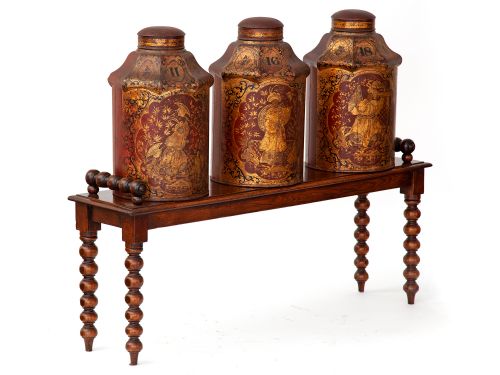
You likely have a coal purdonium. They sat by the hearth to hold fuel for the fire. The gold patterns are typical of late nineteenth-century japanned wares.
They often include an inner removable liner. This stopped rough coal scratching the decorative outer casing.
Please note: This Antique Toleware guide and its associated pricing data are provided for general informational purposes only. It does not constitute formal financial, investment, or appraisal advice and should not be relied upon as the sole basis for any commercial activity, purchasing, or sales decisions. Sellingantiques.co.uk accepts no liability for any actions taken in reliance on this information. Always consult with a qualified professional or independent appraiser.
