


A 2026 Guide by Sellingantiques

French Large Gilded Bronze Antique Hall Lantern, 1920
Priced at £2,950 from O'Keeffe Antiques
Early examples were strictly functional objects for navigating dark streets and farmyards. People carried them constantly before street lighting existed.
Look at the evolution of indoor hall lanterns. They became status symbols in grand houses during the eighteenth century to light staircases.
Coach and railway travel drove a massive expansion in production. Specialised designs emerged to withstand constant vibration and high winds.
Victorian municipal authorities required distinct designs for different public roles. Police, maritime and railway workers all carried specific types.
Changing fuel sources dictated the shape of later antique lanterns. Oil reservoirs replaced simple candle sockets as the nineteenth century progressed.
Dietz dominated the market for tubular oil lanterns. They operated out of New York from the mid-nineteenth century onwards.
Search for the maker's stamp on British railway models. Firms like Eli Griffiths & Sons produced thousands for the regional networks.
Birmingham was the centre for brass carriage lighting. Makers such as Howes & Burley built heavy-duty lamps for horse-drawn vehicles.
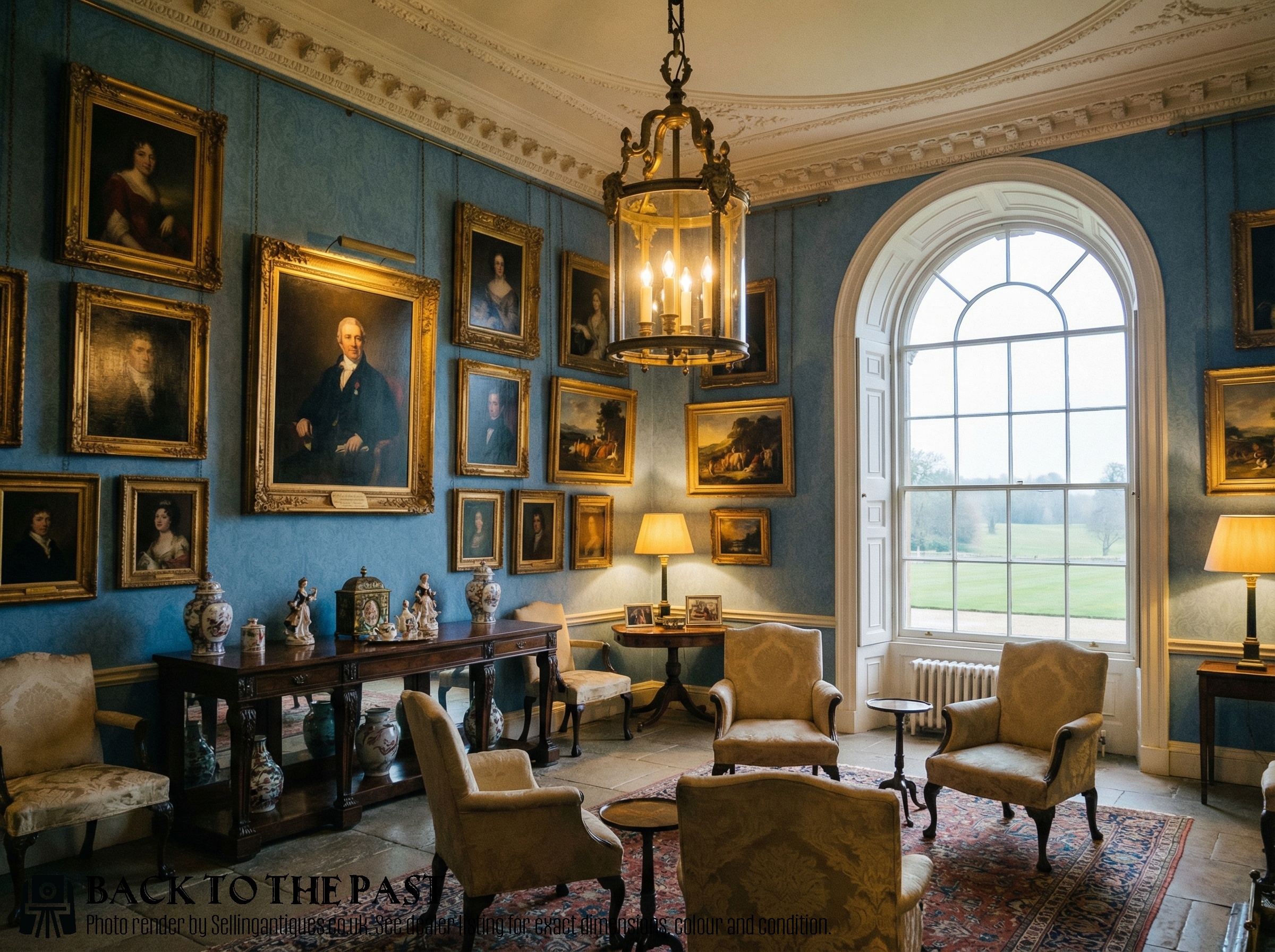
French 19th Century Bronze 4 Light Antique Hall Lantern, 19th Century
Priced at £4,950 from O'Keeffe Antiques
The 2026 retail price guide for Antique Lanterns is drawn from a proprietary archive of over 1.1 million retail prices indexed by Sellingantiques since 2003. This guide relies exclusively on their own internal data; no external sources or auction records are used.
Analysing nearly 25 years of UK antique market history alongside current retail values, the data indicates that typical UK retail prices for Antique Lanterns range between £500 and £2,500. Entry-level prices generally fall under £500 and premium examples upwards of £2,500.
Ventilation cowls sit at the top. They allow smoke and heat to escape without letting rain extinguish the flame inside.
Check the carrying handle mechanism. Most portable antique lanterns feature a folding wire loop or a fixed strap at the back.
Reflectors are often mounted behind the light source. Polished metal plates help throw the beam forward rather than scattering it.
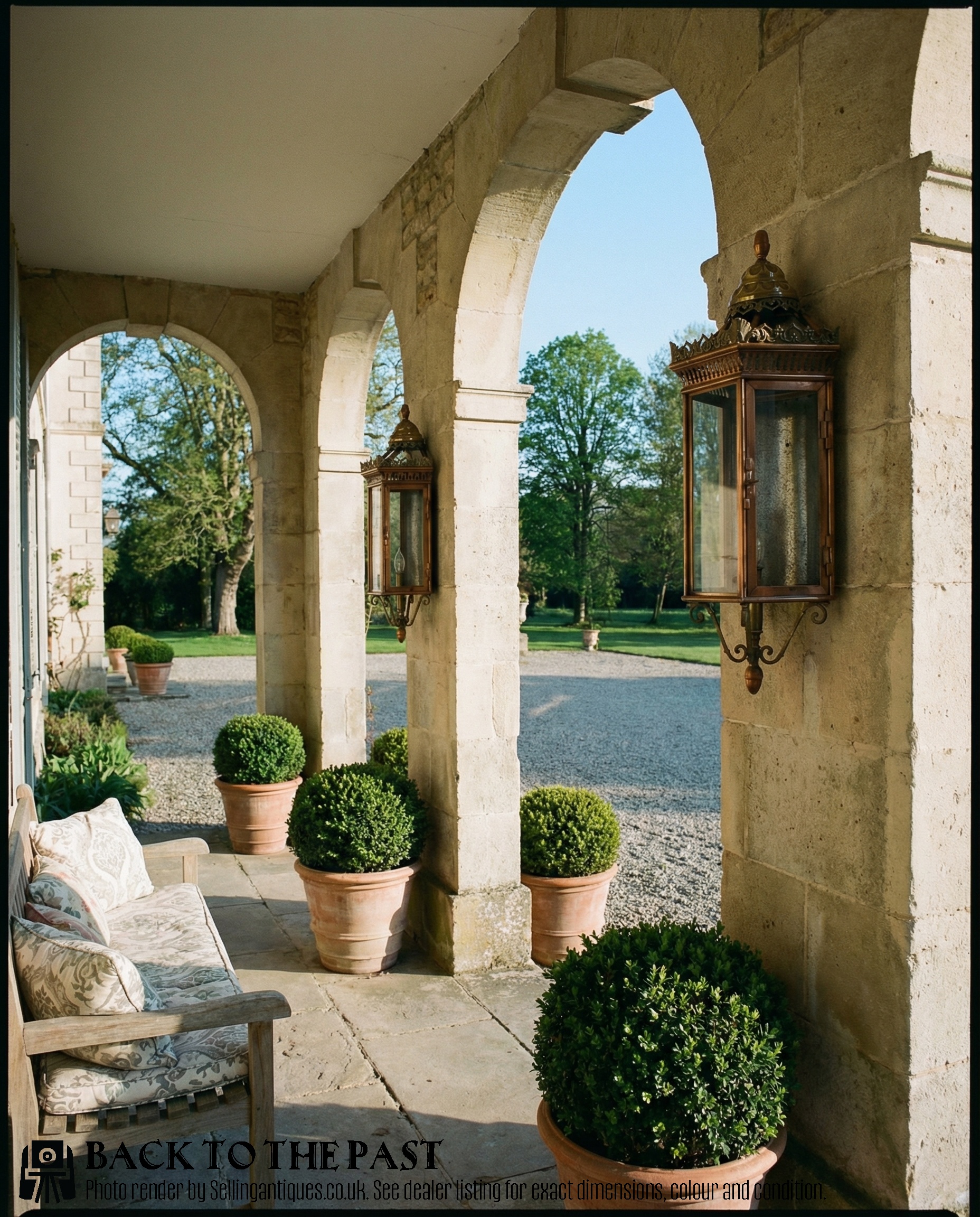
French Pair of Brass & Copper Single Light Half Lanterns, 1930
Priced at £2,250 from O'Keeffe Antiques
Sheet metal was folded and soldered by hand. Early tinsmiths created complex overlapping seams to prevent water ingress.
Casting replaced some beaten work later on. Heavy brass frames on late nineteenth-century hall pieces were cast in sand moulds.
Examine the glass panels closely. Crown glass with a slight bulge is typical on pre-Victorian square lanterns.
"The term lanthorn was widely used in early centuries. It refers directly to the scraped horn panels that served as windows."
"Coloured lenses were standard signalling tools on the railways. Red and green glass inserts allowed workers to communicate across dark shunting yards."
"Some folding models exist. Officers carried pocket lanterns that collapsed flat when not in use."
Based on almost 25 years of Sellingantiques UK antique market data, Antique Lanterns appeared 3976 times (out of 1,100,000 antiques) which gives it a rarity score of 45/100.
This score measures scarcity within the Sellingantiques archive only and is not a survey of the entire antiques market, so these statistics may not be indicative of the general availability of Antique Lanterns elsewhere.
Dust it with a soft brush first. If the brass is heavily tarnished, you can use a mild metal polish on a soft cloth.
Wipe away any residue with a clean duster. Avoid getting polish on the glass, as it leaves a hazy film.
Railway workers needed secure equipment that wouldn't blow open on a moving train. Most of these models have a sprung latch or a sliding catch hidden near the top cowl.
Push down firmly on the brass button or wire loop at the top. The front lens housing usually swings out on a heavy side hinge once the catch releases.
If it feels stuck, do not force it. Decades of grit and old oil often seize the mechanism, so apply a drop of penetrating fluid and wait.
Yes, many people adapt them for modern homes. The key is to route the flex without drilling holes in the original carcase.
A qualified electrician can often pass wires through existing ventilation holes or the base of the old oil fount. They can fit a standard bulb holder inside the glass globe.
Keep the heat output in mind. Modern LED bulbs are much cooler and safer inside an enclosed space than old incandescent bulbs.
It is generally safe if the fount is sound. Fill the base with a small amount of water first and set it on newspaper to check for pinhole leaks in the solder.
Dry it out thoroughly before adding lamp oil. You must also inspect the burner to ensure the winding gear still raises and lowers the wick smoothly.
Never leave an antique lantern burning unattended. Old metal gets very hot to the touch, and old glass often cracks from a sudden temperature shift.
Please note: This Antique Lanterns guide and its associated pricing data are provided for general informational purposes only. It does not constitute formal financial, investment, or appraisal advice and should not be relied upon as the sole basis for any commercial activity, purchasing, or sales decisions. Sellingantiques.co.uk accepts no liability for any actions taken in reliance on this information. Always consult with a qualified professional or independent appraiser.
