
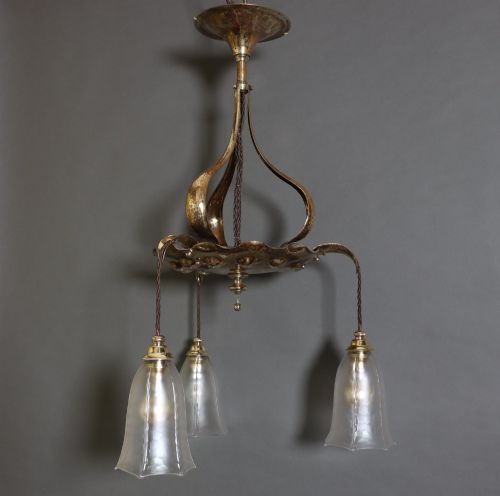
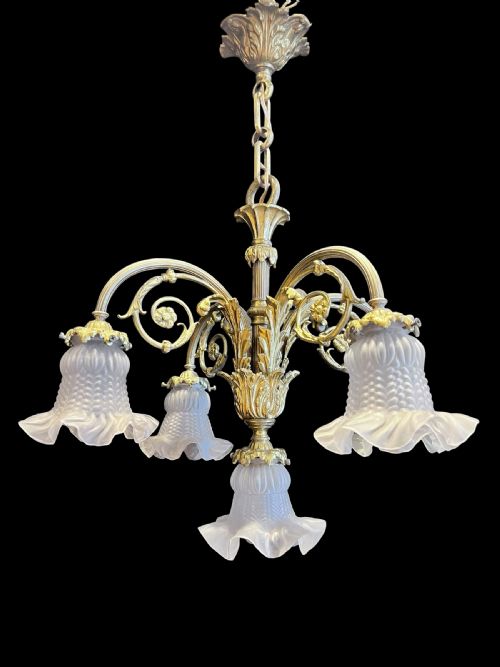
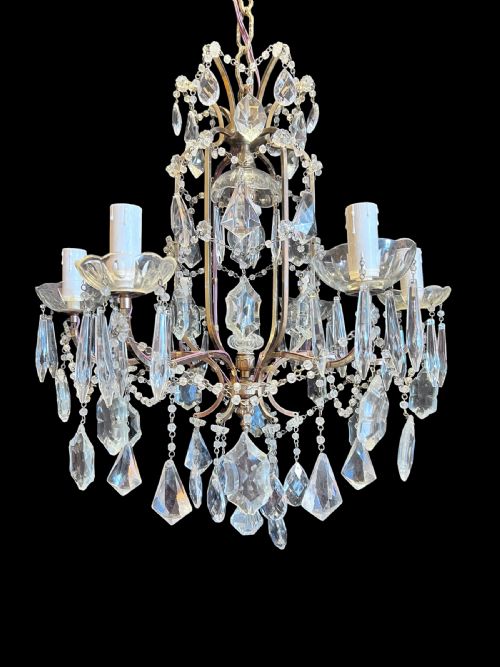
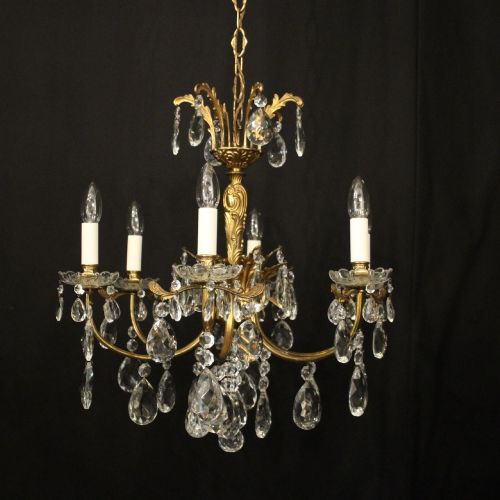
A 2026 Guide by Sellingantiques
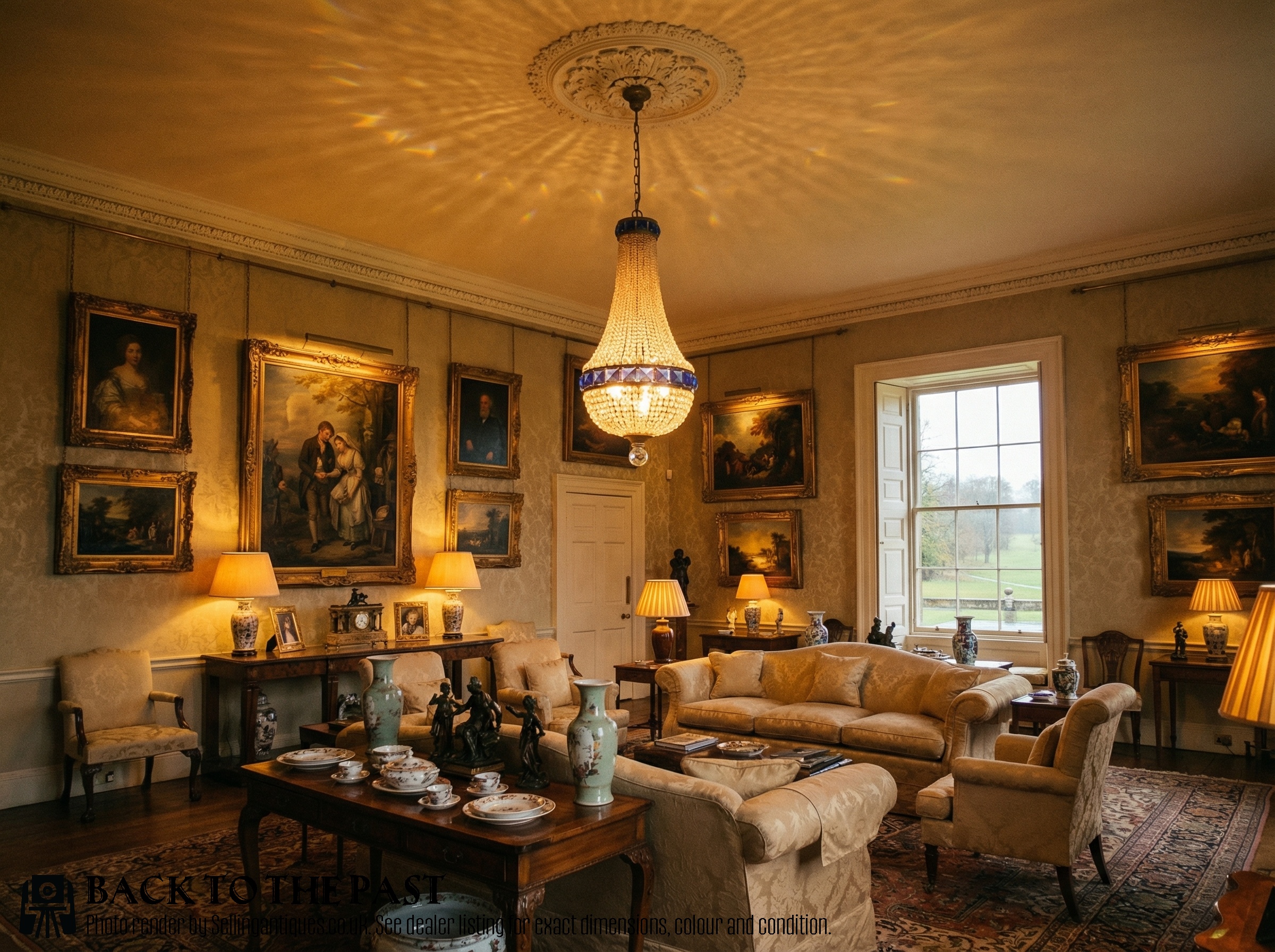
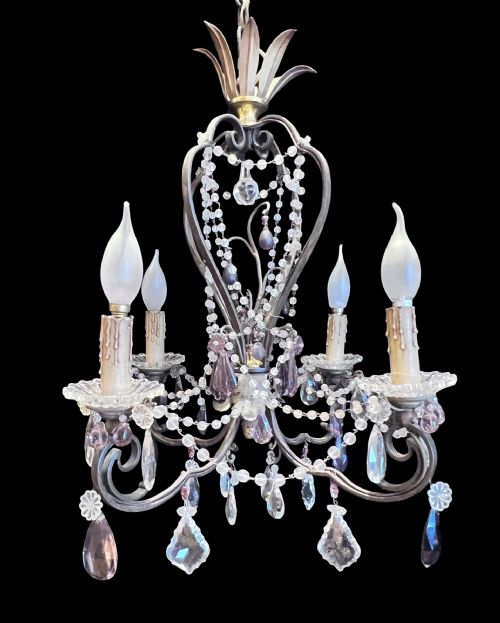
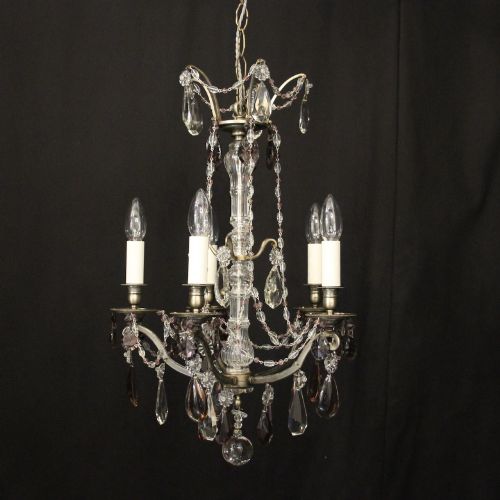
Early 20th Century Bead Chandelier with Blue Prisms at the Top and Centre 10", 1920
Priced at £495 from Rupert Landen Antiques
Simple wooden crosses holding forged iron spikes for tallow candles.
Wealthy households replaced those rough forms with cast brass by the late seventeenth century, creating heavier frames.
Look at how the introduction of lead crystal transformed the design into complex, refractive light sources designed to dazzle.
Gas lighting arrived in the nineteenth century. This required hollow pipes instead of solid stems to feed the burners.
The eventual arrival of domestic electricity meant many older frames were drilled out by later owners to accept new wiring and small lamp holders.
William Parker supplied notable glass examples for the Bath Assembly Rooms in the late eighteenth century.
F. & C. Osler. They dominated the Victorian trade in large-scale cut glass and export pieces sent to India.
Perry & Co. produced thousands of classical Regency lighting designs well into the nineteenth century, relying on intricate crystal chaining.
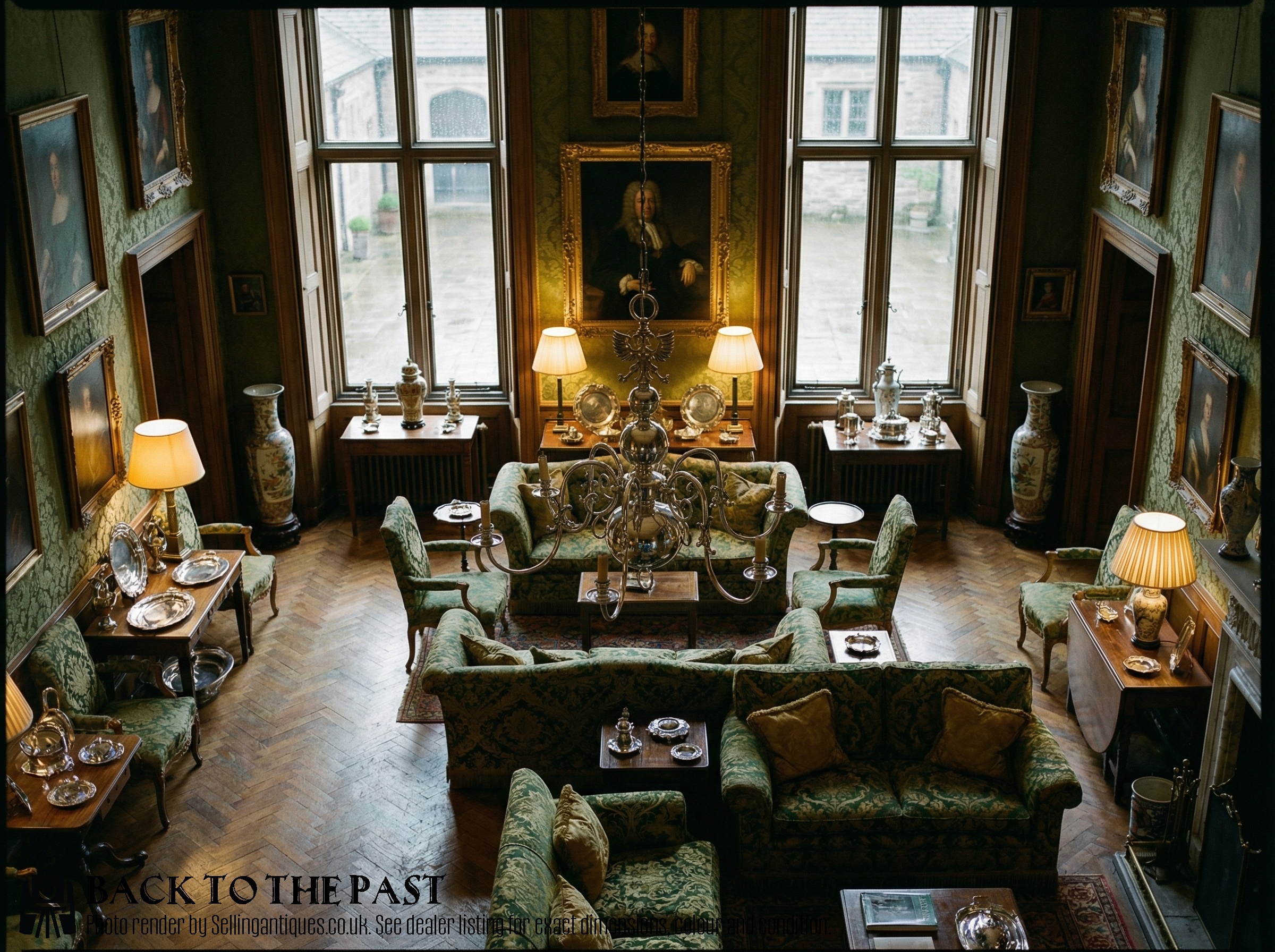
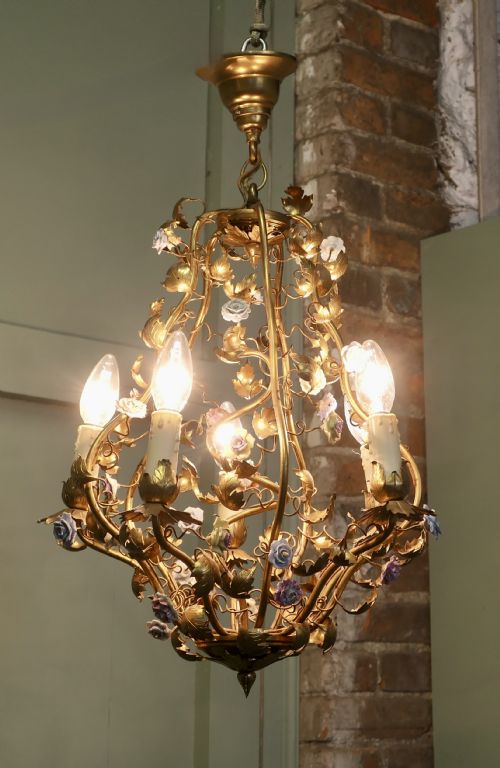
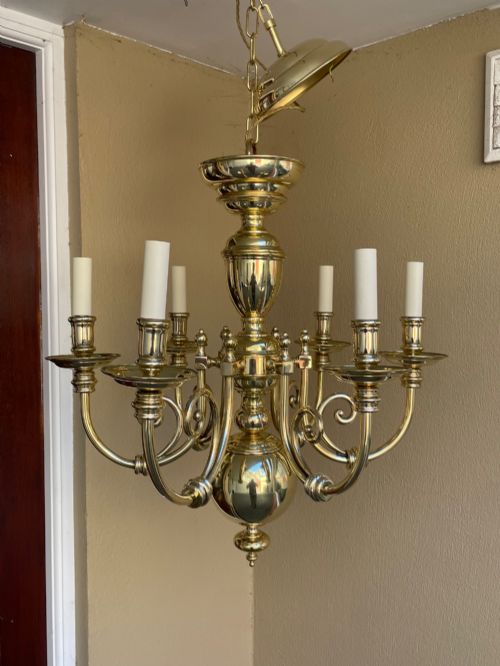
A Large Silver Plated Dutch Brass 6 Armed Chandelier, 1930
Priced at £1,150 from I M Chaney Antique Furniture
The 2026 retail price guide for Antique Chandelier is drawn from a proprietary archive of over 1.1 million retail prices indexed by Sellingantiques since 2003. This guide relies exclusively on their own internal data; no external sources or auction records are used.
Analysing nearly 25 years of UK antique market history alongside current retail values, the data indicates that typical UK retail prices for Antique Chandelier range between £600 and £4,000. Entry-level prices generally fall under £600 and premium examples upwards of £4,000.
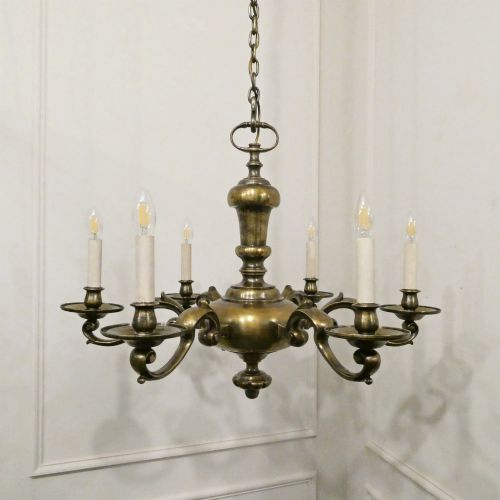
A central baluster or main column dictates the overall proportion of the entire piece.
Branching arms sweep outward in tiers. This spaces the light sources evenly across the room.
Drip pans. Set below the sconces to catch hot wax before it hits the floor, these wide dishes are essential on early candle fixtures.
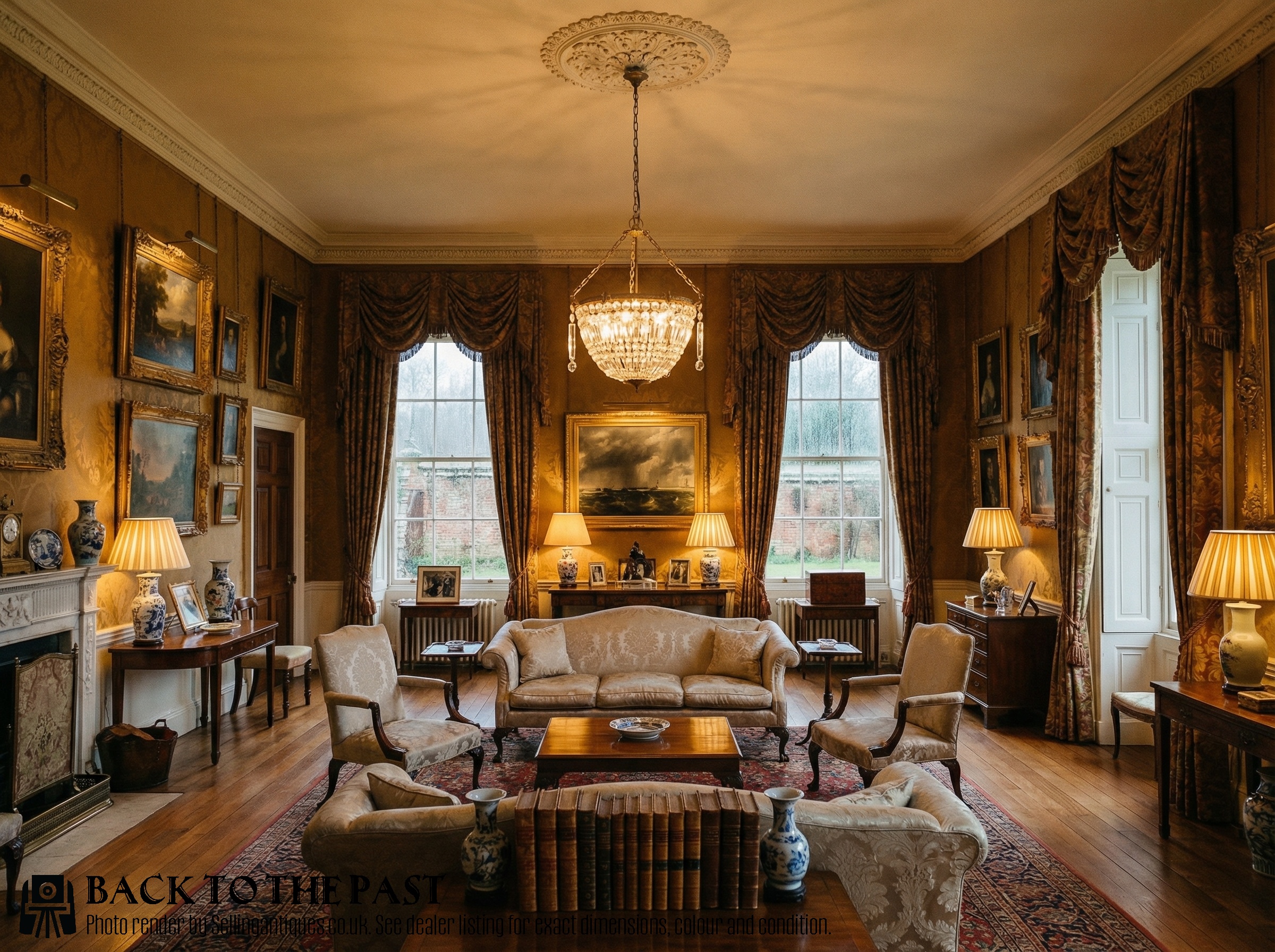
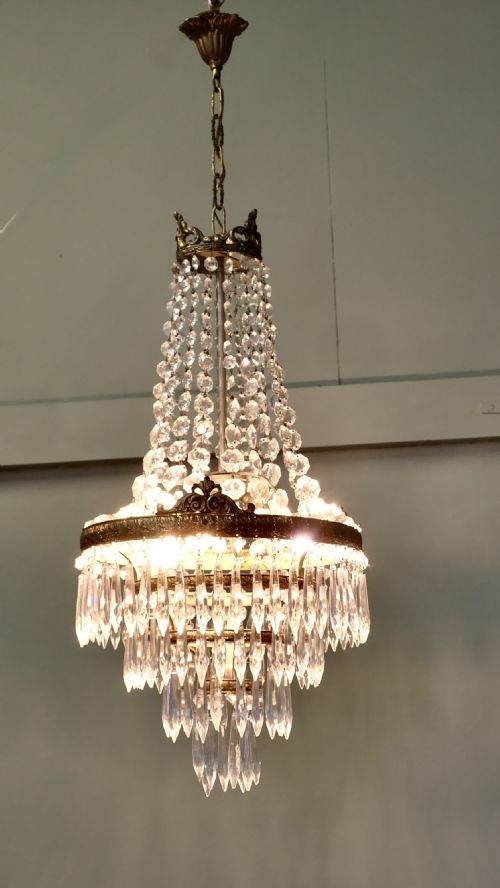
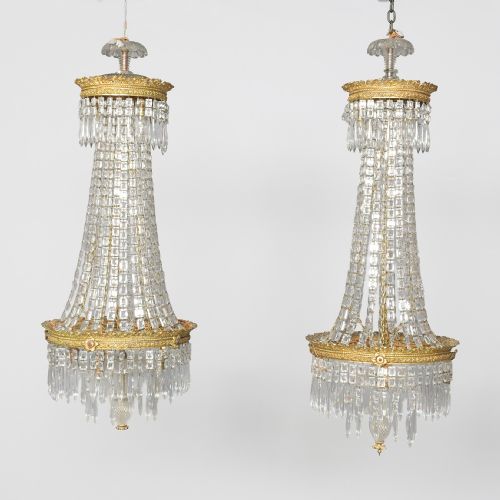
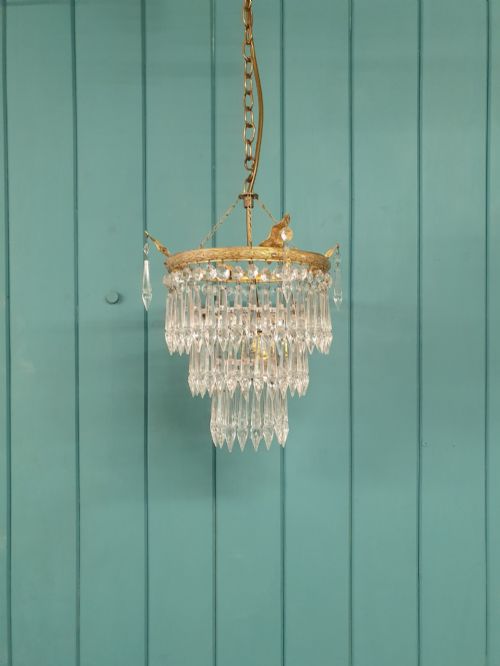
Early 20th Century Really Large Bag/basket Chandelier 18", 1930
Priced at £680 from Rupert Landen Antiques
Glasscutters shaped the early drops by hand against large rotating sandstone wheels.
Casting molten bronze into sand moulds. This allowed makers to produce identical branch arms.
Threaded metal rods replaced crude iron pins to hold the tiered sections securely, making assembly much easier for the final owner.
"Hidden silver foil behind the glass elements. This increases the light reflection in early examples."
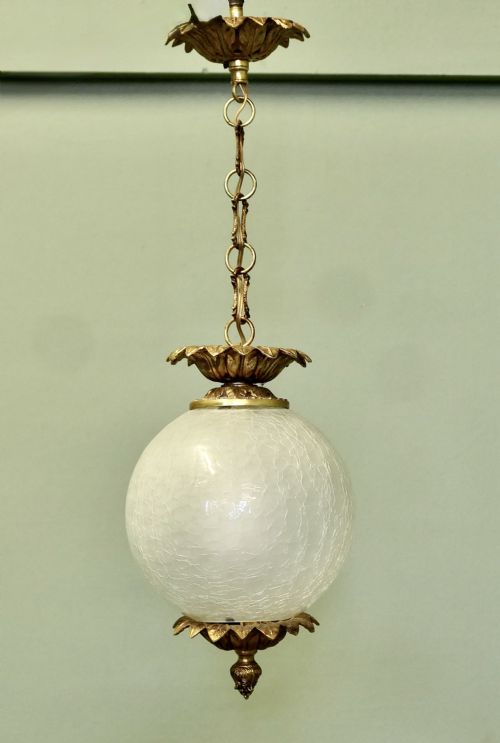
"The heavy central glass ball helps stabilise the frame against draughts in large halls."
"Seasonal cleaning. Some tiered designs were built so the arms could slot out easily, allowing staff to wash the glass sections down at floor level."
Based on almost 25 years of Sellingantiques UK antique market data, Antique Chandelier appeared 8557 times (out of 1,100,000 antiques) which gives it a rarity score of 18/100.
This score measures scarcity within the Sellingantiques archive only and is not a survey of the entire antiques market, so these statistics may not be indicative of the general availability of Antique Chandelier elsewhere.
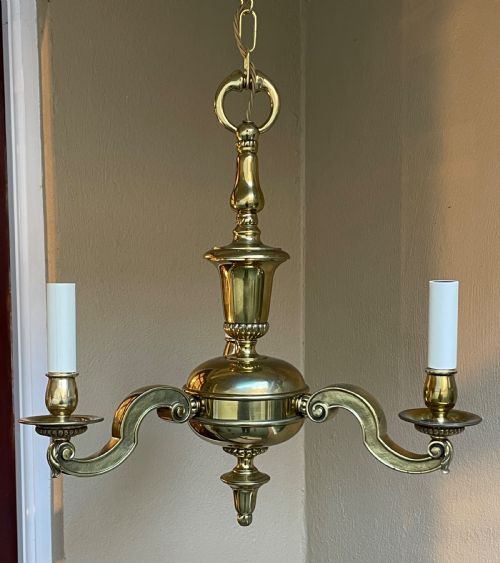
Solid brass fittings are heavy. The cast arms and central baluster carry significant mass.
A standard plasterboard fixing won't hold the weight. Always check your ceiling joists before hanging one.
Loose glass drops rely on old wire that fatigues over time. Unhook the shaky ones before they fall and shatter on the floor below.
Rewiring is a separate issue entirely. Old cloth-covered cable degrades inside the metal arms and becomes a fire hazard.
Get an electrician to test the circuit. They can safely pull new core wire through the original channels.
You can easily fit modern LED bulbs into old lamp holders. The threads and bayonet caps match the sizes established in the early twentieth century.
Electricians often replace the actual sleeve holding the bulb. The visual effect remains the same once the outer decorative candle tube slips over the top.
That dark surface is a natural patina that builds up over a century of exposure to the air. Stripping it away with metal polish leaves the brass looking raw and new.
Most collectors prefer to leave the deep colour intact. You only need to dust the arms and wipe them gently with a damp cloth.
Please note: This Antique Chandelier guide and its associated pricing data are provided for general informational purposes only. It does not constitute formal financial, investment, or appraisal advice and should not be relied upon as the sole basis for any commercial activity, purchasing, or sales decisions. Sellingantiques.co.uk accepts no liability for any actions taken in reliance on this information. Always consult with a qualified professional or independent appraiser.
