
Antique Fire Grates
A fire grate is the iron basket or barred frame that holds burning coal or logs clear of the hearth floor, letting air feed the fire from underneath.
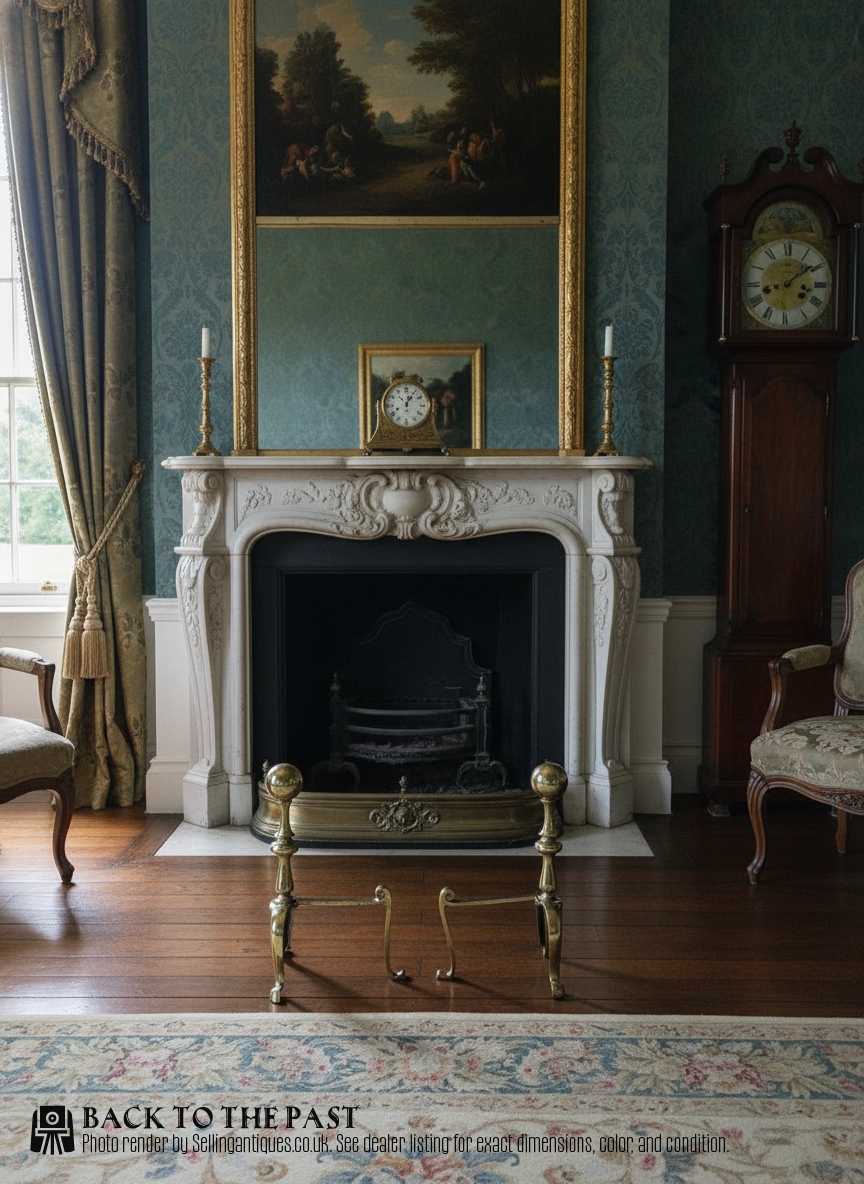
Antique Fire Grates
The grate came in as open hearths gave way to raised iron baskets, and it became the standard fitting once coal replaced logs as the common household fuel. Free-standing baskets and dog grates were made from the eighteenth century through to the twentieth, for coal and for log burning alike.
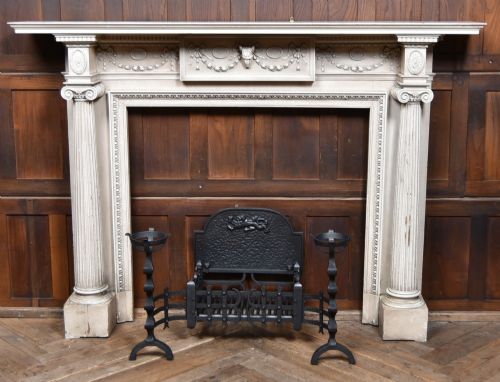
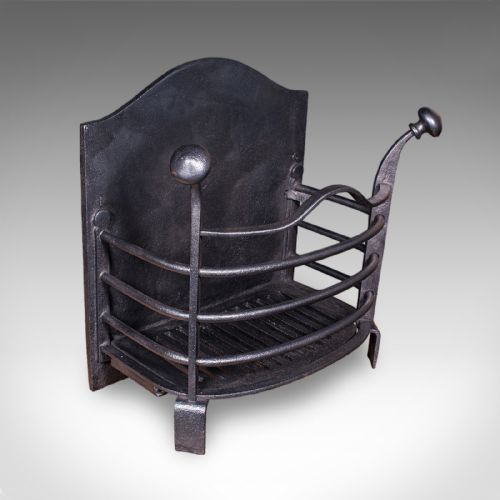
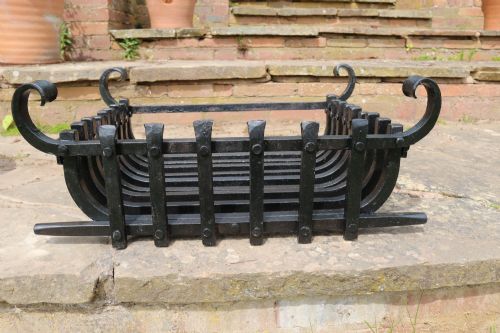
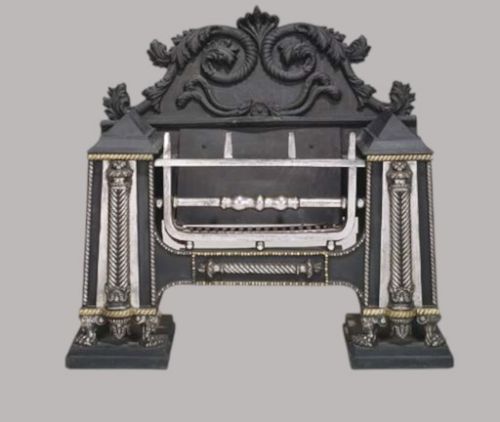
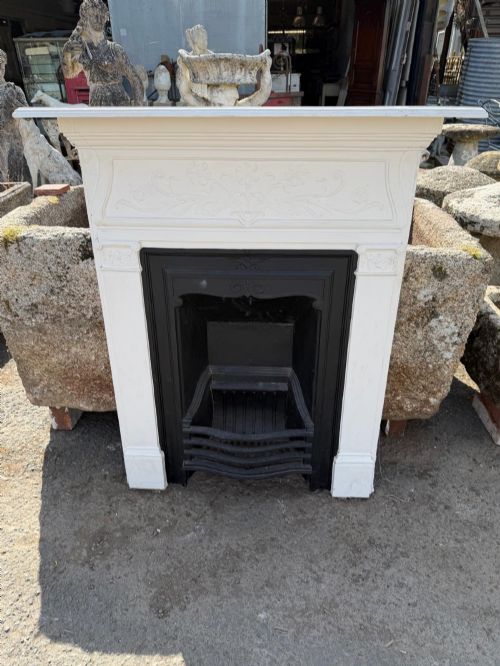
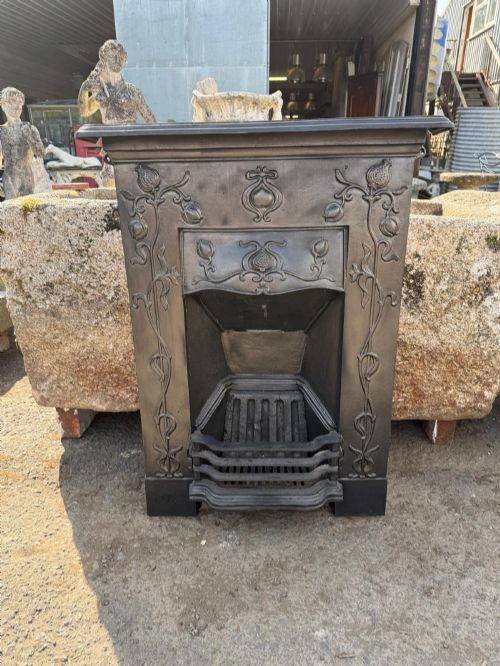
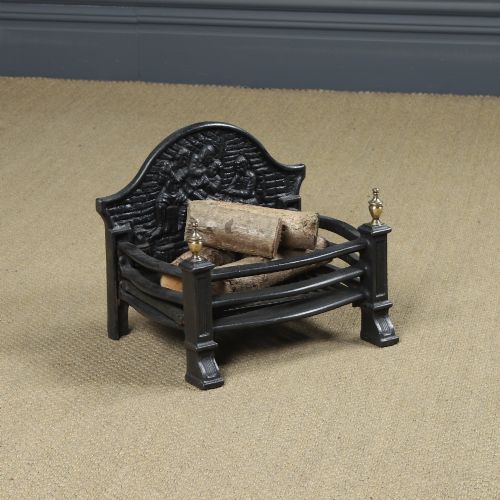
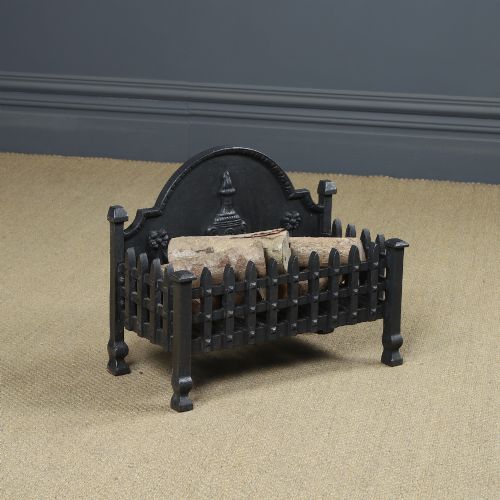
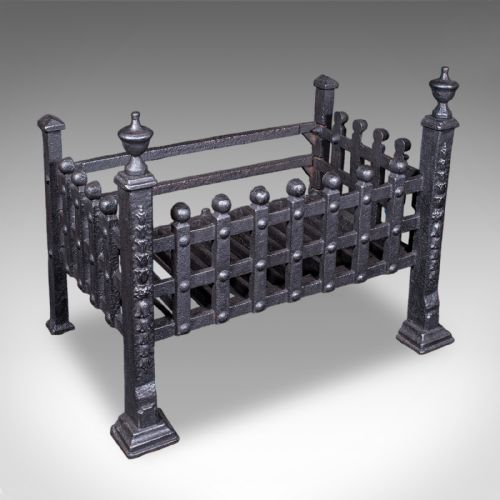
Iron is near-universal, named in a hundred titles, and cast iron leads over wrought. Half of all titles use the word "basket". The form you'll meet most often is a free-standing English cast-iron fire basket of around 1900: open-fronted, lifting out of the opening, sold on its own rather than as part of a fitted surround.
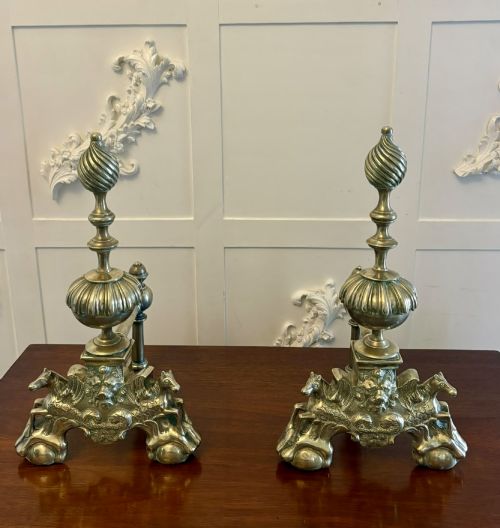
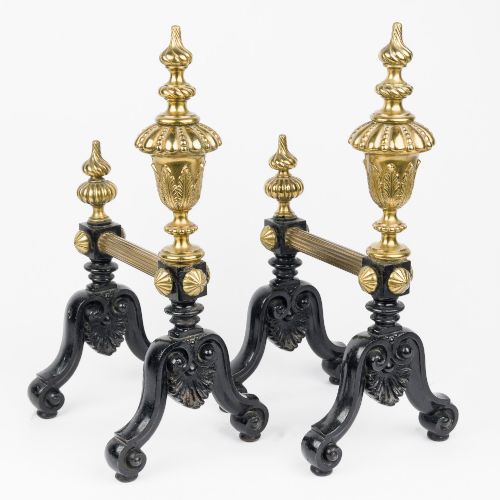
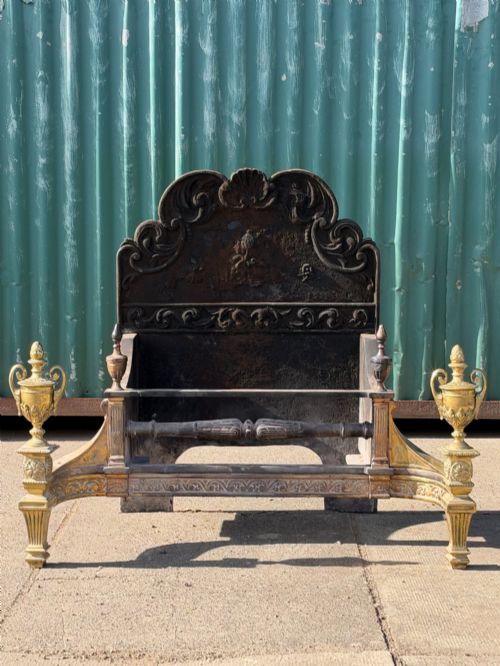
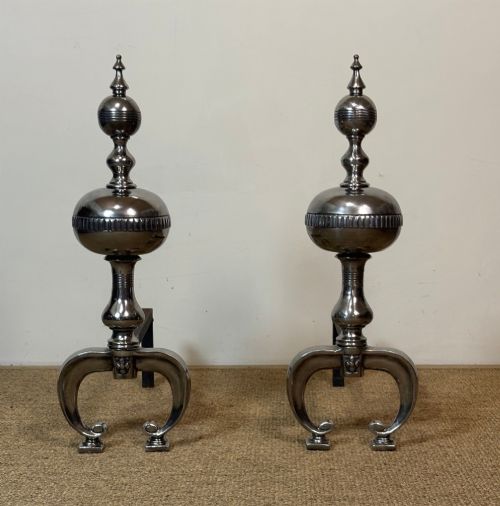
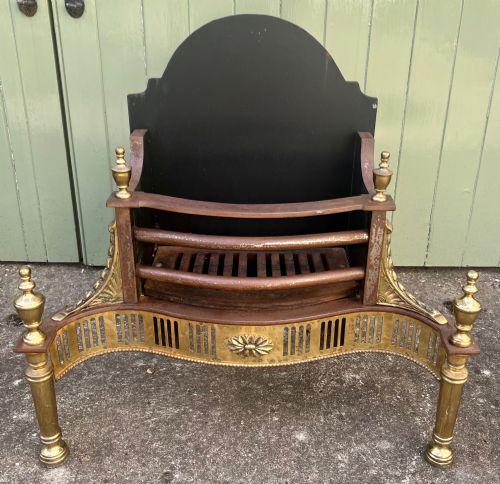
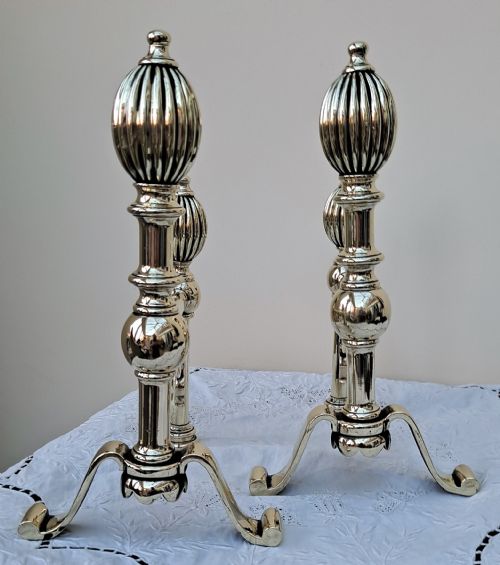
Around a fifth come with andirons or fire dogs, and that share rises to about a third of what's listed at any one time. Inglenook and back-hearth grates make up roughly one in ten, wide and built for logs. Wrought and forged iron is a smaller group, and brass turns up as trim, finials or front mounts on neoclassical, register and hob grates.
Dates run from 1700 to 1940, though much of the labelling is bracket rather than year: "19th Century" and "Victorian" are common, and the largest single bucket is the 1900s. Style names outrun dates here. Several pieces called Regency or eighteenth-century style carry dealer dates in the 1920s, so a style word in a title isn't a date.

Where The Range Widens
Size does a lot of the work. "Large" appears in 28 titles, and the upper end of the category is held by huge, wide, curved or very heavy inglenook grates. A plain iron basket sits at the other end of that scale.
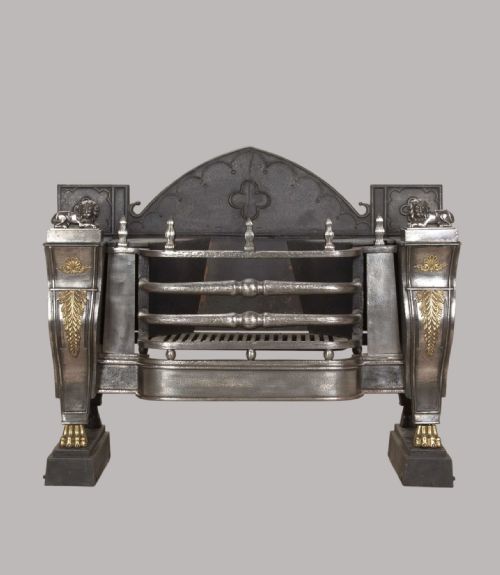
Completeness matters as much as scale. A grate offered with matching andirons and a fire back clusters in the upper half, while the bare basket runs along the bottom. Mixed metals push the same way: brass with iron, steel with brass, and the occasional bronze all sit near the top.
Then there's design ambition. Adam-style and neoclassical fronts, Gothic work, serpentine bars and one-off figural pieces such as a dragon, a winged griffin or a nautilus stand above the plain run. Hand-forged work is the exception in the archive, and the two highest listings in the sample are both cast-and-wrought hob grates of classical design.
Antique Fire Grates Retail Price Guide 2026
Typical UK retail prices for fire grates, calculated from the Sellingantiques database of over a million retail prices indexed since 2003. This retail price guide relies exclusively on Sellingantiques data; no external sources or auction records are used, so the figures do not describe the wider market.
About fifteen fire grates are listed on Sellingantiques each year, and thirty-nine different dealers have listed one.
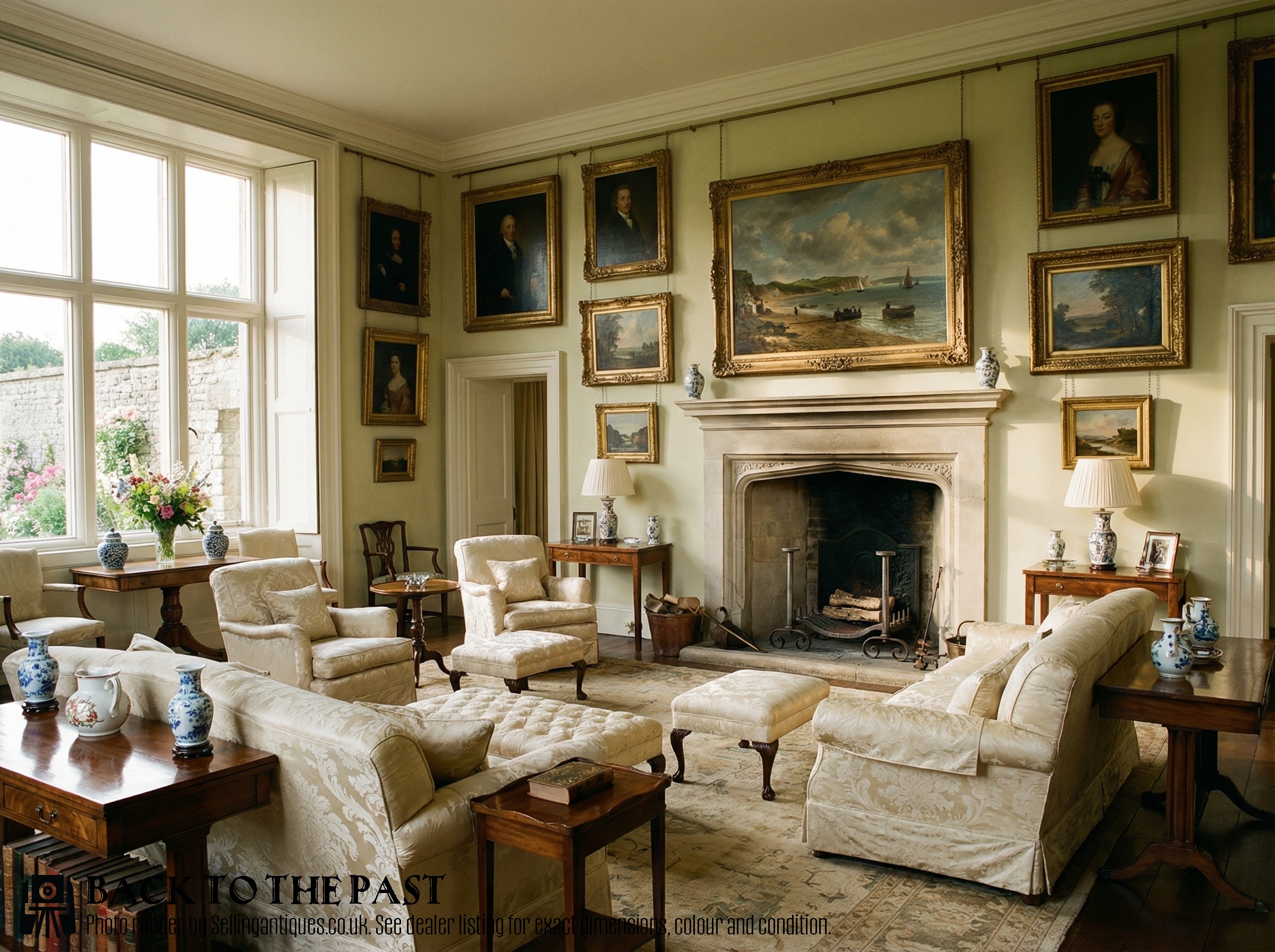
The Antique Fire Grates Glossary
- Fire basket
- A free-standing grate, open at the front and sides, and the commonest form in this category, named in half of all titles.
- Free standing
- Not built into the chimney opening; it lifts out and sits loose on the hearth. Around one title in nine says so.
- Andirons, or fire dogs
- Paired uprights standing either side of the hearth, often supporting or flanking the grate. Named in a fifth of titles.
- Inglenook
- A large recessed chimney opening. Grates described this way are wide and made for burning logs.
- Register grate
- A fitted grate with a closing plate in the throat of the flue, used to control the draught.
- Hob grate
- A grate with flat iron hobs to each side for standing pots or kettles on. Uncommon in the sample, and at the top of the range.
Antique Fire Grates: Frequently Asked Questions
What is the commonest type of antique fire grate?
The free-standing iron fire basket. Half of all titles use the word "basket" and iron is named in a hundred of them, so that shape is the default of the category.
The recurring house form is an English cast-iron basket of about 1900, open-fronted, for coal or logs, sold loose rather than as part of a surround.
Are fire grates sold with andirons?
Often. Andirons appear in a fifth of titles and fire dogs in a smaller group again, usually as a set with the grate, sometimes with a fire back as well.
That combination is more visible in current stock than in the archive, making up about a third of what's listed.
How old are most of these grates?
The dated field spans 1700 to 1940, with 76 listings carrying a clean year. The largest single bucket is the 1900s, followed by 19th century and Victorian as bracket labels.
The earliest dated piece in the samples is an eighteenth-century iron grate given as 1700, with a Georgian one at 1750. The latest is a cast iron grate dated 1940.
Does a style name in the title mean a date?
No. Adam, Regency, Georgian, Gothic, neoclassical, Renaissance, Art Nouveau and Arts and Crafts all appear as descriptions of design.
Several pieces carrying those names are dated by the dealer to the 1920s, including titles such as "18th Century Style ... (Circa 1920)".
What's the difference between cast and wrought iron grates?
Cast iron is moulded in a sand mould, which allows repeat decorative fronts. Around a third of titles say cast.
Wrought or forged iron is hammered rather than moulded, a small group in the archive, though a larger share of current listings.
Where do these grates come from?
English dominates, named in 45 titles. French origin surfaces only twice in the samples, once as an inglenook grate on andirons and once as a bronze chenet.
Around fifteen fire grates come to market on Sellingantiques in a year, and thirty-nine different dealers have listed one.